
The Scale of Exclusion
Muhammad Daud Ali served India for years as an army technician, sustaining combat injuries during the Kargil War. At 65, he possessed a passport, pension records, and military service documentation that should have guaranteed his status as a citizen. Yet when the Special Intensive Revision (SIR) of West Bengal's electoral rolls concluded earlier this year, Ali discovered that he and his three children had been erased from the voter list. Only his wife remained. "I am dumbstruck. I feel deeply hurt and insulted. How can they conduct the elections without solving our disputes? I simply have no idea who to seek justice from," Ali told reporters.
Contents
Ali is not alone. He stands among approximately nine million voters, representing roughly 12% of West Bengal's 76 million electorate, who have been removed from the 2026 electoral rolls. The deletions occurred during a massive voter roll revision exercise conducted by India's Election Commission ahead of state assembly elections scheduled for April 23 and 29. While more than six million names were struck off as absentee or deceased voters, the fate of another 2.7 million, including Ali's family, hangs in legal limbo. Their cases remain undecided, trapped in a bureaucratic maze of tribunals and frozen electoral registers.
Thirteen states and federally administered territories have undergone the SIR process, but West Bengal marks the only instance where the exercise was followed by an additional layer of special adjudication. The Election Commission maintains that the revision aims to weed out duplicate or outdated entries and add genuine voters. Yet the scale of removal has triggered an unprecedented political crisis, legal challenges, and questions about the integrity of the world's largest democracy.
How Millions Vanished from the Rolls
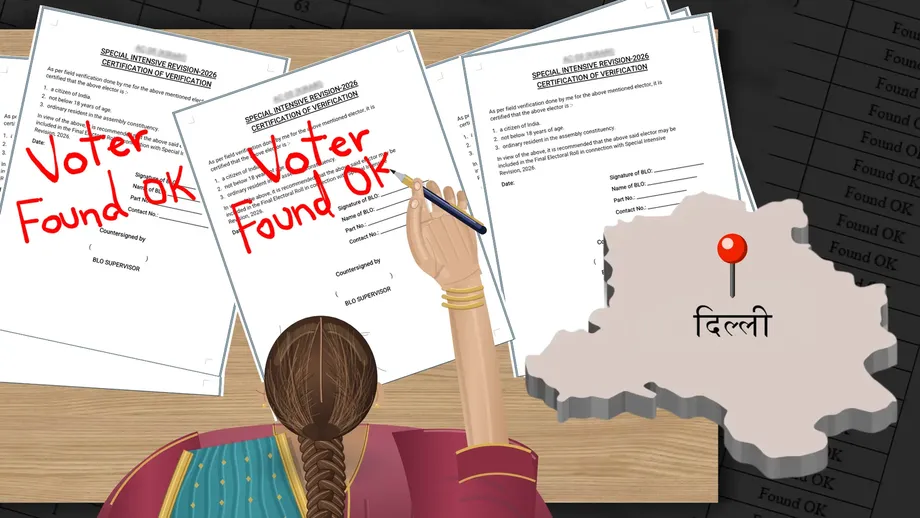
The Special Intensive Revision represents the most extensive electoral roll cleanup in West Bengal since 2002. Unlike regular revisions, SIR involves house-to-house verification, stricter document checks, and the use of artificial intelligence to flag what officials term "logical discrepancies." The process began with 7.66 crore registered voters in November 2025. By February 2026, the draft rolls showed a dramatic reduction to approximately 7.04 crore entries.
The deletions fall into three categories. First, routine administrative removals addressed duplicate entries, deceased voters, and those who had shifted residence without updating their records. Second, absentee voters who could not be located during verification by Booth Level Officers. The third and most contentious category involves 2.7 million voters flagged for "logical discrepancies" by an AI-driven algorithm that searched for anomalies between the 2002 rolls, widely regarded as the last clean baseline, and current data.
The AI system identified red flags including spelling mismatches in names across decades, more than six voters linked to a single ancestor, implausible parent-child age gaps outside the 15-45 year range, grandparent-voter age gaps of less than 40 years, and gender-name inconsistencies. Voters like Ali, despite submitting enumeration forms linking them to the 2002 records and providing substantial documentation, found themselves classified as doubtful cases. Following re-verification hearings, many were excluded anyway.
Constituency-wide data compiled by political parties suggests that around 65% of the 2.7 million in limbo are Muslims. Overall, Muslims account for 3.11 million, about 34%, of the nine million removed, significantly higher than their 27% share in West Bengal's population according to the 2011 census. However, the purge has struck across communities, affecting Hindu Dalits from the Matua refugee community, Hindi-speaking migrants in urban centers, and even prominent government officials.
Stories of Disenfranchisement
Beyond the statistics lie individual stories of humiliation and confusion. Suprabuddha Sen, an 88-year-old engineer who worked for 32 years at Damodar Valley Corporation and is the maternal grandson of legendary artist Nandalal Bose, found his name deleted despite submitting matriculation certificates, passports, employment records, and pension documents. "I don't care anymore about being disenfranchised," Sen stated. "Those who deleted my name should be able to answer why I am not in the list."
Wing Commander Md Shamim Akhtar, a decorated Indian Air Force officer who once held a diplomatic passport and served the nation for 17 years, watched his name move from the final list to "under adjudication" status, then to complete deletion. His attempts to seek clarity from Booth Level Officers proved futile. "I contacted my BLO, Mondal, but he did not tell me any procedure to follow and assured me that it would be restored automatically. Then on March 28, when my name was deleted in the second list, the BLO told me to hire a lawyer and approach the tribunal," Akhtar explained.
The arbitrary nature of the process reveals itself in absurd contradictions. In some families, deceased members remain on the rolls while living relatives are deleted. State minister Ghulam Rabbani, who has contested four elections and voted regularly for decades, discovered his name under adjudication. Cabinet minister Shashi Panja found herself flagged despite her family members remaining eligible. Even West Bengal's Chief Secretary Nandini Chakraborty and Richa Ghosh, a 22-year-old member of India's 2025 Women's Cricket World Cup-winning squad, faced scrutiny while competing abroad.
In Harishchandrapur, a constituency in Malda district along the Bangladesh border, 35-year-old Hasnara Khatun represents the generational trauma of the purge. "I am very angry," she says, noting that her father, grandfather, and great grandfather have been voters. Now, five of the seven members of their family have their voting rights suspended. "We have been effectively turned into non-citizens. Who knows what comes next?" she asked. "The system can't be trusted anymore."
If we don't vote, no-one will even bother to remember that poor people exist.
This sentiment, shared by a voter in West Bengal's Sundarbans to anthropologist Mukulika Banerjee of the London School of Economics, captures the existential dimension of disenfranchisement. Banerjee notes that voting is not merely a procedural right but a deeply meaningful act for marginalised communities. "By denying them their right to vote, one takes away one of their fundamental rights, and one that is hugely meaningful to them and allows them to assert their voice," she observed.
Political Battle Lines
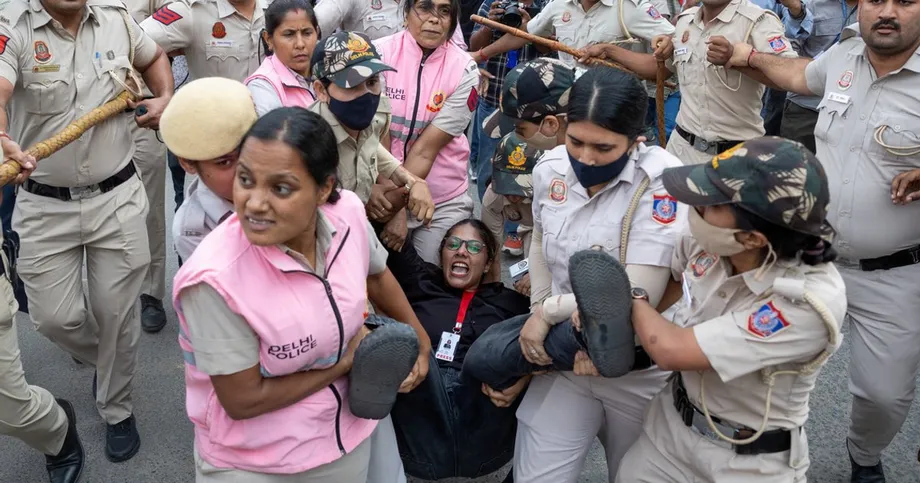
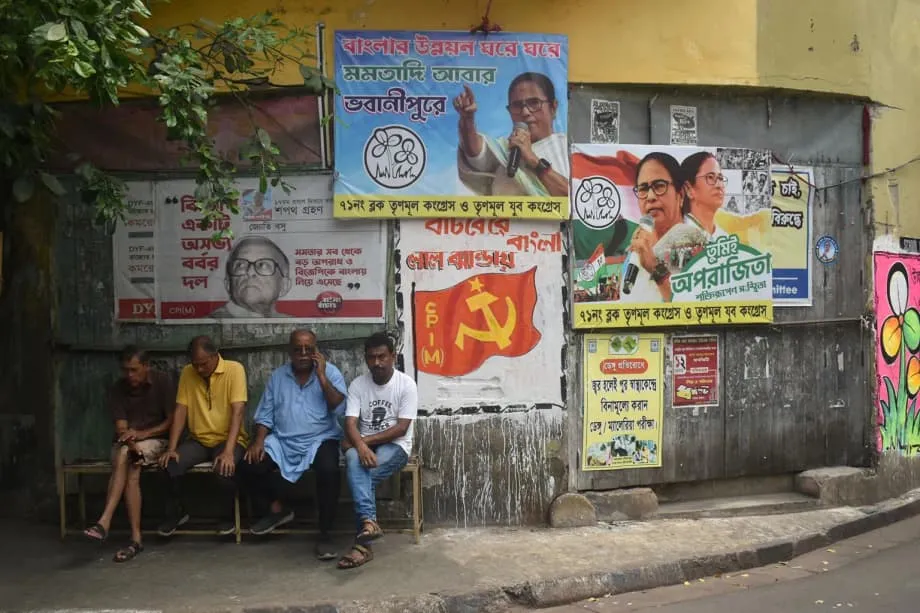
The voter deletion crisis has transformed West Bengal's political landscape into a battlefield of competing narratives. Chief Minister Mamata Banerjee and her Trinamool Congress (TMC) party accuse the Election Commission of operating in tandem with Prime Minister Narendra Modi's Bharatiya Janata Party (BJP) to disenfranchise opposition voters, particularly Muslims. Banerjee has announced plans to stage protests and move the Supreme Court again, asking rhetorically, "How can the elections start without solving the cases of 2.7 million voters?"
The BJP defends the exercise as necessary national housekeeping. Federal minister Sukanta Majumdar argues that the constitution permits only Indian citizens to choose leaders. "Therefore, purging non-citizens was important," he stated, blaming the state government for slowing the process by taking the matter to the Supreme Court. Prime Minister Modi has suggested in campaign speeches that the clean-up targets illegal Bangladeshi infiltrators, a term the TMC says serves as coded language for Muslims.
However, the data complicates simple communal narratives. While Muslims bear a disproportionate burden in districts like Murshidabad and Malda, Hindu communities have suffered heavily in other areas. In North 24-Parganas and Nadia, Dalit Hindus from the Bangladeshi migrant Matua community, who historically supported the BJP, experienced severe deletions. In Kolkata, nearly 29.6% of voters were struck off in the north and 27.5% in the south, with 80% of those deleted being Hindus, many from Hindi-speaking communities with roots in northern India.
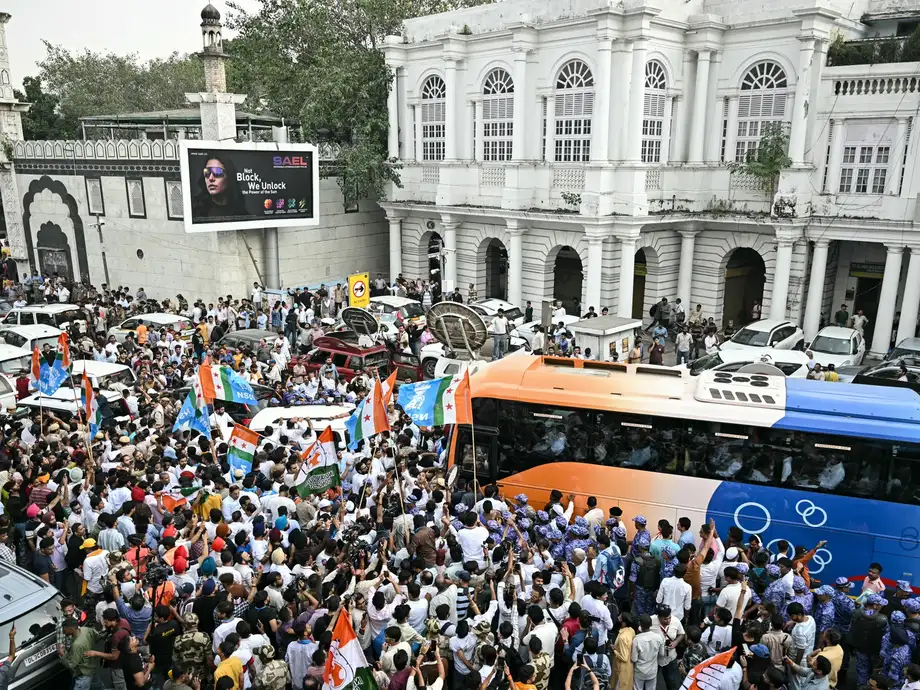
The controversy reached a flashpoint when a TMC delegation met Chief Election Commissioner Gyanesh Kumar in Delhi. After a seven-minute meeting, delegation member Derek O'Brien alleged that Kumar refused to answer questions and insulted the team, telling them to "get lost." The Election Commission strongly refuted these allegations, claiming instead that TMC leaders raised their voices and created a disruptive atmosphere. The exchange highlights the breakdown of trust between constitutional bodies.
Geographic Patterns of Removal
The deletions have not occurred uniformly across West Bengal but have concentrated in specific zones that carry significant electoral weight. Border districts with Bangladesh, including North 24-Parganas, Nadia, Murshidabad, Malda, Uttar Dinajpur, and Cooch Behar, recorded heavy losses. North 24-Parganas alone lost 1.26 million voters, representing 15% of its electorate. Murshidabad, India's most Muslim-populous district, saw 749,000 names struck off, roughly 13% of its voters.
Paschim Bardhaman district experienced the second-highest drop statewide, with the electorate shrinking by 16.9%. These patterns matter because West Bengal's electoral battles are often decided by thin margins in specific constituencies. In Nandigram, where Mamata Banerjee lost to BJP's Suvendu Adhikari by just 1,956 votes in 2021, up to 95.5% of deleted voters are reportedly Muslims, despite the community comprising only 25% of the local electorate.
In Banerjee's own constituency of Bhabanipur, 51.8% of Muslim voters were placed under adjudication, though Muslims make up only 21.9% of the population. The constituency saw tens of thousands of voters struck off. Such targeting in politically decisive seats suggests that the revision could alter outcomes not through persuasion but through subtraction.
The Matua community, a Scheduled Caste group with substantial political sway in border districts, illustrates the complexity of identity-based politics in the region. Large numbers of Hindu Matua voters were deleted in constituencies like Bagda and Bongaon Uttar, undermining narratives that the purge exclusively targeted Muslims. The Matuas, who migrated from modern-day Bangladesh and wield influence over several dozen assembly seats, had largely backed the BJP in 2021, contributing to its rise from 3 to 77 seats. Their disenfranchisement now threatens to fragment the very coalition the BJP cultivated.
Legal Limbo and Judicial Response
The Supreme Court of India has found itself navigating treacherous waters between electoral integrity and democratic inclusion. After repeated legal challenges, the apex court allowed the Election Commission to proceed with April polls without settling all disputes over the deletions, effectively freezing the electoral rolls while 2.7 million cases remain pending. A bench comprising Chief Justice Surya Kant and Justice Joymalya Bagchi termed the situation a "trust deficit" between the constitutional body and the elected government.
The Court ordered an extraordinary intervention: the deployment of approximately 700 judicial officers from West Bengal, Odisha, and Jharkhand to take over quasi-judicial roles from Electoral Registration Officers. Nineteen special tribunals, headed by former High Court chief justices and judges, were established to adjudicate the flood of appeals. However, the sheer volume of cases has overwhelmed the system. Senior advocate D.S. Naidu, representing the poll panel, informed the court that 30 to 34 lakh appeals are currently pending, with each tribunal handling over one lakh cases.
Justice Bagchi articulated the stakes with unusual emotion. "The right to vote in a country you were born in is not just constitutional, but sentimental. It is about being part of a democracy and helping elect a government," he observed. Yet the court maintained that judicial intervention is intended to promote elections, not interdict them. The bench emphasized that unless an enormous number of voters are excluded to the point of materially affecting election results, the process cannot be halted.
The practical results have proven devastating for those seeking restoration. Out of 2.7 million names deleted following adjudication, only two have been restored so far, both following specific Supreme Court intervention. Mahatab Shaikh, a Congress candidate from Farakka, and former MLA Mottakin Alam, now a Congress candidate from Manikchak, regained their voting rights. For the remaining millions, the tribunals remain largely non-operational despite preparatory work at venues like the Syama Prasad Mookerjee National Institute of Water and Sanitation.
With the rolls frozen and polling dates approaching, the Supreme Court scheduled a critical hearing for April 13 to determine whether voters cleared by tribunals after the freeze can still cast ballots. The central question asks whether validation after the deadline can restore franchise rights for this election cycle, or whether eligible citizens must wait years for the next opportunity to participate.
Electoral Arithmetic and Democratic Stakes
The deletion of nine million voters represents more than a bureaucratic adjustment; it constitutes a structural shift in West Bengal's electoral mathematics. In numerous districts, the number of deletions exceeds the victory margins from the 2021 assembly elections. In Hooghly, where the TMC won by 2.79 lakh votes in 2021, 8.68 lakh voters have been deleted. In Purba Bardhaman, a 2.75 lakh margin now confronts 8.35 lakh deletions. In Paschim Bardhaman, a slender 43,893 vote difference is overshadowed by 3.14 lakh removals.
This arithmetic alters the fundamental dynamics of competition. Elections in West Bengal are often decided by narrow margins at the constituency level. A reduction of even a few thousand voters in specific booths can change outcomes, particularly in urban and semi-urban seats. With the voter base compressed, parties must recalibrate strategies entirely, shifting focus from persuasion to mobilization of the remaining registered electorate.
Political scientist Sibaji Pratim Basu notes that India has no precedent for conducting elections while voters' rights remain suspended. "There is no example of an election happening in India with voters' rights remaining suspended," he stated. "This is a shame for democracy." The controversy raises profound questions about the relationship between electoral integrity and inclusive participation. While cleaning rolls is essential for credible elections, the scale, methodology, and timing of this exercise have generated fear rather than confidence.
The human cost extends beyond individual disenfranchisement to the erosion of democratic faith. When military veterans, cabinet ministers, decorated athletes, and lifelong citizens find themselves erased from the rolls despite valid documentation, the message resonates through communities already skeptical of state power. As Hasnara Khatun's family faces the loss of voting rights stretching back generations, the system risks converting administrative error into political alienation.
With West Bengal serving as a crucial prize in national politics, holding the fourth-highest number of parliamentary seats, the resolution of this crisis carries implications beyond state borders. Whether the tribunals can deliver timely justice, whether the Supreme Court can reconcile frozen rolls with voter rights, and whether the Election Commission can restore public trust will determine not just the outcome of the April elections, but the credibility of India's democratic institutions themselves.
Key Points
- Nine million voters removed from West Bengal electoral rolls, representing 12% of the state's 76 million electorate
- 2.7 million voters remain in legal limbo under "adjudication" status with elections scheduled for April 23 and 29
- Only two names restored out of 2.7 million disputed cases despite tribunal establishment
- Supreme Court allowed elections to proceed with frozen rolls while disputes remain unresolved
- AI-driven process flagged "logical discrepancies" comparing current records against 2002 baseline
- Muslims comprise 34% of total deletions despite being 27% of population; Matua Hindu community also heavily affected
- Border districts including Murshidabad, Malda, and North 24-Parganas recorded highest deletion rates
- Prominent figures affected include Kargil war veterans, state ministers, Chief Secretary, and cricket World Cup winner Richa Ghosh
- TMC accuses Election Commission of colluding with BJP to disenfranchise opposition voters
- BJP defends exercise as necessary removal of illegal infiltrators and deceased voters