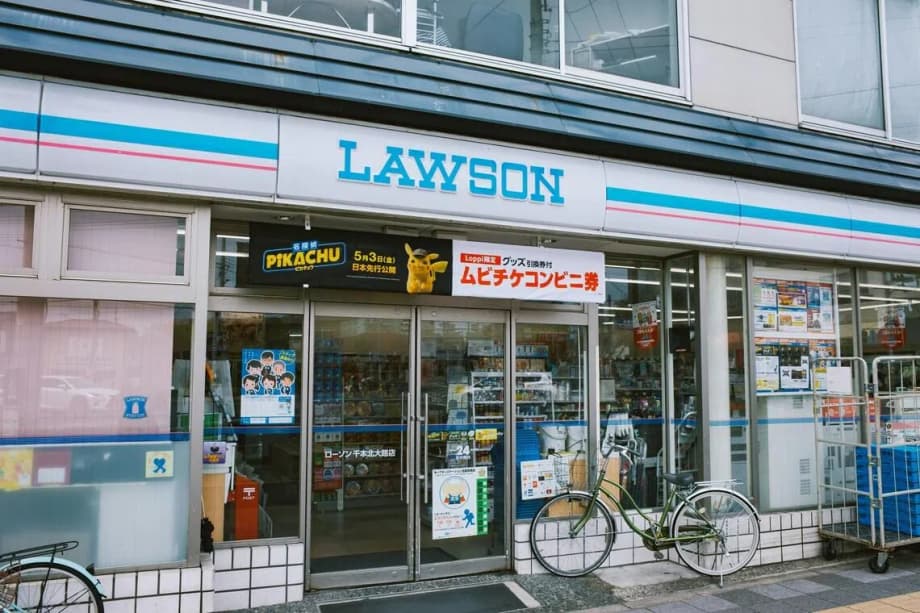
Breaking Barriers at the Register
TOKYO. Lawson, one of the three dominant Japanese convenience store chains, has launched a trial service in Tokyo that uses smartphone technology to bridge the cultural gap between the chain and the growing number of foreign visitors to the country. Starting this spring, customers at three selected locations can tap their phones against smart tags to unlock instructional videos that explain how to purchase hot food and participate in in store promotions. The initiative, which runs through the end of May, represents a direct response to the challenges many international shoppers face when navigating the unwritten rules of Japanese convenience store culture.
The videos, available in English, Chinese, and Korean, walk viewers through the process of buying the signature Lawson karaage kun fried chicken. They also explain how to enter lotteries for anime character merchandise, where every ticket guarantees a prize, and offer access to an augmented reality game featuring the same fried chicken mascots. For Lawson, the goal is straightforward: convert curious tourists into confident customers by removing the uncertainty that often accompanies unfamiliar retail rituals.
The foreign resident population in Japan reached a record level in recent years, with government data showing the total reached nearly four million by mid 2025. The influx of students, workers, and tourists has forced retail operators to reconsider how they communicate with customers who may not read Japanese or understand local customs. Convenience stores, known locally as konbini, sit at the center of this transformation because they function as more than mere snack stops. They serve as banking hubs, ticket offices, postal agents, and dining spots for millions of people daily. When a visitor hesitates at the hot food case, it is not just a lost sale for the store. It is a sign that the industry must adapt.
How the Technology Works
The new service relies on near field communication tags, commonly called NFC tags, which allow smartphones to receive data with a simple tap. Customers who approach the designated areas in the trial stores will find these tags placed near the hot food displays and promotional materials. Once tapped, the tags direct the phone browser to a video portal where language options appear. The content then plays without requiring app downloads or complex registrations, lowering the barrier for travelers who may already be struggling with jet lag and language fatigue.
The instructional content covers several distinct elements of the Lawson experience. For hot food, the video emphasizes a step that often confuses first time visitors: sanitizing hands before touching the display case or serving utensils. In Japan, self service food stations come with an expectation of cleanliness that goes beyond what many foreign shoppers encounter in their home countries. The video demonstrates the location of sanitizer dispensers and the proper way to retrieve items without contaminating shared surfaces. It also addresses the lottery system for anime goods, a popular but potentially baffling concept for tourists unfamiliar with Japanese promotional culture. Each purchase of a designated item yields a ticket, and every ticket wins some form of prize, a structure that differs from typical Western sweepstakes where most participants walk away empty handed.
The augmented reality component adds a layer of entertainment to the educational effort. By pointing their phone cameras at specific markers in the store, customers can summon digital versions of the karaage kun characters, the breaded chicken mascots that have become minor celebrities in the Lawson marketing universe. This feature targets younger visitors and anime fans, a demographic that represents a significant portion of Japan’s inbound tourism market. If the trial proves successful, Lawson has indicated it may expand the service to additional products such as coffee and roll it out to more stores.
Why Hot Food Requires Instructions
To outsiders, buying fried chicken at a convenience store might seem like the simplest of transactions. Yet Japanese konbini operate under a set of cultural expectations that can trip up even experienced travelers. Unlike in many Western countries where packaged hot food sits under heat lamps for customers to grab at will, Japanese stores often require a brief but specific sequence of actions before the exchange of money begins. Hand sanitization is standard. Some items require customers to fill out order slips or wait for a clerk to retrieve fresh stock from a back kitchen. Others sit in open displays where tongs must be used with care to avoid touching adjacent products.
These protocols reflect the Japanese concept of omotenashi, a philosophy of anticipatory hospitality that emphasizes consideration for others. In a crowded country where personal space is limited, cleanliness and order become shared responsibilities. A visitor who reaches directly into a display case without sanitizing first may not intend rudeness, but the act violates an implicit social contract that keeps communal spaces pleasant for everyone. This video guide does not merely explain mechanics. It offers a window into why those mechanics exist, helping visitors participate in the culture rather than simply observe it from a confused distance.
The confusion cuts both ways. Store employees, particularly foreign staff who make up an increasing share of the workforce, sometimes struggle to explain these customs in limited Japanese or English. By delivering instructions directly to visitor phones in their native languages, Lawson removes the burden of real time translation from busy clerks during peak hours. This approach acknowledges a reality that other chains are also confronting: the traditional model of a single standard for customer service no longer functions in a market as diverse as modern Japan.
An Industry Rethinking Training and Talent
Lawson is not alone in the effort to accommodate international shoppers. Across Japan, the big three convenience store operators — Seven Eleven, FamilyMart, and Lawson — are investing in multilingual resources and foreign employee development. Seven Eleven Japan has run an omotenashi hospitality training program for foreign staff since 2021, teaching everything from polite bowing nuances to the correct way to offer plastic bags with food purchases. The sessions, held in the evenings to accommodate international students who attend language classes during the day, cover register operations and the cultural reasoning behind customer service phrases that might sound excessively formal to outsiders.
FamilyMart entered the field in September 2024 with basic training videos for foreign employees, viewable on store terminals in Japanese, English, Chinese, and Vietnamese. The chain also distributes a Welcome Book to staff in multiple languages, including Nepali, which has emerged as one of the most common native tongues among the international workforce. In 2025, FamilyMart introduced a simplified Japanese version to broaden accessibility further.
Ayako Tsutsui, manager of the staff education promotion group at FamilyMart, explained the reasoning behind the expanded resources.
When foreigners first come to Japan and start working in customer service, they may struggle with cultural differences and clash with customers. What is obvious to Japanese people can be difficult for foreigners to understand, so we relate everything carefully.
These investments reflect demographic shifts. At Seven Eleven, more than 50,000 of approximately 400,000 total employees are foreign nationals. Lawson leads the industry with a foreign employee ratio of 15.8 percent, employing roughly 31,000 foreign part timers nationwide as of September 2025.
Tatsuya Murase, a Lawson executive officer and general manager of the sales department, has framed foreign staff as an asset for community resilience. In neighborhoods with high concentrations of international residents, employees who speak multiple languages can assist during emergencies and make shopping more comfortable for customers who prefer not to struggle through Japanese. Murase has also linked the presence of foreign workers and customers to economic vitality in regional areas facing depopulation.
Communities are revitalized by accepting foreigners in factories, offices, schools, agriculture and elsewhere. Foreigners living there shop and work. For us, having vibrant communities is the most important thing. We place importance on creating that environment.
For Lawson, creating an environment where foreign nationals can work and shop comfortably is not a charitable gesture but a business necessity in a shrinking domestic market.
Avatars and the Future of Remote Service
The video guide trial fits into a larger pattern of technological experimentation at Lawson. While the NFC tags address language barriers for customers, the company has simultaneously tackled labor shortages through remote avatar workers. In January 2025, Lawson hired a Japanese resident living in Sweden to operate virtual avatars in Japanese stores, taking advantage of the eight hour time difference to cover overnight shifts. The avatars, equipped with cameras and company provided devices, allow remote workers to guide customers through self checkout processes in real time. The system, developed with Tokyo based tech firm Avita, was already active in 28 stores across Tokyo, Osaka, and Fukuoka as of early 2025.
Sadanobu Takemasu, president of Lawson, has announced plans to expand the avatar program to remote workers in Brazil and the United States. The initiative addresses a pressing industry challenge. A Nikkei survey found that over 62 percent of convenience store operators struggled to hire sufficient part time staff in the last fiscal year. Self checkout stations supported by avatar operators have the potential to reduce in store staff workloads by more than 1.5 hours per store daily, and some locations may eventually operate without any on site personnel during certain late night periods. For a sector where 24 hour operation is the default standard, such innovations offer a way to maintain service levels without overburdening local franchise owners.
These two initiatives, multilingual video guides for customers and remote avatars for staffing, might appear unrelated at first glance. Yet both represent the attempt by Lawson to decouple physical presence from effective service. Whether the customer is in Tokyo speaking Mandarin or the employee is in Stockholm speaking Japanese, technology mediates the interaction and keeps the store functioning smoothly. This philosophy could define the next decade of convenience retail in Japan, particularly as labor pools shrink and tourist numbers grow.
The Tourist Perspective
For foreign visitors, Japanese convenience stores already offer a dizzying array of services that extend far beyond snacks and drinks. Major chains collectively operate roughly 50,000 locations nationwide, many of them open around the clock. Travelers can withdraw cash from foreign compatible ATMs, ship luggage to their next hotel, print concert tickets, buy basic clothing, and even pay utility bills. Lawson alone accepts Alipay at more than 14,000 stores, and the chain has been expanding duty free sales for consumables like snacks and cosmetics.
Yet the sheer density of options can overwhelm newcomers. Seasonal limited time products rotate constantly, from winter oden stews to spring sakura themed sweets. Coffee machines require navigating Japanese language touchscreens. Hot food cases sit behind registers or in corners with specific protocols. Guides from travel publications consistently advise visitors to step inside konbini for the cultural experience alone, noting that even locals develop brand loyalties based on specific menu items. Lawson is known for sweets and fried chicken, Seven Eleven for reliability and ATM access, and FamilyMart for the coffee and chicken pairing.
Against this backdrop, a two minute video explaining how to buy fried chicken becomes less about the chicken itself and more about inviting visitors into a daily ritual that defines modern Japanese life. The trial stores in Tokyo serve as a testing ground for whether digital guidance can replicate the gentle corrections a local friend might offer to a confused tourist. If it succeeds, the model could spread quickly. The three trial locations are situated in areas with high foot traffic from international visitors, making them ideal laboratories for measuring engagement and sales impact.
At a Glance
- Lawson is testing NFC video guides at three Tokyo stores through May to help foreign customers buy hot food and enter anime merchandise lotteries.
- The videos are available in English, Chinese, and Korean, and include an augmented reality game featuring Lawson karaage kun mascots.
- The foreign resident population in Japan reached nearly four million by mid 2025, prompting convenience store chains to invest in multilingual services and staff training.
- Lawson employs the highest ratio of foreign workers in the industry at 15.8 percent, while Seven Eleven and FamilyMart have launched their own hospitality and video training programs.
- The company is also piloting remotely operated avatar workers in 28 stores to address labor shortages, with plans to expand the system to international remote workers.
- Major chains now offer duty free sales, foreign payment options like Alipay, and ATM services for travelers, making konbini central to the tourism infrastructure in Japan.