When Survival Is Not Enough
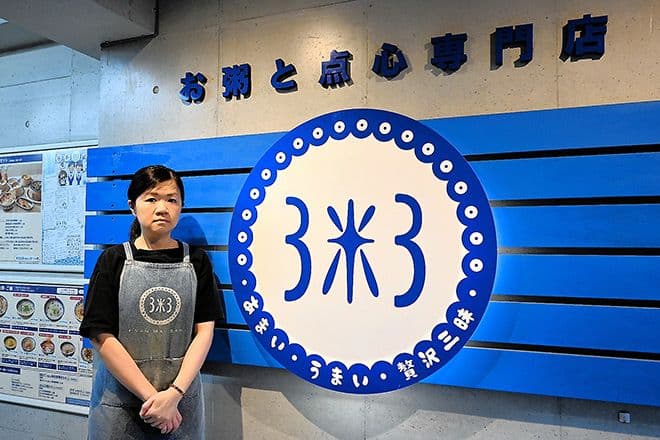
Chan Ka Yee spent years watching Japanese dramas in Hong Kong before she finally saved enough to open her own restaurant near Nerima Station in Tokyo. She launched San Mai San Nerima in August 2020, serving Hong Kong style congee to a growing base of loyal customers. Like many small business owners, she worked long hours at the counter and in the kitchen to keep costs low. She survived the pandemic, kept her staff paid through the worst months, and recently turned a profit for the first time since opening. The small dining room near the Seibu Ikebukuro Line had become a local favorite. Yet in October, the Immigration Services Agency introduced revised standards for the business manager residence status, and her dream began to collapse.
The new rules require applicants to hold 30 million yen in capital, a sixfold jump from the previous 5 million yen. Chan had invested 9 million yen to start her restaurant, a sum that already represented her life savings and years of careful planning. Faced with a financial threshold she could never meet, the 47 year old made the painful decision to close San Mai San Nerima after its final day of service on May 20. She chose to settle her affairs while her visa remained valid rather than risk rejection at renewal. She told local media that she did not want to give up easily, but she saw no path around what she described as a wall.
Chan understood that the government seeks to prevent malicious use of the business manager visa. Still, she believes business performance should carry weight in applications rather than raw capital alone. She has decided to return to Hong Kong, though she says she still believes in future possibilities and wants to prepare for what comes next. Her experience illustrates a growing tension between regulatory tightening and the practical realities of running a small, profitable restaurant in one of the most expensive cities on Earth.
Neighborhoods at Risk
The ripple effects extend far beyond a single restaurant. In Tokyo Edogawa Ward, an area known as Little India, more than half of the 8,400 Indian residents live near Nishi Kasai subway station, where Indian restaurants line every corner. These businesses serve not only Japanese diners but also a vital religious and cultural need for vegetarian meals that strictly follow religious dietary laws. The new capital requirement now threatens the survival of many of these establishments.
A 53 year old Indian man whose wife runs a nearby restaurant expressed despair over the 30 million yen figure. He explained that his wife opened the eatery three years ago with 5 million yen in capital and now records annual sales of roughly 40 million yen. Despite steady earnings, accumulating 30 million yen in liquid capital is out of reach. He warned that if foreigners cannot eat food from their home countries, they will stop coming to work in Japan, and if foreign workers disappear, it is the Japanese who will face trouble.
Jagmohan S. Chandrani, a 73 year old trading business operator who chairs the Edogawa Indian Association, has lived in Nishi Kasai since 1978 and has heard concerns from Indian and Nepalese business owners since October. He warned that many Indians rely on neighborhood restaurants for vegetarian meals that meet religious dietary rules. If those businesses disappear, he said, daily life could become unsustainable.
“Many Indians will no longer be able to continue living in Japan. The community we have built together could be lost.”
Chandrani and other community leaders fear that most nearby ethnic restaurants are in similar situations and will likely be forced to close because the owners cannot renew their residency status.
Why Japan Changed the Rules
The business manager visa, formally known as the business manager status of residence, was created to allow foreign nationals to establish and operate companies in Japan. For years, applicants needed only 5 million yen in capital, an amount that placed Japan within reach of small entrepreneurs and operations run by families. By June last year, roughly 45,000 people held this status, approximately 2.7 times the figure from a decade earlier. About half were Chinese nationals, many of whom were drawn by social media advertisements promising an easy path to residency.
However, government officials grew concerned that the program had become a back door for immigration rather than a tool for genuine entrepreneurship. Between September 2023 and December 2024, the Tokyo Regional Immigration Services Bureau investigated 300 suspected cases of misuse. Officers found irregularities in about 90 percent of them, ranging from empty offices to shell companies with no substantive business activity. In some instances, applicants listed residential apartments as business addresses, and officers arriving for inspections found no staff and neighbors who had never heard of the company.
In response, the Immigration Services Agency convened an expert panel and decided to tighten requirements. The capital floor rose to 30 million yen, and new conditions were added. Applicants must now employ at least one full time worker who is either a Japanese national or a permanent resident. Additional standards for Japanese language proficiency, business experience, or educational background now apply. The government maintains that these changes restore integrity to a system that had drifted from its original purpose of welcoming specialized professionals who could create jobs and innovation.
A Collapse in Applications
The policy shift has produced an immediate and dramatic chilling effect. According to Justice Ministry data cited in multiple reports, new applications for the business manager visa averaged about 1,700 per month during the five months before the rules tightened. In the five months after enforcement, that number fell to approximately 70 per month, representing a decline of about 96 percent. Economic security minister Kimi Onoda, who oversees policies on foreign nationals, told reporters that the sharp drop helped dispel concerns that the visa was being misused for immigration purposes, and that the system was now operating in line with its original intent.
Yet the data also reveals how few existing businesses could meet the new standard. A report from Tokyo Shoko Research noted that of roughly 143,000 corporations established in Japan in 2024, only 1 percent had capital of 30 million yen or more, while 95 percent started with less than 10 million yen. A researcher from the firm observed that the 30 million yen threshold poses a very high barrier for many business owners, and the impact is likely to be significant given the worsening business environment. A survey conducted by the same firm between late March and early April collected responses from 299 foreign run companies. It found that 45 percent expect the stricter visa conditions to affect their operations, and 5 percent are already considering closing. Among those expecting an impact, 27 percent said they would try to increase capital, while 12 percent were exploring mergers or sales, and 6 percent were weighing a transfer of management control. The survey also found that restaurant and food service businesses formed the largest share of respondents, making the sector especially exposed to disruption.
Warnings from Legal and Policy Specialists
Certified administrative procedures legal specialist Kazuhiko Yamada, whose Tokyo office supports foreign restaurateurs and exporters, said the 30 million yen requirement is extremely difficult even for Japanese citizens. His office previously handled two to three new business manager visa consultations each month, but since the revision, none have arrived. He predicted that entrepreneurs capable of raising 30 million yen would instead choose the United States or European nations, where costs are higher but profits and access to English are greater.
“The 30 million yen requirement is extremely difficult. Even among Japanese people, not many can invest that much capital. Some businesses that were profitable and doing well have already given up and gone home.”
Atsushi Kondo, a constitutional law professor at Meijo University who specializes in immigration policy, warned that the higher capital floor may fail to stop the very abuse it targets. He pointed out that people setting up shell companies often have substantial funds, meaning they can still satisfy the 30 million yen requirement while honest, hardworking small operators cannot. He argued that the system should be revised to allow legitimate business owners to continue while still screening out fraud, and that policy should focus on accepting individuals who contribute to Japanese society rather than simply pushing people out.
“Those who set up shell companies often have much money. So, even if the requirement is raised to 30 million yen, they may still be able to get around it. The visa requirement changes will eliminate honest and hardworking individuals. The system should be revised so that such people can continue running their businesses, while also allowing new entrants.”
At Osaka International Legal Office, attorney Lee Hwisa said some foreign owners have already given up and returned home, while others are scrambling to change to a different residence status. Professor Namiko Matsushita of Suzuka University, an expert on international labor mobility, said young foreigners who want to start businesses in Japan may now turn to other countries. She called for careful debate about what kind of society Japan wants to become, rather than reacting with emotion or anxiety.
Labor Shortages and Community Ties
The visa tightening arrives at a moment when Japan faces a shrinking population and a chronic labor shortage. The number of foreign workers in the country exceeded 2.5 million last year, and industries such as elderly care, transport, and hospitality depend heavily on this workforce. Nursing home operators have described foreign workers as indispensable, warning that without them the care sector would face collapse. The restaurant industry itself has already been strained by the suspension of new Specialized Skilled Worker visa applications for restaurants after the program reached its 50,000 worker cap.
Ethnic restaurants serve as more than places to eat. They form the social and cultural backbone of immigrant communities, providing familiar meals, language support, and networks that help new arrivals adjust to life in Japan. If these businesses disappear, the people who depend on them may leave, making it harder for Japanese employers in other sectors to recruit overseas talent. Chinese shop owner Ma Xiaoqing, who sells Japanese crafts in Tokyo, has said that finding a full time Japanese employee is nearly impossible amid deepening labor shortages, and that payroll costs would roughly double if she hired full time staff. Her annual sales of around 15 million yen include international exports, yet the added cost of a mandatory employee threatens her ability to remain.
A Grace Period Filled With Uncertainty
Current visa holders face a transitional window that allows renewal assessments to consider business conditions, tax payment records, and operational stability until October 2028. After that date, the capital requirement is expected to dominate renewal decisions, and companies that do not meet the threshold may face heightened scrutiny and additional documentation. While this offers temporary relief, it does not remove the expectation that sponsoring entities reach the 30 million yen threshold. The ambiguity has already pushed Chan and others to close early rather than gamble on an uncertain future.
Competing Destinations Offer Lower Barriers
As Japan raises its drawbridge, competing financial hubs are moving in the opposite direction. Hong Kong offers an entrepreneur visa that emphasizes business plans, market analysis, and operational readiness rather than a fixed minimum investment. The Singapore EntrePass framework places greater weight on capability, scalability, and intellectual property than on a substantial capital deposit. While the Singapore route does not suit traditional small businesses such as cafes, its flexible approach stands in contrast to the rigid 30 million yen floor now enforced in Japan.
A startup visa program in Japan already exists to bridge founders toward business manager status, though it involves multilayered reviews by local governments and immigration authorities and offers only a short runway. For many small operators, the first step now costs the equivalent of a house down payment, which diverts exactly the kind of founders Japan claims it wants: those who start small, integrate locally, and grow responsibly.
Key Points
- Japan raised the minimum capital for the business manager visa from 5 million yen to 30 million yen in October, alongside new staffing and language requirements.
- New visa applications plummeted by roughly 96 percent, dropping from about 1,700 per month to around 70 per month after the rules took effect.
- A survey of 299 foreign run companies found 45 percent expect negative impacts, and 5 percent are considering closure.
- Foreign restaurant owners in Tokyo Little India and other ethnic neighborhoods say they cannot meet the capital requirement despite profitable operations.
- Transitional measures allow current visa holders a grace period for renewal until October 2028, but uncertainty is already pushing some owners to close early.
- Experts warn the capital requirement may block honest small businesses while doing little to stop shell companies with deeper financial resources.
- Japan faces a labor shortage across elderly care, transport, and hospitality, making the departure of immigrant communities a broader economic concern.
- Hong Kong and Singapore offer entrepreneur routes with no fixed minimum capital, potentially drawing applicants away from Japan.