A $50,000 Monthly Role in Myanmar's Washington Push
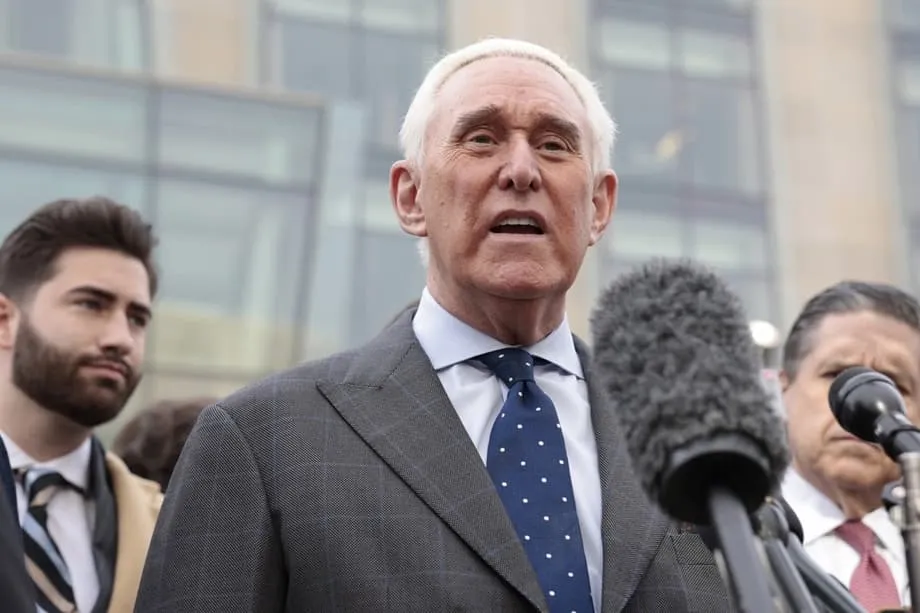
Myanmar's military authorities have hired Roger Stone, a longtime confidant of President Donald Trump, through a $3 million lobbying contract aimed at rebuilding relations with the United States. Disclosures under the United States Foreign Agents Registration Act show that Stone receives $50,000 a month to provide public affairs services for Myanmar's Ministry of Information through DCI Group, a firm based in Washington.
Contents
- A $50,000 Monthly Role in Myanmar's Washington Push
- What the Contract Sets Out to Achieve
- Why Stone's Relationship With Trump Matters
- Rights Groups Challenge the Lobbying Campaign
- DCI Group Has Worked for Myanmar's Generals Before
- How the Earlier Transition Left Military Power Intact
- The Dates Behind the Latest Campaign
- Sanctions and Resource Access Limit the Offer
- Cybercrime and China Complicate a US Opening
- What the Lobbying Effort Can Change
- What to Know
The arrangement grows out of a contract that Naypyidaw signed with DCI Group in July 2025. Its stated priorities are trade, natural resources and humanitarian relief. For the generals, the campaign offers a possible route back into Washington after the February 1, 2021 coup brought civil war, the suppression of civil liberties and sweeping Western sanctions.
Stone's connection to Trump is central to the political appeal of the appointment. The Republican operative, now 73, has maintained a relationship with the president spanning four decades, serving at different times as an adviser, confidant and strategist. Myanmar's authorities appear to be counting on that relationship to open doors that have remained closed to a government accused of widespread atrocities.
The lobbying effort also coincides with another attempt to change the regime's public image. Tightly controlled elections recently delivered victory to military allies while excluding the National League for Democracy, the party of Aung San Suu Kyi. Shortly afterward, coup leader Min Aung Hlaing shed his uniform and had himself appointed president. Critics describe the change as a civilian appearance covering continued military domination.
What the Contract Sets Out to Achieve
DCI Group registered its work for Myanmar last year and has now brought Stone into the effort as a consultant. Department of Justice disclosures describe a mission to rebuild relations between the Republic of the Union of Myanmar and the United States, with particular attention to commerce, resource development and humanitarian assistance.
Stone's monthly payment is part of that broader arrangement. At $50,000 a month, the rate would amount to $600,000 over 12 months, one fifth of the stated $3 million contract value. The figures show the scale of the spending on his services, although the monthly rate alone does not give the total amount he will receive.
The ministry directing the engagement matters. The Ministry of Information is closely connected to the military's propaganda apparatus. Placing the contract there, rather than through a civilian trade ministry, points to an effort to shape political perceptions in Washington alongside the stated economic and humanitarian goals.
The Foreign Agents Registration Act, enacted in 1938 to combat foreign propaganda campaigns, requires people representing foreign interests before the United States government to disclose their activities and compensation. Those disclosures make the relationship between DCI Group, Stone and Myanmar's authorities a matter of public record. Here, the practical purpose of the filings is to show who is acting for the foreign client and how the work is being paid for.
Why Stone's Relationship With Trump Matters
Stone brings decades of Republican political experience and a reputation as a firebrand conservative activist. His longstanding rapport with Trump gives the junta a potential channel to a president whose decisions can shape American diplomatic policy. The hope is that personal access can help soften Washington's position toward Myanmar's military leadership.
Stone's own history includes a criminal conviction and presidential clemency. In 2019, he was convicted of obstructing a congressional investigation into whether Trump's campaign colluded with Russia during the 2016 election. He received a prison sentence of 40 months but served no time after Trump granted him clemency in 2020.
Hunter Marston, director for Southeast Asia at the Lowy Institute in Sydney, noted that it is unclear whether Myanmar's authorities sought out Stone personally or whether DCI Group hired him because of his strong relationship with Trump. That leaves the origin of his selection unresolved, even though the financial arrangement and its stated objectives are disclosed.
Few observers expect the appointment to produce a major diplomatic breakthrough. Stone's access is only one part of the problem facing the junta. United States sanctions, allegations of grave abuses and the military's loss of territory all complicate efforts to turn political contact into a workable relationship.
Rights Groups Challenge the Lobbying Campaign
Justice for Myanmar, a civil society organization that tracks military abuses, condemned Stone and DCI Group for profiting from a heavily sanctioned junta. The organization accuses the military of committing war crimes and crimes against humanity with total impunity, and argues that promoting its interests helps sustain repression.
The group's objection reaches beyond the lobbying fees. It says the junta has illegally seized enterprises owned by the state in the natural resource sector and uses their income to pay for attacks across the country. Trade and resource development, two of the contract's stated priorities, therefore sit at the center of its criticism.
Justice for Myanmar described Stone's involvement and the connection it sees between resource revenue and military violence in the following statement:
Roger Stone has joined this contract with international criminals, which benefits natural resource enterprises owned by the state and sanctioned by the United States that the junta has illegally seized and is using to fund its widening attacks against schools, churches, monasteries and hospitals.
The Independent Investigative Mechanism for Myanmar, a United Nations body established by the Human Rights Council, warned in 2024 that substantial evidence existed of war crimes and crimes against humanity committed by Myanmar's military since the coup. Its warning provides an institutional basis for concerns about abuses that extend well beyond the dispute over lobbying.
United Nations figures indicate that more than 7,700 civilians have been killed since the 2021 takeover, while tens of thousands have been arrested. Conflict monitors recorded more than 450 deaths from air and drone strikes in March 2026 alone, the highest monthly toll since resistance to the coup began.
The military says its operations target terrorists seeking to destabilize Myanmar. Independent monitors describe widespread and indiscriminate violence. Those competing descriptions are central to the junta's effort to present itself as a government restoring order, and to the objections raised by people documenting the civilian cost.
DCI Group Has Worked for Myanmar's Generals Before
DCI Group's involvement repeats an earlier relationship. Myanmar's military intelligence hired the same firm in 2002, when the generals were trying to repair their image in Washington and present themselves as moderate reformers. The current campaign draws on a familiar approach: seek outside help to make military rule more acceptable to foreign governments.
That earlier effort helped prepare the ground for a decade of diplomatic engagement. Secretary of State Hillary Clinton visited Myanmar, followed by President Barack Obama, who in 2012 became the first sitting American president to visit the country. Obama praised the reforms as remarkable, and President Thein Sein visited the White House the following year.
Many activists now view that period of optimism as a transition confined by military power. The army retained decisive authority even while elected politicians gained a larger public role. The February 2021 coup ended the remaining hopes attached to that arrangement and restored direct military control.
Myanmar's generals had pursued image campaigns well before DCI Group's first engagement. After the military killed thousands of protesters demanding democracy during the 1988 uprising, severe Western isolation followed. The authorities responded in part with Visit Myanmar Year in 1996, promoting tourism and cultural heritage while forced labor, political imprisonment and abuses in ethnic areas continued.
The regime also produced propaganda for foreign audiences, including books defending military rule and portraying foreign criticism as hostility toward Myanmar itself. Across these campaigns, the recurring aim was to make reform appear believable while preserving the army's control behind the public presentation.
How the Earlier Transition Left Military Power Intact
The period from 2011 to 2021 shows why the latest civilian presentation faces skepticism. The National League for Democracy won a landslide election victory in 2015 and formed a government, but the military continued to control the Defense, Home Affairs and Border Affairs ministries.
The army also held a constitutional veto through an unelected bloc of soldiers in parliament. In practical terms, elected representatives could take office while the military retained the ability to block constitutional changes and control ministries responsible for key parts of the security system.
Daw Aung San Suu Kyi had to swear to uphold the 2008 constitution, which preserved military power, simply to enter parliament. Critics describe this arrangement as a mirage of political change because civilian participation operated within limits set by the army.
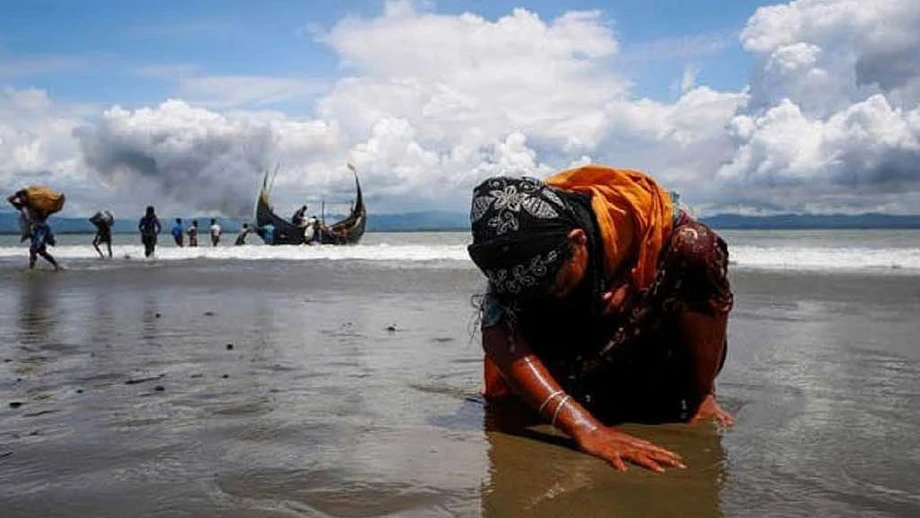
Conflict continued during that transition. The Kachin war resumed in 2011, northern Shan State experienced repeated heavy clashes, and violence engulfed Rakhine State. In 2017, a scorched earth campaign against the Rohingya drove more than 700,000 people into Bangladesh.
A survey by Doctors Without Borders found that at least 6,700 Rohingya were killed in the first month of that campaign alone. The scale of displacement and killing is part of the history behind Washington's sanctions and the continuing international scrutiny of Myanmar's military.
Soe Thane, a key minister under Thein Sein who was widely viewed by diplomats as a reformer, later expressed support for the coup. In a book about the National League for Democracy years, he described Min Aung Hlaing's takeover as a very smart move and said Myanmar's independence had been restored that day. His position illustrates why critics question assurances of reform from figures tied to the military.
The Dates Behind the Latest Campaign
The Stone appointment follows decades of military rule, attempted diplomatic openings and renewed repression. The key dates connect the current contract to earlier efforts to gain international acceptance:
- 1988: The military killed thousands of protesters demanding democracy and faced severe Western isolation.
- 1996: Visit Myanmar Year promoted tourism and cultural heritage while abuses continued.
- 2002: Myanmar's military intelligence hired DCI Group to help improve its standing in Washington.
- 2008: The constitution preserved military powers that later constrained the elected government.
- 2011: The Kachin war resumed as the period of political opening began.
- 2012 and 2013: Obama visited Myanmar in 2012, and Thein Sein visited the White House the following year.
- 2015: The National League for Democracy won a landslide election victory.
- 2017: The military campaign against the Rohingya drove more than 700,000 people into Bangladesh.
- February 1, 2021: The military overthrew the elected government of Aung San Suu Kyi.
- 2024: The United Nations investigative mechanism warned of substantial evidence of war crimes and crimes against humanity since the coup.
- July 2025: Naypyidaw signed the $3 million contract with DCI Group.
- March 2026: Conflict monitors recorded more than 450 deaths from air and drone strikes.
By May 8, 2026, the lobbying campaign was unfolding alongside the recent controlled elections and Min Aung Hlaing's appointment as president. The political presentation had changed, while military allies retained power and Suu Kyi's party remained excluded from the election process.
Sanctions and Resource Access Limit the Offer
The United States has imposed multiple layers of sanctions on Myanmar's top military leaders and their associates. Those measures respond both to the coup and to the alleged genocide against the Rohingya Muslim minority, which is the subject of a case before the International Court of Justice.
Stone's assignment therefore involves more than arranging meetings or improving the junta's image. Restoring economic ties would require Washington to deal with restrictions already placed on military leaders and related interests, as well as the conduct that prompted those restrictions.
Myanmar's rare earth resources offer one possible attraction for American engagement, but much of that wealth lies in conflict zones outside reliable military control. Rare earths are a group of mineral resources; in this case, the immediate political issue is who controls the territory where they are mined.
Discussions about access to those resources have reportedly included proposals involving the Kachin Independence Army because the military has lost large parts of the mining territory near the border. The junta's ability to promise resource access is therefore constrained by its position on the battlefield.
The gap between what the regime wants to sell politically and what it controls on the ground makes a deal harder to build. A ministry can hire representatives in Washington, but the military's territorial losses affect its capacity to carry out the trade and resource commitments at the heart of the lobbying mission.
Cybercrime and China Complicate a US Opening
Cooperation against transnational cybercrime presents another difficulty. The United States Treasury has designated the Karen National Army and its leader, Saw Chit Thu, for facilitating cyber scams, human trafficking and smuggling.
Treasury says the group provides security at scam compounds and leases land to criminal organizations. Saw Chit Thu remains part of the border order aligned with the junta and has previously received honors from Min Aung Hlaing. Those connections complicate any attempt to present the military leader as a useful partner against the criminal networks operating along Myanmar's borders.
China is another obstacle to the diplomatic pitch. In 2021, the junta hired Ari Ben-Menashe, a lobbyist holding Israeli and Canadian citizenship, to promote the claim that the generals wanted to move toward the West and away from Beijing. The current effort follows that earlier attempt to frame engagement with the military as a strategic opportunity for Washington.
Min Aung Hlaing relies heavily on Beijing for diplomatic cover, weapons and political survival. That dependence weakens the argument that bringing the junta closer to the United States would produce a dependable shift away from China.
Myanmar's location near China may attract strategic attention, but the military's domestic position remains central to any proposed partnership. The regime lacks control over large parts of the country and sufficient legitimacy to end the conflict unleashed by its takeover. Those limitations affect its ability to deliver on promises about resources, security and political stability.
What the Lobbying Effort Can Change
The $3 million campaign gives Myanmar's military authorities a paid presence in Washington and a consultant with a longstanding connection to Trump. Its goals bring together diplomatic recognition, commercial interests and humanitarian relief, while the recent elections and presidential appointment offer a new public presentation of military leadership.
Human rights groups see the same effort as an attempt to gain acceptance and economic opportunities for a regime accused of grave crimes. Sanctions, civilian deaths, the Rohingya case, relationships with border forces linked to cybercrime and dependence on China all remain part of the decisions facing Washington.
The central challenge is practical as well as political. Stone may help secure attention, but attention alone cannot restore territory the military has lost or give the junta reliable control over resources and border security. The appointment puts the generals' case closer to American political power while leaving the main obstacles to a durable relationship in place.
What to Know
- Roger Stone receives $50,000 a month through DCI Group for public affairs work for Myanmar's Ministry of Information.
- The appointment is part of a $3 million contract signed in July 2025 to rebuild United States ties, focusing on trade, natural resources and humanitarian relief.
- Stone has known Trump for four decades and received clemency in 2020 after a 2019 conviction and a prison sentence of 40 months.
- Justice for Myanmar accuses the lobbying effort of benefiting military controlled resource enterprises that fund attacks on civilian sites.
- United Nations figures indicate more than 7,700 civilian deaths since the 2021 coup. Conflict monitors recorded more than 450 deaths from air and drone strikes in March 2026.
- Recent controlled elections excluded Suu Kyi's party and were followed by Min Aung Hlaing's appointment as president.
- Sanctions, territorial losses, cybercrime connections and reliance on China limit the junta's prospects for a breakthrough in Washington.