Billions in Computing Investment Meet a Tight Power Supply
India's data center capacity is projected to rise from 1.5 gigawatts to 13.2 gigawatts by 2032, according to estimates from the Ministry of Electronics and Information Technology. That is almost nine times today's capacity, bringing a vast new electricity requirement to a country already facing power cuts and delays in building transmission lines.
Contents
- Billions in Computing Investment Meet a Tight Power Supply
- Why AI Requires So Much Electricity
- Mumbai Shows the Pressure of Concentrated Demand
- Transmission Lines Are Falling Behind
- Why Solar Power Can Be Wasted While Nights Face Shortages
- Can Moving Beyond Major Cities Ease the Strain?
- Electricity and Water Concerns Extend Beyond India
- Companies Turn to Dedicated Power and Liquid Cooling
- Storage and Fast Generation Must Cover the Gaps
- Planning Power Before Building Data Centers
- The Dates and Targets Shaping the Expansion
- Key Points
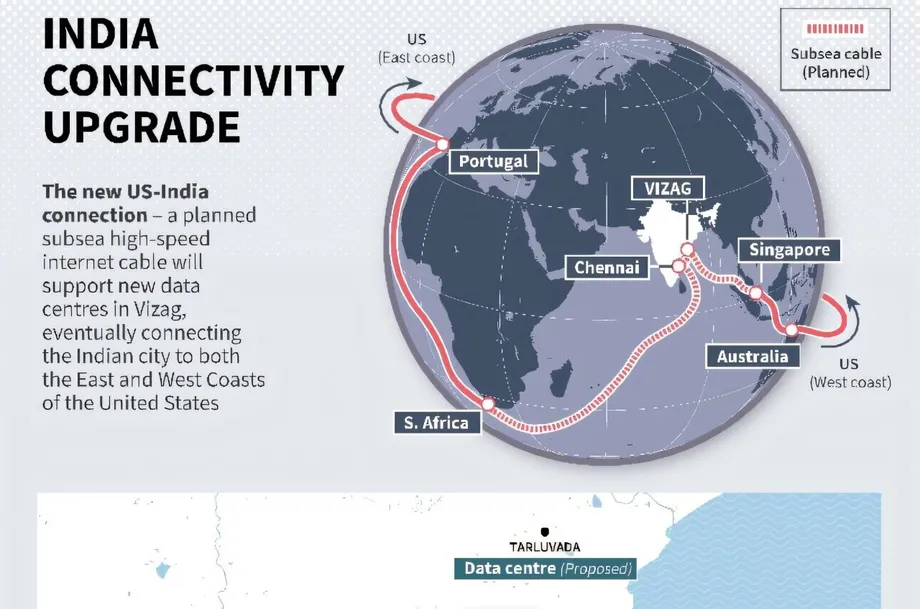
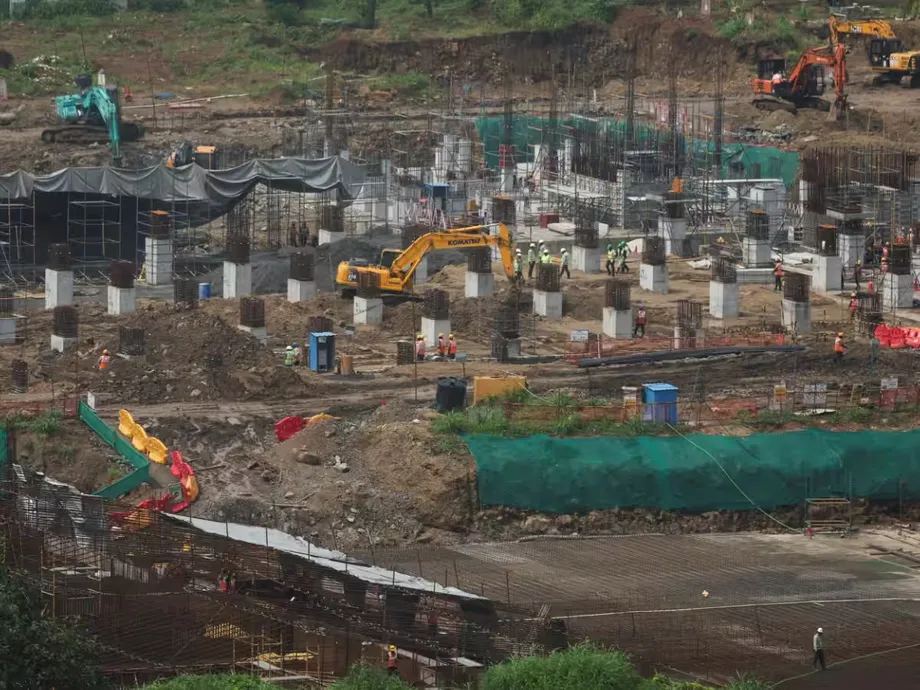
Amazon Web Services has pledged US$12.7 billion for cloud computing facilities in Mumbai and Hyderabad. Google has announced US$15 billion for an artificial intelligence hub in Visakhapatnam, described as the country's largest technology investment to date. Global technology companies and Indian conglomerates are competing for a place in one of the world's fastest growing digital economies.
India's 800 million internet users and accelerating adoption of artificial intelligence are driving demand for computing. Geopolitical tensions in the Middle East are also encouraging clients based in the Gulf and global hyperscalers, companies operating computing infrastructure on a vast scale, to diversify their facilities away from conflict zones.
Sunil Gupta, chief executive of Yotta Data Services, reported a sharp rise in inquiries since March. Companies seeking to revise their infrastructure strategies to maintain business continuity were asking about capacity ranging from 200 to 500 megawatts.
India currently has approximately 270 data centers, accounting for roughly 0.5 percent of national electricity generation. Their share is expected to reach 3 percent by 2030. The national percentage tells only part of the story: facilities concentrated in a few cities can place much greater pressure on local networks than their share of India's total electricity suggests.
The central challenge is matching the speed of digital investment with the supply of reliable electricity. Servers and cooling systems run continuously, while power generation, transmission capacity and urban demand change throughout the day.
Why AI Requires So Much Electricity
A facility focused on AI that consumes 100 megawatts requires as much electricity as approximately 100,000 American households or nearly 750,000 Indian households. The difference reflects lower average household electricity consumption in India.
Data centers draw power 24 hours a day to operate servers and specialized cooling equipment. Traditional industrial demand can change with production cycles. Computing facilities create a persistent requirement for electricity, giving grid operators little relief from their underlying demand.
AI adds to that requirement because its calculations require much more computing work than traditional cloud storage or web hosting. Narendra Sen, founder of AI cloud service provider NeevCloud, described how growing use could multiply electricity consumption:
Data centres are very power hungry and consume more electricity than many of our cities. As more people are using AI now, more queries mean more analyses and that will translate into 20 to 30 times more power consumption in the future,
The International Energy Agency says data centers consumed more than 4 percent of US electricity in 2024, a share that could more than double by 2030. The American grid generates approximately 4,500 terawatt hours annually, compared with India's 1,900 terawatt hours. A terawatt hour measures an amount of electricity used or generated over time, while a megawatt or gigawatt measures power at a particular moment.
India therefore has a much smaller electricity supply into which new computing demand must fit. A parliamentary panel warned in March that concentrated demand in data center clusters could strain transmission infrastructure and threaten clean power ambitions. Many regional grids still depend heavily on coal generation to meet their continuing electricity needs.
Mumbai Shows the Pressure of Concentrated Demand
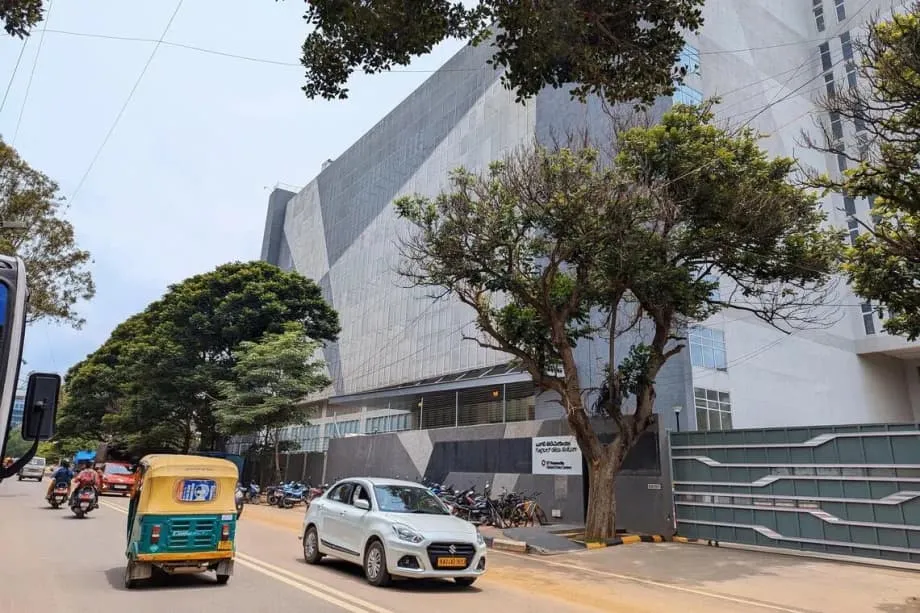
Mumbai, India's busiest data center hub, has 61 operational sites serving global companies including Amazon, Google and Microsoft. They draw electricity from the same grid supporting 20 million commercial and residential users.
By 2030, data centers could consume a third of the electricity produced in the city, according to current projections. Without enough additional supply and network capacity, this concentration creates competition between computing infrastructure and ordinary urban electricity needs.
Indian authorities already struggle to maintain consistent electricity supply in many cities and towns. Regular power cuts affect daily life. In April, before peak summer conditions arrived, grid operators recorded national shortages at night of up to 5.4 gigawatts.
Electricity demand rose from 215,832 megawatts on April 1 to a record 256,117 megawatts on April 25. That was an increase of 40,285 megawatts, or approximately 18.7 percent, within the month. Deficits appeared during evening hours, when solar generation falls but demand for cooling remains high.
Indian Energy Exchange data show how the mismatch affects prices. Abundant solar generation during daylight hours pushed electricity prices down to 1.5 rupees per unit. After sunset, spot prices reached the regulatory ceiling of 10 rupees per unit, nearly seven times the daytime level.
Data centers need uninterrupted power to avoid costly service disruptions. The gap between cheap daytime electricity and expensive evening electricity therefore affects both operating costs and reliability. An electricity system must serve the facilities through every hour, including periods when solar panels stop producing.
Transmission Lines Are Falling Behind
Grid India, the national grid operator, has warned about sudden withdrawals of 1 to 2 gigawatts by data center systems using inverters, equipment that converts electricity between different forms. An abrupt loss of demand can upset the balance between generation and consumption, just as an abrupt increase can.
Large computing clusters can create rapidly changing loads and require connections directly to the transmission network. India's grid was designed around traditional consumption patterns, rather than the sudden disconnections, described as silent exits, and rapid changes in demand associated with these facilities.
Transmission and distribution upgrades have been pursued since 2024, but implementation delays have slowed expansion. Only 42 percent of a target of 15,253 circuit kilometers of transmission lines have been commissioned. The completed infrastructure includes just 3,253 circuit kilometers of interstate lines. Circuit kilometers measure the length of electrical circuits installed along transmission routes.
Those missing connections limit the movement of electricity from renewable generation hubs such as Gujarat and Rajasthan to demand centers such as Visakhapatnam, where Google is building its AI hub. Adding power plants helps only when the network can carry their electricity to the places that need it.
Why Solar Power Can Be Wasted While Nights Face Shortages
India added more than 50 gigawatts of renewable energy capacity in fiscal year 2025-26. Yet approximately 2.3 terawatt hours of solar electricity went unused because of curtailment, when operators reduce generation because the system cannot absorb or transport it.
Coal plants provide steady electricity but cannot reduce their output below 55 percent of their load during sunny afternoons. When solar generation is abundant and coal output cannot fall far enough, grid operators can be forced to discard clean electricity.
Sunset then brings the opposite problem. Solar supply drops as cooling demand remains high, creating the solar cliff described in the electricity system. A growing number of facilities operating continuously adds demand on both sides of that daily change.
India's difficulty is therefore about more than the amount of generating capacity installed. Transmission lines, storage and power plants capable of changing output quickly must work together to deliver electricity when it is needed. Otherwise, daytime renewable surpluses can coexist with shortages after dark.
Can Moving Beyond Major Cities Ease the Strain?
Hyderabad, Delhi-National Capital Region, Bengaluru and Chennai are among the established centers now facing severe power and water constraints. Operators are discussing new facilities 100 to 200 kilometers away from these hubs.
Vibhuti Garg, director for South Asia at the Institute for Energy Economics and Financial Analysis, explained why companies chose the existing locations and why their plans are changing:
These locations were picked for their nearness to undersea fibre cables that transfer data, especially for offshore clients like hyperscalers. These cities also have the availability of good talent. But given that they are high demand areas, there is now a lot of discussion about moving the new data centres 100-200km away,
NeevCloud has established AI computing centers in Indore and Raipur. These central Indian cities offer adequate land parcels and locations in zones with low seismic risk. The facilities purchase renewable electricity from nearby states at rates 30 percent cheaper than metropolitan grid power.
Industry leaders are also scouting inactive mines in central India for underground data centers, where natural cooling could reduce electricity consumption. CapitaLand Investment is developing four data centers across Mumbai, Hyderabad, Chennai and Bengaluru, with plans to double capacity to 500 megawatts by 2030. It is evaluating nearby corridors where fiber connectivity has matured.
Smaller cities have their own constraints. Areas outside major metropolitan hubs lack sufficient transmission infrastructure for computing clusters requiring gigawatts of power, and state electricity distribution companies have struggled to keep pace with rising demand.
Corporate power purchase agreements provide a partial answer by allowing businesses to buy renewable electricity directly from generators. The electricity still needs a route to the customer. Transmission limits can therefore restrict these agreements as well as ordinary grid supply, meaning a move to a new location can transfer the pressure rather than resolve it.
Electricity and Water Concerns Extend Beyond India
Residents near a Microsoft data center in Mexico have reported increased power cuts and water outages lasting weeks. The disruption has led to school cancellations and health clinics operating by flashlight.
In Ireland, data centers consume more than 20 percent of national electricity supply. In Chile, cooling demands are putting pressure on aquifers, underground stores of water. Similar concerns have surfaced in Brazil, Britain, Malaysia, the Netherlands, Singapore and South Africa.
These cases share a conflict between the resources required by computing infrastructure and the electricity and water needed by nearby populations. Researchers at the Pahle India Foundation expressed that concern in a March 2026 analysis:
The lights cannot afford to dim for a billion people so that the tech cloud stays bright for the few.
The concern has ethical and political dimensions. Global corporations and urban elites can receive the benefits of AI while ordinary citizens bear environmental costs and unreliable services. India's electricity consumption per person remains a fraction of that in developed nations, and residential and agricultural users still lack reliable electricity for basic needs and irrigation.
The United States has greater room to accommodate growth through large investments and distribution of facilities across multiple states and climate zones. India's infrastructure operates closer to its physical and economic limits, making the allocation of dependable supply especially consequential for existing consumers.
Companies Turn to Dedicated Power and Liquid Cooling
Reliance Industries and AdaniConneX are moving toward dedicated clean energy plants for their facilities. Such projects can reduce dependence on the public grid, although the wider electricity system still has to accommodate the connections and changing supply.
Iron Mountain Data Centers has partnered with CleanMax Enviro Energy Solutions to supply 32 million kilowatt hours of hybrid solar and wind electricity annually to its Mumbai, Pune and Bengaluru locations. The arrangement increases its renewable share to 75 percent under a group captive model, in which participating businesses share ownership of generation used for their electricity needs.
Cooling accounts for approximately 39 percent of a data center's power consumption, while servers account for 41 percent. Those figures make cooling a major opportunity to reduce the resources required to operate computing equipment.
CapitaLand Investment has introduced direct-to-chip liquid cooling, which brings coolant directly to heat producing chips instead of relying only on cooling the surrounding air. The technology reduces water consumption by 30 to 40 percent and allows rack density to increase from 75 kilowatts per rack to 110-120 kilowatts.
A rack holds computing equipment. Supporting more power within each rack helps accommodate AI deployments, while the cooling approach reduces dependence on traditional water cooling methods. Efficiency improvements address part of the demand challenge alongside investments in additional electricity supply.
Storage and Fast Generation Must Cover the Gaps
India currently operates only 1,082 megawatt hours of battery storage capacity. The government has approved 43 gigawatt hours under viability gap funding, financial support intended to help projects become commercially viable.
Storage capacity measures how much electricity a battery can hold, rather than how much power it can deliver at once. Batteries can store electricity during periods of abundant generation and release it when supply falls, helping connect daytime renewable output with demand after sunset.
For flexibility over longer periods, experts recommend modern gas engines that use pistons to generate electricity. These reciprocating engines can reach full output in less than five minutes and operate efficiently during short periods when the system needs balancing.
Unlike traditional coal or combined cycle gas plants, these engines can run on sustainable fuels such as green hydrogen, offering a transition toward generation without carbon emissions. Their ability to respond quickly addresses a different need from the steady output provided by conventional plants.
Storage, flexible generation and transmission upgrades address connected problems. More renewable generation supplies electricity, storage shifts some of it to another time, and transmission carries it to the customer. Facilities operating continuously require that whole chain to function.
Planning Power Before Building Data Centers
Krishna V. Giri and Payal Seth, fellows at the Pahle India Foundation, argue that voluntary corporate measures are insufficient to prevent grid instability. They have called for mandatory rules requiring energy self-sufficiency for data centers above defined capacity thresholds.
Their proposal also calls for dedicated data center zones planned together with transmission upgrades. Coordinating those investments would address the inefficiencies and rising consumer tariffs associated with expansion that proceeds without a matching electricity plan.
Research on data center growth in Asia Pacific calls for power to guide location and design decisions from the beginning. The approach combines renewable generation at facilities, utility green tariffs, long term power purchase agreements and systems that shift computing workloads to periods when renewable electricity is abundant.
The same research projects regional data center electricity consumption growing more than fivefold, from under 200 terawatt hours in 2025 to over 1,000 terawatt hours by the mid-2030s. That scale makes early coordination between electricity suppliers, network planners and computing companies essential.
India's government has offered foreign cloud service providers a tax holiday lasting 20 years until 2047. Tamil Nadu and Andhra Pradesh are among states offering discounted power tariffs and capital subsidies. Those incentives risk accelerating construction faster than electricity infrastructure can adapt.
Surajit Chatterjee, CapitaLand Investment's managing director and head of Data Centre India, said sustainability is becoming a mandate for environmental and operational reasons. Meeting it requires industry bodies and government agencies to coordinate so that data center requirements are included in evolving renewable energy policies.
The Dates and Targets Shaping the Expansion
India's immediate electricity pressures and its computing ambitions unfold across several deadlines. As of May 8, 2026, the central question is how construction, electricity supply and transmission upgrades will progress together.
- Since 2024: Transmission and distribution upgrades have faced implementation delays.
- March 2026: A parliamentary panel warned about concentrated data center demand, and the Pahle India Foundation examined the risks to ordinary electricity consumers.
- April 1 to April 25, 2026: National demand rose from 215,832 megawatts to a record 256,117 megawatts, with shortages at night of up to 5.4 gigawatts during April.
- By 2030: Data centers are expected to account for 3 percent of India's electricity generation; Mumbai's facilities could consume a third of electricity produced in the city; CapitaLand plans capacity of 500 megawatts.
- By 2032: The ministry projects Indian data center capacity of 13.2 gigawatts, compared with 1.5 gigawatts today.
- By the mid-2030s: Asia Pacific data center electricity consumption is projected to exceed 1,000 terawatt hours.
- Until 2047: The government's announced tax holiday extends to foreign cloud service providers.
No implementation date or capacity threshold was given for the proposed mandatory energy self-sufficiency rules. The companies' investments and national capacity projections set out the scale of expansion, while the transmission delays and April shortages show the electricity pressures already requiring attention.
Key Points
- India's data center capacity is projected to grow almost ninefold, from 1.5 gigawatts to 13.2 gigawatts by 2032.
- Amazon Web Services has pledged US$12.7 billion for facilities in Mumbai and Hyderabad; Google has announced US$15 billion for an AI hub in Visakhapatnam.
- Mumbai's 61 operational data centers could consume a third of the city's electricity production by 2030.
- Only 42 percent of the targeted 15,253 circuit kilometers of transmission lines have been commissioned.
- India added more than 50 gigawatts of renewable capacity in fiscal year 2025-26, while approximately 2.3 terawatt hours of solar electricity went unused.
- Companies are pursuing new locations, dedicated clean power and liquid cooling, but smaller cities also face transmission constraints.
- Policy proposals call for energy self-sufficiency requirements and data center zones coordinated with electricity network upgrades.