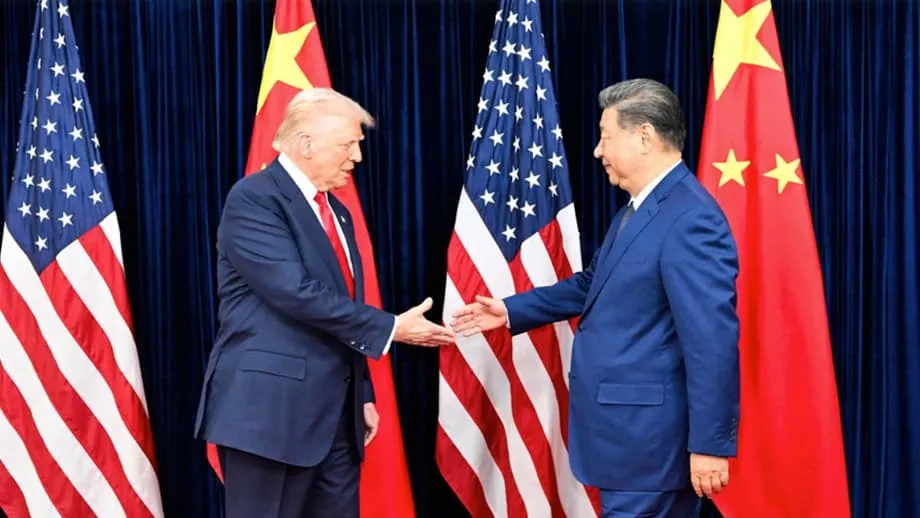
Two Days in Beijing, With Iran at the Center
President Donald Trump and Chinese President Xi Jinping are scheduled to meet in Beijing on May 14 and 15, with Chinese purchases of Iranian oil threatening to complicate efforts to extend the trade truce their governments signed last October. The summit was originally scheduled for late March but was postponed so the White House could focus on the escalating war in Iran.
Contents
- Two Days in Beijing, With Iran at the Center
- Sanctions Meet China's Blocking Rules
- Iran Seeks Reassurance as the Summit Approaches
- Farm Purchases, Aircraft and a Board of Trade
- Rare Earths Keep Pressure on Industry
- Taiwan Is Beijing's Central Security Demand
- AI Chips and Oil Reserves Enter the Bargaining
- Jimmy Lai and the Politics of the Welcome
- Three Possible Outcomes for the Meeting
- Key Points
As of May 8, preparations are under way for the first visit to China by an American president since Trump traveled there in November 2017 during his first term. The agenda stretches from agricultural purchases and a possible major Boeing order to Taiwan arms sales, artificial intelligence restrictions and the imprisonment of Hong Kong media tycoon Jimmy Lai.
Washington wants to preserve the fragile trade agreement. Beijing wants to prevent a further decline in relations that could damage an economy heavily dependent on exports. Both governments are approaching the meeting with limited expectations, even as tensions over technology, trade and sovereignty create several opportunities for disagreement.
The Iran war has made those negotiations harder. American officials want Chinese cooperation over Iranian oil purchases and reopening the Strait of Hormuz, while China needs reliable energy supplies and wants to avoid appearing to act at Washington's direction.
Jamieson Greer, the United States Trade Representative, said in an interview this week that Washington wants the oil dispute contained so it does not disrupt the wider relationship or possible agreements in Beijing.
We are looking for stability with China. We do not want this to be something that derails the broader relationship, or any agreements that might come out of our meeting in Beijing.
Greer also acknowledged serious American objections to Chinese purchases of Iranian crude. Washington argues that the oil revenue funds terrorism sponsored by the Iranian state. The challenge for the summit is to address that dispute while keeping economic negotiations moving and reducing the risk of a dangerous miscalculation between the two powers.
Sanctions Meet China's Blocking Rules
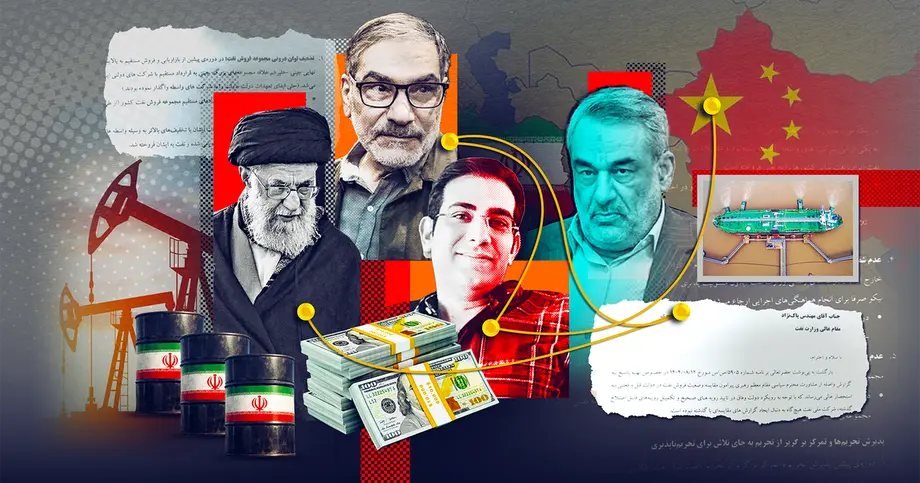
On April 28, the United States Treasury Department's Office of Foreign Assets Control warned financial institutions about the risk of secondary sanctions involving China's independent refineries, often called teapot refineries. These facilities are accused of processing hundreds of millions of barrels of Iranian crude each year.
Secondary sanctions extend pressure beyond the sanctioned country. In this case, a financial institution or business dealing with targeted Iranian oil transactions could itself face American penalties. Washington describes the purchases as financial support for a government it designates as the world's leading state sponsor of terrorism.
China's small independent refineries provide an opaque route for Iranian oil to move around international restrictions. Recent data put the crude handled through these channels at roughly 13 percent of China's total oil imports, giving the dispute substantial weight in China's energy supply.
On May 2, China's Ministry of Commerce invoked its Blocking Rules against American sanctions on five mainland refineries, including Hengli Petrochemical. The regulation says the United States measures, including asset freezes and transaction bans, shall not be recognized, enforced or complied with within Chinese jurisdiction.
Beijing's unprecedented use of the rules creates a direct legal confrontation over sanctions reaching beyond American territory. Washington is telling companies they risk punishment for certain transactions, while Beijing is instructing those within its jurisdiction not to comply with the American restrictions.
Marco Rubio, the United States Secretary of State, warned that Washington would enforce its measures against those who disregard them.
If you ignore our sanctions, you are going to face secondary sanctions. We do not do these things for symbolic purposes.
American officials nevertheless remain wary of allowing the Iranian oil dispute to derail a broader diplomatic reset. The United States and China depend on each other economically, and both face costs if this clash spreads into other areas of trade.
Iran Seeks Reassurance as the Summit Approaches
Iranian Foreign Minister Abbas Araghchi visited Beijing this week to brief Chinese leaders on negotiations with Washington mediated by Pakistan. His visit signals Tehran's concern that China could exchange support for Iranian interests for trade concessions from Trump.
China has privately urged Iran to consider peace deals while publicly condemning American tactics in the Strait of Hormuz as dangerous. That position gives Beijing room to support negotiations while continuing to challenge Washington's handling of the conflict.
Nearly half of China's imported oil travels through the Persian Gulf. Xi therefore faces pressure to secure those energy flows, even while resisting the appearance that China is carrying out Trump's wishes in the region. The combination of dependence on Gulf oil and purchases from Iran makes the war central to Beijing's calculations.
The events leading to the summit show how quickly the trade agenda has become entangled with the conflict:
- Last October: Washington and Beijing signed the trade truce the United States now wants to extend. Trump also raised Jimmy Lai's case during his meeting with Xi in Busan.
- Last December: The United States approved an $11 billion arms package for Taiwan.
- Late March: The Beijing summit was originally scheduled to take place, before being postponed because of the Iran war.
- April 28: The Treasury Department warned about secondary sanctions involving Chinese independent refineries buying Iranian crude.
- May 2: China's Ministry of Commerce invoked its Blocking Rules against sanctions on five mainland refineries.
- The week of May 8: Araghchi visited Beijing to discuss the negotiations mediated by Pakistan.
- May 14 and 15: Trump and Xi are scheduled to meet in Beijing.
Farm Purchases, Aircraft and a Board of Trade
American and Chinese officials have spent months developing a proposed Board of Trade mechanism to identify products that could increase commerce without putting national security or critical supply chains at risk. The aim is to find areas where more buying and selling can proceed despite disputes elsewhere.
Proposals include Chinese purchases of American poultry, beef and crops other than soybeans. A possible commitment to buy 25 million metric tons of soybeans annually for the next three years would amount to 75 million metric tons across that period.
China and Boeing have also discussed an order for 500 737 MAX jets and dozens of widebody aircraft, according to industry sources. Such a deal would be China's first major Boeing purchase in nearly a decade and one of the most visible possible results of the summit.
A large aircraft order would give Trump a concrete economic achievement to promote before November's midterm elections. Agricultural commitments would provide another way for the White House to show that the negotiations are producing purchases of American goods.
Beijing has already restarted imports of approximately 600,000 barrels of American crude oil per day. Those supplies offer a partial alternative to Iranian oil while helping address American concerns about the trade imbalance between the two countries.
The purchases and aircraft discussions remain part of a wider effort to demonstrate stability. The Board of Trade proposal is intended to create practical channels for commerce while the governments continue to disagree over security, technology and foreign policy.
Rare Earths Keep Pressure on Industry
China's dominance in global production of rare earth metals gives Beijing considerable influence over manufacturing supply chains. These materials are essential to American automotive, aerospace and defense production, making access to them a concern well beyond the trade balance.
Beijing's recent export controls on critical minerals have caused widespread disruption to industrial supply chains in the United States. Restrictions on a necessary material can affect manufacturers even when they have customers, factories and other components ready.
Washington has responded with investigations into Chinese excess industrial capacity and forced labor practices. The capacity dispute concerns production that the United States sees as excessive, while the labor investigations address how goods are made.
Both governments therefore arrive with economic tools that can serve as negotiating pressure or become active restrictions if talks deteriorate. A farm or aircraft agreement would offer a visible result, but reliable access to industrial materials remains part of the wider effort to keep trade functioning.
Taiwan Is Beijing's Central Security Demand
Chinese officials have increased their pressure over Taiwan ahead of the summit. Foreign Ministry spokesperson Lin Jian described the Taiwan question as being at the very core of China's core interests and the bedrock of relations with the United States.
Beijing has privately signaled that it wants Washington to move from saying the United States does not support Taiwan independence to saying it actively opposes independence. The wording matters because withholding support and declaring opposition communicate different levels of commitment.
The United States approved an $11 billion arms package for Taiwan last December. It included 420 Army Tactical Missile Systems, more than 80 High Mobility Artillery Rocket Systems and loitering munitions. Loitering munitions can remain in an area before striking a target.
The package is intended to strengthen Taiwan's asymmetric defenses, meaning capabilities designed to counter a stronger opponent without matching it weapon for weapon. Some components reportedly remain delayed at the State Department, giving Beijing a possible point of pressure in the negotiations.
Wang Yi, China's top diplomat, called Taiwan the biggest point of risk in the relationship during a recent conversation with Rubio. He urged Washington to keep its promises and make the right choices to create more room for cooperation.
Chinese analysts suggest that Trump's reduced strategic focus on the Indo-Pacific, driven by his Middle East commitments, could leave Taiwan's Democratic Progressive Party administration exposed to bargaining between the two powers. Taipei is concerned about the possibility that Trump could trade reduced arms sales for Chinese cooperation on Iran.
American military stocks depleted by conflicts in the Middle East may also take years to replenish. For Taiwan, the summit therefore touches both the political question of American support and the practical question of when weapons can be delivered.
AI Chips and Oil Reserves Enter the Bargaining
The White House recently accused Beijing of theft of American artificial intelligence models on an industrial scale. At the same time, Chinese regulators have moved to discourage local companies from buying Nvidia's H200 AI chips, even after Trump approved their export.
American companies want access to China's AI market, valued at $50 billion, while Washington wants to restrict advanced computing that could support Chinese military uses. China's reluctance to buy the approved chips adds another complication to those competing commercial and security goals.
China's strategic petroleum reserves, estimated at approximately 1.4 billion barrels, are another possible bargaining point. Trump may ask Beijing to release oil from those stocks to ease global energy prices pushed upward by the Iran war.
Xi could seek looser restrictions on AI chip exports and advanced semiconductor manufacturing equipment in return. That would connect an immediate energy problem with China's longer term ability to develop sophisticated technology.
Michael Clark, a China expert at the Center for American Progress, warned about the military consequences of such an exchange.
We would be giving China exactly what they need to upgrade their own technology, and in turn military capabilities, using US technology.
Researchers have also raised concerns about AI tools making cyberattacks more powerful and allowing people with less technical skill to develop novel biological weapons. Those risks create pressure for the United States and China to discuss safeguards alongside their competition over chips and markets.
The summit may produce nonbinding safety guidelines or limited agreements to share information about incidents involving AI misuse. Nonbinding guidelines would express agreed expectations without imposing a legal obligation. Deep mistrust between the two governments remains an obstacle to cooperation.
Jimmy Lai and the Politics of the Welcome
Trump has indicated that he will personally raise the case of imprisoned Hong Kong media tycoon Jimmy Lai with Xi. He has described the issue as sensitive for the Chinese leader and previously advocated for Lai's release at their October meeting in Busan.
Lai, 77, is serving a prison sentence of 20 years for colluding with foreign forces. His son has described the punishment as a death sentence because of Lai's age and health. Beijing has given no indication of clemency.
The reception for Trump carries political meaning of its own. The American president has publicly anticipated a lavish welcome, including parading uniformed guards and what he described as a big, fat hug from Xi.
Chinese officials worry that an excessively extravagant ceremony could look like fawning accommodation while Beijing is trying to present itself as a neutral peacemaker in the Middle East. Images of American military C-17 transport planes landing at Beijing airport have already circulated on social media, indicating advance preparations for presidential security personnel and communications equipment.
The accompanying business delegation appears smaller than the nearly 30 chief executives who traveled with Trump in 2017. Companies signed deals worth more than $250 billion during that visit.
Current reporting suggests that the chief executives of Boeing and Citigroup will attend, along with technology leaders from Nvidia, Apple and Qualcomm. The White House has cautioned that accounts of invitations remain speculative until the delegation is finalized. The possible purchases, policy exchanges and summit agreements are also still under discussion as of May 8.
Three Possible Outcomes for the Meeting
Analysts have outlined three possible directions for the summit. The most ambitious is a broad bargain linking trade, technology, Taiwan and Iran. Trump would ease certain technology tariffs and offer security guarantees concerning Taiwan's status, while Xi would sharply reduce Iranian oil imports and publicly press Tehran to negotiate.
Both leaders could claim a political victory under that scenario. Trump could present himself as a peacemaker, while Xi could portray China as helping stabilize the global economy. The scale of the proposed exchange would also bring together some of the most sensitive disputes in the relationship.
Experts at the Brookings Institution consider a cold stalemate more probable. China would continue purchases of Iranian oil through opaque trading channels, and the United States would retain its sanctions. Both governments would agree to avoid further escalation while leaving their central disagreements unresolved.
That outcome would preserve the uneasy calm in place since October. The achievement would be continued restraint and a longer life for the trade truce, rather than a comprehensive settlement of the disputes dividing Washington and Beijing.
The third scenario is a sharp breakdown leading toward economic separation. Visible hostility could derail the summit, Trump could enforce a total naval blockade of Iranian exports, and Xi could respond by restricting rare earth exports and increasing military maneuvers near Taiwan.
Such an escalation could severely disrupt the global economy, push the two countries toward formal economic decoupling and force other nations to choose sides in a new Cold War framework. Economic decoupling means reducing or severing the trade and production links that connect the two economies.
The immediate measure of success is therefore whether Trump and Xi can maintain enough personal rapport and agreed limits to prevent miscalculation. Communication between the presidents currently represents the only reliable brake on conflict between these nuclear powers, whose rivalry shapes global security and economic arrangements.
Key Points
- Trump and Xi are scheduled to meet in Beijing on May 14 and 15 after the Iran war forced a postponement from late March.
- Washington wants to extend the October trade truce while seeking Chinese cooperation on Iranian oil purchases and the Strait of Hormuz.
- China invoked its Blocking Rules on May 2 against American sanctions on five mainland refineries, including Hengli Petrochemical.
- Trade discussions include a Board of Trade mechanism, agricultural purchases and a possible order for 500 Boeing 737 MAX jets plus dozens of widebody aircraft.
- Beijing wants stronger American language opposing Taiwan independence, while an $11 billion Taiwan arms package remains a source of tension.
- AI chip restrictions and China's estimated 1.4 billion barrels of strategic oil reserves could enter the negotiations.
- Trump intends to raise Jimmy Lai's imprisonment, and the business delegation has not been finalized.
- Brookings Institution experts consider continued stalemate and restraint more probable than a sweeping agreement.