Floods, Fires and Technology Shape Tokyo Talks
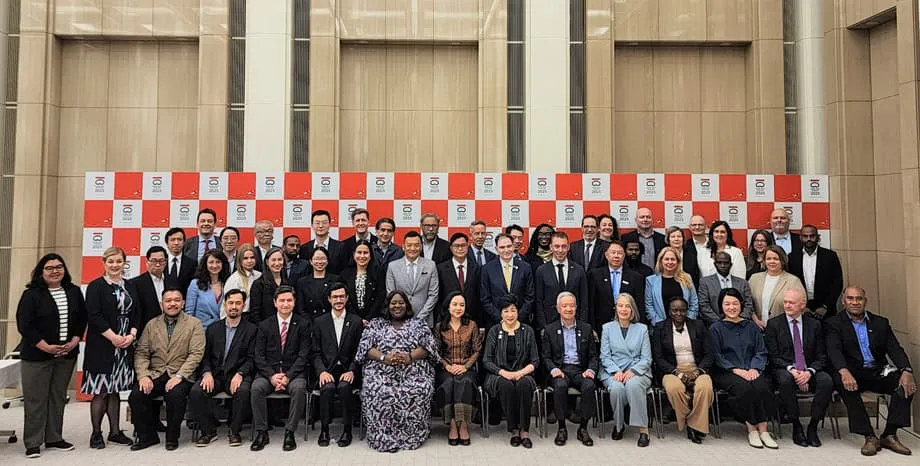
Leaders and representatives from 49 cities across five continents gathered in Tokyo from April 27 to 29, 2026, for the third G-NETS Leaders Summit, bringing experiences of destructive floods and wildfires into discussions about how cities can better protect their residents. The meeting was the largest gathering yet of the Global City Network for Sustainability, launched by the Tokyo Metropolitan Government in 2022.
Contents
- Floods, Fires and Technology Shape Tokyo Talks
- A More Focused Agenda for City Governments
- How the Network Reached Its Third Summit
- Glasgow Explains Its Response to Heavier Rain
- Los Angeles Sets Out Its Wildfire Recovery
- City Halls Meet Startups and Investors
- Japan Connects Innovation With Economic Growth
- Cooperation Expands Across Asia and the Gulf
- Tokyo Puts Flood Defenses and History on the Agenda
- A Startup Contest Offers Money and Global Access
- What the Tokyo Gathering Brought Together
- Key Points
Glasgow described two decades of work to manage increasingly heavy rainfall. Los Angeles outlined its response to the January 2025 wildfires, which destroyed nearly 7,000 structures in Pacific Palisades. Tokyo put its own coastal flood defenses on the agenda, giving delegates an opportunity to examine the infrastructure behind disaster planning.
The summit ran alongside SusHi Tech Tokyo 2026, described as Asia's largest innovation conference, connecting municipal officials with startup founders, investors and major technology companies. Representatives included those from Los Angeles, Paris, Rome, Singapore, Kuala Lumpur, Glasgow and Jakarta.
Tokyo Governor Yuriko Koike established G-NETS around the idea that sustainable cities cannot be built in isolation. Her approach brings together investment, coordinated policies and cooperation across borders among metropolitan areas facing similar environmental and social pressures.
This year's meeting linked that ambition to practical questions: how to store stormwater before it floods homes, rebuild communities after fire, strengthen electricity networks and choose technology that can help cities manage emergencies. Its connection with SusHi Tech also put officials in contact with businesses developing tools for those tasks, moving the discussion from policy commitments toward solutions that cities could put to work.
A More Focused Agenda for City Governments
G-NETS organized the 2026 summit around two central themes: Urban Resilience to Climate Change and Natural Disasters, and Well-being in Cities. Resilience means being able to withstand a shock, keep essential services operating and recover afterward. The second theme keeps residents' quality of life alongside the physical protection of buildings and infrastructure.
Tokyo Metropolitan Government documentation described the change as a consolidation of earlier, broader themes into frameworks intended to produce measurable results in disaster preparedness and quality of life. Flash flooding, wildfires and other severe weather events formed the immediate backdrop.
Koike used the opening ceremony to describe an era of "profound turbulence," pointing to volatile international conditions, increasingly frequent natural disasters, disruptions in energy supplies and the rapid development of artificial intelligence. She stressed the use of technology to build sustainable cities capable of coping with changing global conditions and natural hazards.
The summit followed G-NETS leaders' meetings in 2023 and 2024. Earlier joint statements committed participating cities to inclusive societies regardless of disability or gender, secure communities and stronger environmental policies. In 2026, the agenda narrowed toward operational work, including emergency procedures and making infrastructure better able to withstand damage.
That change reflected a wider shift among municipal governments toward adapting to climate risks alongside their broader sustainability goals. For residents, the practical concern is whether drainage, power supplies, public services and emergency arrangements can function when conditions become dangerous.
How the Network Reached Its Third Summit
G-NETS operates at several levels, involving working staff, senior officials and city leaders. The April meeting followed months of exchanges, online discussions and visits that allowed officials to study projects beyond their own cities.
- 2022: The Tokyo Metropolitan Government launched G-NETS under Governor Yuriko Koike.
- 2023 and 2024: The first two leaders' summits produced broad commitments on inclusion, safe communities and environmental protection.
- During 2025: Tokyo officials visited Amsterdam, Rotterdam and Berlin to study urban resilience, while staff from 11 cities made reciprocal visits to examine Tokyo's transport energy initiatives.
- September and October 2025: Working groups held online meetings on the network's themes. In September, representatives from eight cities studied coastal disaster prevention at the Tatsumi Pump Station and Storm Surge Countermeasure Center.
- November 2025: Working staff from 10 cities joined an urban greening tour of Ohashi Sato no Mori and Azabudai Hills.
- April 27 to 29, 2026: The third leaders' summit brought representatives from 49 cities to Tokyo alongside SusHi Tech Tokyo 2026.
The sequence connected discussions among leaders with work by officials responsible for services and infrastructure. Drainage systems, coastal defenses, urban greenery and transport energy projects gave participants specific examples to examine before the summit.
Glasgow Explains Its Response to Heavier Rain
Susan Aitken, leader of Glasgow City Council, described how a city accustomed to wet weather has faced increasingly intense rainfall over the past two decades. She warned that the changing conditions threaten hundreds of thousands of homes in the Glasgow area.
Aitken explained why familiar weather has become a more difficult problem for the Scottish city:
Scotland is a very green country, and we are a very green country because we are a very wet country. But even for a city accustomed to rain, climate change is bringing heavier rain and more monsoon type rainfall events.
Glasgow's response includes the Metropolitan Glasgow Strategic Drainage Partnership, a collaboration spanning 20 years among Scottish Water, the city council and environmental regulators. Its work links the organizations responsible for water systems, local government and environmental oversight.
Aitken highlighted the White Cart flood prevention project, which has protected communities that previously experienced water reaching waist height. She also described the Shield Hall tunnel, an underground project able to store a volume of water equivalent to 36 Olympic swimming pools during storms before routing it through treatment facilities for recycling.
The tunnel provides temporary space for stormwater when heavy rainfall puts pressure on the system. Glasgow's examples brought the summit's discussion of resilience down to a concrete task: controlling where water goes during a storm so that it does not flow through homes and communities.
Los Angeles Sets Out Its Wildfire Recovery
Los Angeles Deputy Mayor Dilpreet Kaur Sidhu described a different kind of disaster. The January 2025 wildfires destroyed nearly 7,000 structures in Pacific Palisades, with drought and Santa Ana winds exceeding 100 miles per hour driving fires that burned for nearly a month.
Sidhu described the extent of the community's losses:
It was homes, it was businesses, it was schools. It was an entire community.
Los Angeles responded with emergency executive orders to speed debris removal, bring permit processes together and waive certain zoning regulations to encourage resilient rebuilding. Those measures addressed several stages of recovery, from clearing damaged sites to securing permission to rebuild.
The city's longer term priorities include strengthening the electricity grid and improving workforce preparedness for wildfire response. Rebuilding therefore involves both replacing destroyed structures and preparing the services and people needed during another emergency.
Glasgow and Los Angeles presented contrasting hazards, heavy rain in one city and destructive fire in the other. Both accounts showed why the summit focused on operating procedures and infrastructure: recovery depends on decisions involving several public bodies, while prevention requires work sustained beyond an individual disaster.
City Halls Meet Startups and Investors
SusHi Tech Tokyo 2026, now in its fourth edition, brought the municipal discussions into contact with a much larger technology gathering. The conference featured 750 startup exhibitors from 60 countries and 60,000 attendees, with more than 10,000 arranged business meetings expected over its three days.
Its four technology domains were Artificial Intelligence, Physical AI and Robotics, Resilience, and Entertainment. The resilience category included climate technology and cyber defense, connecting protection against environmental threats with the security of digital systems.
Physical AI and robotics brought attention to machines that act in the physical world, while the wider conference gave city officials opportunities to see demonstrations of humanoid robots, autonomous vehicles and flood management technology. These demonstrations linked the summit's policy discussions with products that might address urban vulnerabilities.
Sony, Google, Microsoft and Mizuho participated in reverse pitching sessions. In that format, major organizations set out the problems for which they are seeking startup partners, reversing the usual arrangement in which a young company pitches its product to a potential customer or investor.
The combination was deliberate: municipal leaders could discuss their needs while startup founders and venture capital investors were present. It created a meeting point between public services, technological development and the money needed to bring new ideas into use.
Japan Connects Innovation With Economic Growth
Prime Minister Sanae Takaichi reinforced the national economic importance of the technology gathering in her keynote address. She linked scientific capability with Japan's ability to build a strong economy:
the realization of a strong economy requires excellent scientific and technological capability as its foundation.
Takaichi said startups account for 4% of Japan's nominal gross domestic product, with their contribution growing by 32% over the past two years. Nominal GDP measures the value of economic activity at current prices. The figures placed the startup discussions within a wider national growth agenda, alongside the cities' interest in solving practical problems.
SusHi Tech's Entertainment domain also examined cultural sustainability through Tokyo's anime, music and gaming industries. Discussions covered the integration of tools that use artificial intelligence to create content.
That strand connected with the summit's broader examination of digital transformation. Cities are considering how artificial intelligence can support urban management and creative industries while also preserving cultural heritage. The conference therefore addressed the experience of city life as well as the infrastructure that keeps it running.
Cooperation Expands Across Asia and the Gulf
Koike highlighted stronger cooperation with Gulf Cooperation Council countries, including Saudi Arabia and the United Arab Emirates. Their participation took different forms, including memorandums of understanding focused on economic revitalization.
Southeast Asian participation also expanded. Jakarta Governor Pramono Anung addressed the summit during a broader Asian tour that included Shenzhen and Seoul. He brought an ambition to position Jakarta as a "living laboratory" for urban transformation, treating flooding, congestion and climate challenges as starting points for innovation.
Jakarta's participation formed part of its effort to enter the Top 50 Global Cities by 2030 through international partnerships. Its contribution connected the summit's focus on resilience with an agenda for improving the city's international standing and everyday urban conditions.
Kuala Lumpur's participation followed diplomatic engagement in late 2025. Kuwabara Atsushi, special advisor to Governor Koike on international affairs, extended a formal invitation to Kuala Lumpur Mayor Datuk Fadhlun Mak Ujud during a courtesy call.
That meeting outlined G-NETS' three core themes at the time: inclusive societies, safe cities and environmental protection. It also described the network's approach of involving working staff, senior officials and mayors. The invitation illustrated how preparations for the leaders' summit were built through contacts well before the April gathering.
Tokyo Puts Flood Defenses and History on the Agenda
The summit's Wednesday agenda, on April 29, extended beyond meeting rooms to Tokyo's own urban systems. Delegates were scheduled to inspect floodgates at the Storm Surge Management Center in Koto Ward, a facility at the front line of the city's coastal flood defenses.
The inspection connected directly with concerns about rising sea levels and increasing typhoon intensity across the Pacific Rim. Storm surge defenses help protect coastal areas when storms push seawater toward land, making them a practical part of the summit's discussion of disaster preparedness.
The program also included the Edo-Tokyo Museum in Sumida Ward, which reopened in March 2026 after extensive renovations. The visit was intended to introduce international participants to the historical foundations of modern Tokyo.
The museum stop also supported the metropolitan government's campaign to have Tokyo's Edo period culture and history designated as a UNESCO World Heritage cultural asset. It placed cultural preservation alongside the summit's attention to technology and physical protection.
Both visits followed the network's earlier technical exchanges. The flood prevention inspections in September 2025 and the November urban greening tour had already given participating officials opportunities to examine how Tokyo manages coastal risks and incorporates greenery into the city.
A Startup Contest Offers Money and Global Access
The SusHi Tech Challenge ran alongside the municipal meetings, attracting 820 applications from 60 countries. Twenty semifinalists presented on April 27, and seven finalists advanced to the main event on April 28.
The Grand Prix package offered ¥10,000,000 in funding and automatic entry into the TechCrunch Disrupt Startup Battlefield Top 200. That entry allows the winner to bypass the competition's traditional application process. The winner's identity was not given.
The partnership between the Tokyo Metropolitan Government and TechCrunch was designed to connect Asian innovation with global venture capital. The prize combined immediate funding with access to an international pitching stage associated with the launches of Dropbox, Mint and Yammer.
The contest's figures show how sharply the field narrowed: seven finalists emerged from 820 applications. For participating startups, the route to the prize involved both competition in Tokyo and the prospect of access to investors beyond Japan.
Tokyo used the arrangement to strengthen its role as a hub for sustainable technology and deep tech innovation, extending beyond its traditional industrial identity. Alongside meetings between companies and city officials, the competition provided another channel through which technology businesses could seek finance and international visibility.
What the Tokyo Gathering Brought Together
The third G-NETS summit connected three kinds of work that are often discussed separately: preparing for disasters, recovering after them and finding technology and investment to support both. Glasgow's drainage projects and Los Angeles' rebuilding measures supplied concrete examples of the demands cities face.
Tokyo's contribution combined its own flood protection infrastructure with a network built through staff exchanges, senior official discussions and meetings among leaders. The shift toward resilience and well-being gave those exchanges a more focused agenda than the broad commitments of earlier summits.
SusHi Tech added businesses, investors and demonstrations to that municipal discussion. Its AI, robotics, resilience and entertainment programs linked emergency protection with economic activity, public services and culture. The gathering's central purpose was to connect those ideas with the operational choices cities make about water, energy, rebuilding and the quality of residents' lives.
Key Points
- The third G-NETS Leaders Summit brought representatives from 49 cities across five continents to Tokyo from April 27 to 29, 2026.
- The network, launched in 2022, focused this year's discussions on resilience to climate change and natural disasters, alongside well-being in cities.
- Glasgow presented 20 years of drainage cooperation, including a tunnel able to store water equivalent to 36 Olympic swimming pools.
- Los Angeles described recovery measures after the January 2025 wildfires destroyed nearly 7,000 structures in Pacific Palisades.
- SusHi Tech Tokyo featured 750 startup exhibitors from 60 countries and 60,000 attendees, with more than 10,000 business meetings expected.
- Tokyo highlighted partnerships with Gulf countries and Southeast Asian cities, including Jakarta and Kuala Lumpur.
- The April 29 program included Tokyo's coastal flood defenses and the Edo-Tokyo Museum, which reopened in March 2026.
- The SusHi Tech Challenge offered ¥10 million and automatic entry into the TechCrunch Disrupt Startup Battlefield Top 200.