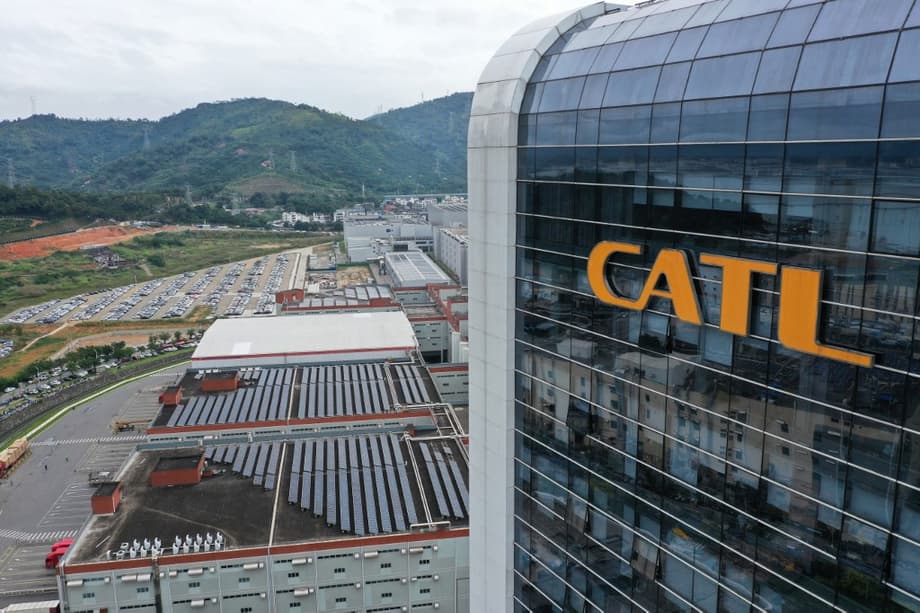
CATL Prices $5 Billion Placement at Discount Amid Market Volatility
Contemporary Amperex Technology Co. Ltd., the largest battery manufacturer in the world, has raised approximately $5 billion through a private share placement in Hong Kong, pricing the deal at the bottom of the marketed range to secure institutional support. The Chinese company sold shares at HK$628.20 apiece, representing a 7% discount to the previous closing price, according to regulatory filings on Tuesday.
- CATL Prices $5 Billion Placement at Discount Amid Market Volatility
- Capital Allocation Strategy and Global Expansion
- Institutional Demand and Investor Composition
- Valuation Debates and Profitability Concerns
- Market Context and Cross Border Trading Dynamics
- Analyst Perspectives and Strategic Outlook
- What to Know
The transaction marks the largest share offering in Hong Kong in 2026 and the biggest new share sale in approximately four years since Kuaishou Technology raised $6.2 billion in the 2021 initial public offering. CATL, known formally as Contemporary Amperex Technology, had marketed the shares between HK$628.20 and HK$651.80 each, translating to a discount range of 3.5% to 7% from the Monday closing price in the Hong Kong Special Administrative Region.
Despite attracting orders from more than 150 entities including hedge funds, sovereign wealth funds and existing shareholders, the company stock declined sharply following the announcement. CATL shares fell as much as 9.2% to HK$613.50 during the Tuesday session before settling with a decline of roughly 6.8%. The shares were last trading at HK$627.50, slightly below the placement price of HK$628.20. The broader market downturn contributed to the pressure, with the Shanghai Composite Index declining 0.20% and the Hang Seng Tech Index dropping 0.32%.
Capital Allocation Strategy and Global Expansion
Net proceeds from the placement are expected to total approximately HK$39.1 billion after fees, with CATL outlining a comprehensive strategy for deployment across international operations. The company intends to channel funds toward global capacity expansion, including the construction of a 7.3 billion-euro battery manufacturing facility in Hungary designed to serve European automaker clients such as Tesla, Stellantis, BMW, and Volkswagen.
The capital injection will also support development of a zero carbon business footprint, research and development initiatives, working capital requirements and other general corporate purposes. This financial commitment aligns with the CATL objective to reduce exposure to potential tariffs on Chinese-manufactured battery exports to Europe while establishing localized production capabilities closer to key markets.
The Hungary plant represents a critical component of the CATL geopolitical risk management strategy. By manufacturing within the European Union, the company aims to circumvent trade barriers while maintaining supply relationships with major automotive manufacturers transitioning to electrification. The facility will join the existing CATL network that supplies Xiaomi, Nio, and other domestic and international EV manufacturers.
Institutional Demand and Investor Composition
The placement attracted robust institutional interest despite the wider-than-expected discount, with more than 150 entities submitting orders through the bookbuilding process. The investor roster includes diverse categories of global capital providers, from hedge funds seeking exposure to the energy transition sector to sovereign wealth funds pursuing long term infrastructure-related investments.
Notably, the offering incorporated a 144A offering structure for investors in the United States, a mechanism the company did not pursue during the initial Hong Kong listing in May 2025. This regulatory framework allows qualified institutional buyers in the US to participate in the private placement without triggering full Securities and Exchange Commission registration requirements, effectively broadening access to American capital markets for CATL.
Bank of America Corp, China International Capital Corp, JPMorgan Chase & Co and Morgan Stanley served as joint bookrunners for the transaction, managing the allocation process among institutional participants. The strong demand despite the 7% discount, wider than the 5.1% discount seen in a Shenzhen block trade earlier this month and the 6.9% discount in a November 2025 transaction, suggests underlying confidence in the CATL market position despite short term price volatility.
Valuation Debates and Profitability Concerns
While the placement succeeded in raising targeted capital, investor reaction revealed underlying concerns regarding the current CATL valuation metrics and near-term profitability pressures. The company currently trades at a price to earnings ratio of approximately 54.4x based on trailing twelve month earnings, substantially higher than competitors such as BYD at roughly 25.68x and SK Inc. near 8.58x.
This valuation disparity has prompted questions regarding the necessity of the fundraising initiative. Analysts including Eugene Hsiao of Macquarie Capital have characterized the move as potentially opportunistic rather than essential, noting that CATL maintains a strong balance sheet and could theoretically fund expansion through internal cash flows. The decision to raise equity capital at current valuations may reflect management desire to secure funding before potential market corrections or as a strategic buffer against intensifying competition.
Profit margin pressures represent another focal point for skeptical investors. Despite reporting first-quarter net profit of 20.7 billion yuan ($2.8 billion), representing a 49% year-over-year increase, the company experienced margin compression during the period. The battery industry continues to face fierce price competition, particularly in the Chinese domestic market where the CATL market share has shown sequential softening, declining from 49.10% in February to 45.54% in March 2026, though remaining dominant relative to the 17.83% share held by BYD.
The challenging competitive environment extends globally, where CATL held a 38% battery market share in 2024, up from 36% in 2023. However, sustaining profitability amid ongoing price wars remains difficult even for market leaders, with industry analysts noting that raw material cost fluctuations and capacity overbuild risks could further squeeze margins in coming quarters.
Market Context and Cross Border Trading Dynamics
The placement occurs against a backdrop of exceptional performance for the CATL Hong Kong-listed securities, which have surged 139% since the debut less than one year ago, giving the company a market capitalization of approximately $288 billion. This rapid appreciation created a significant valuation premium for Hong Kong shares compared to the Shenzhen-listed securities, with the gap reaching a record 49% in March before narrowing to roughly 25% prior to the current offering.
The transaction may help further compress this valuation differential as improved liquidity in the Hong Kong shares attracts more international institutional capital. Historically, Hong Kong-listed shares of mainland companies trade at discounts to the Shenzhen counterparts, making the CATL premium unusual and potentially vulnerable to arbitrage pressures.
Recent weeks have witnessed significant shareholder activity surrounding CATL stock beyond the company own placement. On April 22, a unit of Sinopec, the largest oil refiner in China, sold 8.5 million Hong Kong-listed CATL shares at HK$708 per share through an accelerated bookbuild managed by Goldman Sachs, raising approximately $770 million. That transaction featured a 3.8% discount and included a 90 day lock up agreement on the remaining Sinopec stake.
Additionally, a Shenzhen A-share block trade involving 58 million shares, representing 1.27% of the total CATL share capital, was completed by Ningbo Lianhe Chuangxin at CNY410.34 per share, a 5.1% discount to the closing price. Distributed across 30 institutional investors subject to six month selling restrictions, the deal drew bids from 50 institutions and was 1.1 times oversubscribed, demonstrating sustained appetite for CATL exposure even at modest discounts.
Analyst Perspectives and Strategic Outlook
Financial institutions maintain divergent views on the CATL trajectory following the capital raise. HSBC has retained buy ratings on both mainland and Hong Kong-listed shares of the company, raising price targets to 547 yuan and HK$790 respectively. The bank cites strong earnings momentum, with first-quarter results showing the fastest profit growth pace in nearly two years, and anticipates continued production utilization rates between 85% and 90% supporting volume-driven earnings expansion.
HSBC analysts also highlight macroeconomic tailwinds supporting the CATL business model, including volatile oil prices accelerating global electrification trends and rapid growth in AI data centers potentially steepening demand curves for battery storage solutions. The surge in artificial intelligence infrastructure has created unprecedented power density requirements for server farms, driving interest in large scale battery storage systems to manage energy loads and provide backup power. These factors, combined with CATL technological advancements including sodium-ion batteries promising 1,000-kilometer range capabilities and the recent securing of a significant order with HyperStrong for energy storage applications, underpin bullish sentiment among certain institutional investors.
However, the immediate market reaction to the placement suggests investor caution regarding execution risks associated with the Hungary expansion and the ability of the company to maintain premium valuations while defending market share against aggressive competitors. The 7% discount required to place the shares, wider than recent comparable transactions, indicates that institutional investors are demanding greater compensation for near term uncertainty despite long term growth prospects.
The deal brings total initial public offerings, placements and block trades in Hong Kong to $31 billion so far in 2026, representing a 73% year-over-year increase according to data compiled by Bloomberg. This surge in capital markets activity reflects renewed investor confidence as geopolitical tensions in the Middle East show signs of de-escalation, providing a favorable window for Chinese technology and battery companies to secure growth capital.
What to Know
- CATL raised approximately $5 billion through a Hong Kong share placement priced at HK$628.20 per share, representing a 7% discount to the previous close and the low end of the marketed range.
- The transaction represents the largest share offering in Hong Kong in 2026 and the biggest new share sale in approximately four years.
- Proceeds will fund global capacity expansion including a 7.3 billion-euro Hungary manufacturing plant, zero carbon initiatives, research and development, and working capital.
- More than 150 institutional investors participated including hedge funds, sovereign wealth funds, and existing shareholders, with US investors accessed through a 144A offering structure.
- CATL Hong Kong shares have gained 139% since the May 2025 debut, though the stock fell up to 9.2% following the placement announcement amid broader market declines.
- The company reported first-quarter net profit of 20.7 billion yuan ($2.8 billion), up 49% year-over-year, but faces margin pressure from industry price wars and competitive challenges from BYD and other rivals.
- CATL commands a 45.54% share of the China power battery market and 38% globally, though the price to earnings ratio of 54.4x exceeds that of major competitors.
- Recent shareholder activity included a $770 million sale by a Sinopec unit and a 58 million share block trade in Shenzhen, both completed at smaller discounts than the current CATL placement.