UN Expert Warns India Faces Legal Jeopardy Over Israel Support
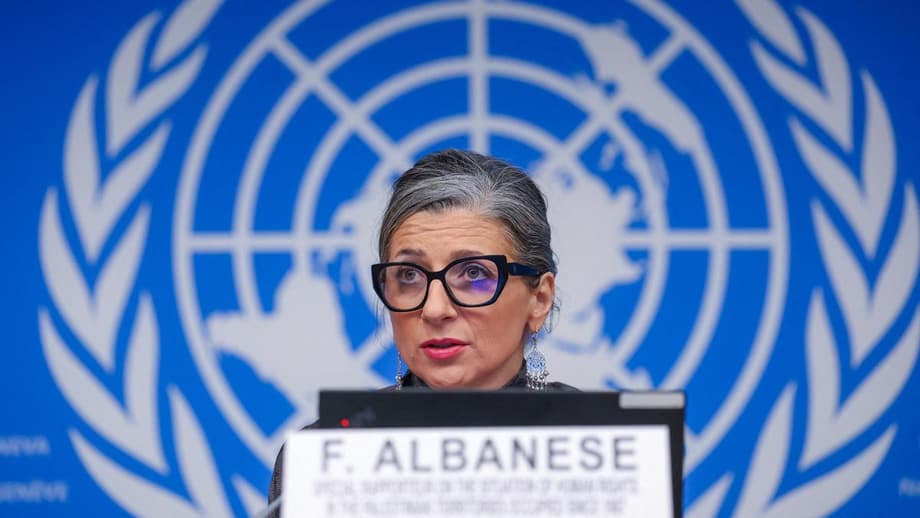
Francesca Albanese, the United Nations Special Rapporteur on the Occupied Palestinian Territories, has issued a stark warning that India risks violating international law through its continued military and political support for Israel during the ongoing conflict in Gaza. In a wide-ranging interview following the presentation of her report Torture and Genocide to the UN Human Rights Council, Albanese asserted that New Delhi’s deepening strategic partnership with Tel Aviv could expose the South Asian nation to legal accountability for alleged war crimes and crimes against humanity.
- UN Expert Warns India Faces Legal Jeopardy Over Israel Support
- Documenting Atrocities in Gaza
- High-Level Diplomacy Raises Concerns
- International Court Rulings and State Obligations
- Military Supplies and Judicial Response
- Colonial Legacies and Moral Contradictions
- Personal Sacrifice and Professional Risks
- Grassroots Resistance and Government Accountability
- What to Know
The Italian lawyer and scholar, who has served as Special Rapporteur since 2022, presented her findings to the Council’s 61st session on March 23. Her report documents what she describes as systematic torture and genocide committed against Palestinians since October 2023. When questioned specifically about India’s legal and moral responsibilities regarding its association with Israel, Albanese did not mince words. She stated that India is actively violating its obligations under international law and suggested the country might soon be facing responsibility for these actions.
Albanese’s intervention comes at a sensitive moment in international diplomacy. Her statements represent one of the most direct challenges yet to the foreign policy of the world’s largest democracy, suggesting that India’s pursuit of strategic military ties could carry unforeseen legal consequences. The warning carries particular weight given recent rulings by the International Court of Justice (ICJ) and the ongoing genocide case against Israel.
Documenting Atrocities in Gaza
The Torture and Genocide report presents a harrowing account of conditions in Palestinian territories since October 2023. Albanese’s investigation concluded that Israeli authorities have transformed Gaza into what she termed a vast torture camp, employing systematic violence designed to break Palestinian resistance, dignity, and sumud (steadfastness).
The documentation is extensive and specific. According to the report, Israeli forces have arrested more than 18,500 Palestinians, including approximately 1,500 children. Over 4,000 cases of enforced disappearance have been recorded. The findings detail the use of surveillance technologies, including facial-recognition checkpoints and drones, as tools of spatial control that create a constant climate of fear extending beyond formal detention centers into daily life.
Albanese notes that torture is not incidental to the occupation but central to a broader system of violence. The report describes acts including beatings, sexual assault, medical neglect, and psychological abuse targeting doctors, journalists, activists, and human rights defenders. More than 50 UNRWA staff members were reportedly tortured, with many interrogated specifically about their humanitarian work.
The Special Rapporteur argues that the scale and nature of these abuses meet the threshold for genocide under international law. She links the torture to a broader structure of apartheid and settler colonialism, suggesting that the violence serves the function of an economy built to dominate, dispossess, and erase Palestinians from their land.
High-Level Diplomacy Raises Concerns
Albanese specifically referenced Prime Minister Narendra Modi’s state visit to Israel in February, which occurred just days before the current regional war with Iran. During that visit, Modi addressed the Knesset, celebrating India’s cultural, political and military relationship with Israel. The trip resulted in upgraded ties sealed with a Special Strategic Partnership.
The timing and symbolism of this diplomatic engagement drew sharp criticism from the UN expert. She noted that the visit took place while Israeli Prime Minister Benjamin Netanyahu faces accusations of war crimes and crimes against humanity before the International Criminal Court (ICC). The ICJ has also declared Israel’s occupation of Palestinian territories illegal and ordered Israel to dismantle it totally and unconditionally.
Under international law, the concept of complicity extends beyond direct perpetration to include states that provide assistance or support to those committing international crimes. Albanese argues that maintaining strategic partnerships and military supply relationships with a state facing genocide allegations creates significant legal exposure for supporting nations.
The report identifies 48 separate corporate actors across sectors including weapons manufacturing, technology, finance, and construction that have failed to use their influence to end violations. Albanese suggests that states like India face similar obligations to disengage from relations that enable ongoing crimes.
International Court Rulings and State Obligations
The legal framework governing Albania’s allegations rests on recent ICJ advisory opinions and established principles of international humanitarian law. In 2024, the ICJ ruled that Israel’s occupation of Palestinian territories violates international law, specifically contravening Article III of the Fourth Geneva Convention regarding the transfer of civilians into occupied territory.
Albanese explained that these rulings impose clear obligations on third-party states. The legal responsibilities are clear, she stated in the interview. The International Court of Justice has declared the occupation illegal and imposed an obligation on states not to trade, not to transfer weapons, and not to buy weapons from a state accused of maintaining an illegal occupation.
This obligation becomes more significant in the context of ongoing genocide proceedings against Israel. The ICJ has previously issued provisional measures ordering Israel to prevent genocidal acts in Gaza. Under the Genocide Convention and customary international law, states are obliged not only to refrain from committing genocide but also to prevent and punish it. This includes avoiding actions that would facilitate or encourage genocidal conduct by another state.
Albanese warned that corporate fixation on narrow technicalities rather than confronting the structural illegality of ties to Israel’s occupation is disingenuous. She urged member states to impose full arms embargoes and suspend trade agreements. Corporate actors cannot claim neutrality, she said. They are either part of the machinery of displacement or part of dismantling it.
Military Supplies and Judicial Response
Specific allegations regarding India’s role center on reported exports of military components to Israel during the Gaza war. Investigations by Al Jazeera in June 2024 indicated that Indian companies continued exporting rockets, explosives, rocket motors, and other military hardware to Israel amid the conflict. These reports suggested that India became a significant supplier as other Western nations faced domestic pressure to restrict arms flows.
The legal ramifications of these exports have been tested domestically. India’s Supreme Court dismissed a plea seeking to halt military exports to Israel during the Gaza siege, declining to intervene in what the court characterized as foreign policy matters. However, Albanese suggests that domestic judicial reluctance does not absolve states of their international obligations.
The Special Rapporteur’s report highlights that 85,000 tons of bombs, six times the amount dropped on Hiroshima, have been unleashed on Gaza using targeting technology and delivery systems potentially supplied by various international partners. While the report does not single out India exclusively, it places all suppliers within a framework of corporate and state complicity.
Albanese pointed to emerging legal efforts in countries like Italy, where lawyers have initiated action against government officials for complicity in genocide. She stressed that there is also criminal liability for individuals who authorise this kind of endeavour, suggesting that government ministers and officials could face personal legal consequences for authorizing military support to Israel.
Colonial Legacies and Moral Contradictions
Beyond strict legal analysis, Albanese framed India’s position as a profound moral contradiction given its historical legacy. She drew explicit parallels between India and Israel, noting that both territorial formations emerged from British colonial rule. India and historical Palestine have one thing in common: their territorial formations have been shaped by British colonial rule, she observed.
She elaborated that Israel was created inside Palestine during the years of British colonization, while India achieved independence through a prolonged anti-colonial struggle. As members of the United Nations, both countries carry responsibilities to uphold the international system established after decolonization.
Albanese described India’s current alignment with Israel as troubling given its history. It seems to me that there is a betrayal of that past in India’s association with Israel, she said, stating that India’s leaders appear to have turned to the other side. She suggested that India was historically one of the principal architects of international law during the decolonization period and played a critical role in making decolonization possible.
The rapporteur warned that figures such as Donald Trump and Netanyahu were twisting the arm of the system, making lawlessness so widespread that it has become contagious. She characterized both India and Israel as contributing to the decay of the international system that previous generations built through struggle.
Personal Sacrifice and Professional Risks
Albanese’s warnings to India come amid significant personal and professional costs for her own advocacy. The United States Department of Treasury designated her as a specially designated national, imposing financial sanctions that freeze her assets and prohibit US citizens or corporations from engaging with her. She is the first UN official to face such sanctions, placing her in the company of sanctioned heads of state such as Vladimir Putin and Bashar al-Assad.
In the interview, Albanese described the sanctions as civil death. She explained that even outside the US, she cannot hold bank accounts or make transfers. Her email addresses were shut down, and academic ties with American universities including Georgetown and Columbia were severed. She faces potential fines of up to one million dollars for anyone providing goods or services to her, and potential imprisonment of up to 20 years for her family members.
I am making a significant sacrifice, and so is my family. I have two young children whom I see far too little. I am choosing this because I believe the children of Palestinians, Israelis, Indians, Congolese, and Sudanese are as deserving of the quiet, safe home I once had as I am.
Her 13-year-old daughter, who holds American citizenship, has initiated legal proceedings against the US President, Secretary of State, and Attorney General to challenge the sanctions. Albanese maintains that she trusts the justice system despite the difficulty of the battle ahead.
She noted that she has been accused of terrible things simply for doing her job, which includes investigating Israel’s conduct. Israel has been remarkably successful in conflating antisemitism with anti-Zionism, she said, such that any criticism of Israel is labelled antisemitic.
Grassroots Resistance and Government Accountability
Despite governmental positions, Albanese expressed hope in popular movements. She noted that in Italy, persistent pressure from citizens compelled the government to announce a suspension of its defense agreement with Israel. Ministers in Italy now face legal proceedings for complicity with genocide and the prospect of electoral defeat over Palestine policy.
She urged Indian citizens to apply similar pressure. I would like the people of India to also speak out strongly on this issue and question their government, she said, acknowledging that civil society within India has continuously raised voices for Palestine and Gaza despite governmental policy.
Albanese argued that the current moment represents a global reckoning. Palestine is a mirror held up to the world’s moral and political failures, she said. She recalled historical reckonings over corporate complicity in apartheid South Africa and Nazi Germany, suggesting that Palestine today represents a defining moment of whether global markets can exist without promoting and profiting from injustice.
The Special Rapporteur concluded that ending the genocide requires not only outrage but rupture, reckoning, and the courage to dismantle what enables it. She remains optimistic that a global conscience is rising against the violence, viewing this as a moment of historical acceleration toward greater justice.
What to Know
- UN Special Rapporteur Francesca Albanese accuses India of violating international law obligations through military and political support for Israel during the Gaza conflict
- Her report Torture and Genocide documents over 18,500 Palestinian arrests, 1,500 child detainees, and more than 4,000 enforced disappearances since October 2023
- The ICJ has ruled Israel’s occupation illegal and ordered states not to trade weapons or provide military assistance to the occupying power
- Albanese warns India may face legal responsibility for complicity in alleged genocide, war crimes, and crimes against humanity committed in Gaza
- Reports indicate Indian companies exported rockets, explosives, and rocket motors to Israel during the war; India’s Supreme Court dismissed a plea to halt such exports
- Albanese describes India’s stance as a moral betrayal of its anti-colonial legacy, noting both India and Israel emerged from British colonial rule
- The US Treasury has sanctioned Albanese personally for her advocacy, freezing her assets and cutting her off from the American financial system