

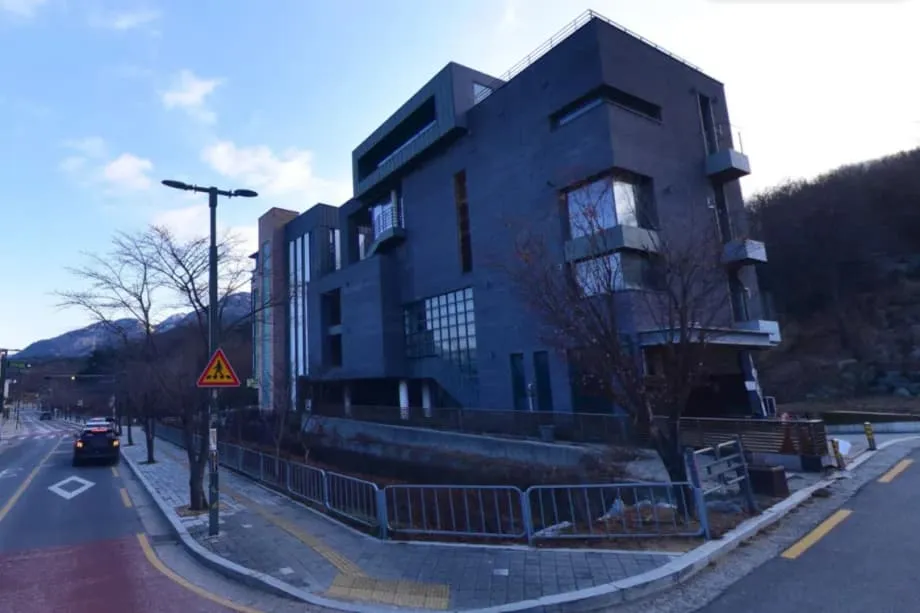
A May Opening Meets Questions About Identity and Legality
A museum preparing to open in May in Seoul's Eunpyeong Hanok Village is facing scrutiny over two matters: why a venue called Korea Museum advertised a collection dominated by Chinese artifacts, and whether its building can legally accommodate public exhibitions. Seoul Metropolitan Government and the Eunpyeong-gu Office launched an inspection on April 21 after a photograph of the museum's outdoor sign spread online.
Contents
- A May Opening Meets Questions About Identity and Legality
- The Photograph That Started the Dispute
- What a Curator Said About the Collection
- What Inspectors Found at the Building
- How the Events Unfolded
- Why Labels About Balhae Matter in This Debate
- The Northeast Project and Cultural Ownership
- DeepSeek and Shopping Searches Extend the Dispute Online
- Private Museum Oversight and the Cost of Compliance
- The Bottom Line
The sign described a collection stretching from prehistoric China through successive dynasties to the early Republic of China era. Korean and Japanese artworks appeared in its final line, alongside works from other countries. For people expecting a museum bearing Korea's name to focus on Korean heritage, that presentation created an immediate mismatch between the institution's name and its advertised contents.
Officials subsequently found that the building was registered as a Type II neighborhood living facility rather than a cultural and assembly facility, the classification required for a museum. District authorities said the existing property appeared to have been remodeled without the necessary notification or permission for its conversion into an exhibition space.
As of April 23, 2026, the planned May opening faces both administrative and public pressure. The operators must address the building violations, while questions about the museum's purpose and collection remain unresolved. Its future course, including whether it will change its name, expand its Korean holdings or move premises, has not been announced.
The dispute has also drawn attention because it comes amid arguments over historical attribution in East Asia. Those arguments extend from museum labels about the ancient kingdom of Balhae to answers generated by artificial intelligence about Korean history and kimchi.
The Photograph That Started the Dispute
Karrot, South Korea's largest marketplace platform for neighborhood sales of secondhand goods, became the starting point for the controversy. A user uploaded a photograph of the outdoor sign at the new museum in Eunpyeong Hanok Village, a traditional Korean village in Seoul's Eunpyeong-gu district.
The Karrot user, whose name was not given, introduced the photograph with a question about the institution:
I am curious about the identity of this new museum in Eunpyeong Hanok Village,
The advertised collection covered prehistoric times, the Xia, Shang and Zhou dynasties, the Warring States period, and the Qin, Han, Tang, Song, Ming and Qing dynasties. It continued into the early Republic of China era. Together, those names presented a broad journey through Chinese history rather than a collection centered on Korea.
The final line said the museum would also display some artworks from other countries, including Korea and Japan. That wording placed Korean material within an additional international grouping, despite the museum's name. The contrast prompted suspicions among observers that the name was misleading.
The post spread widely as citizens debated whether the presentation amounted to cultural appropriation, administrative incompetence or a more serious problem. Cultural appropriation, in this debate, concerned the presentation of another country's heritage under a name that visitors might associate with Korean history.
By April 20, the controversial sign had been removed. A museum official confirmed the removal and acknowledged the public reaction:
We were asked to take down the sign on Monday. We are aware of the controversy.
Removing the sign did not settle the questions it had raised. Officials moved to examine the institution's purpose and legal status, turning an online discussion about its collection into an investigation of its proposed operation.
What a Curator Said About the Collection
A curator at another Seoul museum examined photographs of the sign and concluded that most of the advertised artifacts appeared to come from southern China. The curator spoke anonymously, so the name of the specialist and the institution where the person worked were not disclosed.
The curator's assessment addressed the origin of the objects:
It seems certain they are not of Korean origin,
The collection's apparent geographic origin sharpened the question of how Chinese antiquities would be presented beneath the Korea Museum name. The controversy concerned both what visitors would see and how the institution would explain the relationship between its name, its mission and its holdings.
Questions about the authenticity and identity of the collection accompanied that debate. The curator's stated assessment came from photographs of the sign. A detailed examination of the individual objects, their ages and their ownership histories was not described.
South Korea has spent decades promoting its cultural identity internationally. Against that background, critics worried that a museum presenting Chinese history under a Korean label could confuse visitors about the distinct heritage of the two countries, particularly people unfamiliar with their histories.
What Inspectors Found at the Building
Seoul Metropolitan Government and the Eunpyeong-gu Office carried out an inspection at the property on April 21. The city formally asked Korea Museum to explain its founding purpose and provide documents supporting its right to operate as a cultural institution.
The building's registered use became a central issue. It was classified as a Type II neighborhood living facility, a category permitting residential and smaller commercial activities but excluding exhibition spaces. A museum requires classification as a cultural and assembly facility under South Korea's Building Act.
A building classification identifies the uses for which a property is approved. In this case, the difference matters because cultural and assembly facilities must meet specific safety standards, accessibility requirements and administrative oversight associated with receiving visitors for exhibitions. Those requirements differ from the conditions applying to residential buildings.
District officials concluded that the operators had remodeled an existing building without notifying the relevant authorities or obtaining the permits necessary to convert it for public exhibitions. That finding gave the authorities a concrete regulatory issue to address alongside the public debate about the collection.
An Eunpyeong-gu official described the suspected violation and the consequences of failing to correct it:
It appears the existing building was remodeled without separately notifying the relevant administrative authorities. If the Korea Museum fails to comply with corrective measures, we will impose enforcement fines.
The district announced plans for immediate corrective measures. Enforcement fines would add financial pressure if the operators failed to comply. With the May opening approaching, the museum must resolve the building violations before it can legally welcome the public.
How the Events Unfolded
The controversy developed across several dates, moving from a photograph shared by a resident to government scrutiny of the premises. The museum's advertised opening remained May, but its preparations were overtaken by questions about the collection and the building.
- February: South Korea's National Intelligence Service tested DeepSeek's responses about Goguryeo, Balhae and kimchi, bringing digital versions of cultural disputes into public attention.
- Weeks before the Seoul museum controversy: Japan's Osaka Museum of History faced criticism over its English names for Balhae and its capital, Sanggyeong.
- Before April 20: A Karrot user posted a photograph of Korea Museum's outdoor sign, prompting widespread debate about its predominantly Chinese collection.
- April 20: The removal of the controversial sign was reported. A museum official said the institution had been asked to take it down on Monday.
- April 21: Seoul Metropolitan Government and Eunpyeong-gu officials inspected the museum and examined its building classification and proposed operation.
- April 23, 2026: Building compliance and the museum's response to questions about its identity remained unresolved ahead of the planned May opening.
The sign's removal addressed the most visible cause of the backlash. The inspection widened the dispute by bringing the property's approved use and the remodeling work into focus.
Why Labels About Balhae Matter in This Debate
Japan's Osaka Museum of History had faced criticism just weeks earlier for using the English names Bohai and Shangjing for the ancient Korean kingdom of Balhae and its capital, Sanggyeong. Seo Kyoung-duk, a professor at Sungshin Women's University and a civic activist, objected to that terminology.
According to Seo, those names align with Chinese historical narratives describing Balhae as a regional regime founded by the Mohe people. The Mohe lived in the northern Korean Peninsula and northeastern Manchuria, and China claims them as part of its own ethnic history.
Korean historiography presents Balhae as the successor state to Goguryeo. Balhae was founded in 698 by Dae Jo-yeong, a former Goguryeo general. Historiography means the way history is studied and written, including how historians connect a kingdom to earlier states and peoples.
The disagreement therefore reaches beyond spelling. The choice of names sits within competing explanations of where Balhae belongs in regional history. For Korean critics, terminology used in an overseas museum can shape what visitors learn about a kingdom they regard as part of Korean heritage.
Seo linked the museum labeling dispute to broader concerns about Chinese historical claims and artificial intelligence:
China's historical distortion is getting worse. Its artificial intelligence model DeepSeek has even claimed that Goguryeo and Balhae are part of Chinese history. Inaccurate portrayals of history overseas could be used to legitimize these false claims and must be corrected.
His comments reflect the sensitivity surrounding institutions that teach history to the public. In Seoul, that sensitivity focused on whether Korea Museum's name and proposed Chinese collection would give visitors an accurate understanding of what they were seeing.
The Northeast Project and Cultural Ownership
China's Northeast Project forms part of the wider background to these disputes. Launched in the early 2000s, the government initiative seeks to frame the historical and cultural heritage of neighboring regions as part of Chinese civilization.
The project has provoked particular anger in Korea, where citizens view it as an attempt to absorb Korean historical achievements into Chinese national identity. Competing claims about ancient kingdoms, traditions and artifacts have made historical attribution a recurring point of tension across East Asia.
South Koreans have consequently become increasingly attentive to how their heritage is described abroad and at home. A museum's name, an exhibition label or an online answer can become controversial when people believe it assigns Korean history or culture to another country.
Korea Museum's advertised collection entered that already sensitive environment. Observers questioned whether a venue located in a traditional Korean village and bearing Korea's name would introduce Chinese historical narratives into a space visitors expected to explain Korean culture.
DeepSeek and Shopping Searches Extend the Dispute Online
South Korea's National Intelligence Service tested DeepSeek, a generative artificial intelligence model developed in China, in February. Generative AI produces answers to users' questions, making the language and historical claims in those answers part of what people encounter online.
When asked which country Goguryeo and Balhae belonged to, DeepSeek answered that both were key parts of China's ancient history. Those responses drew criticism because they reflected the historical claims that Korean opponents of the Northeast Project reject.
Questions about kimchi produced different answers depending on the language used. Asked in Korean, DeepSeek identified the fermented cabbage dish as a signature Korean food. Asked in Chinese, it said kimchi originated in China rather than Korea. Asked in English, it gave a less definite answer, saying the dish was related to Korea.
Kimchi is widely recognized as a cornerstone of Korean cuisine. The differing responses drew attention to language bias in AI training data: information categorized and presented differently across languages can lead a system to give different explanations of the same subject.
Chinese ecommerce platforms operating in Korea have faced related criticism. Temu displayed images of jars labeled with the Chinese term pao cai when users searched for kimchi. That example brought the dispute into shopping results, where product images and names can influence how consumers understand a food's identity.
These digital cases connect with the museum controversy through the presentation of cultural information. A museum sign, an AI response and a shopping search all place labels before an audience. The concern expressed in each case is that those labels can shape public understanding of Korean heritage.
Private Museum Oversight and the Cost of Compliance
Korea Museum's case has drawn attention to gaps in oversight of private cultural institutions in South Korea. National and public museums operate under strict government supervision and registration requirements, while private museums face comparatively few bureaucratic requirements when establishing operations.
The absence of formal registration procedures described in this case makes it harder for authorities to check a private museum's stated purpose, authenticate its collection and verify building and safety compliance before visitors arrive. The Eunpyeong property illustrates how a proposed exhibition venue can reach the opening stage while remaining registered for a different use.
Using a building approved for residential rather than cultural purposes allowed the museum to avoid the scrutiny normally associated with establishing a public exhibition space. The resulting dispute has prompted calls for stricter oversight and clearer guidance on how private institutions label and promote themselves.
Tourists are among the visitors most likely to rely on the institution's name and explanations. People without detailed knowledge of Korean and Chinese history may have difficulty identifying whether an artifact is Korean or comes from another country. Accurate descriptions of the collection therefore matter alongside the building's legal status.
The operators must now address the property's use classification or relocate to an appropriate cultural facility. Compliance could involve substantial expense, particularly if enforcement fines are imposed. Those costs could become prohibitive as the institution tries to prepare for its planned opening.
The museum also faces choices about its public identity. Changing its name to reflect a collection of Chinese artifacts or acquiring Korean pieces to support its existing name are possible responses discussed in the controversy. No decision on either course has been announced.
The removed sign leaves the collection's presentation unresolved, while the authorities' corrective measures place a legal requirement before the May debut. The public reaction shows the expectations facing an institution bearing Korea's name: visitors want a transparent account of its purpose and an accurate explanation of the heritage it displays.
The Bottom Line
- Korea Museum planned to open in May in Seoul's Eunpyeong Hanok Village with a collection advertised mainly through Chinese historical periods.
- A Karrot photograph triggered public scrutiny. By April 20, the museum's controversial outdoor sign had been removed.
- An anonymous Seoul museum curator said most advertised artifacts appeared to come from southern China and were not Korean in origin.
- Officials inspected the premises on April 21 and found a Type II neighborhood living classification rather than the cultural and assembly classification required for a museum.
- Eunpyeong-gu authorities announced corrective measures and warned that failure to comply would bring enforcement fines.
- The dispute comes amid arguments over Balhae museum labels, China's Northeast Project, DeepSeek's historical answers and online descriptions of kimchi.
- As of April 23, 2026, the museum had to resolve its building violations before opening, while its future name, collection and location remained undecided.