A Packed Year With the Moon in View
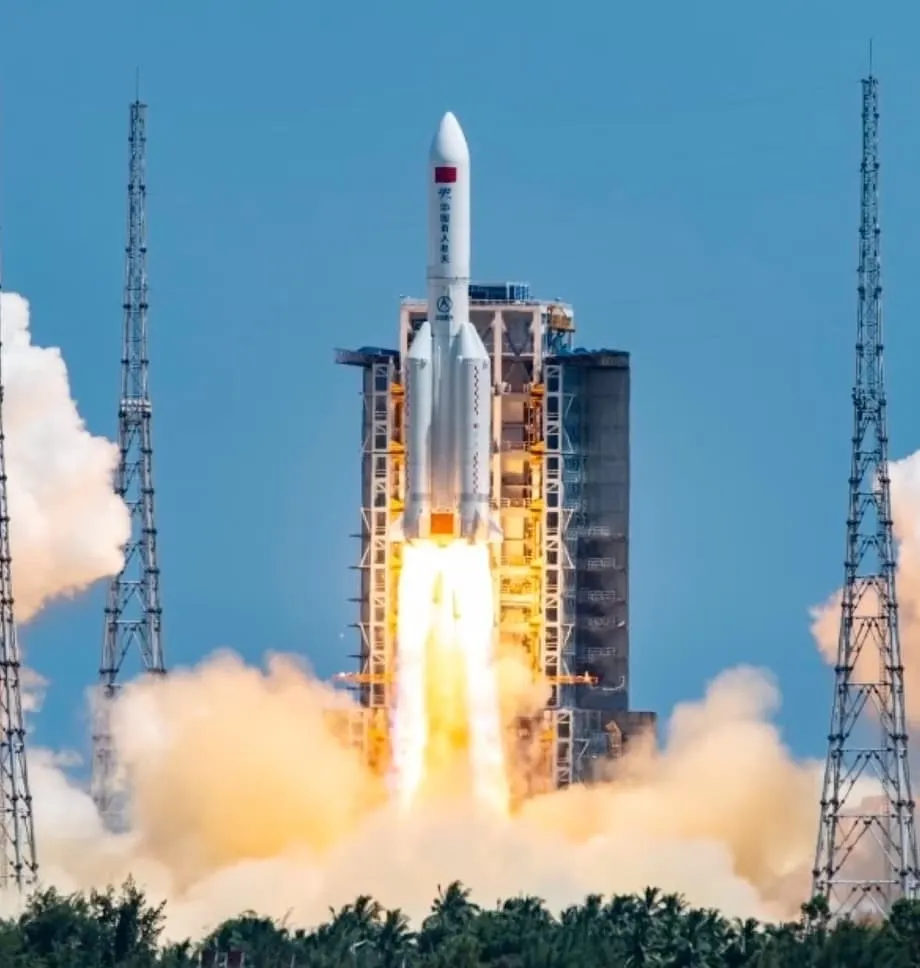
China is preparing for a year of space station missions, new lunar hardware and robotic exploration after recording 93 successful space launches in 2025, a national record. As of March 14, 2026, the China Manned Space Engineering Office's announced schedule includes the Tianzhou-10 cargo mission, the Shenzhou-22 and Shenzhou-23 crewed flights, and an uncrewed test of the Mengzhou-1 spacecraft.
Contents
- A Packed Year With the Moon in View
- Tiangong Prepares for a Stay Lasting Twelve Months
- New Participants Could Join Station Missions
- The Rocket and Spacecraft Behind the Lunar Goal
- Escape Tests, Landing Trials and Rocket Recovery
- Chang'e-7 Heads for the Lunar South Pole
- Tianwen-2 Targets an Asteroid Near Earth
- Xuntian Will Survey the Sky Beside Tiangong
- A Busy Schedule in a Wider Space Race
- The Essentials
The wider agenda includes the Chang'e-7 mission to the Moon's south pole, the planned launch of the Xuntian space telescope and Tianwen-2's arrival at an asteroid near Earth. China also plans its first continuous space stay lasting one year, while preparing to welcome a Pakistani astronaut to the Tiangong space station.
Officials describe 2026 as the most ambitious year in China's spacefaring history. Behind the crowded schedule is a central goal: landing Chinese astronauts on the Moon before 2030. Reaching that goal requires more than a powerful rocket. China must test a crew spacecraft, a lunar lander, emergency escape systems and the equipment that supports repeated missions.
China's connection with rocket technology reaches back more than a thousand years to the Song Dynasty. Military engineers packed black powder into bamboo tubes to launch fire arrows across battlefields on jets of smoke and flame. Those early devices were distant ancestors of the rockets now carrying spacecraft beyond Earth's atmosphere.
The modern program operates on a very different scale. Tiangong needs regular supplies and crew changes, while lunar development and scientific missions demand their own launch vehicles, spacecraft and teams. The 2026 schedule brings those activities together, showing a program moving from development toward sustained, complex operations.
Tiangong Prepares for a Stay Lasting Twelve Months
One astronaut from Shenzhou-23 is scheduled to remain aboard Tiangong for twelve consecutive months while colleagues return to Earth. The flight would mark China's first continuous space stay lasting a full year, extending its experience with people living and working in orbit.
NASA and Roscosmos have already conducted extended missions aboard the International Space Station. China's planned stay will generate its own medical and psychological data for future missions, including journeys farther from Earth.
Twelve months in microgravity places sustained demands on the body. Muscles can weaken, bones can lose density, and changes in the way fluids move through the body can affect vision. Isolation also creates psychological strain. Tracking these changes over a year will help mission planners understand what astronauts need during prolonged periods away from Earth.
China intends to use the findings in planning stays on the lunar surface and possible future expeditions to Mars. A longer mission gives researchers more time to observe how health and resilience change, making the astronaut's daily life aboard Tiangong part of the scientific work.
Tianzhou-10 will support station operations through cargo delivery, while Shenzhou-22 and Shenzhou-23 will carry crews. Together, those missions connect the routine work of maintaining Tiangong with a new test of human endurance. The station remains an operating laboratory even as China's attention increasingly turns toward the Moon.
New Participants Could Join Station Missions
A Pakistani astronaut is expected to become the first foreign national to visit Tiangong under an agreement signed by Beijing and Islamabad in February 2025. The astronaut will serve as a payload specialist, carrying out experiments during a short stay.
Selection and training are progressing smoothly, according to official statements. The anticipated flight is likely to be Shenzhou-24 in late 2026, although the mission assignment and timing are presented as expectations rather than a final confirmed schedule. The planned visit includes experimental work and outreach activities.
Payload specialists selected from Hong Kong and Macau may also fly on station missions during 2026. They entered China's astronaut program through its fourth recruitment round, completed in June 2024. Their participation would bring people from the two special administrative regions into the country's human spaceflight operations.
Gui Haichao's flight in 2023 provides an earlier milestone in that expansion. A payload specialist, he became the first Chinese civilian in space. The potential flights by the Hong Kong and Macau recruits would continue the gradual broadening of an astronaut corps previously drawn from military test pilots.
Pakistan's planned participation also illustrates how China is opening its station to international partners. The International Space Station involves several space agencies in its construction and operation. Tiangong remains a Chinese national facility, with access for foreign participants being arranged through agreements between governments.
The partnership fits China's broader Belt and Road Space Information Corridor initiative, which connects satellite services, ground infrastructure and navigation cooperation with international development projects. Access to Tiangong offers another route into human spaceflight for countries without their own crewed spacecraft, including those seeking partnerships outside traditional frameworks led by Western countries.
The Rocket and Spacecraft Behind the Lunar Goal
The Long March-10 rocket is central to China's plan to land astronauts on the Moon before 2030. Designed specifically for human lunar missions, the heavy lift vehicle uses three cores and has completed static fire tests and demonstration flights at low altitude.
A static fire test runs rocket engines while the vehicle remains secured on the ground. Demonstration flights then test performance in flight. Together, these steps form part of the work needed before a rocket can carry people on a lunar mission.
China's lunar mission design calls for two separate launches. One will send the Mengzhou crew spacecraft toward the Moon, while another will carry the Lanyue lunar lander. The vehicles will meet and dock in lunar orbit before astronauts descend to the surface.
That arrangement places several demanding tasks in sequence: launch, travel to the Moon, rendezvous, docking and landing. Lanyue must then lift off from the lunar surface so the astronauts can return to the spacecraft waiting in orbit. Each vehicle has a different job, and the mission depends on those jobs fitting together.
The uncrewed Mengzhou-1 test flight on the 2026 schedule is another step in developing the next generation of crew spacecraft. Alongside station operations, it gives the year a direct connection to the hardware China intends to use for lunar exploration.
Escape Tests, Landing Trials and Rocket Recovery
Mengzhou has completed tests intended to protect astronauts during launch emergencies. These include escape tests at zero height, which simulate an emergency on the launch pad, and escape tests at maximum dynamic pressure, the stage of ascent when aerodynamic forces are most demanding.
Those trials examine whether the spacecraft can move its crew away from danger at very different points in a launch. An emergency before liftoff creates a different situation from one during rapid ascent through the atmosphere, so both conditions need testing before people fly.
Lanyue has completed landing and takeoff tests on Earth. The trials validate propulsion and guidance systems needed to descend to the Moon's surface and then ascend to lunar orbit. Landing and departure are both essential: reaching the surface is only one part of a mission that must also bring astronauts home.
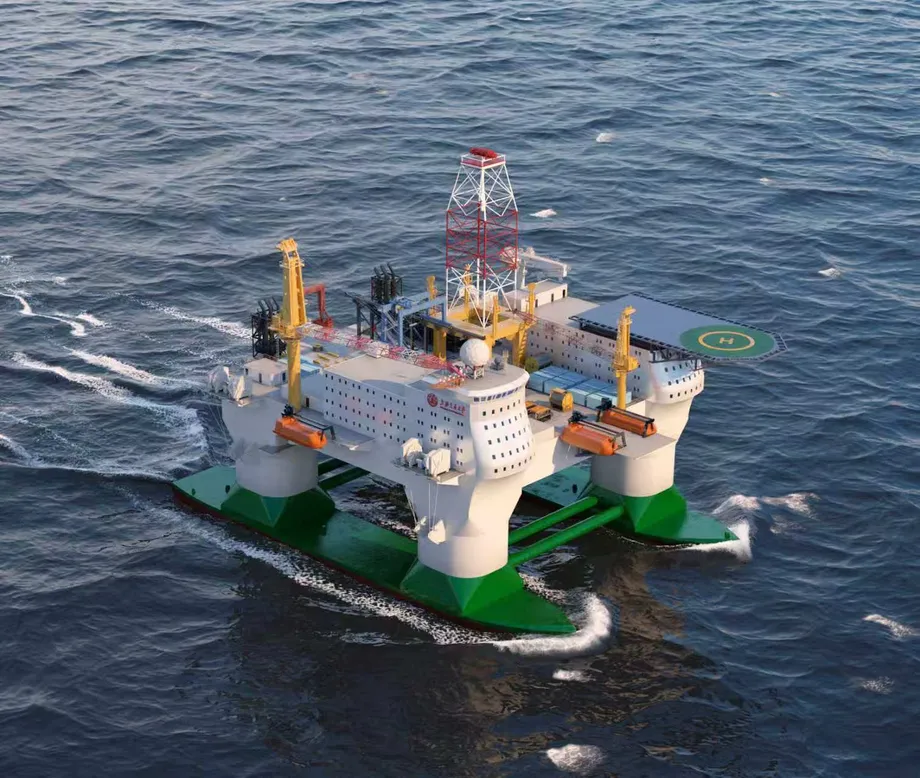
The China Academy of Launch Vehicle Technology has also unveiled Linghangzhe, a recovery ship designed to retrieve Long March rocket stages with a net recovery apparatus. The approach allows recovered stages to operate without landing legs, potentially reducing their weight and complexity.
Linghangzhe adds a support vessel to a program often described through its rockets and spacecraft. Recovery equipment, escape systems and landing tests are all part of the operating infrastructure required for repeated lunar access. China's 2026 work therefore extends beyond preparing a single flight.
Chang'e-7 Heads for the Lunar South Pole
Chang'e-7 is scheduled to launch in August 2026 toward the Moon's south pole. The mission combines an orbiter, a lander, a rover and a small hopping probe, giving it several ways to investigate the region.
The south pole has attracted international interest because permanently shadowed craters may contain water ice. Some parts of these craters remain dark, making them targets for a mission designed to examine both their geology and possible ice deposits.
Chang'e-7's hopping probe will be able to leap into dark craters to search for ice and study their geological composition. The orbiter, lander and rover will provide other parts of the exploration effort, bringing different capabilities to a scientifically rich area.
Water ice could become a useful resource for future astronaut bases. It could also be converted into rocket propellant for missions traveling farther into space. Finding and studying it would help planners assess how lunar resources might support a sustained human presence.
Chang'e-7 runs alongside China's crewed lunar preparations. The robotic mission focuses on conditions and resources at the south pole, while Long March-10, Mengzhou and Lanyue address the separate task of transporting astronauts to the Moon and back.
Tianwen-2 Targets an Asteroid Near Earth
Tianwen-2 is scheduled to reach asteroid 469219 Kamo'oalewa in July 2026. The object is described as a quasi satellite of Earth, an asteroid with an orbit that keeps it associated with our planet, and is among the most accessible objects near Earth.
The spacecraft will attempt to collect approximately 100 grams of material using multiple sampling methods. Its sample return capsule is scheduled to reach Earth in November 2027, making the asteroid encounter in 2026 one stage of a mission continuing into the following year.
Material returned from the asteroid will give scientists samples to study for clues about the early Solar System and planetary formation. The mission complements lunar exploration by investigating another kind of object rather than concentrating all of China's robotic research on the Moon.
Tianwen-2's schedule also shows how several scientific campaigns will overlap. Its expected asteroid arrival in July comes before Chang'e-7's planned August launch, while the sample return remains a later objective. The year combines reaching a destination, starting a new expedition and preparing future results.
Xuntian Will Survey the Sky Beside Tiangong
Xuntian, also known as the Chinese Space Station Telescope, is planned for launch in late 2026. It will carry a primary mirror measuring two meters across and have a field of view more than 300 times larger than that of the Hubble Space Telescope.
A field of view is the area an instrument can see at once. Xuntian's wide view is intended to support large surveys of the sky, allowing the telescope to map cosmic structures and investigate how they have evolved over billions of years.
The telescope will also investigate dark matter and dark energy. These are among the scientific targets of a mission intended to examine the universe on a large scale, extending China's 2026 agenda beyond the nearby destinations of the Moon and an asteroid.
Xuntian will share an orbit with Tiangong, allowing astronauts to perform maintenance and upgrades. That servicing capability could extend its working life for decades and distinguishes the planned observatory from other space telescopes.
Tiangong therefore has a role beyond housing crews and experiments. Its proximity to Xuntian is part of the telescope's operating plan, connecting human spaceflight with astronomical research. The same station preparing for a stay lasting one year could also support a major scientific instrument working nearby.
A Busy Schedule in a Wider Space Race
China's plans unfold alongside renewed international activity in lunar exploration. NASA's Artemis II mission is planned for April 2026, carrying four astronauts on a flight around the Moon. It will not land, but is intended to mark the first human voyage beyond low Earth orbit since Apollo 17 in 1972.
India's Gaganyaan program is preparing for uncrewed test flights that could lead to an independent Indian human spaceflight capability. In the commercial sector, SpaceX continues testing Starship with eventual Mars missions in view, while Vast plans to launch the Haven-1 commercial space station.
These programs place government exploration and private enterprise on parallel tracks during 2026. China's own record of 93 successful launches in 2025 provides the industrial foundation for its next schedule, which combines frequent launches with station operations, lunar hardware development and extended medical research.
The main milestones described for China's program span several years:
- 2023: Gui Haichao became the first Chinese civilian in space.
- June 2024: China's fourth astronaut recruitment round concluded, including payload specialists from Hong Kong and Macau.
- February 2025: Beijing and Islamabad signed the agreement for a Pakistani astronaut to visit Tiangong.
- 2025: China recorded 93 successful space launches, a national record.
- July 2026: Tianwen-2 is scheduled to reach Kamo'oalewa.
- August 2026: Chang'e-7 is scheduled to launch toward the lunar south pole.
- Late 2026: Xuntian is planned for launch, and the Pakistani astronaut is likely to fly aboard Shenzhou-24.
- November 2027: Tianwen-2's sample return capsule is scheduled to reach Earth.
- Before 2030: China aims to land astronauts on the Moon.
China's program is moving toward routine, sustained use of space while taking on more demanding missions. Its combination of launch capacity, international participation and lunar development adds to a period of competition and cooperation involving multiple national programs. For 2026, the central task is to carry out that broad schedule while preparing the people and vehicles needed for the lunar landing goal.
The Essentials
- The 2026 schedule includes Tianzhou-10, Shenzhou-22, Shenzhou-23 and the uncrewed Mengzhou-1 test flight.
- One Shenzhou-23 astronaut is scheduled to stay aboard Tiangong for twelve consecutive months.
- A Pakistani payload specialist is expected to become Tiangong's first foreign visitor, likely aboard Shenzhou-24 in late 2026.
- Payload specialists from Hong Kong and Macau may also fly during the year.
- Long March-10, Mengzhou and Lanyue have completed major tests supporting China's goal of a crewed lunar landing before 2030.
- Chang'e-7 is scheduled for August and will search for water ice near the Moon's south pole.
- Tianwen-2 is scheduled to reach Kamo'oalewa in July and attempt to collect approximately 100 grams for return in November 2027.
- Xuntian is planned for late 2026, with a mirror measuring two meters and a field of view more than 300 times Hubble's.
- China recorded 93 successful space launches in 2025, setting a national record.