Police Escalate Investigation Into HYBE's Market Debut
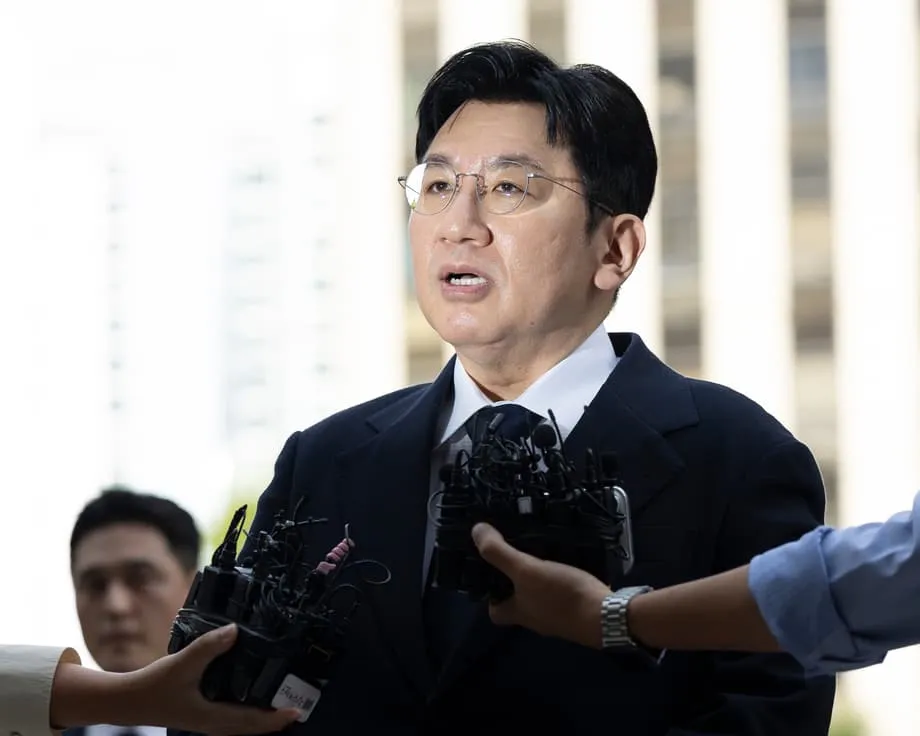
South Korean police have asked prosecutors to seek an arrest warrant for Bang Si-hyuk, the billionaire founder and chairman of HYBE Corporation, over allegations that he illegally earned approximately 200 billion won, or $136 million, through transactions connected to the entertainment company's October 2020 stock market debut.
Contents
- Police Escalate Investigation Into HYBE's Market Debut
- What Police Say Happened Before the IPO
- The Alleged Agreement Behind the $136 Million
- Bang's Lawyers Challenge the Need for Detention
- How the Investigation Reached This Point
- BTS Tour Brings the Travel Ban Into Focus
- HYBE Shares Fall as the Broader Market Rises
- The ADOR Dispute Adds Another Management Strain
- From Songwriter to the Architect of HYBE
- Bang's Wealth and the Assets Already Frozen
- Potential Penalties and a Wider Market Crackdown
- The Bottom Line
The Seoul Metropolitan Police Agency's Financial Crime Investigation Division confirmed the request on Tuesday, April 21, marking the sharpest escalation in an investigation into the executive behind BTS. As of April 22, the next step rests with prosecutors, who must review the police application before deciding whether to ask a court to authorize his arrest.
Investigators have booked Bang on allegations of fraudulent and unfair trading under South Korea's Capital Markets Act. They suspect that he misled early investors about plans to take the company public, then received a share of the profits after a private equity fund bought their holdings and sold them following the listing.
Bang's defense disputes that account. HYBE says documentation concerning the agreement was given to the banks handling the listing, which advised that public disclosure was unnecessary. His lawyers say the investors initiated the share sales and proposed the arrangement for sharing profits.
The warrant request comes as BTS returns to international touring after completing South Korea's mandatory military service requirements. Bang, 53, has been barred from leaving the country since returning from the United States in August, creating difficulties for HYBE's international business during a major comeback by its flagship group.
Seoul Metropolitan Police Agency Commissioner Park Jung-bo said at a briefing on Monday that the investigation was "essentially complete" and would conclude soon. Police have already searched HYBE's headquarters and the Korea Exchange and questioned Bang on five occasions.
What Police Say Happened Before the IPO
The allegations begin in 2019, when HYBE was still called Big Hit Entertainment. Police suspect that Bang told early shareholders and venture capital firms that the company had no imminent plans for a stock market listing. Those investors subsequently sold their shares to a private equity fund connected to his business associates.
An initial public offering, or IPO, is the process through which a company first sells shares to public investors and begins trading on a stock exchange. Before that happens, early shareholders usually have fewer opportunities to sell their holdings. Information about an approaching listing can therefore affect both their decision to sell and the price they accept.
Investigators allege that Bang's statements helped the fund buy the shares at a lower valuation. Within months of the transfers, HYBE proceeded with its October 2020 listing on the Korea Exchange. Investors who had sold beforehand missed the subsequent rise in value.
The company's shares debuted at 235,000 won, approximately $235, compared with an initial offering price of 118,000 won, approximately $110. The listing valued the company at about $7.3 billion and generated substantial wealth for shareholders who retained their holdings.
The central question in the investigation is whether investors received misleading information about the company's listing plans when deciding to sell. Police also suspect that Bang had a private financial interest in the fund's eventual gains through an agreement that was not publicly disclosed.
The Alleged Agreement Behind the $136 Million
Police believe Bang had an arrangement entitling him to 30% of the profits when the private equity fund sold its HYBE shares after the IPO. Investigators estimate that the agreement generated about 200 billion won for him, equivalent to $136 million or £101 million.
Under the alleged mechanism, the fund first acquired shares from investors who believed a listing was not imminent. After HYBE went public and its shares rose, the fund sold its holdings at a profit. Police suspect that it then transferred 30% of those proceeds to Bang under their earlier agreement.
The alleged benefit to Bang was a share of the increase in value without holding the acquired shares directly in his own name. Investigators are examining whether the structure allowed him to receive gains while avoiding the disclosure obligations and regulatory scrutiny associated with direct ownership.
HYBE says it provided the relevant documentation to the IPO underwriters, the financial institutions responsible for arranging the share sale. According to the company, those institutions advised that the agreement did not need to be disclosed publicly.
Bang's defense also says the original investors chose to sell and proposed the terms for sharing profits. The anticipated prosecution argument centers on whether the statements about the IPO timetable were materially misleading, regardless of who suggested the later financial arrangement. Material information means information important enough to affect an investor's decision.
The financial restrictions already imposed are substantial. In December 2024, the Seoul Southern District Court approved the provisional seizure of Bang's HYBE shares worth approximately 156.8 billion won, or $118 million. The order froze a significant portion of his estimated $2 billion fortune while the investigation continued.
Bang's Lawyers Challenge the Need for Detention
Bang's legal representatives have expressed regret over the warrant request, saying he has cooperated voluntarily throughout the investigation. Their response focused on the decision to seek detention while promising continued participation in the legal process.
His attorneys issued the following statement in response to the police move:
We regret that a detention warrant has been sought despite our full and consistent cooperation with the investigation over an extended period. We will continue to cooperate with all legal procedures and make every effort to clearly explain our position.
Authorities received initial information about the suspected conduct in late 2024. The investigation subsequently included raids at HYBE's headquarters in Seoul and at the Korea Exchange, South Korea's principal stock market operator.
Bang has appeared for questioning five times, including two sessions in September. During those September appearances, he told reporters he would cooperate fully and apologized for causing concern.
In August, he voluntarily returned from the United States to South Korea specifically to face questioning. He told employees at the time that he felt deep regret knowing that HYBE's artists and staff might suffer because of the situation. The travel restriction imposed since that return has limited his ability to oversee business abroad.
How the Investigation Reached This Point
The case spans transactions before the listing, the company's public debut and a later criminal investigation. The main events fall into the following sequence:
- 2019: Police allege that Bang told early investors there were no imminent listing plans before they sold shares to a private equity fund connected to his associates.
- October 2020: Big Hit Entertainment, now HYBE, went public on the Korea Exchange at a valuation of approximately $7.3 billion.
- Late 2024: Authorities received initial information concerning the suspected conduct.
- December 2024: The Seoul Southern District Court approved the provisional seizure of approximately 156.8 billion won in Bang's HYBE shares.
- August: Bang returned from the United States for questioning and was barred from leaving South Korea.
- September: Bang attended two questioning sessions among his five appearances before investigators.
- Monday, April 20, 2026: Commissioner Park Jung-bo said the investigation was essentially complete.
- Tuesday, April 21, 2026: Police confirmed that they had requested prosecutors seek an arrest warrant.
The Seoul Southern District Prosecutors' Office is expected to review the application before potentially seeking court approval. If prosecutors request detention, a court hearing would typically take place within two to three days. No hearing date had been given as of April 22.
A detention hearing concerns whether a suspect should be held while the criminal process continues. The financial transactions, Bang's resources and potential concerns about destruction of evidence or flight are likely to feature in the authorities' assessment. His lawyers point to his record of cooperation in challenging the need for detention.
BTS Tour Brings the Travel Ban Into Focus
BTS is performing in 34 cities worldwide in support of "Arirang," its first album in nearly four years. The tour follows the members' completion of their military service obligations and represents an important commercial moment for HYBE.
The group's American concerts are scheduled to begin in Tampa, Florida, later in April. Other international dates include a planned visit to the United Kingdom in July. Industry estimates put potential revenue from the tour at more than $1 billion.
South Korea's National Police Agency confirmed that the United States Embassy in Seoul sent a formal letter requesting a temporary suspension of Bang's travel restrictions. According to police, the request concerned permission for Bang and other senior HYBE executives to enter the United States for Independence Day celebrations on July 4 and business meetings related to BTS's American concerts.
HYBE denied requesting the embassy's intervention. The company said Bang had not received an official invitation from the embassy and that no decision had been made about attending the Independence Day events.
The U.S. Embassy declined further comment when approached by Korean media. The request places an international business concern alongside a domestic criminal investigation: HYBE is managing a major cultural export while its chairman remains subject to restrictions imposed by South Korean authorities.
HYBE Shares Fall as the Broader Market Rises
HYBE's stock fell between 2.3% and 2.9% during Tuesday's trading following news of the warrant request. South Korea's benchmark KOSPI index rose 2.7% and reached fresh intraday highs during the same session.
The opposite movements show how sharply HYBE diverged from the wider market that day. Its decline came despite a generally rising stock market, as investors faced new uncertainty about the chairman's legal position.
Shares in SM Entertainment, YG Entertainment and JYP Entertainment also declined. The weakness across those major K-pop companies reflected broader anxiety about regulatory scrutiny of the entertainment sector.
HYBE had enjoyed a much stronger market response in January, when BTS announced its world tour. The company's shares reached highs not seen in four years, and more than one trillion won was added to its market value. Questions about Bang's legal exposure have since placed pressure on the shares as the company tries to sustain BTS's commercial momentum.
The company has faced scrutiny of its governance and transparency since becoming publicly traded. Public shareholders depend on accurate information about financial arrangements and leadership risks when deciding whether to buy, hold or sell their shares.
The ADOR Dispute Adds Another Management Strain
HYBE is also dealing with the continuing fallout from its dispute with producer Min Hee-jin over subsidiary ADOR and the girl group NewJeans. The conflict erupted in 2024 when HYBE tried to remove Min as ADOR's chief executive.
HYBE accused Min of illegally attempting to take control of the subsidiary. Min accused Bang of hostile treatment and of undermining NewJeans in favor of other acts within the company.
The dispute moved into the courts. A ruling last year bound the NewJeans members to their contracts through 2029, despite their attempts to leave the label following Min's removal.
The ADOR conflict and Bang's financial investigation concern different events, but both create management demands for HYBE during the BTS comeback. The company must handle its artists, contractual disputes and international operations while its founder faces the possibility of detention.
From Songwriter to the Architect of HYBE
Bang was born in 1972 and developed an early interest in music. He performed original compositions in middle school bands before beginning his professional career as a songwriter and producer at SidusHQ.
In 1997, he co-founded JYP Entertainment with singer and songwriter Park Jin-young. JYP later became one of South Korea's big four K-pop conglomerates. Bang's work producing hits for the first generation K-pop group g.o.d earned him the nickname "Hitman Bang," reflecting his success as a composer.
Bang left JYP in 2005 and established Big Hit Entertainment with limited initial capital. The company encountered serious financial trouble and came close to bankruptcy in 2007 before he shifted toward artist management and development.
In 2010, he began developing the group that would become BTS. Initially conceived as a collective focused on hip-hop, it evolved into a group of seven members and debuted in 2013.
Bang described his decision to adopt a "K-pop idol model" for BTS in a 2019 interview with Time, explaining that he had considered the business context and market conditions. BTS later became the first Korean act to top Billboard's Hot 100 and the first Asian group to exceed five billion streams on Spotify. Its success helped establish a template for K-pop's expansion into global markets.
HYBE then grew beyond its origins as a company centered on one label. In 2021, it made its largest acquisition, spending approximately $1.05 billion to buy Scooter Braun's Ithaca Holdings and securing management rights to Justin Bieber, Ariana Grande and other major Western artists.
Later expansion included the acquisition of Atlanta hip-hop label Quality Control and entry into Latin music markets. HYBE now operates through subsidiary labels including Big Hit Music, Belift Lab, Pledis Entertainment and Source Music. Its roster includes Seventeen, Le Sserafim and the global project group Katseye.
Bang's Wealth and the Assets Already Frozen
Bloomberg estimated Bang's net worth at approximately $770 million in 2019. More recent estimates put his wealth above $2 billion, placing him among the richest music executives in the world.
According to the Korea CXO Research Institute, Bang held more than 13 million HYBE shares as of last month, valued at nearly five trillion won, or $3.6 billion. He was identified as the only self-made billionaire in South Korea's entertainment industry.
The shareholding valuation and estimates of personal net worth describe different measures of his wealth. The former concerns the market value of his HYBE holdings at a particular point, while net worth concerns the value of a person's assets after liabilities.
The December 2024 order freezing shares worth 156.8 billion won restricted his control over part of that holding during the investigation. The alleged 200 billion won in proceeds is the amount police attribute to the arrangement for sharing profits, rather than the value of all his HYBE shares.
Potential Penalties and a Wider Market Crackdown
South Korea's Capital Markets Act provides severe penalties for fraudulent conduct involving financial products. A person convicted of generating at least five billion won, approximately $3.4 million, through false representations faces a minimum prison term of five years, with the maximum extending to life imprisonment.
The law also permits fines reaching twice the value of illicit gains. Using the alleged $136 million profit attributed to Bang, that could theoretically mean a fine exceeding $270 million. Any punishment would depend on a conviction and the court's findings.
The investigation is unfolding during a tougher campaign against stock market manipulation and securities fraud under President Lee Jae Myung's administration. Authorities have established a joint investigation team involving the Financial Supervisory Service and the Korea Exchange to target illegal trading.
The team operates under a "one strike and you're out" policy, under which accounts involved in illegal activity face prompt suspension. The approach focuses on interrupting suspected illegal trading as well as pursuing those responsible.
Other prominent figures have faced stock rigging accusations in separate cases, including Samsung chairman Lee Jae-yong, Kakao founder Kim Beom-su and former first lady Kim Keon-hee. They were eventually acquitted in those cases.
Bang's investigation centers on alleged direct misrepresentations to individual investors and a private agreement concerning profits from their former shares. Prosecutors must now decide whether to pursue the police request, after which a court would decide whether detention is justified.
The Bottom Line
- Police have requested that prosecutors seek an arrest warrant for HYBE founder and chairman Bang Si-hyuk over alleged fraud connected to the company's October 2020 IPO.
- Investigators suspect that he misled investors in 2019 and received 30% of a private equity fund's profits, generating approximately 200 billion won, or $136 million.
- HYBE says underwriters advised that public disclosure of the agreement was unnecessary. Bang's defense says investors initiated the sales and proposed the terms for sharing profits.
- Bang's lawyers say he has cooperated fully and regret the decision to seek detention. No court hearing date had been announced as of April 22, 2026.
- Shares worth approximately 156.8 billion won were provisionally seized in December 2024, and Bang has been barred from leaving South Korea since August.
- BTS is touring 34 cities for "Arirang," with its American leg scheduled to start in Tampa later in April and a United Kingdom visit planned for July.
- The U.S. Embassy requested temporary relief from travel restrictions. HYBE denies asking for that intervention.
- HYBE shares fell between 2.3% and 2.9% on Tuesday while the KOSPI rose 2.7%.
- A conviction involving illicit gains of at least five billion won can carry a sentence ranging from five years to life imprisonment, alongside substantial financial penalties.