
A 100 Rupee Threshold Disrupts Everyday Border Shopping
Nepal's strict enforcement of customs duties on goods worth more than NRS 100, approximately INR 63, has sparked protests in Birgunj and disrupted daily shopping across the border with India. Residents who routinely cross for food, clothing and household supplies now face inspections and duty payments on purchases that previously passed with less scrutiny.
Contents
- A 100 Rupee Threshold Disrupts Everyday Border Shopping
- Why Border Families Depend on Indian Markets
- Protesters Invoke the Roti-Beti Relationship
- Government Says the Law Has Not Changed
- Vehicle Restrictions Add to the Pressure
- Raxaul Disruption Puts Essential Cargo Under Strain
- Food Stocks, Cooking Gas and Festival Demand
- Opposition Parties Seek Withdrawal and Exemptions
- Indian Border States Increase Security
- Partial Clearance Resumes at Major Crossings
- At a Glance
As of April 20, 2026, the dispute extends beyond the cost of shopping. Demonstrators say the enforcement threatens the practical arrangements that sustain families in Nepal's southern border communities, while officials defend it as the application of existing customs law to prevent illegal imports and lost government revenue.
Joint teams of customs officials, revenue investigators, police and the Armed Police Force have intensified checks at entry points. Security personnel open individual bags and packages carried by people returning from Indian markets. Long queues have formed, and the movement of goods across the border has slowed dramatically.
The inspections affect trips to weekly bazaars, including those in Phareniya in Rupandehi. For residents accustomed to crossing the border for ordinary purchases, the change means more time at checkpoints and additional costs when their goods exceed the duty threshold.
Customs duty is a payment charged on goods entering a country. The central disagreement is over how strictly Nepal should apply that requirement to the small purchases of border households. Authorities say the rule already existed; protesters want exemptions that recognise how closely their daily lives depend on neighbouring Indian markets.
Why Border Families Depend on Indian Markets
Residents of Nepal's Terai region, particularly in Madhesh Province, have built close economic ties with Indian markets over decades. Families cross for food staples, clothing and agricultural supplies, including fertilizers that protesters say are not always readily available through Nepalese government channels.
Indian markets also supply goods used for major family occasions. Demonstrators say purchases connected with events from birth to death ceremonies have traditionally come from across the border. One demonstrator described the stricter enforcement as an "unannounced blockade," reflecting the sense that familiar routes to essential supplies have suddenly become difficult to use.
Community leaders argue that geography and household economics have created social and commercial connections that function as part of everyday life. They say the policy overlooks those arrangements by applying customs requirements to routine domestic purchases.
Previously, small purchases for personal use often received informal exemptions. Armed security personnel inspecting ordinary shoppers now represent a sharp change in practice, even though officials say the underlying legal requirement is unchanged. Residents describe abnormal tension at crossings that once formed part of the regular rhythm of their day.
Low income households are central to the dispute. Protest leaders say these families depend on cheaper goods in Indian markets to manage their budgets. A duty payment, a lengthy queue or a restriction on transport can therefore affect both the price of a purchase and the effort needed to bring it home.
Protesters Invoke the Roti-Beti Relationship
Demonstrators have repeatedly invoked the Roti-Beti relationship, meaning "bread and daughter," to explain why they see the dispute as more than a customs matter. The term describes centuries of shared cultural practices and marriages across the India-Nepal border, alongside the everyday economic ties represented by bread.
Families connected through marriage and community life often depend on movement across the boundary. Protesters argue that treating routine household purchases as commercial imports disregards those connections and weakens the friendship and mutual dependence that have shaped the bilateral relationship.
Political activists from the Jana Adhikar Party and other groups have demanded exemptions for small purchases intended for domestic consumption. Their demand focuses on separating the needs of ordinary households from the government's campaign against illegal imports.
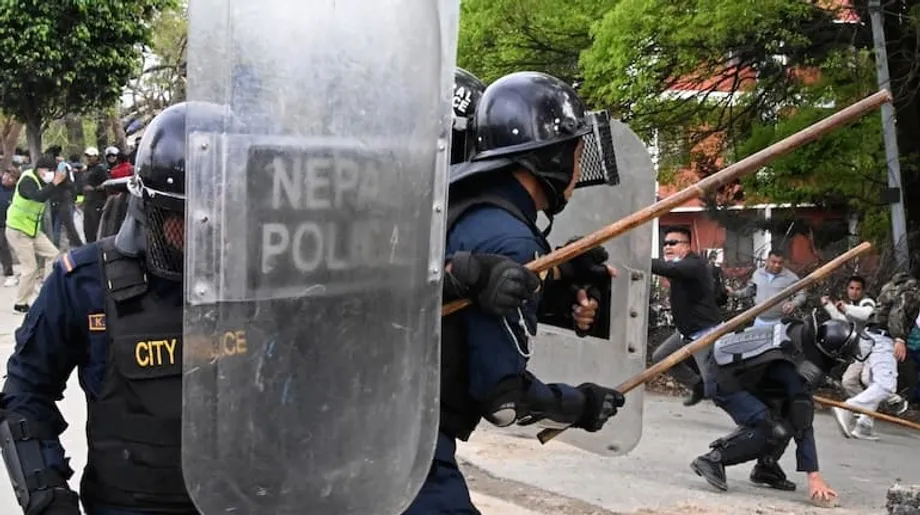
The demonstrations have spread beyond Birgunj. At Kathmandu's Maitighar Mandala, approximately 100 Madhesi youths gathered with placards calling for changes to the policy. Their slogans included "Cancel customs duty," "Respect Madhesi people," and "Don't kill the poor people."
The protests connect a local shopping problem with a wider political argument about how the state treats border residents. For the demonstrators, recognition of the Roti-Beti relationship means allowing practical room for household needs within the customs system.
Government Says the Law Has Not Changed
Nepalese officials insist that the enforcement campaign does not introduce new legislation. They say the Customs Act already required duty payments on goods worth more than 100 rupees, but that the provision was previously applied less rigorously.
The Department of Customs has confirmed that directives from both the Prime Minister and Finance Minister support a zero tolerance approach to revenue leakage. Revenue leakage means money the government should collect but loses when goods enter without the required payments.
Officials defending the customs enforcement described the existing rule and the government's approach in these terms:
It has always been the government's policy to adopt a zero-tolerance approach to prevent illegal imports in customs areas. The Customs Act already had a provision requiring duties on goods worth more than 100 rupees. We have become more proactive now.
Government sources say evasion had been widespread at secondary customs points. Those smaller crossings are now receiving more attention from coordinated monitoring teams involving the Department of Customs, Department of Revenue Investigation, District Administration Offices, Nepal Police and the Armed Police Force.
Authorities present the campaign as a way to collect duties and control illegal imports. Protesters focus on its effect on ordinary shoppers. The conflict centres on enforcement: a rule that officials describe as longstanding is now being applied in ways that residents experience as a substantial change.
Vehicle Restrictions Add to the Pressure
Private vehicles bearing Indian licence plates are now prohibited from entering Nepal without prior authorisation. The restriction forms part of the broader security initiative accompanying the customs crackdown.
Motorcycles and other vehicles previously crossed frequently for personal use. Requiring authorisation changes that pattern and adds another condition to journeys that border communities have long treated as routine.
The vehicle rules operate alongside more intensive inspections of goods at entry points. Residents therefore face tighter controls on both what they carry and how they travel, while the joint monitoring teams maintain their expanded presence at secondary customs posts.
Officials describe the coordinated approach as necessary to prevent illegal imports. Community leaders argue that ordinary personal journeys and household shopping need greater flexibility within those controls.
Raxaul Disruption Puts Essential Cargo Under Strain
The Integrated Check Post at Raxaul suspended operations for several days, disrupting a major route into Nepal. The facility handles approximately 75% of Nepal's trade, including cargo arriving through the Indian ports of Kolkata and Haldia.
Around 600 cargo trucks that normally enter Nepal daily were stranded. Their loads included fruits, vegetables, salt, fish, potatoes, onions and petroleum products. Delays at a crossing handling roughly three quarters of the country's trade create pressure well beyond the neighbouring markets.
The disruption has also affected medicine supplies, raising concerns about the health sector. Household shopping restrictions and delays to commercial cargo both affect access to goods, though they involve different journeys through the border system.
Damage to customs infrastructure during earlier phases of the Gen-Z protests continues to hamper full operations. Those protests targeted government offices, including critical border posts. Restoring trade therefore requires working through damaged facilities as well as managing security and customs clearance.
Raxaul and the adjoining Nepalese city of Birgunj have fallen quiet under curfew-like conditions. About 50 tourists cancelled planned crossings as normal activity in the gateway cities was suspended.
Food Stocks, Cooking Gas and Festival Demand
With Dashain, Tihar and Chhath approaching, the disruption threatens supplies during periods traditionally associated with increased consumption and shopping. Officials are working to restore full capacity before the peak festive shopping season.
Authorities report adequate warehouse stocks of rice, lentils, flour and cooking oil. They have urged the public to avoid panic buying, saying national food stocks are sufficient.
Distribution remains a concern even where goods are already in storage. Delays in moving supplies can create local shortages, particularly in smaller towns and rural areas. Food held in a warehouse still has to reach shops and households.
The Nepal LP Gas Industries Association has warned that continued delays could disrupt household cooking gas supplies. Nepal maintains limited petroleum and LPG reserves, leaving less room to absorb interruptions in deliveries.
LPG, the gas used for household cooking, and other fuel imports depend entirely on movement across the border. Domestic mills can process food grains, but fuel supplies rely on imported deliveries reaching Nepal. That dependence makes stalled petroleum cargo especially pressing for households and distribution networks.
Opposition Parties Seek Withdrawal and Exemptions
The opposition Nepali Congress has formally demanded the immediate withdrawal of the customs enforcement decision. It described the policy as "anti-people and insensitive" during a period of rising inflation.
Lawmakers from Madhesh and Lumbini provinces have met the Home Minister to seek an easing of the customs policy. They stressed the need to preserve centuries of trade relationships while acknowledging that genuine smuggling requires action.
The Jana Adhikar Party has accused the government of targeting ordinary citizens because it cannot control larger sources of revenue leakage. Its protest leaders say the burden falls disproportionately on poorer households in border districts that rely on Indian markets for cheaper goods.
Civil society organisations have proposed temporary periods without customs duties to support cultural visits and religious tourism. Other stakeholders have called for flexibility for household goods and goods used in productive work that support local livelihoods.
Those proposals retain a role for strict border controls against drug trafficking and money laundering. Their aim is to allow room for everyday needs while maintaining enforcement against activities that authorities and community representatives identify as serious concerns. No decision or date for introducing the proposed exemptions has been announced.
Indian Border States Increase Security
Indian authorities have placed border states on high alert in response to the unrest. Uttar Pradesh activated security measures across seven districts: Pilibhit, Lakhimpur Kheri, Bahraich, Shravasti, Balrampur, Siddharthnagar and Maharajganj.
The state established 73 checkpoints with patrolling around the clock. Bihar's East Champaran district also introduced preventive measures to maintain order near the Raxaul gateway.
In northern Bengal, the Kakarvitta-Panitanki crossing experienced protests involving torched tires and damaged infrastructure. The unrest there added to concerns about movement and security along the border.
West Bengal Chief Minister Mamata Banerjee urged residents of districts bordering Nepal to avoid trouble and maintain peace. She said the Union government had not ordered border closures and described violence in Kathmandu and other areas as an internal matter for Nepal to resolve.
Banerjee also stressed that stability in Nepal benefits India. The Sashastra Seema Bal, India's border security force at these crossings, has been instructed to discourage tourists from entering Nepal because of curfew conditions in border towns.
Partial Clearance Resumes at Major Crossings
Nepalese authorities report that partial cargo clearance has resumed at major entry points, including Kakarbhitta, Biratnagar, Bhairahawa and Nepalgunj. Fuel, LPG, medicines and food items are receiving priority.
Police escorts now accompany convoys from border points to help essential goods move safely. Indian authorities have cooperated by keeping their offices open to support trade, while temporary customs offices have been deployed to process stranded shipments.
Damaged infrastructure continues to limit full operations. The combination of temporary processing arrangements, priority clearance and escorted convoys is intended to move urgently needed cargo while regular capacity is restored.
For border households, the dispute over daily purchases continues alongside those efforts. The government is defending strict collection of duties under existing law, while residents and opposition groups are pressing for changes that recognise the cost of routine shopping and the close ties between communities on either side of the boundary.
At a Glance
- Nepal is strictly enforcing duties on goods worth more than NRS 100, approximately INR 63, brought from India.
- Protests in Birgunj and Kathmandu demand relief for household purchases and recognition of the Roti-Beti relationship.
- Joint monitoring teams are inspecting bags and packages, while Indian registered private vehicles require prior authorisation to enter Nepal.
- The Raxaul Integrated Check Post, handling approximately 75% of Nepal's trade, suspended operations for several days, stranding around 600 cargo trucks.
- Officials report sufficient national food stocks, but distribution delays and limited fuel reserves remain concerns.
- Nepali Congress wants the enforcement decision withdrawn, while lawmakers and civil society groups seek exemptions or greater flexibility.
- Indian border states have increased security, including 73 checkpoints across seven Uttar Pradesh districts.
- Partial clearance has resumed at several Nepalese crossings, with fuel, cooking gas, medicines and food receiving priority.