When Cramming Kills Curiosity
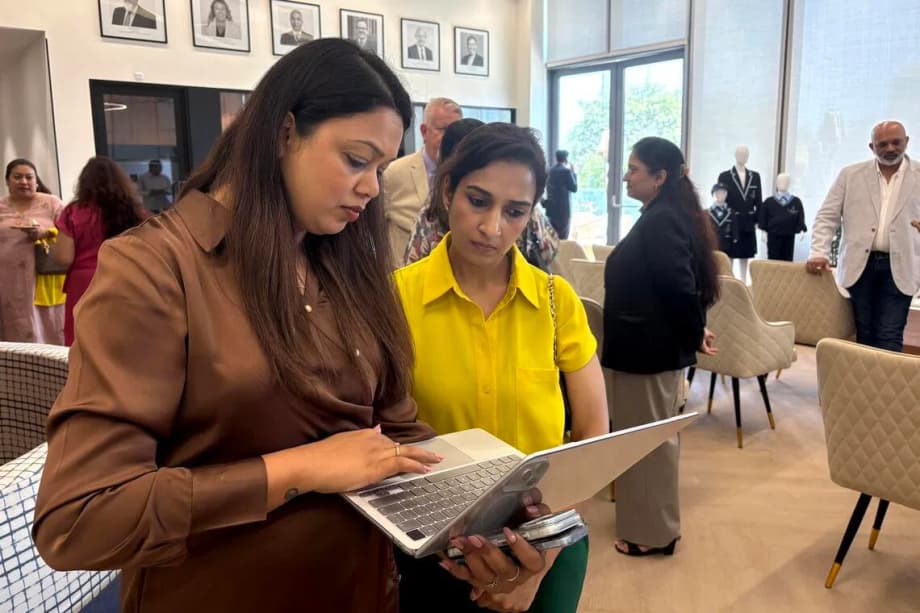
Ms Neha Aggarwal watched her 10-year-old son fade. Living in Panipat, an industrial hub in northern India’s Haryana state, she saw the sixth-grader lose all interest in school. He was not learning; he was memorizing. “He is losing all interest in school and learning. He is just cramming,” she explained during a recent trip to scout schools in Gurgaon, about 129 kilometers from her home. With limited options in her hometown, she began considering boarding schools offering the International Baccalaureate (IB) or Cambridge Assessment International Education, hoping to give him what she called “a new experience of life.” Her story mirrors a growing movement across India, where affluent parents are increasingly transferring children from traditional Indian schools to international curricula in search of something they believe is vanishing from conventional classrooms: the joy of learning itself.
Across the country, families are making similar calculations. According to ISC Research, India hosted 972 international schools in January 2025, up from 884 in 2019. This 10 percent increase places India second only to China in the number of international schools globally. The trend is no longer confined to metropolitan elites in Delhi, Mumbai, or Bangalore. Parents in Tier 2 and Tier 3 cities such as Madurai, Trichy, and Udhampur are now joining the shift, driven by rising disposable incomes and a desire for educational models that emphasize critical thinking over memorization.
Across South Asia, there is a clear and sustained rise in interest in international education. Today, parents are evaluating education through a wider lens. Beyond academic outcomes, there is increasing emphasis on skills such as critical thinking, communication and adaptability.
Vinay Sharma, senior vice-president and regional director of Cambridge International Education for South Asia, notes that demand reflects a fundamental change in how families view schooling. They seek skills that translate across borders, preparing students for an interconnected world where adaptability matters as much as academic scores.
The Pedagogy Divide: Exams versus Experience
The contrast between traditional Indian education boards and international curricula could hardly be starker. Indian curricula, whether the Central Board of Secondary Education (CBSE), the Indian Certificate of Secondary Education (ICSE), or various state boards, remain largely exam-driven. Final examinations carry significant weight, featuring objective questions, short answers, and long-form essays that determine a student’s academic fate. While internal assessments and practicals have gained importance, the shadow of standardized testing looms large.
International programs like the IB and Cambridge operate differently. They blend internal assessments, research projects, and examinations to evaluate students. The focus rests on inquiry-based learning, where students explore concepts through projects and real-world applications rather than memorizing facts for tests. This approach appeals to parents who experienced the intense pressure of India’s competitive exam culture and wish to spare their children similar stress.
“The boards are changing due to NEP, but there are still many gaps. It is a very slow process, and training teachers to move away from the old system is slow,” said Ms Anita Paul, former principal of Amity Global School in Noida. She refers to India’s National Education Policy (NEP), which officially aims to shift focus away from rote learning toward skills-based and experiential education. Yet implementation has lagged, leaving parents to seek alternatives in the private sector.
The cost of this alternative remains prohibitive for most Indians. Schools offering international curricula often charge double that of Indian board schools, with annual fees starting at 700,000 rupees (approximately S$9,480) and climbing significantly higher. Despite these costs, enrollment continues growing, suggesting that for a segment of affluent families, the price represents an investment in global mobility and comprehensive child development.
The Financial Burden of Future-Proofing
The decision to enroll a child in an international school represents one of the largest financial commitments a family can make. According to estimates from the book “100 Ways to See India,” raising a child from conception through age 21 costs approximately Rs 74.3 lakh. Factor in inflation, and the figure rises to Rs 1.16 crore or even Rs 1.83 crore depending on economic conditions. Education consumes nearly 59 percent of these total expenses, dwarfing housing, healthcare, and other necessities.
The financial strain extends beyond school fees. According to HSBC’s Quality of Life Report 2024, nearly 90 percent of affluent Indian parents plan to fund their child’s education abroad. Doing so could consume up to 64 percent of their retirement savings. Some families expect scholarships or loans to bridge the gap, while others contemplate selling assets to finance international degrees. This reality has created a new class of education planners and financial advisors who specialize in helping parents navigate these long-term costs.
For families without generational wealth, the sacrifice is immediate and tangible. One parent discussed on social media forums described paying around 80,000 rupees monthly for two children attending international schools in Hyderabad. “I am not rich and am managing on a salary,” the parent wrote, questioning whether the expense truly delivers value or whether the money would be better invested elsewhere. Such discussions reveal the anxiety beneath the aspirational surface of international schooling.
Financial experts recommend starting early. Systematic Investment Plans (SIPs) in mutual funds, diversified portfolios balancing equity and debt, and consistent saving from a child’s birth can potentially build a corpus of Rs 75 lakh to Rs 1 crore over 18 to 20 years. Yet even careful planning faces the pressure of education inflation, which runs at 10 to 12 percent annually in India, potentially doubling costs every six to seven years.
Learning or Schooling? The Pedagogy Debate
Proponents argue that international schools offer something intangible yet vital: an environment where curiosity drives education rather than fear of examinations. “Parents are asking for learning, not just schooling,” observed Harish Srinivasan in a professional analysis of the trend. “When families choose an international curriculum, they are often responding to something deeper: a desire for personalised learning, meaning, and relevance outside exam walls.”
The appeal includes smaller class sizes, interdisciplinary thinking, and what educators call “learner-centric” pedagogies. Students engage in projects that connect to real-world issues, developing communication skills and collaborative abilities that traditional exam halls rarely nurture.
Yet critics challenge whether this approach serves Indian students well. Dr Ashani Dasgupta, who has worked with thousands of students since 2010, argues that children from international schools often underperform their state board and central board counterparts in motivation, focus, and rigor. “The international schools produce a strange ‘I am doing something valuable’ effect,” Dasgupta noted. “Students are immersed in a tonne of superficial activities (probably to entice rich parents). Students are made to believe that they are doing ‘projects’ of ‘international’ stature (while they actually learn almost nothing).”
This frivolity, according to critics, breeds disrespect toward true academic rigor. Because most students come from affluent backgrounds, they rarely encounter the highly motivated peers fighting to overcome economic inequality through sheer academic effort. The school environment becomes an echo chamber of privilege where hard work is undervalued.
The Transition Trap: Higher Education Hurdles
For all the emphasis on global preparation, a surprising reality has emerged: most students from international schools continue their higher education within India. This creates a complex transition problem. India’s most prestigious higher education institutions, particularly the Indian Institutes of Technology (IITs), require preparation for entrance examinations that align closely with the Indian board system. The Joint Entrance Examination (JEE) demands the kind of intensive, rigorous preparation that international curricula often deliberately avoid.
Ms Ritu Verma, a human resources consultant, embodies this tension. Three years ago, she moved her 13-year-old daughter from an Indian board school to an international institution specifically because she did not want her child to “study like crazy” the way she had. “I wanted a more comprehensive development of the child and, secondly, the option to go anywhere if she pursues an international curriculum,” Verma explained. While her daughter now enjoys researching topics and expanding her horizons, Verma worries about future options within India. “I want her to have options in India,” she said.
Online discussions among parents reveal similar anxieties. Many note that after completing international curricula in 10th or 12th grade, transitioning back into the Indian competitive exam system proves difficult. Students who spent years avoiding three-hour examinations suddenly face the rigorous testing cultures of Indian universities or the CAT (Common Admission Test) for business schools. Those without the financial means to study abroad face limited pathways, suggesting that international schooling works best for families committed to overseas higher education.
For students who do make the transition successfully, the benefits are tangible. Saranya, Ms Verma’s daughter, notices the difference between her experience and that of friends in local schools. “I see my friends (in local schools) only studying and studying and worrying about marks,” she said. “I am glad I do not have to sit a three-hour exam.”
Government Response and Geographic Expansion
The trend has not escaped government attention. Some state governments now actively encourage international curricula adoption, seeking to align India with global education standards and tap economic opportunities in a country where roughly half the 1.4 billion population is under 25.
Southern state Andhra Pradesh plans to introduce the IB curriculum in one additional class each year in every state-run school, reaching up to Class 10 by 2035. In Delhi, the Delhi Board of School Education partnered with IB in 2021 to implement programs in 30 government schools. “The IB’s presence in India has more than tripled in 15 years, reflecting India’s rising investment in education and its embrace of educational approaches that prepare students for an interconnected world,” said Mr Mahesh Balakrishnan, senior development manager of IB (India).
The expansion has reached unexpected locations. Queen Elizabeth’s School, a 450-year-old British grammar school, is preparing to open a 6.9-hectare campus in Manesar, an automobile manufacturing hub near Delhi. The founding head of the prep school, Ms Sonal Chatrath, discovered that Indian parents defied her expectations. “My perception was always that parents in India are very much examination-focused, and it is all about the maths and the English and the sciences. The parents that I have had conversations with have a broader outlook,” she observed. “I think parents want a consistent education, whether it is to continue in India or abroad. But I think a lot of them will probably go abroad.”
This geographic diversification suggests the movement is maturing beyond a metropolitan fad into a structural shift in how affluent India approaches education.
The Essentials
- India now hosts 972 international schools, up from 884 in 2019, making it second globally only to China in number of international schools.
- Annual fees for international curricula typically start at 700,000 rupees (S$9,480), roughly double the cost of traditional Indian board schools.
- Nearly 59 percent of total child-raising expenses in India go toward education, with overall costs reaching Rs 1.16 to 1.83 crore depending on inflation.
- While 90 percent of affluent Indian parents plan to fund education abroad, doing so could consume up to 64 percent of their retirement savings.
- Critics argue international school students often lack the motivation and rigor of state board students, while supporters praise the focus on critical thinking and reduced exam pressure.
- State governments including Andhra Pradesh and Delhi are now introducing IB curricula into government schools to democratize access.
- Despite international preparation, most students continue higher education in India, creating challenges when transitioning back into the competitive exam-based university system.