A smaller tax could bring faster relief
Japan's government is considering cutting the consumption tax on food and beverages from 8% to 1%, instead of the promised 0%, after retail system manufacturers described a large difference in preparation time: about three months for a rate above zero, compared with approximately one year for zero.
Contents
- A smaller tax could bring faster relief
- Why zero requires more software work
- The promise and the fiscal deadline
- A coalition partner leaves room for compromise
- The LDP faces a question of trust
- The slowest systems may set the pace
- Custom software complicates the rollout
- What 1% would mean for grocery bills
- Two years of relief brings another set of tradeoffs
- The Bottom Line
As of April 26, 2026, the proposal has become a difficult choice for Prime Minister Sanae Takaichi. She promised to eliminate the tax for two years and introduce the reduction within the fiscal year ending March 31, 2027. A faster reduction to 1% could help meet that deadline, while leaving a tax she explicitly pledged to remove.
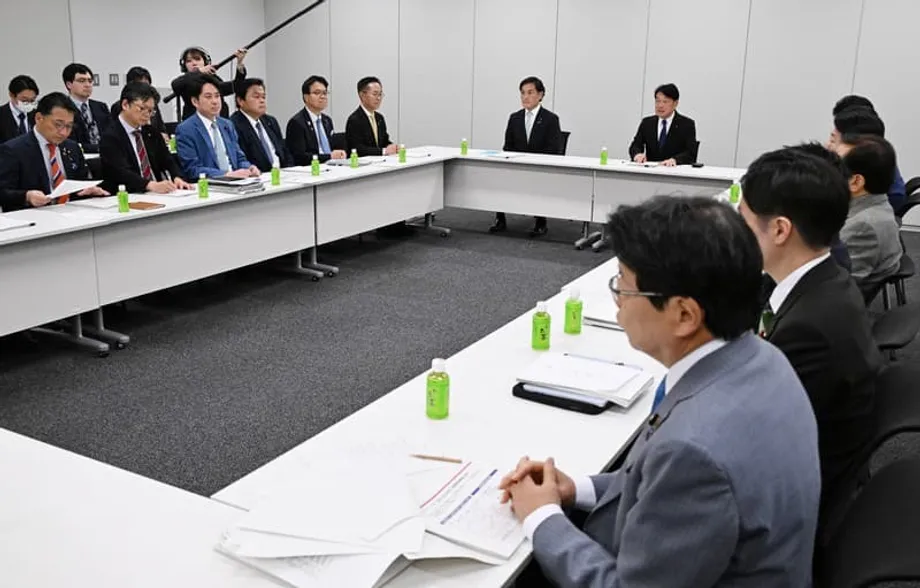
The technical issue emerged at an April 8 working level meeting of the National Council on Social Security, a forum involving different political parties. Manufacturers of point of sale systems, the computers retailers use to record purchases and calculate bills, explained that a rate other than zero could substantially shorten the work needed to update their software.
Senior figures in the Liberal Democratic Party had previously accepted a preparation period of one year as unavoidable. A senior LDP member expressed surprise at the briefing, suggesting that policymakers had not fully understood how differently retail software might handle zero and a small positive rate.
Takaichi made the food tax reduction one of her most visible commitments to households facing rising prices. The obstacle now places that promise against the practical demands of updating thousands of retail systems across Japan. For consumers, the immediate issue is both how much their grocery bills could fall and when the change could begin.
Why zero requires more software work
Point of sale systems do more than add up the prices at a checkout. They connect sales records, inventory information and tax calculations. Retailers ranging from small shops to large supermarket chains depend on those functions working together.
The explanation presented in the debate is that existing systems were built around the assumption that goods carry some tax, even if the rate is small. Under that design, changing the food tax from 8% to 1% can be handled by adjusting the stored tax rate while keeping the main calculation processes in place.
A zero rate calls for more extensive changes, according to the manufacturers' explanation. Engineers would have to revise core components to accommodate purchases with no consumption tax, a situation the account describes as outside the assumptions of systems originally coded decades ago when Japan's consumption tax was introduced.
Division by zero is one concern raised about those changes. In arithmetic, dividing a number by zero does not produce a defined result. If a software operation attempts that calculation, it can cause an error. Within retail systems, calculations used to distribute costs between items or analyse sales information could therefore need careful checking when a tax value becomes zero.
A representative of a major point of sale manufacturer said introducing 0% would require extensive safety checks across millions of lines of older code to prevent accidental division by zero. An industry observer familiar with retail software development also described the need to verify that no instruction attempts such a calculation.
The time consuming task, under this explanation, is checking and changing the system wherever its existing design depends on a positive tax value. A rate of 1% preserves that value and avoids the particular mathematical risks identified in the briefing. The manufacturers' estimates put the difference at roughly nine months.
The promise and the fiscal deadline
Takaichi set out the pledge at a January 2026 press conference announcing her intention to dissolve the House of Representatives. She described eliminating the food tax as her "cherished goal" and presented it as protection for household budgets being squeezed by inflation.
The prime minister committed to removing the tax on food and beverages for two years. In explaining that commitment, she said those purchases would be outside consumption tax:
will not be subject to consumption tax.
Takaichi later sharpened the schedule during debates between party leaders, saying she intended to introduce the reduction "within the fiscal year." The deadline attached to that statement is March 31, 2027.
The legislative timetable leaves little room for a year of software preparation. Even if a bill revising the tax law passes during an extraordinary Diet session in autumn 2026, a further year of system changes would push the start into autumn 2027. That would be about six months beyond the promised fiscal deadline.
The main dates shaping the decision are:
- January 2026: Takaichi announces her intention to dissolve the House of Representatives and promises to eliminate the food and beverage tax for two years.
- April 8, 2026: Point of sale manufacturers explain the different preparation periods at a working level meeting of the National Council on Social Security.
- April 15, 2026: Coalition leader Fumitake Fujita and LDP tax policy chair Itsunori Onodera discuss the possibility of a 1% rate.
- Autumn 2026: An extraordinary Diet session is the legislative opportunity considered in the implementation timetable.
- March 31, 2027: The fiscal year ends, marking Takaichi's stated deadline for introducing the reduction.
- Autumn 2027: A year of software work after autumn legislation could push a zero rate to this period.
A coalition partner leaves room for compromise
Fumitake Fujita, co leader of Nippon Ishin, also known as the Japan Innovation Party, indicated that the coalition partner could accept flexibility. Nippon Ishin governs in coalition with the LDP.
At an April 15 press conference, Fujita said the purpose of reducing the public's financial burden mattered more than an absolute requirement to reach zero:
I don't think it absolutely has to be zero. If it matches the policy philosophy of lowering the burden on the public, various assumptions are possible.
Fujita's position gives Takaichi political support for considering a rate that could be introduced sooner. A senior administration official also acknowledged the choice, saying that 0% remained the basic policy but that the speed associated with 1% made it a possible alternative if the prime minister prioritised rapid implementation.
The government had not settled on a final rate or a start date as of April 26. The discussion is about whether faster relief can justify changing the precise promise made to voters.
The LDP faces a question of trust
A senior LDP official opposed the 1% compromise, arguing that the party had promised the public zero taxation and that discussions within the party continued to support keeping that commitment despite the technical obstacles.
Takaichi's January language makes the political difficulty unusually direct. A 1% tax would be a large reduction from the current 8%, but it would leave a charge on the food and beverages she said would no longer be subject to consumption tax.
The administration currently enjoys high approval ratings. Continued pressure on grocery bills could nevertheless make a delayed reduction costly for a prime minister who presented it as essential household relief. Voters could see a missed deadline as a failure to carry out policy, while critics could attack a positive rate as a broken promise.
The issue is also uncomfortable for an administration that prides itself on administrative competence. A campaign commitment that appeared simple now depends on coordinating software development, testing and deployment across a large and varied retail network.
Takaichi must weigh the benefit of delivering relief sooner against the cost of changing a central commitment within months of taking office. Fujita's flexibility offers room for a compromise, while resistance within the LDP keeps pressure on her to retain 0%.
The slowest systems may set the pace
Itsunori Onodera, chairperson of the LDP's Research Commission on the Tax System, took a cautious position when speaking to reporters on April 15. He acknowledged the suggestion that 1% could shorten preparation, but said the timetable needed to account for the businesses taking longest to change their systems.
Onodera warned that an uneven transition could create confusion:
There was a comment that '1% would shorten the process,' but in the end, if we do not align with the place that takes the longest, there will be major confusion. I want to discuss this after properly confirming it.
His concern reaches beyond whether one manufacturer can update its software in three months. A national tax change involves retailers and developers with different systems, staffing levels and technical requirements. The fastest companies cannot by themselves determine whether the entire retail network is ready.
Regional retailers and smaller software developers may struggle to keep pace with national chains. Onodera's position is that the government should confirm those constraints before treating the shorter estimate as the basis for a nationwide schedule.
Custom software complicates the rollout
Large supermarket and convenience store chains often use systems customised for their own businesses. Their checkout software connects with point cards, loyalty programmes, inventory management and other proprietary services.
Those connections mean a tax change can require individual work for each retailer rather than one software update that everyone can install. The modifications must keep the tax calculation accurate without disrupting the services linked to each transaction.
Small and midsize developers face a different pressure. Many supply proprietary systems tailored to retailers in particular prefectures or communities, and severe shortages of engineers can limit how quickly they carry out changes.
Japan's retail technology network therefore combines large, heavily customised systems with smaller systems whose developers may have fewer staff available. Even a technically simpler 1% rate could take longer than the standard estimate in some businesses.
Testing is another substantial part of the work. Developers need to check that accounting, inventory records and reporting continue to function accurately after the new rate is introduced. Older systems also carry the accumulated complexity of decisions made over decades of operation.
Retail industry observers have also identified staff training and communication with customers as practical demands. Cashiers would need to understand transition procedures. If an uneven rollout left some receipts showing 1% and others temporarily showing 8%, customers would need a clear explanation. These are further reasons why the software estimate alone cannot resolve the implementation timetable.
What 1% would mean for grocery bills
Food and beverages currently attract an 8% consumption tax, compared with the standard 10% rate applied to most goods and services. The lower food rate recognises the essential nature of grocery purchases and the heavier burden they place on households with lower incomes, which spend a larger share of their budgets on food.
A reduction from 8% to 1% would remove seven percentage points of tax. A reduction to zero would remove all eight. Measured against the current tax rate, the 1% proposal would eliminate seven eighths, or 87.5%, of the food tax burden.
That comparison explains why supporters of a compromise see it as substantial relief, while opponents still regard zero as central to the promise. The policy choice concerns the remaining one percentage point as well as the months households might wait for the reduction to begin.
The broader food tax debate also includes international practice. Many developed countries exempt essential groceries from value added taxes or sales taxes, recognising the pressure that food taxation places on the purchasing power of the poorest households. The proposed elimination would move Japan towards that approach, while 1% would retain a small tax.
Two years of relief brings another set of tradeoffs
Takaichi's proposal is temporary, lasting two years. Concerns about public revenue help explain that limit: Japan has massive public debt and faces spending pressures associated with an ageing population.
Permanent elimination would therefore be fiscally difficult. The temporary proposal seeks to provide relief from rising prices while limiting how long the government gives up food tax revenue.
Critics argue that changing the tax for a limited period creates administrative complexity for a benefit that will end. Supporters argue that immediate help with household expenses matters more than achieving a perfect policy design.
A 1% rate could offer a compromise by delivering most of the promised reduction while preserving the positive tax setting in retail systems for a future restoration. It would still require coordinated updates, testing, staff preparation and a credible national timetable.
The decision facing Takaichi is therefore both political and practical. Keeping the exact zero tax pledge could delay relief beyond March 2027. Choosing 1% could shorten preparation, but would require her to explain why the government is retaining part of a tax it promised to remove.
The Bottom Line
- Japan is considering cutting the food and beverage consumption tax from 8% to 1% instead of the promised 0%.
- Manufacturers told an April 8 meeting that preparation could take about three months for a positive rate, compared with approximately one year for zero.
- Takaichi promised zero tax for two years and implementation within the fiscal year ending March 31, 2027.
- A year of software work after legislation in autumn 2026 could delay a zero rate until autumn 2027.
- Nippon Ishin co leader Fumitake Fujita supports considering flexibility, while resistance within the LDP centres on keeping the zero tax promise.
- LDP tax policy chair Itsunori Onodera says the timetable must account for the systems taking longest to update.
- Customised retail software, engineer shortages, testing and staff preparation remain challenges even at 1%.
- A 1% rate would remove seven of the current eight percentage points of food tax, equivalent to 87.5% of the existing tax burden.