
Bank Accounts, Company Shares and Bail Money Targeted
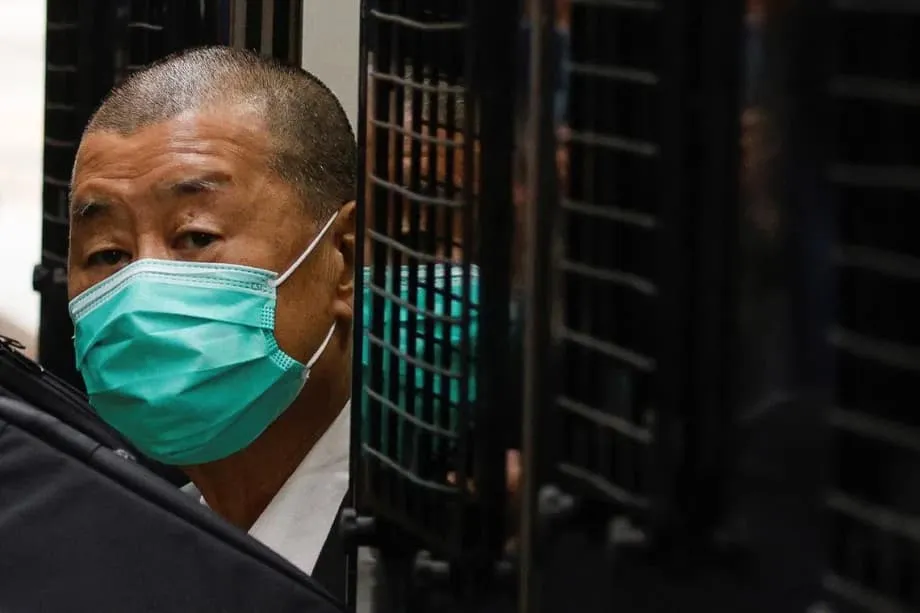
Hong Kong authorities are seeking to confiscate more than HK$127 million ($16.22 million) from imprisoned Apple Daily founder Jimmy Lai Chee-ying, with a hearing scheduled for July 8 at the Court of First Instance. A High Court writ issued on April 21, 2026, lists bank accounts, company shares and small factory properties linked to the media businessman, now aged 76.
Contents
- Bank Accounts, Company Shares and Bail Money Targeted
- What Makes Up the HK$127 Million Claim?
- How the National Security Rules Allow Confiscation
- From Factory Work to Apple Daily
- The Convictions Behind the Application
- Years of Restrictions on Lai's Finances
- Rights Groups Condemn the Case
- Hong Kong Officials Defend the Punishment
- Why the Case Matters to Businesses
- What to Know
The application reaches beyond the newspaper that made Lai a prominent critic of Beijing. It covers wealth connected to his earlier garment businesses, holdings in 17 companies and more than 50 bank accounts held personally or through corporate entities. Authorities also want HK$12 million ($1.53 million) that Lai deposited as bail during earlier legal proceedings.
Comitex Holdings and Dico Consultants account for the largest identified component. The government values Lai's shareholdings in those two private companies at more than HK$71.3 million ($9.10 million), based on their property portfolios and bank reserves. That is more than half of the HK$127 million headline amount.
The government is asking the court to permanently transfer the targeted assets to government control under the implementing rules of the national security law imposed by Beijing in 2020. The application marks an unprecedented use of that legislation to strip a convicted person of private wealth accumulated over decades in manufacturing and media.
Lai's legal team declined to comment through a spokesperson. The July hearing will address a central issue in the proceedings: how far confiscation powers can reach beyond money earned through an offense to legally acquired property that authorities consider connected to national security crimes.
What Makes Up the HK$127 Million Claim?
The April 21 writ presents a broad picture of Lai's remaining business interests. Alongside the two private companies, it names shares in Next Digital, the parent company of Apple Daily, and several small factory properties associated with his manufacturing interests.
Lai retains a 71.26 percent stake in Next Digital. Earlier estimates valued that holding at more than HK$343 million ($44 million) before Apple Daily closed in 2021. Its current value is unclear, leaving an unresolved part of the financial picture as the confiscation application moves toward a hearing.
The government is also seeking HK$56.5 million from bank accounts, with corporate shares targeted separately. This breakdown describes the cash component of a wider application that includes ownership stakes and property interests. The total value of assets ultimately confiscated could extend beyond the cash immediately available.
A company share is a piece of ownership in a business. Its value can depend on what that business owns, including buildings and money in the bank. This helps explain why the writ identifies both shareholdings and the property portfolios and banking reserves used to value some of them.
The application also includes a HK$2 million fine imposed after Lai's fraud conviction in 2022. That conviction was overturned in February 2025. Including the fine suggests that authorities are seeking money that might otherwise be returned to him after the guilty verdict was quashed.
How the National Security Rules Allow Confiscation
Beijing enacted Hong Kong's national security law in June 2020 after months of protests in the former British colony. Its implementing rules give authorities powers to freeze assets and later seek their confiscation when they classify the property as connected to an offense.
The rules define that connection broadly. They cover funds or tools used to commit national security offenses, as well as proceeds obtained from those activities. A freeze restricts access to property; confiscation permanently takes it away through a court order.
Legal observers have described the confiscation threshold as lower than that found in traditional criminal proceedings. Under this framework, authorities can seek property connected to national security crimes without the detailed evidentiary standards typically associated with fraud or money laundering cases.
Lai's case will test the boundaries of those powers because the application covers wealth accumulated through longstanding business activity. The issue is whether assets legally acquired in manufacturing and media fall within the rules because of their alleged connection to security offenses.
Hong Kong officials defend the provisions as a way to cut funding that could support activities endangering state security. In an April 2 announcement, the government said confiscation orders prevent convicted people, their accomplices or their agents from using property linked to offenses to continue such activities.
The government described these measures as standard international practice for fighting serious crime and protecting the public interest. It also maintained that the legitimate rights and interests of Hong Kong residents remain protected.
From Factory Work to Apple Daily
Lai began his working life as a refugee factory worker before building a business in the garment industry. The supply chain management companies now included in the confiscation application connect the proceedings to that earlier chapter of his career.
His move into media came in 1995, when he founded Apple Daily. The tabloid combined celebrity gossip with aggressive political reporting and open advocacy for democratic reform, becoming one of Hong Kong's most recognizable newspapers.
Apple Daily was a vocal critic of Hong Kong's local administration and Beijing's central government. Its political role became especially prominent during the 2019 protests against an extradition bill that would have allowed suspects to be sent to mainland China for trial.
Millions of residents took to the streets over several months during those demonstrations. Authorities have consistently portrayed Lai as their mastermind, placing his newspaper and personal influence at the center of their account of the unrest.
The confiscation application brings both sides of his business career into the same proceeding. The assets sought include interests associated with garment manufacturing as well as the media company through which he became a leading public advocate for democratic reform.
The Convictions Behind the Application
The High Court convicted Lai in December 2024 of two counts of conspiracy to collude with foreign forces and one count of conspiring to publish seditious materials. The court identified him as the driving force and strategist behind efforts to use Apple Daily and his personal influence to undermine governmental authority and damage relations between Beijing and Hong Kong.
Lai received a prison sentence of 20 years in February 2025, the most severe penalty imposed under the national security law to that point. The government is now pursuing confiscation alongside that punishment, extending the consequences of the case from imprisonment to control over his assets.
The legal proceedings and restrictions on his businesses have developed over several years:
- 1995: Lai founded Apple Daily after building his career in the garment industry.
- 2019: Apple Daily criticized the authorities during protests against the proposed extradition bill.
- June 2020: Beijing enacted Hong Kong's national security law.
- May 2021: Hong Kong's security bureau froze about HK$500 million in assets connected to Lai.
- June 2021: Apple Daily stopped publishing after an asset freeze and a second police raid.
- 2022: Lai was convicted of fraud and fined HK$2 million.
- December 2024: The High Court convicted him on the three conspiracy counts.
- February 2025: He received a prison sentence of 20 years, and his earlier fraud conviction was overturned that month.
- April 2, 2026: The government explained its position on confiscation orders.
- April 21, 2026: The High Court issued the writ listing assets sought by the government.
- July 8, 2026: The Court of First Instance is scheduled to hear the confiscation application.
Years of Restrictions on Lai's Finances
The April 21 filing follows a campaign lasting several years to restrict Lai's access to money and business assets. In May 2021, Hong Kong's security bureau froze approximately HK$500 million connected to the publisher, including his Next Digital shares and company bank accounts.
That freeze came days after nearly 200 police officers raided Apple Daily's headquarters and arrested Lai and several executives. The operation marked the first application of the national security law to a media outlet.
Apple Daily ceased publication in June 2021 after the freeze and a second police raid. Its parent company eventually went into liquidation, the process through which a company's affairs are wound up and its assets dealt with.
Three firms linked to Apple Daily were recently designated prohibited organizations and removed from the corporate registry. Those steps further severed Lai's connections to his former media holdings.
The HK$500 million freeze in 2021 and the current application for more than HK$127 million describe different stages of government action. The first restricted access to assets; the July proceedings concern the government's request to take permanent control of the property listed in the new application.
Rights Groups Condemn the Case
International human rights organizations and foreign governments have sharply criticized the confiscation application and the wider prosecution. Their objections center on freedom of expression, press freedom and the treatment of a publisher whose newspaper challenged the authorities.
United Nations Human Rights Chief Volker Turk publicly deplored Lai's prison sentence of 20 years and demanded that the verdict be promptly reversed. Amnesty International has designated Lai a prisoner of conscience, arguing that his persecution stems solely from his exercise of freedom of expression and commitment to press freedoms.
Sarah Brooks, Amnesty International's China Director, described the group's objections ahead of earlier trial proceedings. She criticized Lai's detention before trial and the arrangements governing the hearing:
The years long pre-trial incarceration of a 76 year old man simply because his newspaper dared to criticize the government and report public discussions lays bare the disintegration of respect for human rights in Hong Kong. Lai's case is not being heard by a jury; instead, the decision rests with a judge selected personally by Hong Kong's chief executive. Lai, like almost all others in national security cases, has been denied the right to bail and prevented from choosing his own lawyer.
Brooks' statement brings together several concerns: the length of detention before trial, the absence of a jury, the selection of the judge, access to bail and the ability to choose a lawyer. Amnesty places those issues within its broader argument that Lai is being punished for his journalism and political expression.
Hong Kong Officials Defend the Punishment
Chief Executive John Lee has defended the action against Lai, stating that the businessman deserves his punishment. Lee described him as having committed numerous heinous crimes and evil deeds beyond measure.
Media outlets supporting Beijing have portrayed Lai as a traitor serving US interests and seeking foreign sanctions against officials in Hong Kong and mainland China. That portrayal reflects the authorities' focus on foreign involvement in the national security case.
The government presents the confiscation application as a means of preventing further offenses, including activity carried out through accomplices or agents. Rights groups view the prosecution and financial restrictions as an attack on press freedom and private property.
The July hearing will turn that dispute into a decision about the specific assets in the writ. Authorities have asked for confiscation; the court must consider the request under the national security framework.
Why the Case Matters to Businesses
International business communities have raised concerns about the security of private property in Hong Kong beyond the immediate effect on Lai and his family. The reach of the application into bank accounts, corporate ownership and factory properties places commercial assets at the center of a national security proceeding.
Critics have described the action as a warning to companies operating under Chinese Communist Party governance. They argue that businesses risk coming into conflict with ruling officials who seek money and property from their opponents.
Mark L. Clifford and L. Gordon Crovitz argued that businesses know better than to invest in a place where private assets are seized at the whims of the Chinese Communist Party. Their criticism focuses on the predictability of property protections, a central concern for people deciding where to invest.
Hong Kong historically built its reputation as an economy with low taxes, limited government intervention and strong protections for the rule of law and property rights established during British colonial rule. Critics regard the pursuit of Lai's assets as a departure from that reputation.
They also connect the action to a broader pattern in mainland China, where private entrepreneurs have faced accusations ranging from illegal business operations to tax violations, frequently followed by asset forfeiture. The use of national security powers in Hong Kong has intensified their concerns about the weakening of legal safeguards that once distinguished the city's business environment from mainland jurisdictions.
The government's position remains that confiscation protects the public and prevents property connected to offenses from funding further threats to state security. The July 8 hearing will determine how those powers apply to the assets named in Lai's case.
What to Know
- Hong Kong is seeking more than HK$127 million ($16.22 million) in assets from Jimmy Lai, with a confiscation hearing scheduled for July 8, 2026.
- The April 21 writ covers more than 50 bank accounts, holdings in 17 companies, bail money and small factory properties.
- Shares in Comitex Holdings and Dico Consultants are valued at more than HK$71.3 million; the application also targets HK$12 million in bail funds.
- Lai retains a 71.26 percent stake in Next Digital, whose current value is unclear.
- The request includes a HK$2 million fine from a fraud conviction overturned in February 2025.
- Lai, aged 76, is serving a prison sentence of 20 years following convictions for conspiracy to collude with foreign forces and conspiracy to publish seditious materials.
- Rights groups condemn the prosecution and financial restrictions, while Hong Kong officials defend confiscation as a national security measure.