

April 7 Decree Puts Corporate Decisions Under Scrutiny
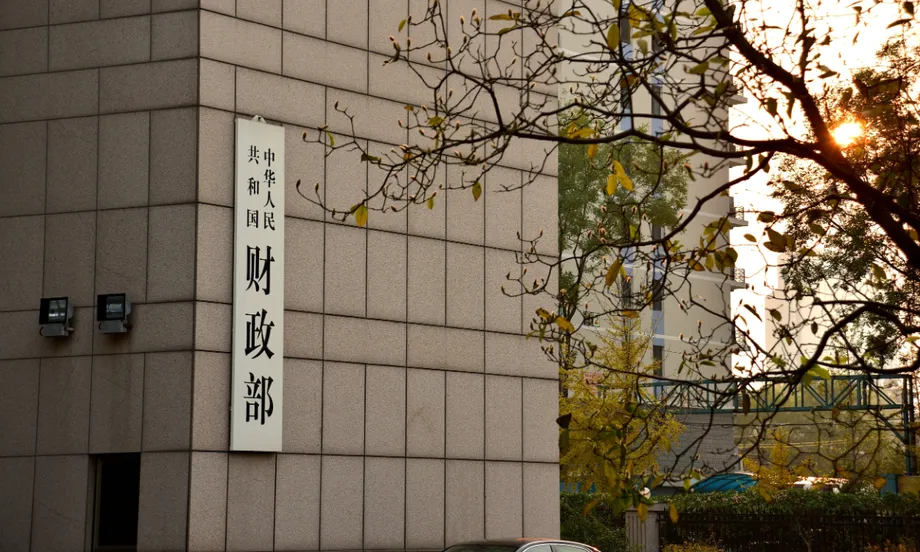
China has given authorities broad powers to investigate foreign companies over decisions to move supply chains away from the country, including powers to examine corporate records and prevent employees from leaving China. Premier Li Qiang signed the decree containing 18 provisions on April 7, and the regulations took effect immediately.
Contents
- April 7 Decree Puts Corporate Decisions Under Scrutiny
- Investigations Could Extend to Employees
- Supply Chain Checks Face New Restrictions
- Business Chambers Warn of Further Withdrawals
- Why Companies Are Adding Other Production Locations
- Rare Earth Controls Put Pressure on Manufacturers
- Port Investments Extend China's Reach
- Beijing Combines Countermeasures With Trade Negotiations
- The Timeline and the Decisions Ahead
- The Essentials
Article 15 allows security reviews when foreign organizations or individuals are suspected of "interrupting normal transactions" or taking "discriminatory measures" that could damage China's supply chain security. Authorities do not need to demonstrate an intention to harm China. Commercial decisions that "cause or may cause substantial harm" can fall within the rules, giving regulators considerable room to decide which actions deserve investigation.
The measures arrive amid mounting friction over China's place in global manufacturing. China's trade surplus reached nearly $1.2 trillion last year, meaning the value of its exports exceeded its imports by that amount. Trading partners have expressed concern about manufacturing displacement as Chinese goods compete with production in their own countries.
Foreign business groups fear the broad language could leave multinational companies trapped in joint ventures or unable to respond to political pressure at home to reduce their dependence on Chinese suppliers. A joint venture involves companies sharing ownership of a business, making decisions about withdrawal more complicated than simply changing an order.
Beijing's upcoming auto show adds an immediate business setting to the dispute. Thousands of automotive executives and engineers are preparing to gather in the Chinese capital, just as the new rules increase uncertainty about corporate decisions and the personal risks facing employees.
The central tension is straightforward: Western governments want businesses to reduce reliance on China, while Beijing is expanding its ability to challenge actions that weaken Chinese supply chains. Companies operating across those jurisdictions face pressure from both directions.
Investigations Could Extend to Employees
The regulations establish a centralized coordination mechanism involving more than 15 government agencies, including the Ministry of Commerce and the Cyberspace Administration of China. That structure brings trade and digital oversight authorities into a common framework for dealing with supply chain security.
Article 15 reaches beyond a completed withdrawal from China. Because its wording includes decisions that may cause substantial harm, authorities can examine suspected damage before the full commercial consequences have occurred. For businesses considering another supplier or production location, the concern is how regulators will interpret an ordinary commercial decision.
Chinese authorities can also bar individuals from leaving the country during investigations. This makes the rules a concern for employees as well as the companies that employ them.
Jens Eskelund, president of the European Union Chamber of Commerce in China, highlighted the personal risk and the uncertainty surrounding the process:
The threat that individual employees could be punished through exit bans is concerning, given the lack of a clear and transparent legal process.
Foreign business groups want clearer boundaries around the conduct that could trigger these powers. The broad test in Article 15 gives companies little certainty about how a decision to reduce purchases, change suppliers or reorganize operations might be assessed.
Supply Chain Checks Face New Restrictions
Article 13 prohibits investigations or information collection within China that violates state provisions. Its broad wording could affect the checks companies conduct to understand where their products come from and whether suppliers meet their obligations.
Environmental, social and governance audits, often called ESG audits, examine issues such as environmental practices, treatment of workers and corporate management. Forced labor compliance checks focus on whether people are being made to work against their will. Both can require businesses to collect information from suppliers and trace goods through several stages of production.
The new restrictions potentially complicate those activities. A multinational company may need supply chain information to meet requirements in its home market while also facing Chinese limits on how that information can be gathered.
Article 16 requires organizations and individuals within China to "strictly execute" countermeasures. For executives responsible for complying with Western sanctions, this creates a direct legal conflict: Chinese authorities can require action that clashes with obligations imposed elsewhere.
Sanctions are restrictions that governments place on particular transactions or business relationships. When different governments demand incompatible conduct, the difficulty moves from a policy dispute into the daily decisions of managers, compliance staff and employees.
Business Chambers Warn of Further Withdrawals
Michael Hart, president of the American Chamber of Commerce in China, said foreign businesses were not consulted while the regulations were being drafted. Business associations representing major trading partners have criticized both the substance of the measures and the process used to introduce them.
Hart warned that growing legal uncertainty could encourage companies to reduce their exposure to China further:
There needs to be more clarity, or this could cause foreign players to de-risk further from China.
Reducing risk can mean keeping an existing Chinese operation while placing some new production or purchases elsewhere. Hart's concern is that rules intended to discourage this shift could make companies more determined to pursue it.
The State Council has justified the regulations as necessary to protect economic stability and national security. That rationale has also been used to expand pressure on companies including PVH, the parent company of Calvin Klein and Tommy Hilfiger.
PVH faced an investigation in 2024 over alleged discriminatory measures against products from Xinjiang. That case provides a concrete example of the pressure businesses have already faced over decisions involving Chinese goods.
The European Union Chamber of Commerce in China has also issued a report criticizing China's increasing use of export controls, particularly restrictions involving rare earth minerals. Its survey found that the controls affected European companies across numerous industries.
The Chamber described the uncertainty businesses faced in obtaining supplies:
the ability to export a particular item could be taken away at any point based on political rather than security factors.
Companies therefore face uncertainty at both ends of a transaction: whether they can obtain materials from China and whether changing their sourcing arrangements could attract scrutiny.
Why Companies Are Adding Other Production Locations
The COVID-19 pandemic exposed weaknesses in supply chains concentrated in a small number of locations. Rising geopolitical tensions have since prompted Western governments to advocate "friend-shoring" and "near-shoring", meaning production in allied countries or closer to the market where goods will be sold.
China accounts for 52% of European Union import dependencies in strategic sectors, including semiconductors, pharmaceuticals, batteries and critical materials. These dependencies concern goods that the EU relies on outside suppliers to obtain, rather than a measure of all its imports.
Research by the U.S. Chamber of Commerce found that more than 83% of North American businesses and approximately 90% of European firms had announced plans to relocate at least part of their supply chains away from China. The figures describe plans for partial relocation, a strategy that can leave substantial operations in China.
Companies adopting "China plus one" or "China plus two" strategies retain existing Chinese facilities while adding supply arrangements in one or two other countries. Vietnam, Mexico and India are among the locations receiving these additional commitments.
Vietnam has emerged as a major beneficiary. High-tech goods now account for 42% of its exports, compared with 13% in 2010. That is an increase of 29 percentage points, illustrating how much the composition of its exports has changed.
Mexico has attracted investment from companies seeking proximity to the U.S. market while avoiding direct trade tensions with China. Since October 2021, the Mexican state of Nuevo Leon has attracted more than $7 billion in foreign investment, with Chinese companies accounting for 30% of those investments as they also seek to circumvent tariffs.
Chinese companies are therefore part of the same movement toward additional manufacturing locations. For both Chinese and foreign businesses, establishing production elsewhere can be a way to maintain access to customers when trade barriers make direct shipments more difficult.
Rare Earth Controls Put Pressure on Manufacturers
China's new supply chain rules follow export controls on rare earth metals and magnets, materials essential to electric vehicles, semiconductors and military equipment. China produces approximately 60% of the world's rare earths and processes nearly 90% of rare earth magnets, giving it substantial influence over the availability of these industrial inputs.
The difference between those two shares matters for manufacturers. Access to minerals is one part of the supply chain; obtaining processed materials and magnets suitable for production is another. China's position is especially strong at that later stage.
In October 2025, Beijing announced extensive licensing requirements and restrictions targeting products containing as little as 0.1% rare earths. The controls also reach foreign products using technology of Chinese origin related to rare earths, extending their application beyond goods made inside China.
The measures ban use for military end users. Major U.S. automotive manufacturers have faced threats of factory shutdowns as shipments of rare earth products slowed while licensing applications were assessed. U.S. defense contractors face outright supply bans under the restrictions on military end users.
The controls were initially aimed at the United States in response to President Donald Trump's tariffs. Shipments to the European Union have also been curtailed, reflecting China's opposition to European tariffs on imported electric vehicles.
The United States and Australia have responded with an investment agreement worth billions of dollars intended to reduce China's dominance in the sector. Their bilateral strategy calls for an initial $1 billion in new investments within six months to accelerate promising projects, with billions more expected over the medium term.
The minerals dispute helps explain why supply chain decisions have become so politically sensitive. A manufacturer seeking another source of an essential material is making a commercial choice within a wider struggle over trade, security and access to industrial resources.
Port Investments Extend China's Reach
Research by AidData found that Chinese state institutions invested $23.9 billion over the past 25 years in 363 foreign ports and related activities across 20 countries with high incomes. This network gives China a presence in infrastructure through which multinational supply chains operate.
The port investments include $1.97 billion for Hambantota International Port in Sri Lanka and $1.13 billion for Israel's Haifa Port, alongside substantial financing for ports in Australia, Spain and Singapore.
Evan Smith, chief executive of Altana, a company that maps supply chains, said China's control of software used to manage ports gives Beijing visibility into corporate logistics. That infrastructure allows Chinese officials to monitor multinational supply chains and detect when companies shift orders to suppliers in places such as Vietnam or Mexico.
Such visibility matters because supply chain relocation involves more than an announcement about a new factory. Changes in orders and shipping routes can reveal how a company is reorganizing its production and purchasing.
AidData described the port investments as a safeguard against supply chain decoupling between East and West. By maintaining a role in the infrastructure carrying global trade, China can retain influence over trade flows even when tariffs encourage goods to move along different routes.
Beijing Combines Countermeasures With Trade Negotiations
Chinese officials have presented the regulations as defensive measures against "unilateral bullying" and discriminatory foreign sanctions. State media describes them as establishing "reciprocal countermeasures" to protect economic stability and national security.
Legal experts say the regulations bring together instruments from China's existing policy toolkit, including the Anti-Foreign Sanctions Law and the Export Control Law, within a unified framework. The new structure connects measures directed at foreign restrictions with powers focused on supply chain security.
Beijing is also trying to deepen its integration into global commerce so that separating from China becomes economically difficult. It is accelerating roughly 20 trade negotiations with partners across Europe, Asia and the Global South while promoting Chinese standards in digital trade and logistics infrastructure.
China is fast-tracking its effort to join the Comprehensive and Progressive Agreement for Trans-Pacific Partnership and reviving negotiations with the Gulf Cooperation Council. These initiatives seek to connect China's manufacturing base more closely with multiple regional trading systems.
Trade negotiations and restrictive regulations serve different parts of that strategy. Deeper commercial ties give partner countries reasons to keep doing business with China, while countermeasures increase the potential costs of decisions Beijing considers harmful.
Trading partners must weigh those ties against concerns about overcapacity and trade imbalances. Overcapacity means production exceeds what markets can readily absorb, adding pressure on competing manufacturers. The nearly $1.2 trillion Chinese trade surplus provides a concrete measure of the imbalance driving part of the dispute.
The Timeline and the Decisions Ahead
The April regulations sit within a sequence of investment shifts, corporate investigations and restrictions on industrial materials. The key dates show how commercial diversification and government intervention have developed alongside each other:
- 2010: High-tech goods accounted for 13% of Vietnam's exports, compared with 42% now.
- October 2021 onward: Nuevo Leon attracted more than $7 billion in foreign investment, with Chinese companies accounting for 30%.
- 2024: PVH faced an investigation over alleged discriminatory measures against products from Xinjiang.
- October 2025: China announced expanded licensing requirements and restrictions involving rare earths, including rules reaching certain foreign products.
- April 7, 2026: Premier Li Qiang signed the decree containing 18 provisions, which took effect immediately.
- April 16, 2026: Foreign companies face the new framework as thousands of automotive executives and engineers prepare for Beijing's upcoming auto show.
Chinese authorities now have a broader framework for responding to decisions they consider damaging to supply chain security. Foreign companies must consider that framework alongside obligations involving sanctions, supplier checks and access to restricted materials.
The rules' practical reach remains uncertain, particularly how authorities will interpret ordinary sourcing changes and apply the investigation powers. Business chambers are seeking clarity, while warning that uncertainty itself could encourage further moves away from China.
Beijing's strategy depends on trading partners accepting deeper integration despite concerns about manufacturing competition and trade imbalances. The competing pressure is already visible in corporate plans: businesses want additional production locations, while China wants to preserve its central role in the networks that supply them.
The Essentials
- Premier Li Qiang signed China's decree containing 18 provisions on April 7, 2026, and it took effect immediately.
- Authorities can investigate suspected harm to supply chain security, examine records and prevent employees from leaving China during investigations.
- Articles 13 and 16 create concerns over information collection and conflicts between Chinese countermeasures and Western sanctions obligations.
- Foreign business chambers warn that broad wording and limited clarity could encourage companies to reduce their exposure to China.
- More than 83% of North American businesses and approximately 90% of European firms have announced plans to move part of their supply chains away from China.
- China produces approximately 60% of the world's rare earths and processes nearly 90% of rare earth magnets.
- The United States and Australia plan an initial $1 billion in new minerals investments within six months, with billions more expected later.
- AidData identified $23.9 billion in Chinese state investment in 363 foreign ports and related activities over 25 years.
- Beijing is accelerating roughly 20 trade negotiations while expanding its powers to counter supply chain separation.