March Arrivals Reach 2.06 Million
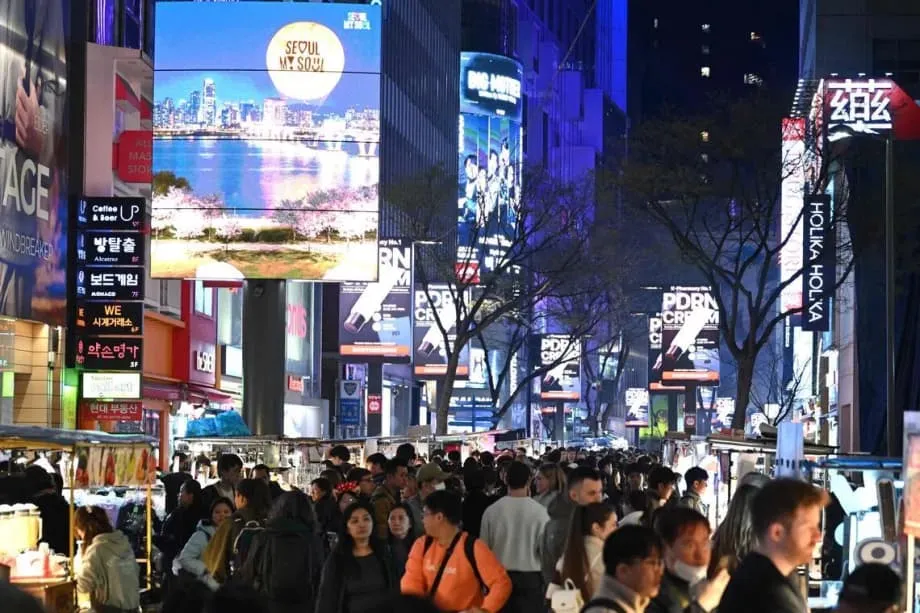
South Korea welcomed a record 4.76 million foreign tourists in the first quarter of 2026, up 23 per cent from a year earlier, the Ministry of Culture, Sports and Tourism announced on April 16. March alone brought 2.06 million visitors, setting a monthly record as BTS returned to the stage in central Seoul.
Contents
- March Arrivals Reach 2.06 Million
- BTS Fans Bring Spending Beyond the Concert
- China, Japan and Taiwan Lead Visitor Growth
- More Visitors Travel Beyond Seoul
- Visa and Immigration Changes Ease Entry
- A Comeback Shared With 190 Countries
- Networks and Safety Systems Support the Crowd
- Goyang Opens an 82 Performance World Tour
- Strong Growth Meets Travel Uncertainty
- The Bottom Line
March arrivals rose 27 per cent from the 1.61 million recorded in March 2025. Officials directly attributed the month's surge to the group's comeback, including its free March 21 concert at Gwanghwamun Square, which turned the historic gathering place into a destination for fans from around the world.
The quarter's growth came despite escalating tensions in the Middle East during March. Those tensions have introduced uncertainty into international travel, including the risk of higher airfares as fuel costs rise.
Foreign credit card spending increased 23 per cent to 3.21 trillion won ($2.18 billion), while visitor satisfaction remained strong at 90.8 points. Together, the figures show that the rise in arrivals was accompanied by greater spending and a positive assessment of the visitor experience.
President Lee Jae Myung's administration had already raised the country's tourism target for 2026 to 23 million visitors. That would represent a 21.4 per cent increase from the 18.94 million arrivals recorded in 2025. The opening quarter gives the government an encouraging start toward that goal, with Korean music, television dramas and cuisine helping draw travelers.
BTS Fans Bring Spending Beyond the Concert
Hana Card tracked the spending of 30,000 foreign nationals who purchased tickets for BTS concerts. Between January 1 and April 12, those visitors spent approximately 55.5 billion won ($38 million) in South Korea.
The average was 1.85 million won per visitor, far above typical tourist expenditure levels. That helps explain why a major music event matters to tourism policy: the economic activity extends beyond admission to a performance and into visitors' spending during their stay.
Hana Card's figures cover a specific group of concert ticket buyers over a period stretching into April. The ministry's 3.21 trillion won figure measures foreign credit card spending during the first quarter. Each offers a different view of how international visitors are contributing to the economy.
The 23 per cent rise in foreign credit card spending matched the percentage increase in first quarter arrivals. Government officials see the tourism results as support for strategies developed over many years to promote Korean culture abroad and turn that interest into visits.
China, Japan and Taiwan Lead Visitor Growth
China remained South Korea's largest source of visitors, with 1.45 million arrivals in the first quarter, an increase of 29 per cent from a year earlier. The rebound reflects renewed appetite for travel to South Korea after earlier fluctuations in tourism between the two countries.
Japan followed with 940,000 arrivals, up 20.2 per cent from 2025. Taiwan recorded the fastest growth among the major markets, rising 37.7 per cent to 540,000 visitors.
Chinese, Japanese and Taiwanese visitors together accounted for 2.93 million of the quarter's 4.76 million arrivals, or about 62 per cent. Their share shows how central nearby Asian markets remain to South Korea's tourism economy.
Korean pop music, television dramas and cuisine have devoted audiences across East Asia. Those cultural connections provide a continuing reason to visit, alongside the appeal of individual events such as the BTS comeback.
Travelers from the United States and Europe totaled 690,000, up 17.1 per cent. American and European visitors typically stay longer and spend more each day than visitors from regional markets, making their growth valuable to the government's efforts to increase tourism revenue and attract a wider mix of travelers.
More Visitors Travel Beyond Seoul
Regional airports, excluding Incheon and Gimpo, recorded a 49.7 per cent increase in arrivals. That growth outpaced the 23 per cent increase in foreign arrivals nationwide, giving destinations outside the capital a stronger role in the quarter's results.
The share of visitors exploring places outside Seoul rose to 34.5 per cent, compared with 31.3 per cent in 2025. The increase of 3.2 percentage points means a larger proportion of travelers included regional destinations in their trips.
Cruise tourism also expanded. Major ports, including Jeju, Busan and Incheon, recorded 338 ship calls, up 52.9 per cent from the previous year. A ship call is a vessel's visit to a port, so the figure measures port visits rather than individual passengers.
Government investment in port infrastructure and the development of attractions and activities at destinations was credited with supporting that growth. The airport and cruise figures show how tourism gains are spreading across different entry points, even as Seoul remains the setting for major cultural events.
Visa and Immigration Changes Ease Entry
South Korea expanded eligibility for visas allowing repeated entry in March. The changes included permits valid for five years and ten years for nationals of 12 countries, including China, Vietnam and the Philippines.
A visa allowing multiple entries lets its holder make repeated visits during the permit's validity. The expansion forms part of the government's effort to make travel to South Korea more convenient and sustain the rise in arrivals.
Automated immigration clearance was also expanded from 18 countries to 42. These systems reduce waiting times at entry points by allowing eligible travelers to complete immigration checks through automated facilities.
From April 1, expedited screening for participants in international conferences was broadened to include up to two accompanying people per delegate. The change extends faster processing beyond the conference participant to a small accompanying group.
The reforms address a practical part of tourism growth: visitors attracted by concerts, conferences or other activities still need to secure permission to enter and pass through immigration. Wider visa access and faster processing are intended to make those steps easier.
A Comeback Shared With 190 Countries
BTS paused group activities in 2022 so its members could complete South Korea's mandatory military service. The group returned in March 2026 with its fifth studio album, "ARIRANG," reconnecting with an international audience that had waited through the break.
The album debuted at number one on the Billboard 200 and held the top position for two consecutive weeks, a first for a K-pop act. The chart success accompanied a concert designed to reach people both in Seoul and abroad.
The free March 21 performance at Gwanghwamun Square drew nearly 300,000 spectators. Netflix streamed the event live to 190 countries, extending the audience far beyond those gathered in the capital.
Netflix used triple redundancy encoding to support the broadcast. In simple terms, that means maintaining three layers of backup in the process that prepares video for transmission, helping keep delivery running if a part of the system encounters trouble.
The comeback brought together music, tourism and South Korea's technical capabilities. Fans traveled to attend, viewers abroad watched the performance, and telecommunications companies prepared for the intense demand created by a large crowd using mobile services at once.
Networks and Safety Systems Support the Crowd
Gwanghwamun's concert preparations included mobile ticketing linked to device identifiers to prevent scalping, the resale of tickets at inflated prices. Organizers also used 31 metal detection gates to process attendees.
Police deployed vehicles equipped to counter drones and explosive detection units throughout the historic district. Those measures accompanied the crowd management arrangements for a gathering of nearly 300,000 people.
SK Telecom deployed its proprietary artificial intelligence system, "A.One," to manage crowd density across three venue zones. KT used its "W-SDN" traffic management solutions, while LG Uplus applied autonomous network technology to predict surges in demand.
LG Uplus also installed temporary relay equipment at more than ten locations. Such equipment helps carry mobile signals where heavy use places extra pressure on the network.
Navigation services adjusted to the event as well. Naver Map reconfigured the concert area for navigation resembling the guidance used inside buildings. Kakao Map provided highly precise bus location information across 420 Seoul routes, helping commuters navigate detours.
The preparations addressed several needs at once: screening people entering the venue, managing concentrations of spectators, maintaining mobile connections and helping people travel through a city affected by the concert.
Goyang Opens an 82 Performance World Tour
BTS launched its "ARIRANG" world tour on April 9 at Goyang Stadium near Seoul. The schedule includes 82 performances across 34 cities in 23 countries, a record for the number of dates by a K-pop artist.
The opening concerts in Goyang sold out immediately. Fans arrived from Australia, Pakistan, Mexico, Russia and Brazil despite heavy rain, extending the international travel associated with the March comeback into April.
A circular stage design accommodates more than 40,000 spectators per show. Analysts predicted that total tour revenue could reach 2.7 trillion won ($1.81 billion), excluding additional spending by fans. That figure is a forecast as of April 16, with the tour still under way.
Casey Murrihy, a fan aged 44 from Australia, traveled specifically for the Goyang opening. She described her excitement after the group's long absence:
I am absolutely elated that they are finally coming back. It's been a long wait.
Kim Eunhee, a South Korean attendee, said the prospect of the concert had given her motivation during cancer treatment:
Even during my hardest times last year while fighting it, this was the one thing I kept waiting for.
The dates connecting the comeback to the tourism figures span several months:
- 2022: BTS paused group activities for mandatory military service.
- January 1 to April 12, 2026: Hana Card tracked 55.5 billion won in spending by 30,000 foreign concert ticket buyers.
- March 2026: BTS returned with "ARIRANG," and South Korea expanded eligibility for visas allowing multiple entries.
- March 21: BTS performed at Gwanghwamun Square, with Netflix broadcasting to 190 countries.
- April 1: Faster conference immigration screening expanded to include up to two accompanying people per delegate.
- April 9: The world tour opened at Goyang Stadium.
- April 16: The tourism ministry announced the record first quarter arrivals.
Strong Growth Meets Travel Uncertainty
Kang Jung-won, head of the Tourism Policy Office, said the government would continue its tourism strategy while recognizing risks from higher fuel costs, rising airfares and uncertain global travel sentiment.
We will continue to implement strategies outlined in the national tourism initiative to strengthen competitiveness.
The 23 million visitor target sets the scale of the government's ambition for 2026. Reaching it will require sustained growth beyond the first quarter, supported by cultural events, easier entry and a wider range of destinations.
South Korea's opening results combine several developments: a surge around BTS's return, growing arrivals from major Asian markets, increased spending and more travel outside Seoul. The government now seeks to sustain that momentum while international travel faces pressure from the Middle East tensions that emerged in March.
The Bottom Line
- South Korea recorded 4.76 million foreign tourist arrivals in the first quarter of 2026, up 23 per cent.
- March set a monthly record of 2.06 million visitors, with officials crediting BTS's comeback.
- Foreign credit card spending reached 3.21 trillion won, and visitor satisfaction stood at 90.8 points.
- Hana Card tracked 55.5 billion won in spending by 30,000 foreign BTS concert ticket buyers between January 1 and April 12.
- China led with 1.45 million visitors, followed by Japan with 940,000 and Taiwan with 540,000.
- Regional airport arrivals rose 49.7 per cent, and major ports recorded 338 cruise ship calls.
- Visa eligibility expanded, and automated immigration clearance increased from 18 countries to 42.
- BTS's tour includes 82 performances in 34 cities across 23 countries, with revenue forecast at 2.7 trillion won before additional fan spending.
- The government's 2026 target is 23 million visitors, amid risks from higher airfares and uncertain travel sentiment.