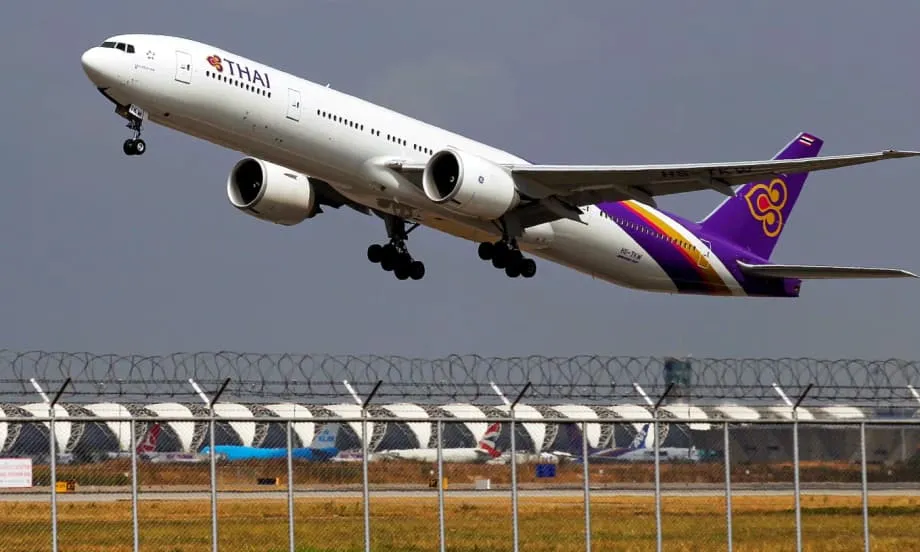
May Flight Cuts Bring Fewer Seats and Higher Charges
Thai Airways International will cancel or reduce 46 domestic and international services in May 2026 as soaring jet fuel prices and weaker travel demand squeeze Thailand's national flag carrier. The Bangkok airline's changes reach across Asia and Europe, with Seoul services falling from three flights a day to one and flights to Kaohsiung, Taiwan, suspended from May 8 through the end of the month.
Contents
- May Flight Cuts Bring Fewer Seats and Higher Charges
- Where Thai Airways Is Reducing Asian Flights
- Europe and Domestic Thailand Also Lose Departures
- Temporary Changes Under Daily Review
- How the Strait of Hormuz Disruption Raises Fuel Costs
- Other Thai Carriers Make Larger Capacity Cuts
- Reductions Stretch Across Southeast Asia and Australia
- What the Higher Surcharges Mean for Travelers
- Bookings, Schedule Changes and Alternative Routes
- Thin Margins Put Weaker Airlines Under Pressure
- What to Know
The reductions were described as affecting approximately 10% of total capacity. Chief Executive Officer Chai Eamsiri gave a different measure at the Transport Ministry on April 24, saying the May adjustments represented about 4 to 5% of the airline's total schedule. Capacity describes the amount of transport available, including seats, while a schedule describes the flights operated.
Thai Airways set out the changes in an April 17 notice to ticket agents, citing sharply higher oil costs and softer passenger demand during the traditionally slower period in the middle of the year. By April 30, the pressure had spread well beyond one airline: other Thai carriers and airlines across Southeast Asia, Hong Kong and Australia had also announced reductions.
Passengers face a second change from May 1, when Thai Airways will nearly double fuel surcharges on newly issued tickets. Those charges are included in ticket prices. For return journeys to European destinations such as London, Milan and Paris, the economy surcharge will rise from $275 to $524, while the business class charge will increase from $510 to $982.
The combination is difficult for airlines and travelers alike. Fuel is becoming much more expensive just as some passengers are less willing to travel. Cutting departures allows an airline to put more passengers on each remaining flight, but leaves travelers with fewer choices of departure time and date.
Where Thai Airways Is Reducing Asian Flights
Bangkok's Suvarnabhumi Airport is the starting point for a broad set of regional reductions. Singapore, one of Southeast Asia's busiest business and leisure corridors, will fall from five daily Thai Airways flights to four throughout May. Phnom Penh services will decline from 14 flights a week to 11.
North Asia faces the deepest reductions. Seoul's Incheon International Airport will receive one daily flight instead of three between May 8 and May 31. That removes two of the three daily departures during that period. Kaohsiung will lose its Thai Airways service entirely from May 8 through the end of May.
Beijing and Shanghai will each fall from two flights a day to one for most of the month. Tokyo's Narita Airport will receive two daily flights instead of three, and Taipei will also fall from three to two. Hong Kong services will decline from four daily departures to three.
South Asian routes face a similar squeeze, although the scale varies considerably. Mumbai will fall from two daily flights to one. Delhi will lose one weekly departure, moving from 22 flights a week to 21. Hyderabad, a connection serving a growing technology hub, will have five weekly flights instead of daily service.
The Singapore reduction removes one fifth of its daily departures, while the Seoul reduction removes two thirds during the stated May period. Those comparisons, based on the announced frequencies, show why the effect on an individual passenger can be much greater than the airline's network figures suggest. Some routes retain several daily options; others lose half or more of their flights.
Europe and Domestic Thailand Also Lose Departures
Thai Airways will reduce services to Frankfurt, Munich, Copenhagen, Stockholm, Oslo and Istanbul from daily operations to five flights a week. Each destination will lose two weekly departures, with passengers concentrated onto the remaining days while the airline keeps the destination in its network.
Domestic services will also change. Specific flight numbers between Bangkok and Udon Thani will be canceled throughout May. Khon Kaen will fall from four daily flights to three, while Ubon Ratchathani will decline from 14 weekly flights to 12, with cancellations on Tuesdays and Thursdays.
The Udon Thani adjustment concerns particular flight numbers. Chai said Thai Airways was maintaining its route authorities and destinations, using fewer flights and smaller aircraft where necessary. Route authorities are the permissions that allow an airline to serve a destination.
Temporary Changes Under Daily Review
Chai described the May changes as temporary operational responses, rather than permanent departures from markets. Speaking at the Transport Ministry on April 24, the chief executive said a dedicated operations center was monitoring demand each day and could restore flights during stronger travel periods.
The adjustments for May represent about 4 to 5% of the airline's total schedule and are short term. We have established a war room to monitor demand on a daily basis and respond quickly. Flight frequencies could be restored during peak travel periods if demand rebounds.
Thai Airways is trying to improve its load factors, the share of available seats occupied by passengers. Combining travelers from several departures onto fewer flights can increase that share and help the airline use its remaining services more efficiently. Aircraft downsizing serves a similar purpose by matching the number of seats more closely to demand.
Chai also described an opportunity in cargo. Lower passenger loads have increased available cargo capacity, allowing the airline to pursue revenue from valuable goods and medical shipments, where demand remains robust. That offers another source of income while passenger operations face pressure.
The main dates for the changes are:
- Late February 2026: Military actions in the Middle East preceded the Strait of Hormuz blockage and the sharp rise in fuel costs.
- April 17: Thai Airways issued its schedule adjustment notice to ticket agents.
- April 24: Chai explained the temporary reductions at the Transport Ministry.
- May 1: Higher Thai Airways fuel surcharges take effect for newly issued tickets.
- May 8 to May 31: Seoul services fall to one daily flight, and Kaohsiung services are suspended.
- May and June: Several other regional airlines will operate reduced schedules, with some suspensions extending to June 30.
How the Strait of Hormuz Disruption Raises Fuel Costs
The fuel crisis follows the closure of the Strait of Hormuz, a narrow maritime passage through which approximately 21% of global seaborne oil supplies travel. Military actions in the Middle East in late February 2026 were followed by a blockage that disrupted energy supplies and pushed up the cost of jet fuel.
Jet fuel prices have risen from approximately $90 a barrel to peaks near $240, a surge described as roughly a tripling since February. Industry estimates put at least 400,000 barrels a day of Asia Pacific jet fuel production at risk from the disruption to crude oil shipments through Hormuz. Crude oil is the raw material refineries process into fuels, including the fuel used by aircraft.
Asian airlines face particular exposure because fuel hedging is generally weaker across the region than among European and American carriers. Hedging uses financial arrangements to reduce exposure to changes in future fuel prices. Airlines with less protection feel a sudden rise in market prices more directly.
Mayur Patel, Asia Pacific commercial lead at aviation data specialist OAG, described the disruption as substantial and worsening. He explained how the rise in both crude oil and jet fuel prices was affecting airline operating costs:
Asia's exposure differs from Europe and the US because fuel hedging is weaker across the region, leaving more carriers directly exposed when crude and jet fuel surge. Once jet fuel moved from $85 to $90 per barrel to approaching $200, the impact on operating economics was immediate.
European airlines are also cutting flights. Lufthansa announced 20,000 flight cuts, while SAS canceled 1,000 flights in April. Patel's comparison points to a shared fuel shock but different levels of financial protection against it.
Other Thai Carriers Make Larger Capacity Cuts
Thai AirAsia, Thailand's dominant airline offering low fares, announced a 30% reduction in total seat capacity for May and June 2026. Its suspended routes include Shanghai, Riyadh, Guwahati and Kathmandu, as well as several domestic services from Suvarnabhumi Airport.
Thai AirAsia X, the subsidiary operating longer international journeys at low fares, has suspended Bangkok to Shanghai services since the middle of April. It has also halted Riyadh operations through June 30.
Pattra Boosarawongse, chief executive of Thai AirAsia X, described the suspensions as difficult but necessary decisions in response to the prolonged rise in global aviation fuel prices. The duration of those suspensions extends the effects beyond Thai Airways' May adjustments.
The pressure is particularly severe for airlines built around inexpensive tickets. Their business models depend on attracting many passengers, turning aircraft around quickly between flights and keeping planes in use for much of the day. Higher fuel costs make those low fares harder to maintain.
Brendan Sobie, an aviation analyst based in Singapore, said such airlines face especially harsh choices. When a fuel shock pushes fares up by 15 to 20%, travelers who are sensitive to price may stay home. Raising prices can help cover costs, but it can also reduce the demand needed to fill aircraft.
Reductions Stretch Across Southeast Asia and Australia
Batik Air Malaysia has reduced domestic capacity by 35%, the sharpest reduction by a single airline in Southeast Asia's domestic market. Vietnam Airlines announced a 2% capacity reduction between the middle of May and June, with possible cuts of up to 18% of international flights if fuel conditions worsen.
Vietjet Air has removed nearly 20% of international departures across 24 routes. Bamboo Airways has implemented capacity reductions of 30%. Together with the Thai changes, those figures show a regional contraction affecting both domestic connections and international travel.
Hong Kong's Cathay Pacific and HK Express will operate reduced schedules from May through June. The pressure therefore reaches airlines serving different types of passengers and using different fare models.
Australia's Qantas faces an estimated $800 million increase in its fuel bill. It has suspended routes including Hamilton Island to Melbourne and Darwin to Gold Coast. Virgin Australia confirmed a 1% capacity reduction, which amounts to thousands of seats in Australia's concentrated domestic market.
The reductions range from Virgin Australia's 1% to Batik Air Malaysia's 35% domestic cut. Each figure applies to the particular operation described, with some airlines reducing seats across a network and others removing departures on selected routes. For travelers, the practical result is fewer available seats across a growing number of destinations.
What the Higher Surcharges Mean for Travelers
Thai Airways' new fuel surcharges take effect on tickets issued from May 1, 2026, and are included directly in the price passengers pay. The amount depends on the route and cabin class.
European return journeys illustrate the size of the increase. The economy surcharge rises by $249, from $275 to $524, while the business class charge rises by $472, from $510 to $982. Both are close to twice the previous charge.
Regional routes also face steep increases. The Bangkok to Singapore economy surcharge rises from $49 to $93. Economy charges for Tokyo and Seoul increase from $152 to $292. Even the shorter Bangkok to Yangon journey sees its economy surcharge rise from $49 to $93.
Passengers holding tickets issued before April 30 retain the existing fuel surcharge rates, including when their travel takes place after May 1. For those travelers, the issue date of the ticket determines the stated surcharge treatment.
Travel industry analysts expect fewer available seats and higher operating costs to push base fares upward as well. The base fare is the underlying price of the journey, while the fuel surcharge is an added charge included in the ticket price. A passenger can therefore face higher costs from both parts of the fare.
Kasikorn Research Center forecasts a 9.2% decline in foreign arrivals to Thailand during the second quarter of 2026 as these pressures weigh on travel demand. Fewer flights and more expensive journeys also affect hotels, tour operators and local businesses that depend on visitors reaching the country.
Bookings, Schedule Changes and Alternative Routes
Thai Airways has arranged alternatives for affected passengers and is contacting travelers directly about schedule changes. Passengers with existing reservations should monitor their itineraries closely, especially where departures have been reduced or temporarily suspended.
Travel industry guidance for people planning visits to Thailand during the summer is to book early. With several airlines reducing capacity and fares rising, an earlier reservation offers better protection against limited availability and price increases.
Singapore Airlines has maintained its Bangkok services without changes, providing an option while Thai carriers reduce their schedules. Changi Airport has also emerged as an alternative connection point as capacity through Gulf hubs contracts.
Bookings on Singapore to London and Hong Kong to London routes have risen sharply as passengers seek other ways to travel. Changes to Gulf airline capacity therefore affect journeys far beyond the Middle East, including connections between Asia and Europe.
OAG's analysis suggests that the fuel shock could strengthen the case for direct journeys over longer distances that bypass traditional Gulf hubs. Airlines operating aircraft that use fuel efficiently, including the Airbus A321XLR and A350-1000, have advantages when connections through the Gulf become less dependable.
Thin Margins Put Weaker Airlines Under Pressure
Asian airlines operated on margins of approximately 3% in 2025. A margin is the portion of revenue left after costs, so a small margin leaves little room to absorb a sudden increase in a major expense such as fuel.
Sustained jet fuel prices above $200 a barrel threaten the viability of competitors with less financial backing. OAG's analysis suggests the shock could prompt consolidation among weaker airlines, meaning carriers may combine as they seek a stronger financial position.
Analysts warn that a prolonged conflict increases the likelihood of airline collapses, although the industry has shown resilience during previous disruptions. Thai Airways' daily monitoring, temporary frequency cuts, aircraft changes and cargo strategy show how one carrier is trying to manage the pressure while retaining its network.
As of April 30, the date for a return to the full Thai Airways schedule had not been given. Chai said frequencies could be restored during peak travel periods if demand recovers. Further capacity adjustments across Asia Pacific are expected if fuel prices stay elevated or supply constraints worsen.
What to Know
- Thai Airways will cancel or reduce 46 services in May, with the changes described as affecting approximately 10% of capacity. CEO Chai Eamsiri put the adjustments at 4 to 5% of the total schedule.
- Seoul services fall from three daily flights to one from May 8 to May 31. Kaohsiung services are suspended during the same period.
- Frankfurt, Munich, Copenhagen, Stockholm, Oslo and Istanbul fall from daily service to five flights a week.
- Jet fuel has risen from around $90 a barrel to peaks near $240 following the Strait of Hormuz disruption.
- Fuel surcharges on Thai Airways tickets issued from May 1 nearly double. European economy return charges rise from $275 to $524.
- Tickets issued before April 30 retain the existing surcharge rates, including for travel after May 1.
- Thai AirAsia is cutting seat capacity by 30% in May and June. Other regional airlines have announced reductions of varying sizes.
- Kasikorn Research Center forecasts a 9.2% decline in foreign arrivals to Thailand during the second quarter.
- Thai Airways says its changes are temporary and is monitoring demand daily. A date for full restoration has not been announced.