36,000 Gather as the Constitutional Debate Intensifies
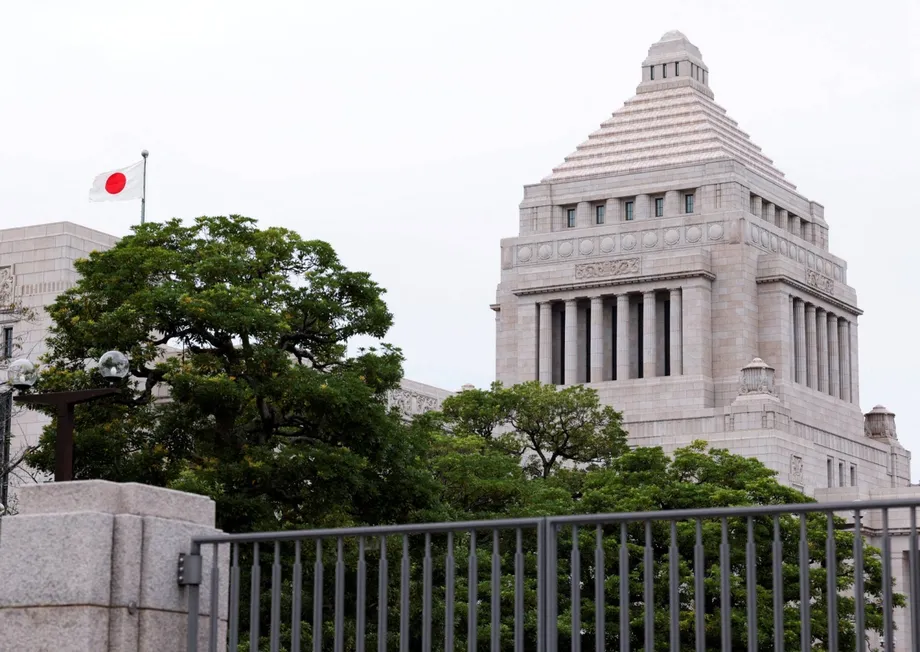
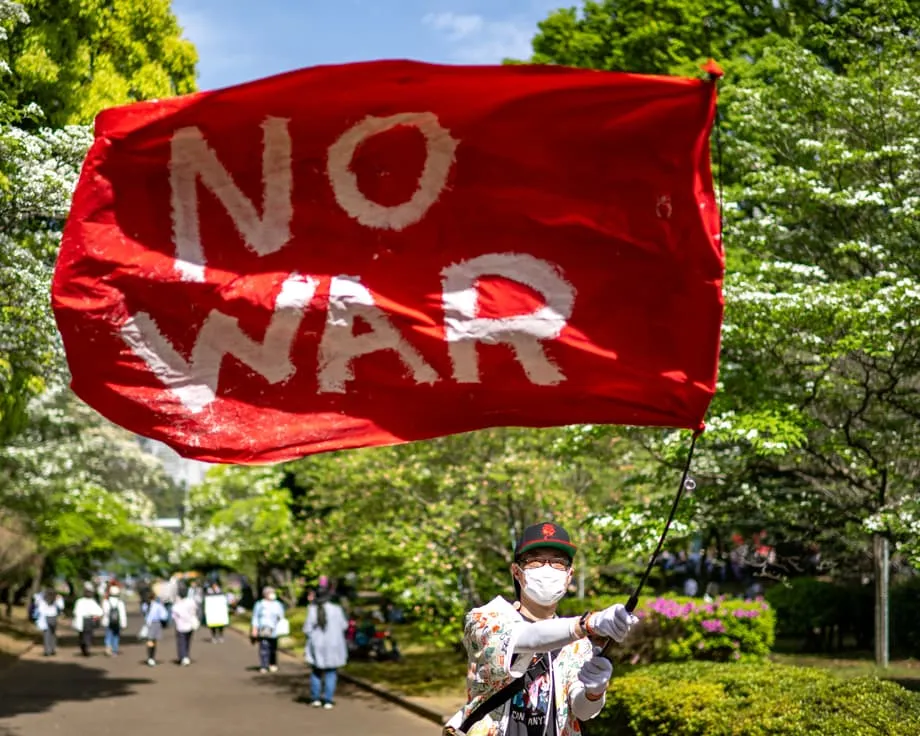
An estimated 36,000 people gathered outside Japan's National Diet on April 19, 2026, in the largest demonstration of a growing campaign to defend the country's pacifist constitution. The crowds had expanded from 3,600 in late February to 24,000 in late March. By April, glowing light sticks filled the narrow streets around parliament, turning opposition to constitutional revision into a visible public movement.
Contents
- 36,000 Gather as the Constitutional Debate Intensifies
- What Article 9 Means
- A Growing Campaign, Date by Date
- Light Sticks Bring Younger People Into the Streets
- Missiles, the Iran War and Fears of Involvement
- Weapons Exports Open a New Front
- Why Opponents Want More Than Unchanged Wording
- A New Generation Builds on Earlier Protests
- Regional Alarm and Competing Spending Priorities
- The Parliamentary Route to a Public Vote
- Key Points
Gohta Hashimoto, a university student aged 22, carried a toy lightsaber, an unlikely symbol of resistance. At a rally launching a petition to protect Article 9, he explained why he had become involved.
I've been interested in the constitution for about a year, ever since the rise of far-right parties in Japan,
I wanted to be part of a movement that keeps my country peaceful and protects the constitution.
Prime Minister Sanae Takaichi is moving in the opposite direction. In mid-April, at the Liberal Democratic Party's convention marking its 70th anniversary, she declared that "the time has come" for constitutional reform and announced plans to present a formal amendment proposal within a year.
Japan's government had also approved a major relaxation of weapons export restrictions on April 7. Together, the export decision and the constitutional push have brought questions about war, military cooperation and national identity into the streets.
Smartphone data analysis showed a striking feature of the demonstrations: people in their 30s formed the largest age group, more than 20 percent were in their 20s, and women accounted for 60 percent of participants. A campaign long associated with older peace activists is drawing a younger generation worried about its own future.
What Article 9 Means
Article 9 of Japan's 1947 constitution renounces war as a sovereign right of the nation and bans the maintenance of armed forces. Drafted by American occupation authorities under General Douglas MacArthur, it has shaped Japan's security policy for nearly 80 years.
Japan nevertheless maintains the Self-Defense Forces, or SDF. The constitutional debate concerns how those forces fit within Article 9 and what they should be allowed to do. For decades, the country's military role was constrained by a defensive approach that limited the projection of force abroad and participation in military operations alongside allies.
Takaichi inherited the constitutional revision agenda of her mentor, former Prime Minister Shinzo Abe, who was assassinated. She presents revision as completing Japan's journey toward becoming a "normal country." Opponents see the peace constitution as a protection against involvement in wars beyond Japan's borders.
A demonstrator expressed that fear in terms of the country's relationship with the United States.
The constitution enables us to stay out of America's wars, including in this region. The thought that might change makes me really angry.
Article 9 has already been interpreted more broadly without changing its wording. In 2015, Abe expanded its meaning to permit "collective self-defense." That means Japanese forces can help an ally under attack even when Japan itself is not directly threatened. Later administrations acquired capabilities for strikes before an attack and permissions for overseas deployments without formally amending the constitution.
For protesters, the concern is therefore about both the text of Article 9 and the military activities permitted under it. The government can change policies and interpretations through executive decisions, while changing the constitution itself requires parliamentary approval and a public vote.
A Growing Campaign, Date by Date
The demonstrations have developed alongside military deployments, an export policy change and Takaichi's renewed commitment to constitutional revision. The main developments through April 30 show how quickly the debate has gathered momentum.
- February 2026: A snap election gave the LDP a two-thirds majority in the powerful lower house of the Diet.
- Late February: A demonstration drew about 3,600 people.
- Late March: Protest attendance rose to about 24,000.
- March 31: Missiles with a range exceeding 1,000 kilometers were deployed in Kumamoto and Shizuoka prefectures.
- April 7: The government lifted the longstanding ban on lethal weapons exports.
- April 9: Coordinated demonstrations took place at more than 130 locations across Japan.
- Mid-April: Takaichi announced plans to present a constitutional amendment proposal within a year.
- April 19: An estimated 36,000 demonstrators gathered outside the National Diet.
The April 19 attendance was ten times the late February figure of 3,600 and half again as large as the late March turnout of 24,000. The spread to more than 130 locations also shows that opposition extends beyond the streets surrounding parliament in Tokyo.
Light Sticks Bring Younger People Into the Streets
Demonstrators have borrowed a visual language from the December 2024 protests against South Korea's impeached President Yoon Suk Yeol. Glowing sticks create waves of light that express solidarity, while smartphones and social media help connect people who may previously have avoided political activity.
Yuri Hioki, a programmer aged 28, held a bright yellow light stick at the Tokyo rally. She described how the accessory made participation feel less intimidating.
When you have one of these it makes you realise you're not alone,
It gives you the courage to come along and protest.
Other participants carried balloons shaped like the numeral 9, referring to Article 9. Placards read "Cats, not bombs" and "No one should be sent to war." Toy lightsabers, light sticks and accessible slogans give the demonstrations a different appearance from earlier generations of Japanese protest.
Young participants are also challenging a social habit in which politics was often treated as an uncomfortable or taboo subject. Hashimoto described his changing view of who should take responsibility for political decisions.
I always thought of politics as something for older people, but that feels like turning over my future to someone else,
Until now I'd never thought of the constitution as something young people needed to fight for.
The movement now includes families, office workers and veterans of earlier peace campaigns, as well as students. Its reach depends partly on whether people who have never attended a demonstration feel able to join.
Missiles, the Iran War and Fears of Involvement
Kumamoto and Shizuoka prefectures received long-range missiles on March 31. The weapons can hit targets more than 1,000 kilometers away and have what is described as "enemy base strike capabilities." In simple terms, they allow Japan to strike military targets far beyond its own territory.
Protesters have targeted these deployments as a move from a defensive military posture toward the ability to conduct offensive operations. Their concern is sharpened by the Iran war and uncertainty surrounding US President Donald Trump's foreign policy.
Koichi Nakano, a professor of political science at Sophia University, said those developments had helped bring younger people into the movement.
The war has brought home the risk that Japan could get involved in an illegal war under Takaichi,
So many more people feel they need to show their support for Article 9 as the last bulwark against war.
Some younger activists fear that constitutional change could expose their generation to conscription or combat deployments. For them, a debate about legal wording is closely connected to personal safety and the possibility of being drawn into an ally's conflict.
Demonstrators have chanted "Stop sucking up to America" and carried signs reading "Hands off the constitution." Those messages frame the revision campaign as submission to Washington's geopolitical demands rather than an independent Japanese decision about security.
Weapons Exports Open a New Front
Takaichi's government approved the export policy reversal through the cabinet and National Security Council. The April 7 decision dismantled a ban described as lasting 80 years, opening the way for Japan to export lethal equipment including fighter jets, missiles and warships to allied countries.
Australia is among the prospective beneficiaries. It recently signed a $7 billion agreement for Mitsubishi Heavy Industries to build eleven warships. The new rules provide a wider route for Japanese manufacturers to sell military equipment abroad, and Australia welcomed the "regulatory clarity" created by the decision.
Purchasing countries must pledge alignment with the United Nations Charter. The export rules also allow exemptions for "special circumstances" involving Japan's national security. Critics regard that exception as a loophole broad enough to bypass the pacifist principles they want to preserve.
At a rally in Shinjuku after the announcement, Ryozo Sawada, aged 74, described the decision as a frightening departure from the national identity he had grown up with.
Ever since I was a child, the one thing about Japan I could truly be proud of was that we renounced war,
The fact that they actually decided to export weapons is incredibly frightening.
The export reversal links the constitutional debate to industrial policy. Japanese military manufacturers gain access to a broader international market, while opponents object to public money supporting weapons that may be used in wars abroad.
Why Opponents Want More Than Unchanged Wording
Nakano argues that the revision campaign follows years of expanding military powers through reinterpretation. In his view, supporters now want constitutional recognition of the Self-Defense Forces to give stronger legal backing to activities that remain politically contested.
The Sophia University professor described what he believes is driving the push.
Pro-revisionists know that there is no real consensus on these supposedly constitutional offensive measures, so they want to put the final nail in the coffin of the peace constitution,
By making the SDF 'constitutional,' they want to legitimise everything the SDF does, including the so-called limited collective self-defence.
The exact amendments Takaichi intends to propose remain unclear. Expected proposals include formally recognizing the legal status of the Self-Defense Forces while potentially retaining Article 9's renunciation of war. Critics fear the familiar words could remain while the restrictions attached to them become weaker.
Public opinion is divided. Polls show roughly half supporting constitutional recognition of the military. The weapons export reversal and fears connected with the Iran war may be pushing some people toward preserving Article 9.
The argument therefore reaches beyond whether Japan should possess a military. It concerns the limits on that military, the circumstances in which it can act alongside allies, and whether those limits should be settled through interpretation or a constitutional amendment approved by voters.
A New Generation Builds on Earlier Protests
The current demonstrations echo the 2015 campaign against Abe's security legislation. The student collective SEALDs, short for Students Emergency Action for Liberal Democracy, combined street fashion, music and social media with political organizing.
SEALDs did not stop the security bills, but its campaign provided a model for inclusive, nonviolent demonstrations. That approach avoided the radical Marxist imagery and clashes with police associated with student movements in the 1960s.
Older peace campaigns remain part of the present movement. Annual Constitution Day rallies held on May 3 near Tokyo Bay drew 70,000 people in 2019, before the COVID-19 pandemic disrupted public gatherings. The 2026 demonstrations have brought together several generations, including survivors of the 1945 atomic bombings and younger activists from Nihon Heiwa, or Japan for Peace.
Some veterans of the 1960s protests can no longer march. They continue monthly vigils at local train stations on the ninth day of each month, a date chosen to symbolize Article 9. Younger participants such as Hashimoto are bringing new energy as the established activist population ages.
One demonstrator welcomed the change in participation and described the contrast with earlier rallies.
More and more young people are standing up, which I think is truly encouraging,
Previously, those who participated in rallies are in their 60s, 70s, and 80s. But now, I find they have finally come to hold demonstrations in front of the Diet and join penlight demonstrations.
The combination of older campaigners and new participants connects memories of Japan's wartime experience with the concerns of people who may live with the consequences of today's decisions for decades.
Regional Alarm and Competing Spending Priorities
China has sharply criticized Japan's changing military policy. Chinese Foreign Ministry spokesperson Guo Jiakun said Beijing would oppose what it regards as renewed militarization.
the international community, including China, will remain extremely vigilant on this issue and will firmly resist Japan's reckless new militarization.
Beijing also criticized Takaichi's ritual offering to Yasukuni Shrine. The shrine honors Japan's war dead, including more than 1,000 convicted war criminals. China views the gesture as contempt for countries that suffered Japanese wartime aggression.
South Korea has expressed concern about both the shrine offering and weapons exports. The United States, by contrast, has welcomed Japan's military expansion as helping the two countries' forces work together more closely within their alliance. Australia's response has focused on the clearer export rules supporting its warship agreement.
Inside Japan, protesters are also questioning spending priorities. The defense budget reached a record 9.04 trillion yen, approximately $56.8 billion, for fiscal year 2026. Defense spending has doubled to 2 percent of gross domestic product, the measure of the country's economic output.
Demonstrators argue that military expansion is taking resources from healthcare, social services and other needs while people face economic stagnation and declining living standards. One protester objected to weapons manufacturers profiting from equipment funded by taxpayers.
Isn't that murder? Weapons are used to kill people, to fight wars. Why only the military industry, which manufactures weapons, profits in the end? These weapons are even manufactured with our tax money. There is no way I can agree with such a thing,
The spending argument gives the peace campaign an immediate domestic concern alongside its warnings about war. Protesters are asking what public money should support and who benefits from the government's choices.
The Parliamentary Route to a Public Vote
Takaichi's February election victory gave the LDP a two-thirds majority in the lower house, providing momentum for constitutional proposals. Japan's amendment process, however, requires support from at least two-thirds of members in both houses of the Diet, followed by approval in a national referendum.
The government lacks equivalent support in the upper house, where opposition parties could block authorization of a referendum. Takaichi would need opposition cooperation there or a national election that delivers the necessary two-thirds majority.
A referendum would then require a simple majority of voters to approve the change. This high threshold has defeated previous efforts to revise the constitution, and parliamentary strength alone cannot complete the process.
Takaichi's stated target is to present a formal amendment proposal within a year of her mid-April announcement. The annual Constitution Day gatherings on May 3 are the next established date in the peace movement's calendar.
As of April 30, the demonstrations have turned an argument about constitutional language into a public reckoning with Japan's history, its alliance with the United States and its future military role. Weapons exports are expanding, the Self-Defense Forces have capabilities for strikes at greater distances, and preparations for potential combat operations abroad are part of the concern driving the crowds.
For Hashimoto and other young campaigners, defending Article 9 means claiming a voice in decisions once left to older generations. A future referendum would put the survival of Japan's pacifist experiment into its ninth decade before the electorate.
Key Points
- An estimated 36,000 people protested outside the National Diet on April 19, up from 3,600 in late February and 24,000 in late March.
- People in their 30s formed the largest age group, more than 20 percent were in their 20s, and women accounted for 60 percent of demonstrators.
- Article 9 of the 1947 constitution renounces war and bans the maintenance of armed forces.
- Takaichi plans to present a constitutional amendment proposal within a year of her mid-April announcement.
- The April 7 weapons export reversal permits sales of fighter jets, missiles and warships to allied countries.
- Australia signed a $7 billion agreement for Mitsubishi Heavy Industries to build eleven warships.
- Missiles deployed in Kumamoto and Shizuoka on March 31 can strike targets more than 1,000 kilometers away.
- Coordinated demonstrations took place at more than 130 locations across Japan on April 9.
- Japan's fiscal 2026 defense budget reached 9.04 trillion yen, approximately $56.8 billion, as protesters called for greater attention to healthcare and social welfare.
- China and South Korea criticized Japan's policy changes, while the United States supported closer defense cooperation.
- Constitutional revision requires two-thirds support in both parliamentary houses and majority approval in a national referendum. Takaichi lacks the required support in the upper house.