A cheaper grocery bill, with key decisions still pending
Japan's proposal to cut the consumption tax on food and nonalcoholic beverages from 8% to 1% has entered detailed scrutiny in the House of Representatives, bringing a promised two years of relief closer to a parliamentary vote. The central dispute is now about who would receive accompanying payments, whether shops would pass the tax reduction through to customers, and how the government would find roughly ¥10 trillion.
Contents
- A cheaper grocery bill, with key decisions still pending
- What the government has formally proposed
- Who would receive the payments?
- How much could food prices fall?
- Why the government's earlier position matters
- Where would the ¥10 trillion come from?
- What happens when the rate returns to 8%?
- Opposition parties offer competing routes to relief
- Businesses and local governments face practical choices
- The parliamentary timetable now comes into focus
- Key Points
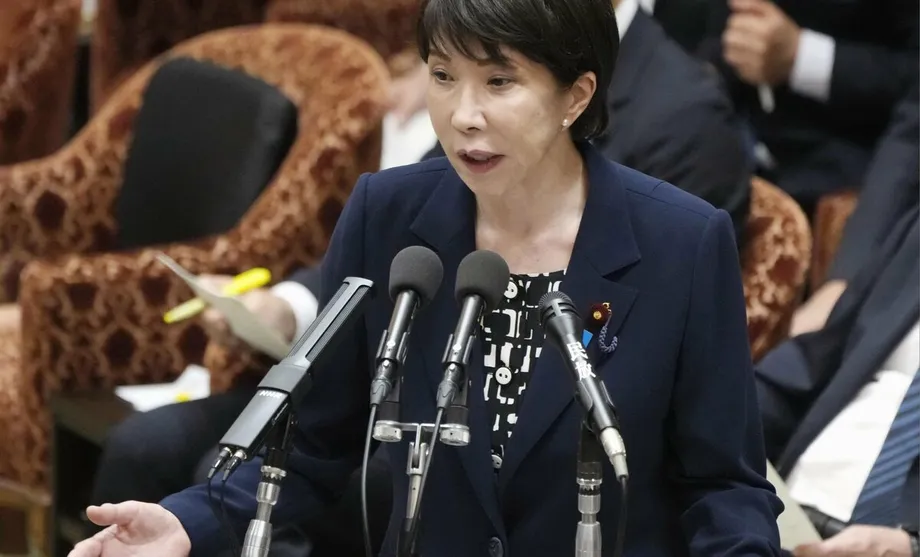
Prime Minister Sanae Takaichi's government wants the lower rate to begin on April 1, 2027, and end in March 2029. Payments linked to income would begin during that period, followed by a fuller support system when the food tax returns to 8% in April 2029.
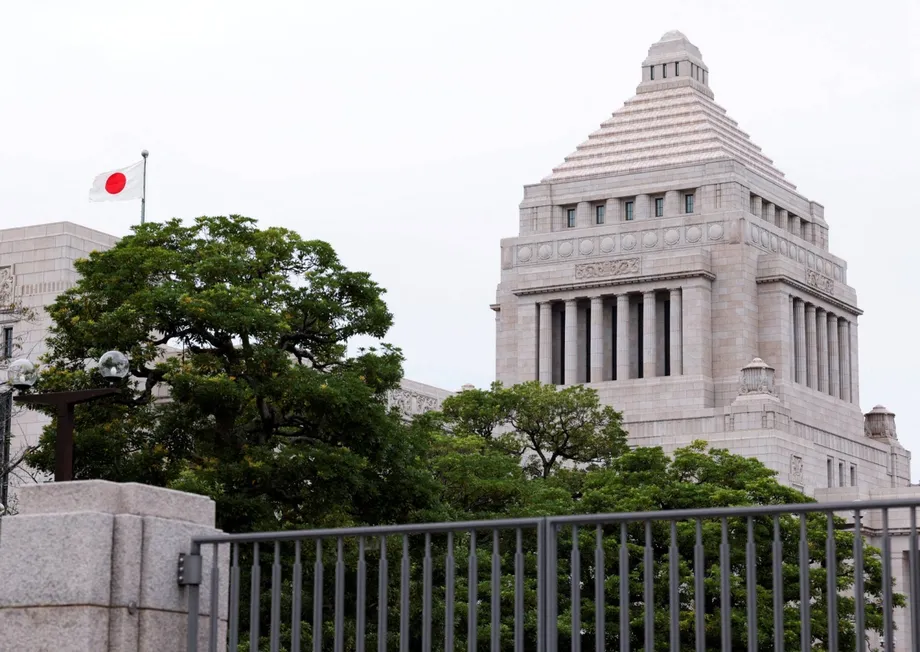
The ruling parties are seeking passage through the Lower House by early November and enactment before the parliamentary session ends on December 12. Opposition lawmakers want eligibility, payment amounts and financing explained before they approve the package.
Detailed deliberations were reported as beginning in the Lower House Financial Affairs Committee on October 23, although another account placed the start of committee questioning on October 21. The full chamber began debating the legislation on October 20.
The immediate household concern is straightforward: how much less will groceries cost, and will support continue after the temporary tax cut expires? The legislation answers the tax timetable more precisely than those questions about payments.
Finance Minister Satsuki Katayama has said the government intends to provide support at the same time as the tax rate returns to its original level, easing the pressure on consumers. The shape of that replacement support is still being negotiated.
What the government has formally proposed
The Cabinet Secretariat's tax and benefit plan sets out the sequence: a temporary 1% rate for food and beverages currently covered by the reduced consumption tax rate, early payments linked to income, and a more detailed benefit system from fiscal 2029.
The Cabinet approved the underlying policy on August 5, 2026, following the National Council on Social Security's July 29 interim conclusions. It approved an outline on September 15 and submitted the legislation to the 222nd Diet on October 9.
The bill combines a temporary reduction in the food consumption tax with support payments intended to reduce workers' tax and social insurance burdens. The Finance Ministry's temporary tax reduction notice identifies fiscal 2027 and fiscal 2028 as the two years covered.
The government's longer term goal is a refundable tax credit. In simple terms, this is support delivered through the tax system that can include a payment when a person's entitlement exceeds the tax they owe. The government says its approach will focus on workers with low and middle incomes, increase take home income and reduce incentives to limit working hours near income thresholds.
Takaichi describes the temporary tax reduction as a bridge to that system. The choice of 1%, rather than zero, followed earlier concerns about retail software preparation: manufacturers had said adjusting systems to a positive rate could be much faster than introducing a zero rate.
Who would receive the payments?
Takaichi has offered an illustration covering about 20 million workers earning approximately ¥1 million to ¥3.5 million a year. Under that example, recipients could receive an average of roughly ¥30,000 annually during the initial phase.
The government plans to allocate around ¥600 billion a year to early payments in fiscal 2027 and fiscal 2028, described as equivalent to the remaining 1% food tax. Dividing ¥600 billion among 20 million people produces the illustrative ¥30,000 average. Actual payments would depend on the eventual rules.
Eligibility thresholds, individual payment amounts, permanent financing and business assistance remain undecided. Katayama says details will emerge through the budget process. Takaichi has described the ¥3.5 million upper income figure as a reference for discussion, with further analysis needed.
The lower income boundary is particularly contested. The government has presented ¥1.06 million as a central option, alongside ¥740,000 and ¥530,000. Those figures reflect different points in existing tax, social insurance and employment insurance arrangements. Komeito deputy leader Kazuyoshi Akaba has insisted on the ¥530,000 boundary, which would bring workers with lower earnings into consideration.
Household examples add another layer. Katayama has cited ¥3.75 million for a couple, while Takaichi has discussed heavy tax and social insurance burdens for a couple with two children earning ¥5.1 million or less. These are examples used in designing support, with household size and children among the factors under discussion.
Democratic Party for the People deputy leader Motohisa Furukawa has demanded another round of consultation before eligibility is fixed by government ordinance. An ordinance is a detailed rule issued by the government under powers granted by a law. That demand places a practical issue before parliament: how much should lawmakers settle now, and how much should ministers decide later?
How much could food prices fall?
Takaichi has put the average benefit from the tax reduction at ¥36,000 per person. The government's earlier presentation described that estimate as an annual saving. The amount an individual household receives would depend on its food spending and prices at the checkout.
A simple calculation explains why a reduction from 8% to 1% is not a 7% cut in the current shelf price. Food priced at ¥1,000 before tax costs ¥1,080 at 8%, or ¥1,010 at 1%. With the price before tax unchanged, the shopper saves ¥70, about 6.5% of the previous total.
Democratic Reform Party lawmaker Kazuhiko Shigetoku has challenged the government over whether continuing inflation could absorb part of that saving. Team Mirai lawmaker Takumi Hayashi has also cited European examples in which retail prices fell by less than the tax reduction.
Takaichi acknowledged that food prices depend on several factors, while defending her expectation that the reduction would reach shoppers.
effects of the consumption tax rate reduction will generally be reflected in prices.
Katayama has said the government does not intend to force businesses to cut prices and accepts that companies must reflect higher costs in what they charge. She has also warned against opportunistic price increases and pressure on suppliers. The government plans to track food price statistics, with Katayama proposing a meeting of relevant ministers to monitor developments.
Why the government's earlier position matters
Komeito lawmaker Shinichi Isa has questioned how the current proposal fits with a Cabinet approved answer issued in November 2025. That answer said retailers could leave prices unchanged after a food tax reduction and described such a measure as an inefficient way to help people with low incomes.
Katayama responded that the government now considers the combination of a tax reduction and payments the best approach for delivering sufficient support quickly. She acknowledged a responsibility to explain the change in position.
The price pressure behind the debate is substantial. A Teikoku Databank survey expected 3,153 food and beverage items to increase in price in October 2026, the second largest monthly total that year. A smaller tax charge would therefore arrive in a market where many underlying prices are already rising.
Public surveys capture both support and doubt. One found 56% in favour of the legislation and 37% opposed. Another recorded 62.6% support for cutting the food tax, while 52.2% said the measure would not be effective against rising prices. For households, welcoming a lower tax and doubting that it will stop inflation can coexist.
Where would the ¥10 trillion come from?
The combined tax reduction and early payment programme would require approximately ¥5 trillion annually, or ¥10 trillion over two years. Takaichi has pledged to cover the cost without deficit financing bonds, meaning borrowing used to fill a gap between government revenue and spending.
Katayama has identified broad areas for finding money: reviews of special tax concessions, subsidies and government funds, together with revenue outside taxation. Specific measures and their expected yields have yet to be set out.
The dispute follows the earlier funding debate on October 13. At that stage, the government estimated that the tax reduction alone would reduce central and local revenue by about ¥4.3 trillion annually, with accompanying assistance bringing the package close to ¥5 trillion. Proposed support for farmers could add around ¥200 billion.
Consumption tax revenue helps finance social security, including pensions and medical care. Shigetoku has challenged the government to explain how those commitments would be protected, while Democratic Party for the People lawmaker Satoshi Asano has pressed for the actual contents of the financing plan.
What happens when the rate returns to 8%?
April 2029 would bring two changes together: restoration of the 8% food tax and full introduction of the workers' support programme. The early payments are intended to offset the remaining 1% burden for selected recipients; the later system is meant to provide broader relief linked to income.
Takaichi says the temporary reduction should end as scheduled because consumption tax funds social security and because Japan needs sustainable public finances and investors' confidence. The bill contains no clause allowing an extension on economic grounds.
Opposition lawmakers argue that restoring the rate would impose a sharp increase on household bills, especially for people who receive no replacement payment. Asano explained his party's concern during the parliamentary debate.
We are not opposed to tax cuts," DPP lawmaker Satoshi Asano said. "We want to prevent a major tax increase on the middle class in two years.
Takaichi has rejected the description of restoration as a new burden. She has ruled out postponement for ordinary economic reasons, while allowing flexibility for major disasters or infectious disease outbreaks. Katayama subsequently said an extreme recession would warrant an appropriate response, leaving ministers with different public wording about exceptional circumstances.
Katayama's proposal to deliver support simultaneously with restoration makes eligibility especially consequential. A household benefiting from cheaper groceries in 2027 and 2028 would need to know whether it qualifies for payments in 2029, and whether those payments match its higher tax bill.
Opposition parties offer competing routes to relief
Komeito proposes replacing the tax reduction with payments of about ¥80,000 per person over two years, or ¥320,000 for a family of four. It would use roughly the same ¥10 trillion envelope, directing a fixed amount to individuals rather than linking relief to how much food they buy.
The Democratic Party for the People has submitted an alternative combining tax deductions, resident tax reductions and benefits, aiming to save workers up to ¥50,000 annually. Asano has also proposed payments of roughly ¥50,000 to workers with low and middle incomes within the current fiscal year.
The Constitutional Democratic Party of Japan wants cash assistance this fiscal year for households with low incomes that are exempt from resident tax. The Democratic Reform Party has proposed a prompt ¥40,000 payment to each citizen.
Takaichi rejects a switch to nationwide cash payments before the fiscal year ends in March 2027. She explained the timing objection in parliament.
"Cash payments take time, and it would be difficult to ensure they reach all eligible recipients nationwide within the fiscal year, so we are not considering them," she said.
Katayama has also questioned how much cash assistance would be saved rather than spent. Opposition parties focus instead on speed and certainty: a payment delivers a known sum, while savings from a tax reduction depend on purchases and retail pricing.
Businesses and local governments face practical choices
Restaurants face concern about a wider tax difference between meals eaten out and prepared food bought at supermarkets. Asano has cited local eateries worried about losing customers and asked ministers to clarify business assistance quickly.
Small farmers, forestry operators and fishing businesses exempt from remitting consumption tax could also be affected. A lower tax component in their sales could reduce money they retain. Support for these businesses is part of the budget discussion alongside household relief.
Local governments would have a role in administering payments. The Cabinet Secretariat says national and local authorities should cooperate, minimise administrative work and discuss responsibilities after the design of the programme and local duties are made clear.
The administrative decisions matter to recipients as much as the headline figures. Authorities will need a workable way to identify income, account for family circumstances and deliver the correct amount. The government has committed to consultation with local authorities over how that work is divided.
The parliamentary timetable now comes into focus
The Liberal Democratic Party won 316 Lower House seats in February, giving it a two thirds majority by itself. The balance is different in the Upper House, where the ruling bloc of the LDP and Japan Innovation Party is four seats short of a majority.
Six opposition parties in the Upper House, including the Constitutional Democratic Party of Japan, the Democratic Party for the People and Komeito, called on October 22 for a special committee to ensure sufficient debate. The government is seeking opposition backing while pursuing the following timetable:
- October 9, 2026: The Cabinet approved the legislation and submitted it to parliament.
- October 20: The Lower House held an explanation of the bill and questions in plenary session.
- October 27: The Financial Affairs Committee is scheduled to question invited witnesses.
- October 28: A joint examination with the Agriculture, Forestry and Fisheries Committee is scheduled.
- Early November: The government and ruling parties aim for Lower House passage.
- December 12: The current parliamentary session is scheduled to end.
- April 1, 2027: The proposed 1% food tax would begin.
- April 2029: The rate would return to 8%, alongside full introduction of support payments.
The next hearings bring the household and business issues into the same debate. Ministers must explain how a broad tax reduction, targeted payments and assistance for affected producers fit within the financing plan before lawmakers decide whether to approve the package.
Key Points
- Japan proposes cutting the food and nonalcoholic beverage consumption tax from 8% to 1% for two years from April 2027.
- The combined tax and early payment package would require roughly ¥10 trillion over two years.
- An illustrative payment model covers about 20 million workers earning ¥1 million to ¥3.5 million annually, with average yearly support of about ¥30,000.
- Final eligibility, payment amounts, financing measures and business assistance remain under discussion.
- The government intends to restore the 8% rate in April 2029 as fuller support payments begin.
- Witness questioning is scheduled for October 27, followed by a joint committee examination on October 28.
- The ruling parties seek enactment by December 12 and need opposition cooperation in the Upper House.