An 8 Centimeter Opening for a New Heart
A 67-year-old man with severe heart failure, previous small strokes and chronic lung disease has received a donor heart in China's first robotic heart transplant. Surgeons at the First Affiliated Hospital of Xi'an Jiaotong University in Shaanxi province performed the operation on October 5 through an opening of about 8 centimeters between his ribs, leaving his breastbone intact.
Contents
- An 8 Centimeter Opening for a New Heart
- Why the Patient Needed a Transplant
- A Donor Heart Was Still Essential
- Why Surgeons Avoided Dividing the Breastbone
- Rehearsing the Operation Before Surgery
- Five Connections Inside a Confined Space
- What the Early Recovery Shows
- How the Procedure Fits the Global Timeline
- Could More Patients Receive This Approach?
- Key Points
The patient came off a ventilator on the day of surgery. Before the transplant, his heart's main pumping chamber was ejecting just 19 percent of the blood it contained with each contraction, and doctors concluded that medical treatment could no longer reverse his deterioration.
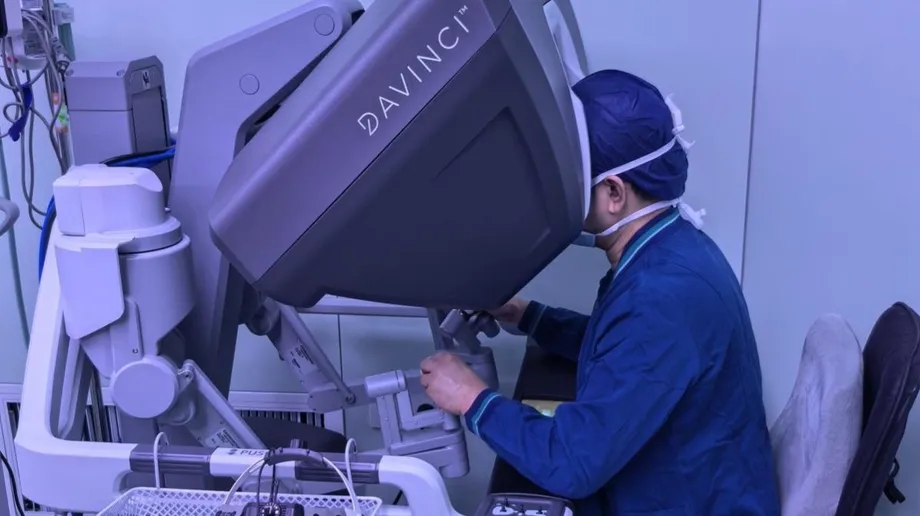
The hospital described the procedure as the world's third robotic heart transplant, following operations in Saudi Arabia in 2024 and the United States in 2025. Surgeons controlled the robotic instruments throughout the operation, using a magnified three dimensional view to remove the diseased heart, position the donor organ and stitch its connections.
The achievement follows the hospital's announcement of the procedure, covered in the account of China's first robotic transplant. Details of the patient's condition and the surgical preparation explain why the team chose this approach and what his early recovery has involved.
Why the Patient Needed a Transplant
The man's symptoms had worsened over several months. He had experienced chest tightness and breathlessness after activity for years, followed by a progressive decline in his ability to exercise during the six months before treatment.
During the final month, he became unable to lie flat comfortably and developed swelling in both legs. Fluid accumulation increased his weight by more than 5 kilograms, while medicines intended to remove excess fluid were providing insufficient relief. Together, these symptoms showed that his failing heart was struggling to meet his body's needs.
An ultrasound examination measured his left ventricular ejection fraction at 19 percent. This figure describes how much blood the left ventricle, the heart's main pumping chamber, pushes out with each beat. His reading indicated severely impaired pumping. Tests also found substantial leakage through the mitral, tricuspid and aortic valves, allowing blood to flow backward instead of moving efficiently forward.
Doctors also had to account for coronary artery disease, multiple lacunar cerebral infarctions and emphysema. These conditions affected the blood supply to his heart, reflected previous small strokes in his brain and reduced the function of his lungs. After assessing his condition, the team concluded that transplantation was his only remaining rescue option.
A Donor Heart Was Still Essential
The patient was registered in the China Organ Transplant Response System, known as COTRS, to enter the computerized allocation process while awaiting a donor heart. Robotic assistance changed how surgeons would perform the operation; the treatment still required a suitable donated organ.
In the early hours of October 5, the team received notification that a donor heart was available. Staff assessed the organ's quality, checked the recipient again and began the surgical process.
The timing brought together two tasks: confirming that the donated heart was suitable and ensuring that a patient with several serious illnesses could undergo the planned operation. His worsening condition had made the waiting period particularly dangerous.
Why Surgeons Avoided Dividing the Breastbone
Conventional heart transplantation usually involves a median sternotomy. Surgeons make an incision down the center of the chest and divide the breastbone to obtain a broad view of the heart and surrounding vessels. The incision is about 20 centimeters long.
Yan Yang, director of cardiovascular surgery at the Xi'an hospital, said the trauma of that approach created particular concerns for this patient, including bleeding, infection of the breastbone and a prolonged recovery. His poor heart function and illnesses affecting other organs made the decision more difficult.
The robotic procedure used a main incision of about 8 centimeters between the ribs, plus two smaller instrument openings in the right chest wall. Compared with the approximately 20 centimeter incision described for conventional surgery, the main opening was about 12 centimeters shorter. Its location also allowed surgeons to leave the breastbone whole.
Yan explained why the team considered preserving the chest structure valuable:
"The core advantage of a robot-assisted transplant is that it preserves the integrity of the thoracic cage, significantly reduces surgical trauma, shortens the recovery period and lowers the risk of infection," he said.
Rehearsing the Operation Before Surgery
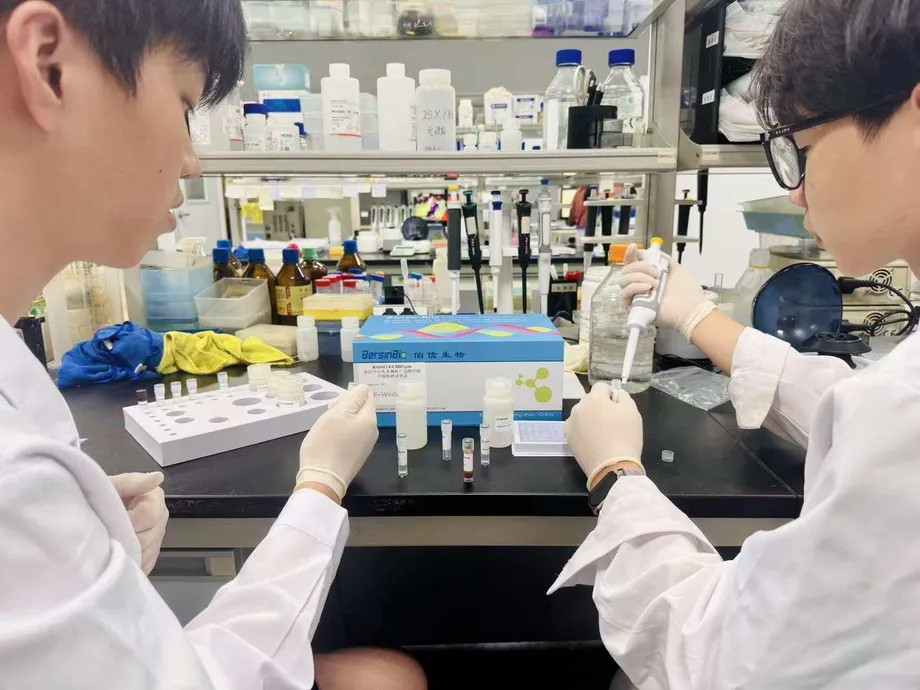
The Xi'an team conducted simulation drills before operating. Doctors used three dimensional image reconstructions and models to test where to place the incision, how the instruments would enter the chest and how the donor heart would be implanted.
Those preparations addressed a practical challenge: a smaller opening gives surgeons less direct access. The instruments needed enough room to reach the surgical connections, while the main incision had to allow removal of the diseased heart and insertion of the donor organ.
Doctors from several disciplines repeatedly assessed the plan. For a patient with severe heart failure, previous brain injury and lung disease, choosing the surgical route required consideration of both the transplant itself and his ability to recover afterward.
Five Connections Inside a Confined Space
During the operation, surgeons watched a three dimensional screen and guided the robotic arms into position. The main incision served as the passage for removing the patient's heart and introducing the donor heart. The two smaller openings admitted robotic instruments for precise cutting and stitching.
The team completed five surgical joins: at the left atrium, pulmonary artery, aorta, superior vena cava and inferior vena cava. These connections link the transplanted heart to the pathways that carry blood between the body, heart and lungs. Each join requires careful stitching so blood can circulate through the new organ.
The donor heart was kept under low temperature protection during the procedure. Cooling helps limit the organ's oxygen needs while it is outside its normal circulation. After the donor heart began beating, the patient was transferred to the cardiac surgical intensive care unit for monitoring.
Yan said robotic arms offered a greater range of rotation, stability and dexterity than human hands, including movements that hands cannot perform. In this operation, those capabilities helped surgeons work within the limited space available through the smaller openings.
What the Early Recovery Shows
The patient was taken off mechanical ventilation on the day of surgery. A ventilator supports breathing during an operation and, when needed, afterward. Removing that support was an early step in his recovery before the longer process of rebuilding strength.
Li Yongxin, deputy director of the hospital's cardiovascular surgery department and a member of the operating team, described the patient's progress:
"The patient's heart function has fully recovered. ... We will help him build strength step by step with daily physical and cardiac rehabilitation," Li said.
Li expected the patient to resume normal life within one to two months. That was a recovery forecast. The hospital had not disclosed a discharge date or longer follow up results.
Yan cited a short term postoperative mortality rate of 5 to 10 percent for conventional heart transplantation. Establishing the corresponding risks for robotic transplantation will require results from more patients and longer observation. For the Xi'an patient, the immediate milestones were a beating donor heart, intensive care monitoring and breathing without a ventilator on the day of surgery.
How the Procedure Fits the Global Timeline
Robotic heart transplantation remains at an early stage of clinical exploration. The Xi'an operation followed procedures in Saudi Arabia and the United States, with differences in the patients treated and the routes used to move the donor heart into place.
- September 2024: King Faisal Specialist Hospital in Saudi Arabia performed the first fully robotic heart transplant on a 16-year-old patient with terminal heart failure, using a small opening between the ribs.
- March 2025: Kenneth K. Liao, director of cardiothoracic transplantation and mechanical circulatory support at Baylor College of Medicine in Houston, performed North America's first robotic heart transplant. The procedure used an opening through a space in front of the abdominal lining to remove and implant the heart.
- October 5: The Xi'an Jiaotong University hospital team performed China's first procedure, using an incision between the ribs and two additional robotic instrument openings.
The hospital described China as the third country to carry out this type of transplant. The sequence also shows how new the method remains: the first cases involved both a teenager and older adults, with teams adapting access routes to their surgical plans.
Could More Patients Receive This Approach?
Yan said robotic transplantation could offer an option for patients whose age or other illnesses make the trauma of conventional surgery especially concerning. The Xi'an patient illustrates the clinical problem the team was trying to address: he urgently needed a new heart while facing substantial risks from a large chest incision.
Yan described his hopes for wider use of the procedure:
"Although at an early stage of development, robotic heart transplant may become a routine surgical option in the future to benefit more patients," he said.
He also raised the possibility of doctors eventually operating from thousands of kilometers away, and of robots one day performing a transplant autonomously. Both were future possibilities in his comments. The Xi'an operation involved surgeons directly controlling the robotic arms.
The immediate advance was more concrete: a team transplanted a donor heart into a seriously ill man while preserving his breastbone. His continued rehabilitation, along with results from future patients, will help doctors assess where this demanding technique can be used most effectively.
Key Points
- A 67-year-old man received China's first robotic heart transplant at the First Affiliated Hospital of Xi'an Jiaotong University on October 5.
- Surgeons used an incision of about 8 centimeters between the ribs and two smaller instrument openings, without dividing the breastbone.
- The patient had severe heart failure, an ejection fraction of 19 percent, coronary artery disease, previous small strokes and emphysema.
- Surgeons controlled robotic instruments to complete five connections linking the donor heart to the recipient's circulation.
- The patient came off a ventilator on the day of surgery. His team forecast a return to normal life within one to two months.
- The hospital described the operation as the world's third of its kind, following procedures in Saudi Arabia and the United States.