
From Pacifism to Power: Japans Strategic Shift
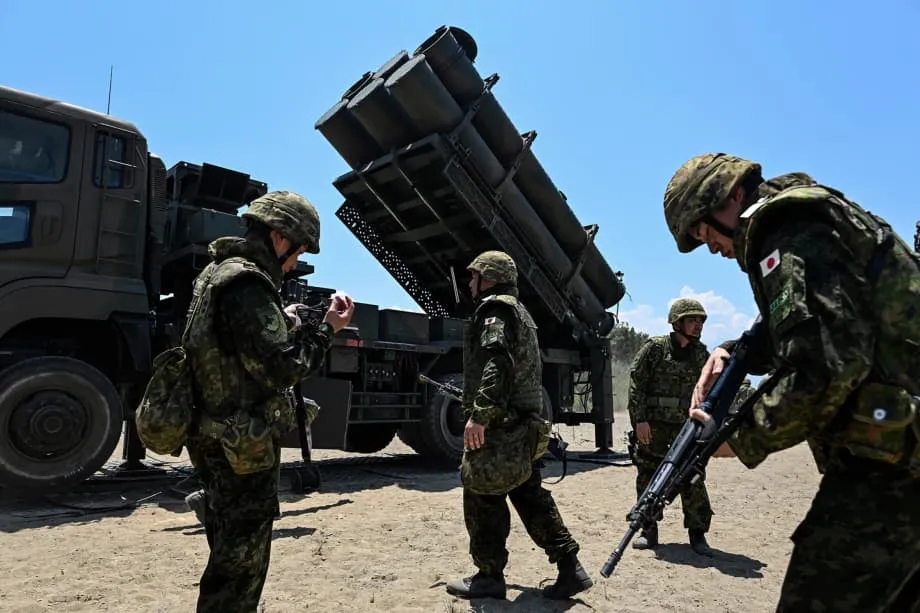
Over the last decade, Japan has moved decisively away from its postwar pacifist identity. After promising following World War II to maintain only a minimal military, Tokyo is now constructing truly capable armed forces and a sizable defense industrial base. In December 2018, the country announced plans to modify its Izumo class destroyers so they could operate F-35B fighters, effectively giving Japan its first aircraft carrier since 1945. The government also committed to purchasing 147 F-35 fighter jets. In 2023, Tokyo allowed its companies to begin selling certain offensive weapons and weapons parts. Last month, Japanese authorities scrapped most of the remaining limits on arms exports, clearing the way for overseas sales of destroyers, missiles, and jets. These steps represent a fundamental reimagining of Japans role in regional security.
Contents
- From Pacifism to Power: Japans Strategic Shift
- The Takaichi Doctrine and the Taiwan Question
- A Growing Arsenal and a Global Defense Market
- The U.S. Japan Alliance Faces a Transactional Test
- Integrating Command and Control for a New Era
- Building Networks Beyond the Bilateral Relationship
- Deterrence, the China Factor, and Economic Coercion
- Fiscal Realities and Domestic Political Hurdles
- The Bottom Line
This evolution began in earnest in 2015, when then Prime Minister Shinzo Abe passed legislation permitting Japans Self Defense Forces to use force in limited cases of collective self defense, such as if an attack on the United States threatened Japans survival. The reform prompted public outrage and protests at the time, yet it took effect and set the stage for further change. In 2017, Abe signaled that Tokyo would no longer treat its informal one percent of GDP ceiling on defense spending as fixed. In 2018, Japan created the Amphibious Rapid Deployment Brigade, a marine style unit designed to defend and retake remote islands. Japans 2022 National Security Strategy and Defense Buildup Program committed the country to acquiring counterstrike capabilities, including longer range missiles that can reach targets on the Asian mainland.
Today, the debate in Tokyo among most politicians is no longer about whether Japan should bolster its own security. It is about how quickly it should do so. The country is on track to spend roughly two percent of its GDP on defense by 2026, and it is transforming its entire defense posture rather than loosening restraints at the margins. Reversing this trajectory would require canceling multiyear procurement contracts, shrinking production lines, undoing new export rules, and weakening units and bases that are being built across the countrys southwest. Given the popularity of these reforms, the country is unlikely to elect leaders who want to undo them.
The Takaichi Doctrine and the Taiwan Question
No one appears more committed to accelerating this shift than Prime Minister Sanae Takaichi. An Abe protege who took office in October 2025, Takaichi wasted little time expanding Japans military posture. In January 2026, she called a snap election and secured a 316 seat supermajority in the House of Representatives, the largest victory for her Liberal Democratic Party in the postwar era. Her platform, built on a strong Japan First narrative, channels the anxieties of a younger generation shaped by Chinese coercion and North Korean nuclear brinkmanship rather than memories of war.
On November 7, 2025, Takaichi told the Japanese parliament that a Chinese attack on Taiwan could threaten Japans survival, signaling more clearly than any predecessor that Tokyo might use military force under the 2015 security laws if an assault on the island occurred. Beijing responded with fury, accusing Takaichi of trying to return Japan to its colonial past and warning of serious consequences. China discouraged its citizens from traveling to Japan, suspended seafood imports, restricted exports of dual use items to Japanese military entities, and later placed dozens of Japanese companies and organizations on export control lists. In December, Chinese fighter jets reportedly locked fire control radars on Japanese military aircraft.
Takaichi refused to back down. Her stance appears to have boosted her popularity at home, illustrating a paradox of Chinese coercion. The harder Beijing tries to crack down, the more it faces political blowback in Tokyo. Takaichi has also pledged to revise Japans three core national security documents by the end of 2026 and has advanced the timeline for reaching two percent defense spending to 2026. She is preparing the ground for a potential revision of Article 9 of the constitution, which legally renounces war and prohibits maintaining military forces.
A Growing Arsenal and a Global Defense Market
Japans defense transformation extends well beyond budget figures. Tokyo is strengthening security on its southwestern islands by adding missile units, air defenses, ammunition depots, fuel stores, hardened shelters, and facilities that allow aircraft and ground units to disperse across the Ryukyu Islands. It is investing heavily in munitions stocks, expanding unmanned systems, and pursuing counterstrike capabilities such as Tomahawk land attack cruise missiles, which will begin deploying on destroyers next year. The country is also developing a next generation fighter jet with Britain and Italy for deployment in the mid 2030s.
In April 2026, Japan unveiled its biggest overhaul of defense export rules in decades. The government removed five categories that had limited most military exports to rescue, transport, surveillance, and minesweeping equipment. Ministers will now assess each proposed sale individually, while retaining principles that ban sales to countries involved in conflict and mandate strict screening. The change immediately opened doors for defense industrial cooperation. Australia selected Japans Mitsubishi Heavy Industries for a 6.5 billion dollar deal to build warships for the Royal Australian Navy. Countries ranging from Poland to the Philippines are exploring procurement opportunities. Philippine Defence Secretary Gilberto Teodoro welcomed the shift, stating that access to high quality Japanese defense articles would strengthen domestic resilience and contribute to regional stability through deterrence.
Prime Minister Takaichi defended the new policy by noting that no single country can now protect its own peace and security alone.
No single country can now protect its own peace and security alone, and partner countries that support each other in terms of defense equipment are necessary.
Tokyo hopes defense exports will shore up its industrial base by boosting production volumes, lowering per unit costs, and adding manufacturing capacity that could be drawn upon in a military crisis. For decades, contractors such as Mitsubishi Heavy Industries depended on small orders from a single customer, the Self Defense Forces. The new rules allow Japanese companies to build with partners abroad rather than merely buying from them. However, Japanese industry is already stretched by surging domestic demand, and in some technology areas it lags global competitors. Inefficient allocation of resources could result in higher costs or lesser capability.
The U.S. Japan Alliance Faces a Transactional Test
Japans buildup should be widely welcomed in Washington, which has long pressed its wealthy East Asian ally to spend more on defense. These moves are designed to strengthen the alliance, and Japanese officials remain deeply committed to their partnership with U.S. peers. Yet whether Tokyos efforts actually strengthen the partnership depends heavily on how Washington reacts. Since U.S. President Donald Trump returned to office in 2025, the United States has treated alliances in increasingly transactional terms. In April 2025, Trump imposed 25 percent tariffs on Japanese goods before the two sides eventually struck a deal setting most rates to 15 percent. Trump also demanded that Japan pay roughly four times as much to the United States in exchange for continuing to host U.S. troops, calling Japan spoiled for having ripped us off for 30, 40 years.
The Pentagons 2026 National Defense Strategy urges allies and partners to take primary responsibility for defending themselves, offering more limited U.S. support. The document downplays the threat from China and the Indo Pacific region while elevating priorities in the Western Hemisphere. U.S. military interventions in Venezuela and Iran have raised questions about the durability of American forward presence in Asia, and senior level U.S. support for Japan was muted when Beijing launched its coercive campaign against Takaichis Taiwan comments.
This approach carries risks. Linking security commitments to bilateral tariffs or unrelated commercial concessions gives allies a reason to look for markets, financing channels, and supply routes that do not run through the United States. If Washington continues to lambast Tokyo, Japan could use its greater capacity to bargain harder and shift more defense procurement and codevelopment toward Australia and Europe. These acts would not make Japan anti American, but they would leave the United States with less influence over Tokyo.
Integrating Command and Control for a New Era
Operational integration has become an urgent priority. In 2024, Washington and Tokyo announced plans to transform U.S. Forces Japan into a joint operational headquarters serving as a counterpart to Japans Joint Operations Command, which was established in March 2025. The goal is to enable faster, more synchronized decisionmaking and more effective operational planning for contingencies ranging from gray zone scenarios to open conflict. The Trump administration affirmed it would proceed with these plans, and in January 2026 the two governments reaffirmed efforts to upgrade alliance command structures.
Despite this progress, major questions remain. The alliance has not convened a 2+2 meeting of foreign and defense ministers since 2024, and working level meetings continue without sufficient senior political engagement. Military planners still need clarity on how the new U.S. Joint Force Headquarters will interact with Japans Joint Operations Command in practice, particularly regarding real time decisionmaking, targeting coordination for counterstrike missions, and operational division of labor. Simply moving command authority closer to the front line will not automatically resolve these issues.
Some defense experts argue that incremental reforms are no longer sufficient. They contend the alliance needs a combined forces command structure akin to the U.S. Republic of Korea model to unify operational planning and enable the alliance to fight as a single cohesive force. Achieving this would require years of legal preparation and political signaling, but waiting until a crisis begins would be strategic malpractice. History rarely announces its turning points in advance, and the window for building such a framework may not remain open indefinitely.
Building Networks Beyond the Bilateral Relationship
Japan is not relying solely on Washington for security. Tokyo has steadily strengthened partnerships with Australia, India, European states, Southeast Asian countries, and even South Korea, with which it has typically had tense relations. These relationships create more channels for joint training, intelligence sharing, and supply chain diversification. They make it harder for China to isolate Japan and provide additional layers of resilience should U.S. political support prove inconsistent.
The trilateral relationship among Australia, Japan, and the United States illustrates this trend. Over the past decade, the three countries have built one of the most sophisticated trilateral security relationships in the Indo Pacific, spanning intelligence sharing, advanced maritime operations, and joint exercises. Australia and Japan now function as de facto allies despite the absence of a formal bilateral defense treaty. Canberra and Tokyo launched a new framework for strategic defense cooperation covering cyber, space, logistics, and supply chain resilience, while Australias decision to procure Japanese designed Mogami class frigates represents a significant step toward defense industrial integration.
Japan is also central to minilateral groupings such as the Quad, which brings together the United States, Japan, Australia, and India, as well as the Squad involving the Philippines. Tokyo has steadily advanced its Free and Open Indo Pacific vision, which centers on preserving a rules based order, freedom of navigation, and free trade. Even if Washingtons interest in the normative dimensions of regional strategy fluctuates, Japan can help sustain regional partnerships on trade, maritime governance, and economic security.
Deterrence, the China Factor, and Economic Coercion
Chinas rapid military modernization and increasingly coercive behavior across the East and South China Seas provide the immediate backdrop for Japans buildup. Beijing is less likely to confront a coalition that features not just U.S. and Taiwanese forces but well equipped Japanese ones. Any conflict over Taiwan would involve Japanese bases, missiles, sensors, air defenses, and logistics networks, making a quick victory difficult for China to achieve. Beijing must now assume that Tokyo would enter such a conflict, meaning the strategic calculus has shifted.
A Taiwan crisis might begin with Chinese efforts to split U.S. and Japanese decision makers by choking off access to industrial inputs required to sustain deterrence. Rare earths, specialty materials, sensors, drone components, and semiconductor related tools could all become pressure points. Tokyo might feel compelled to act quickly to protect its territory and prevent a fait accompli around Taiwan or the East China Sea, while U.S. officials might hesitate if intervention threatened the American economy or disrupted supply chains. Japans current efforts are designed to answer that problem. By expressly committing itself to Taiwan and building up its military, Tokyo signals that it will not shy away even if Washington hesitates.
Critics worry that Japans new capabilities will increase escalation risks. If these capabilities are poorly coordinated with the United States, governed by unclear rules of engagement, or based on imprecise role sharing, they might create danger. Yet so long as Japan builds up its forces as a complement to American power rather than a replacement, this buildup is unlikely to spur an attack from Beijing. Weakness and indecision are far more likely to invite conflict than strength.
Fiscal Realities and Domestic Political Hurdles
Japan faces serious impediments to achieving its ambitious aims. The country carries the worlds highest debt to GDP ratio among advanced economies, nearing 240 percent. The yen has remained weak, undercutting the purchasing power of defense investments. Tax increases to fund the buildup have proven politically difficult, and recent stimulus spending has done little to ease long term fiscal concerns. Demographic decline, recruitment challenges, and labor shortages in the defense industry add further constraints.
Domestic politics also present uncertainties. The collapse of the Liberal Democratic Partys 26 year coalition with Komeito removed a traditional brake on defense expansion, but the new coalition with the Japan Innovation Party rests on a razor thin majority. Takaichis personal popularity outpaces that of her party, and questions remain about how long the current alignment can last. If Komeito were to rejoin the coalition, conservative defense ambitions could face renewed constraints. For now, however, the public has shown strong support for a tougher stance toward China, giving Takaichi room to maneuver.
The Bottom Line
- Japan has abandoned its postwar pacifist constraints and is transforming its military into a capable, outward looking force with global defense industrial partnerships.
- Prime Minister Sanae Takaichi has accelerated spending to two percent of GDP and linked Japans security directly to a potential Taiwan contingency, triggering fierce Chinese retaliation.
- Tokyo has scrapped decades old arms export restrictions, enabling sales of warships and missiles to allies including Australia and the Philippines.
- The Trump administrations transactional approach to alliances, including tariffs and demands for higher host nation payments, risks pushing Japan toward greater strategic autonomy.
- Operational integration between U.S. and Japanese forces is advancing through new command structures, but the alliance still lacks a clear combined wartime framework.
- Japan is deepening security networks with Australia, India, Europe, and Southeast Asia to hedge against uncertainties in U.S. commitment and to bolster regional deterrence.