Constitutional Crossroads: Mass Protests Challenge Revision Push
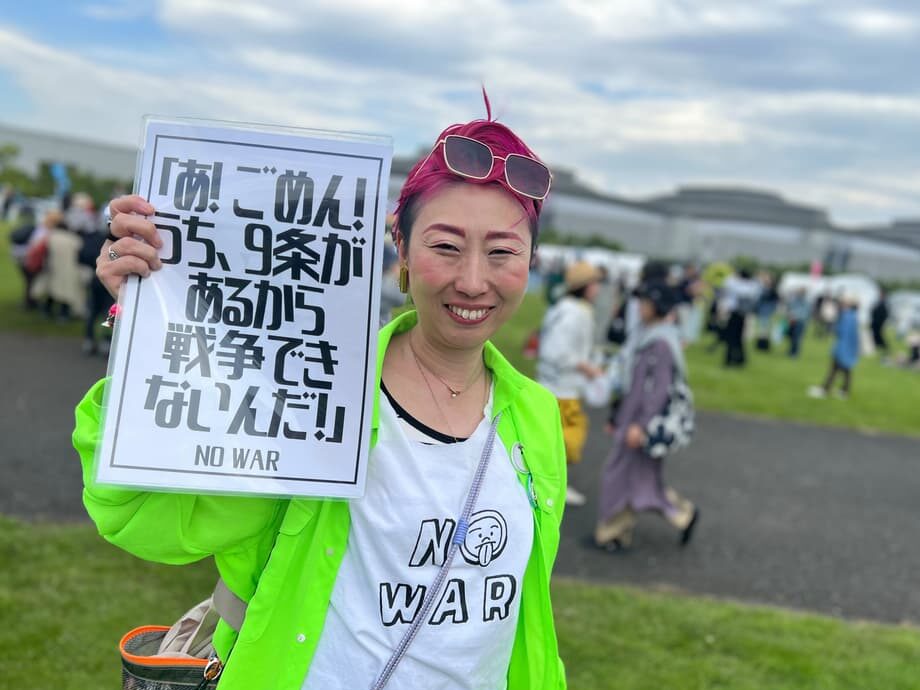
On a spring Sunday marking Constitution Memorial Day, an estimated fifty thousand people converged on Tokyo Rinkai Disaster Prevention Park, transforming the holiday into a vivid display of civic resistance. The crowd, waving luminous light sticks and placards shaped like the numeral nine, represented the largest demonstration yet against Prime Minister Sanae Takaichi and her campaign to revise the postwar pacifist constitution. The gathering capped weeks of escalating protests that have swelled from several thousand participants in late February to thirty six thousand outside the National Diet in April, and now to this record turnout. Demonstrators spanning multiple generations, from university students to octogenarians who survived World War II, united in defense of Article Nine, the constitutional clause that has kept Japan from engaging in military conflict for nearly eight decades. The intensity of public mobilization has surprised political observers who assumed that constitutional revision would face only token opposition from an apathetic electorate.
- Constitutional Crossroads: Mass Protests Challenge Revision Push
- The Document That Shaped a Nation
- A Youth Movement Illuminated by Light Sticks
- The Hormuz Incident and Alliance Tensions
- Economic Transformation and Arms Exports
- The Political Mathematics of Amendment
- Divided Nation, Split Polls
- Voices from the Streets
- The Essentials
Prime Minister Takaichi, who assumed office in October twenty twenty five and secured a renewed mandate in February twenty twenty six elections, has made constitutional reform a central pillar of her administration. Speaking during an official visit to Vietnam, she called for advanced discussions on revising the document, arguing that the constitution should periodically be updated to reflect the demands of the times. She stressed that politicians must not engage in discussion merely for the sake of debate, but must move toward concrete decisions to retain public trust. This rhetoric signals an urgency that has galvanized both supporters and opponents of change, setting the stage for the most significant constitutional confrontation in modern Japanese history.
The Document That Shaped a Nation
To understand the intensity of these demonstrations requires examining the unique history of the Japanese supreme law. Drafted by United States occupation authorities under General Douglas MacArthur in the aftermath of World War II, the constitution took effect on May third, nineteen forty seven, and has remained entirely unamended since. At its heart sits Article Nine, often called the pacifist clause, which states that the Japanese people forever renounce war as a sovereign right and threaten or use military force to settle international disputes. The article explicitly declares that Japan will never maintain land, sea, or air forces, yet reality has evolved differently.
Japan has constructed substantial Self Defense Forces comprising maritime, ground and air capabilities, while successive governments have interpreted the constitutional constraints with increasing flexibility. Legislation passed in twenty fifteen under Prime Minister Shinzo Abe, the political mentor of Takaichi, already permits limited collective self defense, allowing Japanese forces to assist allies under attack even when Japan itself faces no direct threat. Despite these workarounds, the constitution still prevents Japan from projecting power abroad in ways that traditional militaries operate, a limitation that revisionists argue has become dangerous in an era of renewed great power competition.
A Youth Movement Illuminated by Light Sticks
The recent protests have shattered conventional wisdom about Japanese political apathy, particularly among younger citizens. University students and professionals in their twenties and thirties have emerged as unexpected vanguards of the pacifist movement, adopting tactics inspired by South Korean demonstrations against President Yoon Suk Yeol in twenty twenty four. Gohta Hashimoto, a twenty two year old student, has become emblematic of this new activism, brandishing a toy lightsaber at rallies as a symbol of resistance. He explained that he has been interested in the constitution for about a year, ever since the rise of far right parties in Japan, and he wanted to be part of a movement that keeps his country peaceful and protects the constitution.
Analysis of smartphone location data revealed that people in their thirties formed the largest single demographic at recent Diet protests, with more than twenty percent in their twenties and sixty percent of all participants being women. These demonstrators have infused the movement with creative energy, waving colorful light sticks and chanting slogans while electronic dance music pulses through the crowds. The aesthetic draws directly from Korean pop culture protest traditions, creating an accessible entry point for political newcomers. Yuri Hioki, a twenty eight year old programmer, noted that holding a bright yellow light stick gives courage to participate, transforming individual anxiety into collective strength.
The Hormuz Incident and Alliance Tensions
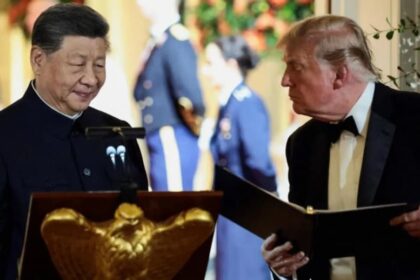
The constitutional debate has gained urgency from recent geopolitical crises that exposed the practical constraints of Article Nine. In March, Takaichi reportedly declined a request from United States President Donald Trump to deploy Japanese maritime forces to the Strait of Hormuz, citing constitutional restrictions against projecting military power abroad. The refusal highlighted a growing friction within the security alliance as Washington shifts military assets from Asia to the Middle East to support operations against Iran, leaving Japanese strategists scrambling to address security gaps. The Trump administration has criticized the reluctance of Japan to contribute to Hormuz security, yet the United States Embassy in Tokyo posted a message on its official social media account that could be interpreted as support for the constitutional status quo.
The embassy noted that the document, highly praised by General MacArthur in his memoirs, has upheld popular sovereignty, respect for fundamental human rights, and pacifism for seventy nine years without amendment. This ambiguous stance underscores the complex position of American officials who wrote the constitution but now face its constraints when requesting Japanese military cooperation. Professor Koichi Nakano of Sophia University in Tokyo observed that the war has brought home the risk that Japan could get involved in an illegal war under Takaichi, so many more people feel they need to show their support for Article Nine as the last bulwark against war.
Economic Transformation and Arms Exports
Beyond constitutional symbolism, the administration has already begun dismantling practical barriers to military normalization. In April, Tokyo scrapped its longstanding ban on exporting lethal weapons, a move that allows defense contractors including Mitsubishi Heavy Industries and Kawasaki Heavy Industries to supply arms to seventeen countries with which Japan maintains defense cooperation agreements. While prohibitions on sales to active war zones remain, the change represents a fundamental shift from the postwar principle of limiting military technology to self defense applications.
The timing coincides with the visit of Takaichi to Australia to discuss energy security, critical minerals, and defense cooperation with Prime Minister Anthony Albanese. Analysts suggest Japan aims to capture a share of the global defense market, which has grown forty one percent between twenty sixteen and twenty twenty five to nearly three trillion dollars. However, Japanese firms face significant obstacles transitioning from domestic procurement models to international competition, including capacity constraints, workforce shortages, and the need to establish maintenance networks abroad. An analyst characterized the shift as a transition from a domestic, ministry led procurement model to normal practice where companies drive business opportunities like other global enterprises.
The Political Mathematics of Amendment
The constitutional ambitions of Takaichi rest on formidable electoral arithmetic. Following the February twenty twenty six snap election, the Liberal Democratic Party secured a two thirds supermajority in the House of Representatives, the lower chamber of the Japanese parliament known as the Diet. This threshold meets one requirement for initiating constitutional amendments, which must pass with two thirds support in both houses before proceeding to a national referendum requiring simple majority approval. However, the LDP lacks similar dominance in the House of Councillors, the upper house, where opposition parties retain sufficient strength to block proposals.
Nobukatsu Kanehara, a senior diplomat and executive director of the Sasakawa Peace Foundation, observed that Takaichi must gather much more steam and reclaim the upper house with two thirds majority, otherwise she cannot succeed. It is not easy. Undeterred, Takaichi has targeted the LDP party convention in twenty twenty seven for submitting a concrete amendment proposal. Possible revisions include formal constitutional recognition of the Self Defense Forces, a change critics warn could open the door to scrapping Article Nine entirely and ending eight decades of official pacifism.
Divided Nation, Split Polls
Public opinion remains deeply fragmented regarding constitutional change. A poll conducted by the conservative Yomiuri Shimbun found fifty seven percent of respondents favored revision, while a survey by the liberal Asahi Shimbun showed support at forty seven percent. A Kyodo News poll revealed more nuanced attitudes, with seventy three percent insisting that any amendment requires broad consensus among multiple political parties rather than unilateral LDP action. The same survey found sixty four percent see no need to rush the process, compared to twenty five percent who favor speed.
These numbers suggest that while abstract support for reform exists, specific proposals regarding Article Nine generate significant anxiety. Nakano argues that pro revisionists know that there is no real consensus on these supposedly constitutional offensive measures, so they want to put the final nail in the coffin of the peace constitution. By making the Self Defense Forces constitutional, they want to legitimize everything the forces do, including the so called limited collective self defense. But they want to go well beyond that, too, so Japan finally becomes a normal country like the United States and Britain.
Voices from the Streets
Within the crowds gathering at Tokyo parks and outside the National Diet building, personal stories illuminate the stakes of the constitutional debate. Hiroko Maekawa, a local Tokyo councillor, offered a blunt assessment of the security alliance.
Under Takaichi, Japan is following America like a dog follows its owner. The LDP wants to turn the self defence forces into a traditional military, because they know the constitution, as it is, prevents them from doing that.
Megumi Koike, another local official, described the constitution as a national treasure and a treasure to the world, rejecting the premise that threats from China and North Korea justify fundamental change. She insisted that the government should be spending money on healthcare, education and jobs, not on more weapons.
For older participants, the protests carry the weight of lived memory. Eighty seven year old Haruka Watanabe, attending a demonstration in Osaka, expressed a desire to cherish the constitution like my own child, and pass it on to the next generation. First time protester Izumi, who attended with concerns for her family, stated that she has nephews and nieces, and she absolutely does not want them to be sent to war someday. She opposes war and believes Article Nine must be protected at all costs.
The Essentials
- An estimated fifty thousand people gathered in Tokyo on Constitution Memorial Day to oppose revision of Article Nine, with similar demonstrations occurring nationwide
- Prime Minister Sanae Takaichi aims to revise the nineteen forty seven constitution for the first time, citing security threats from China and North Korea
- Article Nine renounces war and prohibits maintaining military forces, though Japan currently operates substantial Self Defense Forces under flexible interpretations
- Amendment requires two thirds majority in both houses of parliament followed by national referendum approval
- Recent polls show divided public opinion, with forty seven to fifty seven percent supporting revision depending on the survey, but seventy three percent demanding cross party consensus
- Protests have attracted unexpected youth participation using light stick tactics borrowed from South Korean demonstrations, with sixty percent of participants being women
- Takaichi cited Article Nine in March when declining a United States request to deploy forces to the Strait of Hormuz
- The government lifted the ban on lethal weapons exports in April, allowing defense firms to sell to seventeen partner countries