The Great Migration Accelerates
South Korea is witnessing a population shift of historic proportions as residents abandon the capital in search of affordable living. According to domestic migration data released by the Ministry of Data and Statistics, 83,984 people moved from Seoul to Gyeonggi Province during the first three months of this year. The figure represents a 30.9 percent increase from the previous quarter and an 11.7 percent jump from the same period a year earlier, marking the highest quarterly level since the final three months of 2021, when 85,481 people made the same journey.
This movement, widely described as the Seoul exodus, reflects mounting pressure from a housing market that has pushed ordinary households beyond their financial limits. The data, drawn from resident registration transfer reports, tracks population movements across administrative districts and reveals a clear pattern. Even after periods of price correction, apartments in Seoul remain among the most expensive in the nation. The city jeonse rental market, which operates on a lump sum deposit system rather than monthly rent payments, has tightened dramatically in recent years. As jeonse listings declined and prices rebounded, many households found securing housing within the capital impossible without assuming crushing debt burdens.
The outflow is not limited to established families. The migration spans demographics, though young professionals and newly married couples form a significant portion of those relocating. What began as a trickle during the pandemic years has become a steady stream, reshaping demographic maps and forcing policymakers to confront an uncomfortable reality. The capital, long regarded as the engine of Korean economic and social mobility, is increasingly viewed as financially inaccessible by the very generation expected to drive future growth.
Housing Costs Break the Budget
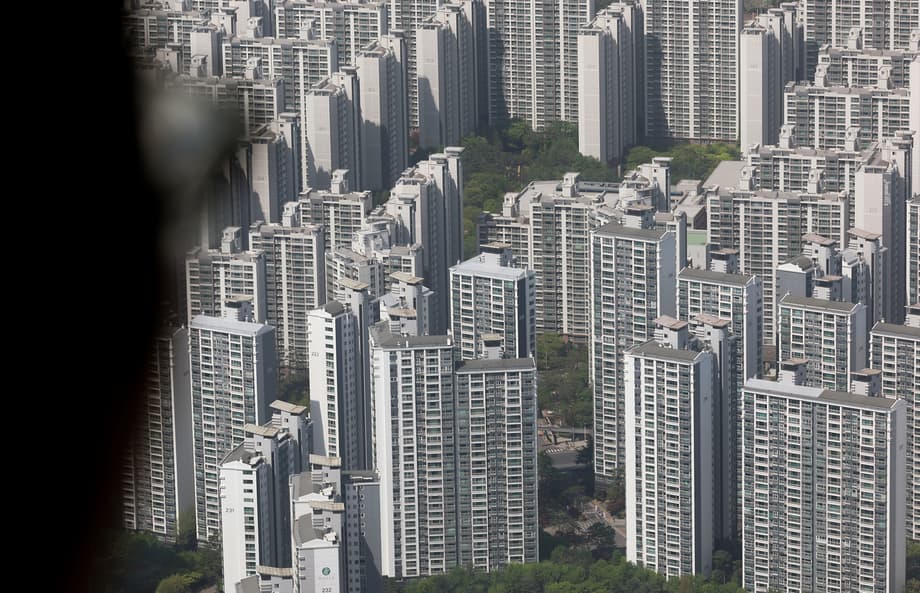
The financial barriers to remaining in Seoul have grown nearly insurmountable for average families. Apartment prices in the capital continue to hover at levels that place homeownership far out of reach for buyers with middle incomes. A sweeping lending regulation that took effect recently caps home mortgage loans at 600 million won, approximately $430,000. While designed to curb speculative buying and stabilize prices, the rule has had a chilling effect on the aspirations of working class households. With average apartment prices in Seoul now hovering around 1.46 billion won, buyers qualifying for the maximum loan still need at least 860 million won in cash to complete a purchase. The policy effectively limits direct market access to households with substantial liquidity.
The regulation is expected to affect more than 1.27 million households, roughly 74 percent of the 1.71 million apartment units in Seoul. In districts with high prices, such as Gangnam and Seocho, where average prices exceed 3 billion won, buyers previously could borrow up to 50 percent of a property value, translating to loans of 1.5 billion won or more. Under the new framework, financing is capped at 600 million won, requiring upwards of 2.5 billion won in cash for properties in these neighborhoods. One housing policy researcher in Seoul warned that the market is increasingly catering exclusively to wealthy individuals, which could deepen socioeconomic divisions across the capital region.
These lending constraints arrive as South Korea grapples with one of the highest household debt burdens in the world. The ratio of household debt to gross domestic product reached 91.7 percent in the final quarter of 2024, ranking second among 38 major nations according to data from the Institute of International Finance. Only Canada recorded a higher ratio at 100.6 percent. Bank of Korea Governor Rhee Chang-yong has stressed the need to lower this ratio gradually to around 80 percent, warning that excessive borrowing could threaten financial stability and economic growth. Yet with housing costs climbing, many residents feel forced to choose between taking on dangerous debt or leaving the city entirely.
Gyeonggi Becomes the New Frontier
Those fleeing Seoul have largely resettled in major Gyeonggi Province cities with strong transportation links and developed housing infrastructure. Suwon recorded the largest total inflow from other regions in the first quarter, welcoming 13,712 new residents. Goyang followed closely with 13,317 arrivals, while Yongin received 13,005 and Seongnam took in 12,088. Hwaseong and Pyeongtaek each recorded more than 10,000 inbound residents. Within the province, Gwangmyeong posted the highest net population gain, adding 8,203 residents during the quarter.
Housing demand from Seoul residents has become increasingly visible in property transactions. According to data from the Supreme Court registry information system, Seoul residents accounted for 15.69 percent of apartment buyers in Gyeonggi Province in March, the highest level since June 2022. During the previous year alone, people living in Seoul purchased 17,093 apartments in the province, representing a 27.3 percent increase from the total of 13,429 units recorded a year earlier. Goyang emerged as the most active market, with 1,736 apartments bought by people from Seoul, followed by Namyangju with 1,409 units, Hanam with 1,252 units, and Uijeongbu with 1,109 units. In the seven cities where transactions exceeded 1,000 units, residents of the capital accounted for 53.7 percent of all purchases in Gyeonggi Province, totaling 9,183 apartment sales.
This surge in demand is rapidly reshaping local property values. Data from the Korea Real Estate Board showed that apartment prices in Yongin Suji-gu rose 7.24 percent this year as of the fourth week of April. Prices in Seongnam Bundang-gu climbed 4.59 percent, while Suwon Yeongtong-gu and Hwaseong Dongtan-gu rose 3.67 percent and 2.88 percent, respectively. During the same period, the average increase across Seoul was just 2.65 percent. The faster price growth in these commuter towns suggests that the capital exodus is not merely a transfer of residents, but a fundamental realignment of the entire metropolitan housing market.
Young Koreans Face the Hardest Choices
The migration trend is especially pronounced among young adults, for whom Seoul has transformed from a land of opportunity into a financial trap. According to Statistics Korea data released last year, the capital recorded a net outflow of 10,000 young people aged 19 to 34 to other parts of the capital region in 2024, five times higher than the figure of 2,000 recorded during the previous year. Gyeonggi Province absorbed 6,000 of these young migrants, while Incheon recorded a net inflow of 4,000. Many young Koreans initially relocate to Seoul for work or educational opportunities, only to find that housing costs make long-term residence unsustainable.
The collapse of the housing subscription system has compounded these difficulties. South Korea operates a unique subscription account program intended to help buyers purchasing for the first time, particularly younger applicants, acquire newly built apartments at regulated prices. However, the system is now faltering as launch prices for new apartments increasingly exceed existing market rates. According to real estate platform Zigbang, 19 of 24 privately developed apartment complexes launched nationwide this year had average prices per 3.3 square meters higher than apartments completed within the past two years in the same areas. In Seoul, complexes like Dfine Yeonhui in Seodaemun-gu were priced approximately 18 percent above the average launch price in the district and about 27 percent higher than recent market rates.
As expected profits from price gaps diminish, enthusiasm for the subscription market is fading. Total subscription account holders fell from 26.979 million in January 2024 to 26.132 million in January this year, a decrease of approximately 840,000. The decline was sharpest among holders in the middle stage of enrollment with three to five years of participation, who dropped by more than 1.5 million. Those enrolled for ten years or more increased, indicating that younger applicants with lower priority scores are abandoning the system. Construction costs have surged due to rising land prices, raw materials, labor expenses, and financing costs, making it impossible for developers to offer the discounts that once made subscriptions attractive.
Seo Jin-hyung, a professor of real estate law at Kwangwoon University, explained that the burden extends beyond home purchases to the rental market.
Seoul housing prices have become extremely expensive, pushing existing residents toward outer areas. At the same time, people moving into the capital region from regional areas are increasingly choosing Gyeonggi or Incheon instead of attempting to settle directly in Seoul.
Seo also noted that Incheon and many Gyeonggi cities remain highly dependent on commuting into Seoul, meaning that residents who move for affordability often trade housing savings for transportation burdens.
Government Policies and Market Response
Officials in Seoul have recognized the crisis and are attempting to expand housing supply, though critics question whether these efforts can keep pace with demand. Land Minister Kim Yun-duk announced that the government will swiftly expand home supply for young people and newly married couples in the Seoul metropolitan area. The pledge came during a consultation between the ruling Democratic Party of Korea and the government at the National Assembly, where both sides discussed measures to boost urban housing supply amid concerns over rising prices. Kim stated that the government will do its best to provide stable housing for those living in poor conditions and worried about expensive prices.
The announcements follow a previous commitment to launch construction of more than 1.35 million homes nationwide by 2030. Kim explained that last year focused on revising regulations to prepare for expanding supply, and implementation would accelerate this year. Democratic Party lawmaker Maeng Sung-kyu called on the government to make use of land owned by the state and aged public institution buildings in the Seoul metropolitan area, stressing the need for regulatory support to ensure timely construction.
In the private sector, developers are racing to meet demand in outlying areas. Lotte Construction is marketing Uijeongbu Lotte Castle Naribec City with financial relief packages including a 5 percent down payment, 10 million won fixed first installment, and loan interest assistance. Samsung C&T has introduced Raemian Songdo Station Centripol in Incheon, featuring 2,549 units across 19 buildings. The Korea Land and Housing Corp. is accepting applications for 391 units in Goyang Changneung District, while Lotte Construction plans to launch Pungmu Station Lotte Castle Signature in Gimpo. These projects reflect a broader industry pivot away from central Seoul toward the capital region periphery.
Yet the policy environment remains complicated. Stricter debt service ratio regulations have made homeownership through subscriptions increasingly difficult, while price cap systems intended to curb inflation fail to account for rising construction costs. Some economists warn of a balloon effect, where demand suppressed in Seoul simply migrates to areas with lower and mid-range prices in Gyeonggi and Incheon, pushing prices higher there instead. A realtor in Banpo-dong warned that tightened rules often drive buyers toward secondary lenders or even illegal financing channels, creating new risks without solving underlying affordability problems.
The Commuting Paradox
Despite the mass migration outward, Seoul remains the undisputed economic center of South Korea, creating a commuting paradox that strains transportation networks and personal finances. Incheon and many Gyeonggi cities remain highly dependent on commuting into Seoul for employment, meaning that lower housing costs often come at the price of longer travel times and increased transportation burdens. After housing prices briefly declined in 2022 and early 2023, they began rising again, and the burden of housing costs appears to have intensified last year. Many households now prioritize affordability and transport access over the prestige of a Seoul address.
Analysts warn that the growing outflow could reinforce the structure of jobs and commuting centered on Seoul across the wider metropolitan area rather than dispersing economic activity. Young workers in particular face a double penalty: they are priced out of living near their workplaces, yet they must return daily for career advancement. This dynamic risks creating a rigid geographic hierarchy where the capital retains economic power while exporting its housing crisis to surrounding jurisdictions. The irony is unmistakable. Residents are leaving Seoul because they cannot afford to live there, yet they must return daily for work, effectively subsidizing the capital economy while struggling to build wealth in satellite cities where prices are now rising rapidly.
The lasting social effects could be profound. If Gyeonggi cities continue to absorb Seoul housing demand without comparable job growth, the region could see entrenched patterns of spatial inequality, where residence is determined by wealth rather than preference. The transformation of suburbs that were once affordable into expensive commuter towns may simply replicate the Seoul crisis on a broader geographic scale, leaving fewer refuge options for future generations.
What to Know
- 83,984 people moved from Seoul to Gyeonggi Province in the first quarter of 2026, a four-year high and a 30.9 percent quarterly increase.
- A new mortgage loan cap of 600 million won has effectively blocked middle-class buyers from the Seoul market, where average apartments cost 1.46 billion won.
- Young adults aged 19 to 34 led the exodus, with Seoul losing a net 10,000 young residents to surrounding areas in 2024.
- Gyeonggi cities including Suwon, Goyang, Yongin, and Seongnam each welcomed over 12,000 new residents in the first quarter.
- Apartment prices in some Gyeonggi districts are rising faster than in Seoul, with Yongin Suji-gu up 7.24 percent this year.
- The South Korean government has pledged to build over 1.35 million homes nationwide by 2030, with accelerated supply in the capital region.
- Household debt relative to GDP stands at 91.7 percent, the second highest among major global economies.