A Debt Burden Growing Faster Than the Economy
China's total debt excluding the financial sector has crossed 302% of gross domestic product, according to calculations by the National Institution for Finance and Development, a research body under the Chinese Academy of Social Sciences. The ratio rose by 11.8 percentage points in a year, a faster increase than in the previous year, as government and corporate borrowing climbed while households pulled back.
Contents
- A Debt Burden Growing Faster Than the Economy
- Who Is Borrowing, and Who Is Cutting Back?
- Why Falling Prices Make Debt Harder to Carry
- Companies Kept Alive by Repeated Loan Renewals
- Beijing's Debt Swaps and Spending Plans
- Falling Revenue Leaves Local Budgets Exposed
- How the Strain Built Up
- Why China's Debt Matters Beyond Its Borders
- A Sudden Crash or Years of Weak Growth?
- The Essentials
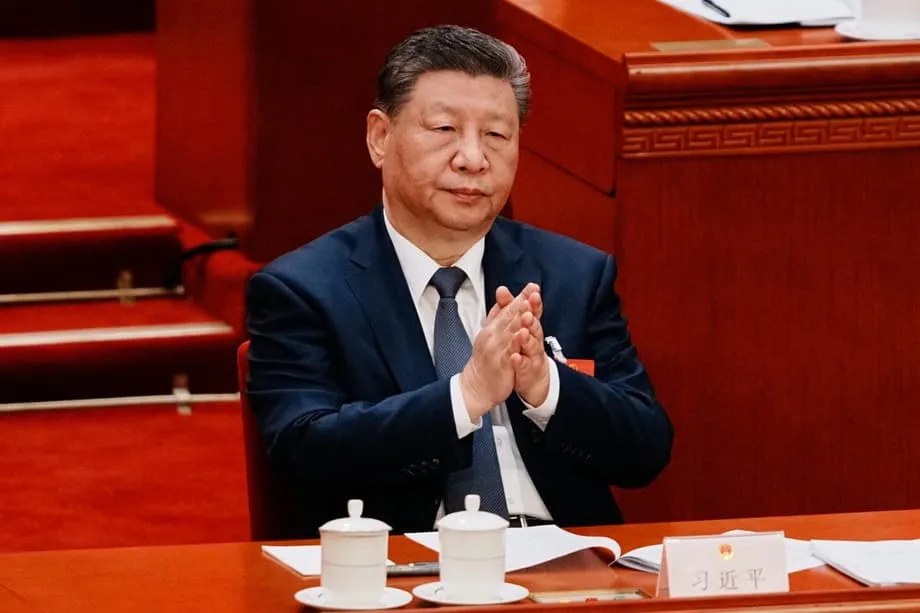
As of May 12, 2026, the figures point to a growing financial strain beneath China's competition with the United States over technology and trade. President Donald Trump is preparing to meet Chinese President Xi Jinping, with those subjects likely to feature prominently. China's borrowing raises another issue: how long an economy can keep taking on debt when prices are falling and many businesses struggle to earn enough to repay it.
Mark Williams, chief Asia economist at Capital Economics, says China's debt ratio has doubled since 2010 and now exceeds 300%. It has risen by more than 120 percentage points over the past 15 years. Among the major economies described in his comparison, only Japan carries a heavier burden, while China's speed of accumulation sets it apart.
The United States, the eurozone and the United Kingdom have seen their broader public and private debt ratios decline since 2010, even after borrowing to support their economies during the pandemic. Total public and private debt in the United States stood at roughly 265% of GDP in 2025, down from pandemic highs.
A debt ratio compares outstanding borrowing with the value of goods and services an economy produces in one year. China's figure of 302% means debt is just over three times annual output. The concern is both the size of that stock and the pace at which obligations are growing faster than the income available to support them.
Who Is Borrowing, and Who Is Cutting Back?
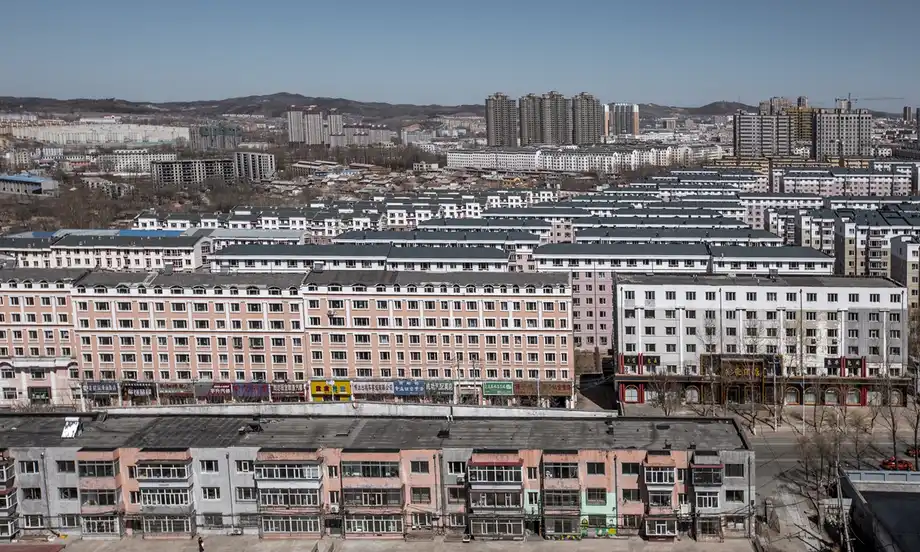
Chinese households are moving in the opposite direction from companies and government. Mortgage lending contracted for an eleventh consecutive quarter, while annual household debt growth slowed to just 0.5%, a record low. Families are paying down loans and avoiding new borrowing as the prolonged property downturn, falling home prices and weak income growth damage confidence.
Government borrowing increased by 7.6 percentage points of GDP in 2025, while debt owed by nonfinancial companies rose by 6.2 percentage points. Nonfinancial companies are businesses outside banking and other financial services. When local government financing vehicles are included, the public sector owes nearly 40% of all outstanding debt.
Local government financing vehicles are entities through which local authorities finance investment and other spending outside their regular budgets. Their obligations help explain why China's official government debt figure is much smaller than broader estimates of its public borrowing.
Official figures put government debt at approximately 96 trillion yuan at the end of 2025. Central authorities owed about 41 trillion yuan, with local governments accounting for the remainder, approximately 55 trillion yuan. The official total was roughly 68.5% of GDP.
The 302% measure covers a much wider field, including household and corporate obligations. Hidden local liabilities and borrowing held outside official government balance sheets also complicate the picture. Independent estimates put financing vehicle debt alone at about 45% of GDP, on top of the official government tally.
Local officials remain under pressure to deliver growth and protect employment. Subsidized loans to favored industries, including artificial intelligence, electric vehicles and robotics, are one way to pursue those goals. Central authorities have promised to restructure local debt and prevent new hidden borrowing, while the pressure to sustain investment continues to encourage credit expansion.
Why Falling Prices Make Debt Harder to Carry
China has experienced three consecutive years of deflation on an economy wide price measure, the longest stretch since market reforms began in the late 1970s. Prices have fallen for eleven consecutive quarters, leaving nominal GDP growth at just 4%, its weakest reading of the reform era outside the 2020 pandemic shock.
Nominal GDP measures output at current prices. When prices fall, the cash value of production grows more slowly, even when businesses produce more goods. Debt is usually repaid in fixed amounts of money, so weaker sales revenue makes those payments harder to meet.
China's debt ratio faces pressure from both sides of the calculation. Borrowing adds to the total owed, while weak nominal growth limits the expansion of the economy against which that debt is measured. A recovery in prices would help by increasing nominal income and output.
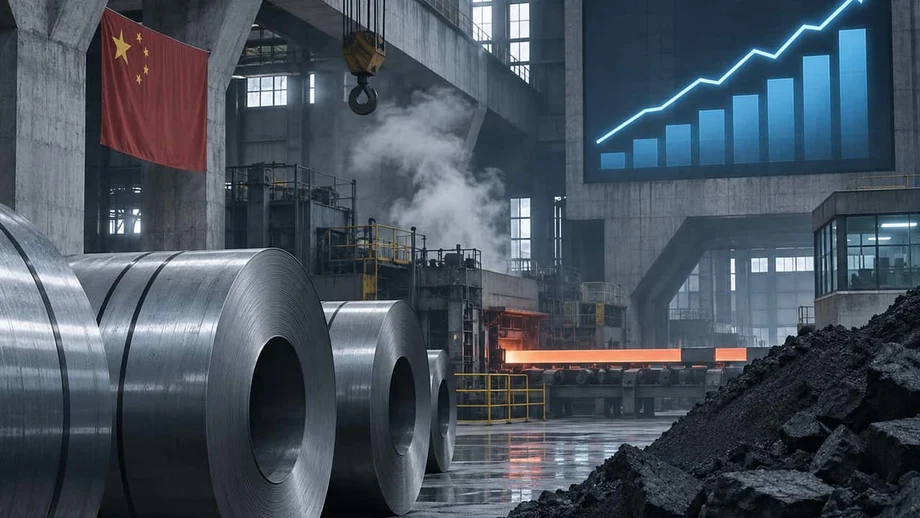
Local governments and banks owned by the state have directed credit toward manufacturing capacity for electric vehicles, solar panels, steel and robotics while domestic demand has weakened. More production competing for limited demand pushes businesses to lower prices, reducing profit margins and making debt harder to service.
Chinese policymakers describe this disorderly price competition as involution. Authorities have launched a campaign against it across ten leading manufacturing sectors, but the incentives to support factories, investment and employment remain in place.
Exports provide an outlet for excess production when buyers at home cannot absorb it. That reliance risks worsening trade tensions with the United States, Europe and developing markets. Borrowing intended to prevent a slowdown can therefore leave China with more industrial capacity, weaker prices and greater dependence on overseas demand.
Companies Kept Alive by Repeated Loan Renewals
Research from the Federal Reserve Bank of Dallas draws parallels between China today and Japan in the 1980s and 1990s. Both experienced rapid credit expansion financed entirely by domestic savings rather than foreign borrowing. That funding structure reduced the immediate danger of an abrupt financial crisis, but it also allowed weak borrowers to remain in business.
Banks can renew loans instead of requiring repayment from companies that cannot afford it. This practice, called evergreening, postpones the recognition of losses on bank balance sheets. When savings remain largely within the domestic banking system, lenders owned by the state face little funding pressure and can keep extending credit to insolvent borrowers.
Zombie firms are companies whose operating earnings are too low to cover their interest payments, yet which continue operating because lenders renew their loans. The share of assets held by such firms across China's nonfinancial sectors rose from 5% in 2018 to 16% in 2024, an increase of 11 percentage points.
Real estate showed the most severe deterioration: zombie firms held 40% of the sector's assets, up from 6%. In manufacturing, their share rose from 4% in 2020 to 11% in 2024. The services sector reached 17%.
These firms continue using money, workers and raw materials that more productive competitors could employ. The Dallas Fed economists describe how a similar pattern depressed Japanese productivity for decades, particularly in industries protected from foreign competition.
Chinese business debt has doubled since 2019, while revenues have increased by only 30%. Roughly one third of companies are losing money, yet creditors continue renewing loans to prevent widespread defaults. Keeping those businesses operating protects jobs in the short term while leaving resources tied up in firms with weak earnings.
Williams, the chief Asia economist at Capital Economics, described the tension between supporting employment and maintaining unproductive businesses:
The irony is that one driver of both government borrowing and the lax lending standards of state owned banks is the desire to prop up economic growth and prevent job losses. But the product of a credit boom that has been underway for 18 years is a banking system propping up unproductive firms, widespread losses across industry, and entrenched overcapacity.
Beijing's Debt Swaps and Spending Plans
China's Ministry of Finance has introduced measures to contain local government debt risks. About 2.8 trillion yuan in special bonds were issued in 2025 to replace hidden local liabilities with more transparent debt carrying lower interest costs and longer repayment periods.
A debt swap replaces an existing obligation with another form of borrowing. Lower interest rates and more time to repay can relieve pressure on local budgets, while moving hidden liabilities into a more visible framework. Authorities are also tightening controls on new borrowing.
Vice Finance Minister Liao Min has stressed that China's official government debt ratio of roughly 68.5% remains below the G20 average. He argues that the central government still has considerable capacity to borrow. That assessment focuses on official government obligations, while the broader ratio includes the corporate and household debts that take the total above 300%.
The 2026 budget envisages continued proactive fiscal policy. Deficit targets and issuance of treasury bonds with very long maturities are intended to support equipment upgrades, consumer goods replacement programs and strategic infrastructure. Beijing is trying to sustain demand and investment while managing the liabilities accumulated through earlier rounds of borrowing.
Finance Minister Lan Foan has warned local governments against adding illegal debt. He described the requirement as:
iron discipline of not adding illegal debt
Local governments must reconcile that instruction with pressure to maintain growth, employment and investment. Debt restructuring can reduce immediate repayment costs, but local budgets also need revenue to pay for services, projects and interest.
Falling Revenue Leaves Local Budgets Exposed
China's national tax revenue fell from nearly 16% of GDP in 2019 to 12.6% in 2025. Slower commerce, declining taxes on property transactions and unauthorized tax breaks offered by localities to attract investment have weakened the fiscal base.
Land sales, once a major source of local funding, have collapsed alongside the property market. The loss strains the managed fund budget, which finances much infrastructure spending. Local authorities therefore face pressure from both weaker regular tax receipts and reduced income from selling land.
The central government has criticized unauthorized local tax incentives and tightened borrowing controls. Localities competing for investment can reduce their own revenue through those concessions, adding to the difficulty of servicing debts and funding existing commitments.
China's consolidated fiscal deficit reached 7.2% of GDP in 2025, compared with the official target of 4%. The broader calculation removes accounting treatments such as counting special bond proceeds as revenue. Money raised by borrowing increases available cash, while also creating an obligation to repay.
The gap between the two measures shows the scale of spending pressure beyond the headline deficit target. Weaker tax receipts and land income make the debt swap program especially valuable for immediate budget relief, while also making a recovery in underlying revenue more necessary.
Debt swaps can buy time by lowering financing costs and delaying repayment. Without stronger revenues, local governments still face the task of funding services and investment while meeting their obligations. The strain connects China's property slump, fiscal policy and industrial support in the same borrowing cycle.
How the Strain Built Up
China's current position reflects years of borrowing rather than a single spending decision. Williams describes a credit boom lasting 18 years, while the figures on company assets, revenue and public finances show how the pressure has developed across different parts of the economy.
The main dates in that progression are:
- Since 2010: China's debt ratio has doubled, while broader debt ratios in the United States, eurozone and United Kingdom have declined.
- 2018: Zombie firms held 5% of assets across China's nonfinancial sectors, compared with 16% in 2024.
- 2019: China's tax revenue was nearly 16% of GDP. Business debt has since doubled, while business revenues have risen 30%.
- 2020: Zombie firms held 4% of manufacturing assets, rising to 11% in 2024. The pandemic also produced the exception to the comparison with today's weak nominal growth.
- 2025: Official government debt reached about 96 trillion yuan, the tax ratio fell to 12.6%, and about 2.8 trillion yuan in special bonds were issued for debt swaps.
- May 12, 2026: The broader debt ratio exceeds 302%, while the 2026 budget continues support for investment and consumption.
- 2031: The IMF projects global government debt at 102% of world GDP, with China's government debt ratio approaching 127%.
The sequence shows borrowing expanding while the financial returns supporting it weaken. More debt has coincided with slower revenue growth, larger shares of assets held by struggling businesses and reduced tax income relative to the economy.
Why China's Debt Matters Beyond Its Borders
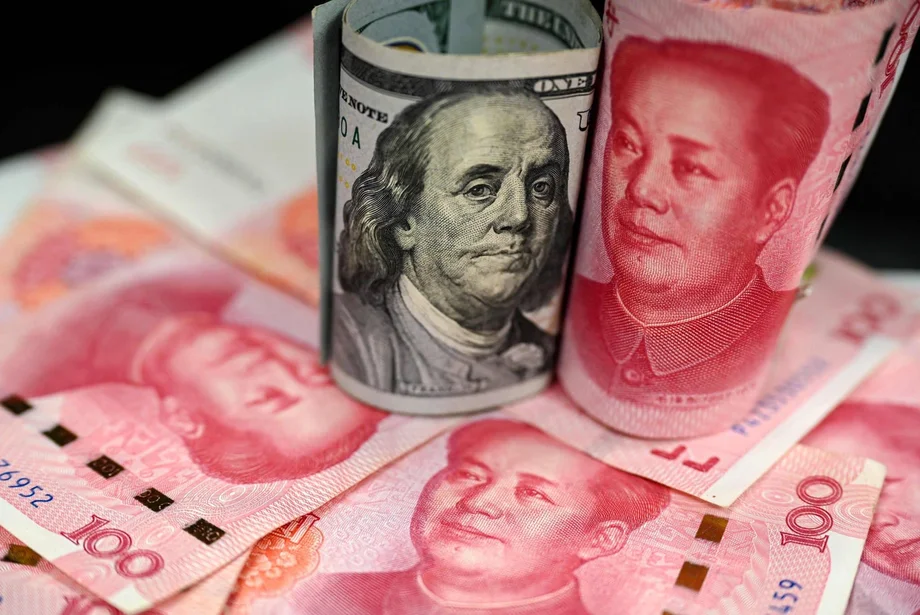
The International Monetary Fund puts global government debt above $111 trillion in 2025. The United States and China together account for more than half of that amount, with Washington carrying $38.3 trillion in public debt and Beijing $18.7 trillion.
The IMF projects global government debt will reach 102% of world GDP by 2031, a level last seen in the aftermath of World War II. Reconstruction then helped economies grow their way out of heavy obligations. Today's combination of slower growth and higher borrowing costs makes that route more difficult.
Global interest payments are expected to rise from roughly 3% of GDP today to nearly 5% by 2031. As interest absorbs more income, governments can become increasingly dependent on issuing new debt to service existing borrowing.
In the United States, persistent deficits of 7% to 8% of GDP could push federal debt to 142% of GDP within six years. China's government debt ratio is projected to approach 127%. Those figures concern government borrowing, while China's headline ratio above 300% also includes household and corporate obligations.
The two economies transmit financial pressure through different channels. The United States borrows heavily in global capital markets and faces rising external financing costs. China relies on domestic savings and banks directed by the state, which channels more of the strain into its own financial system, productivity and household wealth.
A sustained Chinese slowdown would reduce demand for raw materials and manufactured imports. A disorderly reduction in borrowing could spread financial stress across emerging Asia. Trade, capital flows and commodity markets connect those risks to economies far beyond China.
Neither country has shown a willingness to tighten fiscal policy meaningfully. Continued borrowing without changes to spending, revenues or the use of credit leaves both facing increasing demands on future income.
A Sudden Crash or Years of Weak Growth?
Most economists do not expect China to experience a financial collapse like the one associated with Lehman Brothers. Capital controls, high domestic savings and state dominance of banking provide buffers. The financial system has already endured a severe test during the property market collapse.
Creditors backed by the state can absorb losses gradually instead of forcing immediate bankruptcies. That capacity makes a prolonged adjustment more likely than an abrupt collapse, with weak borrowers continuing to operate and debt being renewed over time.
Liu Lei of the National Institution for Finance and Development argues that the central test is the efficiency of debt, rather than its absolute level. If new credit can revive nominal growth, the debt ratio can stabilize. A modest recovery in prices would strengthen nominal GDP and ease the upward pressure on the ratio.
China's repeated use of borrowing to sustain growth has delivered diminishing returns. Banks support unproductive firms, industrial losses are widespread, and falling prices encourage consumers to delay spending when incomes are weak. New lending can then sustain old obligations rather than generate stronger earnings.
Japan's experience is relevant because losses can persist inside a banking system for years while productivity suffers. China faces the risk of a similarly long period of weak growth, even with the capacity to manage repayment pressures and avoid sudden failures.
Greater household consumption, higher nominal incomes and lending guided more closely by productive returns would address the pressures described in the debt figures. As of May 12, 2026, no date has been given for the anticipated Trump and Xi meeting, and whether the current measures will restore enough nominal growth to stabilize China's debt ratio is still undecided.
The Essentials
- China's debt excluding the financial sector exceeds 302% of GDP, after an annual increase of 11.8 percentage points.
- Government and corporate borrowing are rising while mortgage lending has contracted for eleven consecutive quarters.
- Official government debt reached about 96 trillion yuan at the end of 2025, roughly 68.5% of GDP.
- Zombie firms held 16% of nonfinancial assets in 2024, including 40% of real estate assets.
- Three years of economy wide deflation have weakened nominal growth and made debt harder to service.
- China issued about 2.8 trillion yuan in special bonds for debt swaps in 2025, while tax revenue fell to 12.6% of GDP.
- The IMF projects global government debt at 102% of world GDP by 2031.
- State control of banking provides protection against an abrupt crisis, while prolonged weak growth remains a central risk.