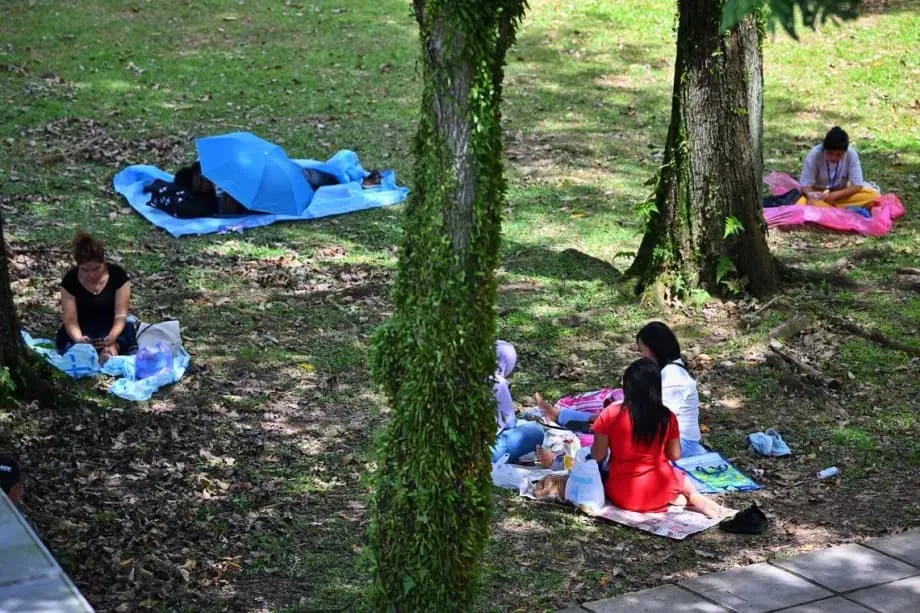
New Rights for 4.2 Million Domestic Workers
Indonesia's parliament passed the Domestic Workers Protection Law on April 21, 2026, ending a 22-year campaign for legal recognition and safeguards for approximately 4.2 million people who cook, clean and care for families. Nearly 90 percent of those workers are women.
Contents
- New Rights for 4.2 Million Domestic Workers
- What Legal Recognition Changes
- How the Campaign Reached Parliament
- A Working Life With Little Rest
- Violence Behind Closed Doors
- Pay, Benefits and Recruitment Rules
- An Age Limit to Address Child Labor
- The Next 12 Months Will Shape Enforcement
- A Milestone With Reach Beyond Indonesia
- What to Know
House Speaker Puan Maharani brought down her gavel to cheers and applause in the parliamentary chamber. Domestic workers who had traveled from across the archipelago watched the session, including women who had spent years protesting for protection against unpaid or unfairly paid work, excessive hours and abuse.
The vote fell on Kartini Day, Indonesia's annual commemoration of Raden Ajeng Kartini, the women's rights advocate born in 1879. Bob Hasan, chairman of parliament's Legislative Body, described the legislation as a tribute to her legacy of empowerment.
the most beautiful gift
Ajeng Astuti, a domestic worker who had joined demonstrations demanding the law, described what its passage meant after more than two decades of campaigning.
It feels like a dream," she said. "This is our 22-year struggle as marginalized women to gain protection.
The law contains 12 chapters and 37 articles covering recruitment, employment contracts and working conditions. It formally recognizes domestic workers as employees, establishes rights to benefits and requires placement agencies to obtain licenses. Detailed rules must follow during a transition period of 12 months.
For workers and employers, the change brings household employment into a clearer legal framework. People whose work had long been treated as informal assistance are now recognized as workers with rights and protections, although pay will still be determined by agreement rather than a national minimum wage set by this law.
What Legal Recognition Changes
Domestic workers previously fell outside the worker classification used in Indonesia's existing labor laws. That exclusion left them without contracts, social security or recourse when employers violated basic rights. Human rights organizations have described conditions in the sector as modern slavery.
The Domestic Workers Protection Law moves domestic labor from the informal economy toward formal employment. In practical terms, the person cleaning a house or caring for a family gains a recognized employment status, while the household employing that person takes on defined responsibilities.
Minister of Law Supratman Andi Agtas told lawmakers that the measure aims to provide legal certainty for both sides of the employment relationship. Its purposes include preventing discrimination, exploitation and abuse.
Supratman also connected the government's support to President Prabowo Subianto's previously expressed wish for the legislation to be completed.
"For the government, this is a source of happiness because President Prabowo Subianto also expressed his wish for this bill to be completed," he said.
The measure addresses a sector that had remained in legal ambiguity since Indonesia's independence. Recognition matters because the work takes place inside private homes, where arrangements can be informal and workers may have little opportunity to seek help outside the household.
How the Campaign Reached Parliament
Activists had been challenging the language used for domestic labor since 2003. They sought to replace "pembantu", meaning servant, with "pekerja", meaning worker. The campaign connected everyday language to a larger demand: recognition that cooking, cleaning and caring are genuine economic contributions, rather than informal help.
The National Network for Domestic Workers Advocacy, known as Jala PRT, first submitted draft legislation to the House of Representatives in 2004. For twenty years, the bill repeatedly stalled despite appearing in national legislative programs. Previous governments failed to prioritize it, while many lawmakers themselves employed domestic workers, creating conflicts of interest that hindered progress.
Campaigners used protests, hunger strikes and film to keep the proposal before legislators. Their efforts extended well beyond Jakarta, linking workers and supporters across several regions.
- 2003: Activists were campaigning to replace the term "pembantu" with "pekerja" to recognize domestic labor as work.
- 2004: Jala PRT first submitted draft legislation to the House of Representatives.
- November 2014: Four Jala PRT representatives began a hunger strike outside parliament in Senayan, Jakarta. The protest lasted days and received support from industrial labor unions.
- March 2023: Following supportive remarks by then-President Joko Widodo, the proposal was declared a Parliament Initiative Bill.
- April 21, 2026: Parliament passed the Domestic Workers Protection Law on Kartini Day.
The March 2023 decision still left campaigners waiting through months without discussion. Civil society organizations renewed their pressure through continuous actions, while coordinated demonstrations took place in Jakarta, North Sumatra, South Sulawesi, Semarang and Yogyakarta.
Activists also used the film campaign "Mengejar Mbak Puan", translated as "Chasing Sister Puan", to press the House leadership. The eventual vote followed sustained efforts to turn a proposal on the legislative agenda into enforceable protections.
A Working Life With Little Rest
Jumiyem, a domestic worker from Yogyakarta, began working in 1989 at the age of 15. Her testimony with the International Domestic Workers Federation described the daily conditions behind the campaign for legal protection.
In her first job, she worked from 4:30 a.m. until 10 or 11 p.m. She slept on a small divan near the dining table, with a used banner providing her only privacy. Her workplace was also the place where she had to rest.
Jumiyem changed employers approximately ten times because of psychological abuse, excessive working hours without days off and sexual violence. During one period, she worked both as a household cleaner and as a convenience store attendant.
That combination required her to wake at 4:00 a.m. and continue working until nearly midnight, leaving only four hours for rest. Her account shows how household duties could expand into other work while leaving little separation between working time and personal time.
Jumiyem described the dependence created when workers have no legal protection.
Without legal protection, domestic workers often rely solely on the kindness of their employers.
The law seeks to replace that dependence with recognized rights, employment agreements and safeguards. Its practical value will depend on whether workers in circumstances like hers can use those protections inside the homes where they work.
Violence Behind Closed Doors
Jala PRT documented more than 3,300 cases of violence against domestic workers between 2021 and 2024. Those cases included physical abuse, psychological trauma, economic exploitation and human trafficking.
The National Commission on Violence Against Women recorded 56 official reports in 2024 alone. Sexual violence accounted for 37.51 percent of cases, followed by psychological violence at 32.48 percent. The figures describe several forms of harm affecting workers whose employment takes place away from public scrutiny.
A 2023 case in South Jakarta exposed the severity of abuse some workers endured. Nine people, including a woman aged 70, received prison sentences of up to four years for torturing a young domestic worker.
The victim had been beaten, burned with cigarettes and chained to a dog cage. The case illustrated the extreme vulnerability of a worker inside an abusive household.
The new legislation establishes mechanisms intended to prevent violence and exploitation. Central and regional governments will share enforcement responsibilities, while institutions at community level are encouraged to help monitor conditions and prevent abuse.
Access to help is a central practical issue. A legal right has to reach a worker inside a private home, where an employer may control the working environment and where outsiders may rarely see what happens.
Pay, Benefits and Recruitment Rules
The law gives domestic workers access to vocational training, health insurance and unemployment benefits. Vocational training means instruction in skills used at work, while insurance and social security provide forms of protection when a worker needs healthcare or faces covered employment risks.
Religious holiday allowances, known as THR, are guaranteed, along with health coverage and employment social security in accordance with existing statutes. These provisions bring benefits into a sector where workers previously lacked formal safeguards.
Article 15 leaves wages to mutual agreement between the employer and the domestic worker. The legislation does not establish a national minimum wage, so it does not set a single wage floor for everyone covered by the measure.
Bob Hasan explained that the basis for pay is an agreement between the two parties rather than a minimum wage. Further regulations will address wage levels and payment schedules, making the detailed rules important to how those agreements work in practice.
Placement agencies must obtain licenses and are explicitly prohibited from deducting workers' wages. Agencies connect workers with employers, and wage deductions had been a common exploitative practice. The ban addresses money being taken from a worker's earnings through the recruitment or placement process.
The law also establishes standards for recruitment, contracts and working conditions. Together, these provisions create responsibilities at several stages of employment, from finding a job to agreeing on pay and carrying out daily work.
An Age Limit to Address Child Labor
The legislation sets the minimum employment age at 18. Previously, children as young as 12 entered domestic work, often leaving education to help families facing economic hardship.
Indonesia's education context makes that provision particularly consequential: fewer than one third of citizens complete high school. For children who entered household employment early, earning money could come at the expense of continuing their schooling.
Jumiyem's account also places the age limit in a human context. She began domestic work at 15 and described long hours, inadequate sleeping arrangements and repeated abuse across her working life.
The new threshold places domestic employment within an adult employment framework. Alongside formal contracts and recruitment standards, it addresses a sector in which young people had previously been able to start work with few safeguards.
The Next 12 Months Will Shape Enforcement
The government has a transition period of 12 months to prepare detailed implementing regulations, including specific penalties for violations. Those regulations will determine further details on wages, payment schedules and enforcement procedures.
Lita Anggraini, coordinator of Jala PRT, welcomed the vote as recognition for women whose work had long been neglected, while stressing that further work was necessary.
Most domestic workers are women workers who have been neglected all this time; now there is recognition and protection. But the struggle is not over.
Lita called for comprehensive public education so employers understand their new responsibilities and workers know their rights. Awareness will matter because a worker cannot readily seek a benefit or challenge a violation without knowing what the law provides.
Ahmad Doli Kurnia Tandjung, deputy chair of the House Legislative Body, pointed to the difference between domestic employment and standard industrial relations. He described household employment as more familial in nature, reflecting cultural norms in which domestic workers are often considered part of the family.
That household relationship is part of the setting in which the law must operate. Employers and workers will need to translate personal arrangements into agreements that recognize pay, benefits and other employment rights.
Elly Rosita Silaban of the Confederation of Indonesian Trade Unions warned that the law risks becoming merely symbolic without adequate supervision. Domestic work takes place behind closed doors, making oversight a particular challenge.
The detailed wage rules and enforcement procedures remain to be settled during the transition period. The next stage is to turn the law's protections into arrangements that workers can use and authorities can supervise.
A Milestone With Reach Beyond Indonesia
UN High Commissioner for Human Rights Volker Türk welcomed the legislation and urged Indonesian authorities to act quickly so its protections reach workers in their daily lives.
move swiftly to implement this law, in order to make its protections real and effective in the everyday lives of domestic workers across the country.
Türk also encouraged countries across Asia and beyond to adopt similar measures. The United Nations has presented Indonesia's legislation as a potential model for protecting the tens of millions of domestic workers worldwide whose employment remains unregulated.
The International Labour Organization estimates that more than 75 million people work in domestic service globally. Most lack legal protection or social security. Indonesia's approximately 4.2 million domestic workers form part of that much larger workforce.
Simrin Singh, the ILO's country director in Indonesia, described the vote as the result of more than 20 years of sustained advocacy by trade unions, government champions and worker organizations. The ILO's Asia and Pacific office also stressed that reforms of this kind require continuing engagement by many participants over a long period.
Indonesia participates in an international care economy in which domestic workers often migrate for employment. Formal recognition at home establishes a precedent for stronger protections within the country and for Indonesian workers abroad.
The law also addresses a deeply unequal position for women, who make up nearly 90 percent of Indonesia's domestic workforce. Its recognition of domestic labor as genuine work gives legal expression to the campaign that began with demands to replace the language of servitude with the language of employment.
What to Know
- Indonesia's parliament passed the Domestic Workers Protection Law on April 21, 2026, after 22 years of campaigning.
- The vote took place on Kartini Day and affects approximately 4.2 million domestic workers, nearly 90 percent of them women.
- The law contains 12 chapters and 37 articles covering recognition, recruitment, contracts and working conditions.
- Protections include training, health insurance, unemployment benefits, religious holiday allowances and employment social security.
- The minimum employment age is 18. Placement agencies must be licensed and cannot deduct workers' wages.
- Article 15 leaves wages to agreement between workers and employers rather than setting a national minimum wage.
- Jala PRT documented more than 3,300 cases of violence against domestic workers between 2021 and 2024.
- A transition period of 12 months allows for detailed regulations, while advocates and international officials are calling for effective supervision and implementation.