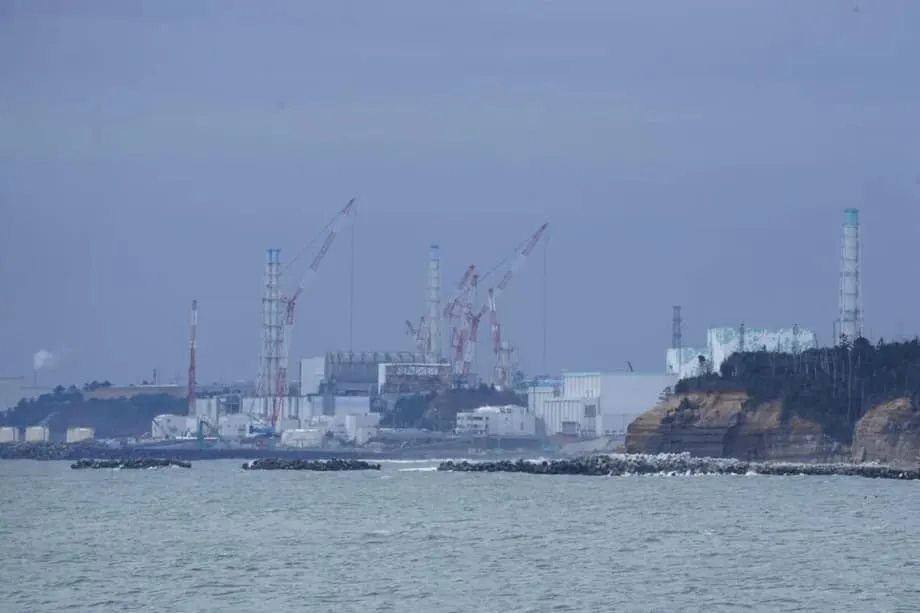
A Remote Island Enters Japan's Nuclear Waste Search
Japan has approved a preliminary survey of Minamitori Island, a remote Pacific coral atoll nearly 2,000 kilometers southeast of Tokyo, as a possible location for permanently storing highly radioactive nuclear waste. The decision advances a search that has lasted two decades, while leaving the choice of a final disposal site for later stages.
Contents
- A Remote Island Enters Japan's Nuclear Waste Search
- What Makes Minamitori an Unusual Candidate?
- Why Japan Needs Permanent Disposal
- What the Survey Will Examine
- Consent Comes With Conditions
- Can the Island's Rock Contain the Waste?
- Storms and Rising Seas Add to the Challenge
- Shipping Waste Across the Pacific
- A Second National Priority Near the Island
- What to Know
Economy, Trade and Industry Minister Ryosei Akazawa confirmed that the government would conduct a literature survey after obtaining consent from Masaaki Shibuya, mayor of Ogasawara village, which administers the island. Minamitori becomes Japan's fourth location for such a survey and the first approached directly by the central government rather than through an application initiated by a municipality.
The island has no permanent civilian population. Its only inhabitants are members of the Japan Maritime Self-Defense Force and government personnel, and all its land belongs to the state. Those circumstances make it an unusual candidate for a project that has encountered strong opposition in other communities.
Japan's immediate task is to examine existing information about the island's geology, earthquakes and volcanic history. Approval for this preliminary study does not authorize drilling or construction. If Minamitori is ultimately selected, it would host an underground repository intended to isolate dangerous radioactive materials for tens of thousands of years.
The decision comes as Japan moves to restart nuclear power plants idled after the 2011 Fukushima disaster. The country has accumulated thousands of tons of spent nuclear fuel and about 2,500 canisters of vitrified high-level radioactive waste, yet still needs a permanent destination for its most hazardous material.
Shibuya's acceptance followed months of quiet diplomacy between national officials and the municipal government. His conditions focus on government responsibility, protection against negative publicity and assurances that agreeing to a study does not amount to agreeing to a repository.
What Makes Minamitori an Unusual Candidate?
Minamitori Island, also known as Minami-Torishima, is Japan's easternmost territory. Japanese navigator Shinroku Mizutani discovered it in 1868, and Japan annexed it in 1898. The coral atoll covers just 740 acres, or 300 hectares, and rises 62 meters above sea level.
The island is described as 700 miles, or 1,125 kilometers, southeast of mainland Japan, while its distance from Tokyo is approximately 1,900 kilometers. It is one of the most isolated locations under Japanese administration and lies closer to Guam than to the Japanese mainland.
Minamitori falls within the jurisdiction of the Tokyo Metropolitan Government, despite its distance from the capital. Ogasawara village oversees it from municipal offices in the Bonin Islands. The island has hosted a meteorological station for typhoon research and has basic infrastructure, including a runway and port facilities.
State ownership removes the need for the complicated land purchases that can obstruct other potential nuclear waste sites. The absence of permanent civilian residents also means that officials would not face the same immediate neighborhood opposition found at inhabited mainland locations.
Those advantages concern administration and politics. A project intended to serve all Japanese citizens still raises a question of democratic consent, particularly when the proposed location has no permanent civilian community of its own. Ogasawara's elected leadership must also consider the interests of residents living elsewhere in the municipality.
Why Japan Needs Permanent Disposal
Japan's nuclear waste problem stretches back to the start of operations at the Tokai Nuclear Power Plant in 1966. Decades of electricity generation have left thousands of tons of spent fuel, alongside approximately 2,500 canisters of high-level waste now held temporarily at facilities in Aomori and Ibaraki prefectures.
High-level radioactive waste is produced when spent nuclear fuel is reprocessed to extract uranium and plutonium. The remaining waste is mixed with glass to form a solid material, a process called vitrification, and stored in metal containers. Making it solid helps keep the waste contained, while its radioactivity still requires isolation.
The material remains hazardous for approximately 100,000 years. Japan's disposal approach requires placing it in stable bedrock at least 300 meters below the surface, where it can remain separated from people and the surrounding environment as radiation levels decline.
Japan faces a deadline of 2045 at the latest for permanent underground isolation. Against that deadline, a site selection process lasting roughly 20 years leaves little room for repeated delays. Reactor restarts add urgency to a disposal problem that already exists from earlier decades of nuclear power generation.
Finland's Onkalo repository, the world's first permanent disposal facility, provides a comparison for the scale of the task. It stores waste in copper canisters embedded in granite bedrock 450 meters underground. Japan's waste is solidified in glass and held in metal containers, but the requirement for geological stability is similar: groundwater and the surrounding environment must remain protected over many millennia.
What the Survey Will Examine
Minamitori's literature survey is the first step in Japan's three-stage selection framework. It is expected to take two years and consists of a review of existing published geological, seismic and volcanological information. Researchers will examine the limestone foundation, volcanic history and exposure to earthquake activity.
A literature survey is a study of records, rather than physical investigation at the site. Its purpose is to decide whether a location deserves closer examination. This stage does not authorize drilling, geological sampling or construction.
A favorable result would allow the process to advance to a detailed investigation involving drilling and geological sampling. Facility construction and operation would follow later if the location were selected. The full process spans roughly 20 years, linking today's decisions to disposal arrangements in the 2040s and beyond.
The dates and decisions described in Japan's search show how slowly candidate locations have emerged:
- 1966: The Tokai Nuclear Power Plant began operating, starting a period of waste accumulation that continues to shape the disposal challenge.
- 2007: Toyo in Kochi Prefecture withdrew its application after intense protests by residents.
- November 2020: Applications began for the surveys in Suttsu and Kamoenai, both in Hokkaido. Both municipalities have since completed the initial phase.
- April 2026: Shibuya signaled willingness to consider a Minamitori survey during community meetings, before consent was secured and the approval was confirmed.
- 2045: Japan faces its stated latest deadline for permanent underground isolation of the waste.
Genkai in Saga Prefecture is the third municipality where a survey is continuing. Minamitori adds a fourth candidate to this limited group, after years in which financial incentives have attracted few volunteers.
Consent Comes With Conditions
Shibuya discussed the proposal with residents at meetings on Hahajima and Chichijima islands. He argued that the central government should take responsibility for the decision and sought concrete measures to counter negative publicity that could affect Ogasawara.
Akazawa, the economy, trade and industry minister, responded to the mayor's demand for a clear separation between preliminary research and final site selection. He gave this assurance:
I want to clearly promise that (the survey) is not directly linked to selecting (the island) as the disposal site,
Akazawa also committed to government leadership in advancing the process while acknowledging local concerns. Shibuya's consent is therefore conditional acceptance of an initial study, with construction consent remaining a later decision.
Shibuya has asked the government to approach other municipalities at the same time, so that Ogasawara does not become the sole focus of Japan's disposal search. That demand addresses the distribution of responsibility for waste created by a national electricity industry.
Municipalities participating in the survey process can receive up to 2 billion yen, approximately $12.6 million, in central government grants. Local leaders must weigh that money against concerns about safety, reputation and the prospect of a project extending far beyond the initial study.
Minamitori also marks a change in how the government seeks candidates. A survey can begin when a municipality applies voluntarily or when the government requests and obtains its consent. This case is the first initiated through a direct central government request, reflecting frustration with the small number of volunteers.
Can the Island's Rock Contain the Waste?
Minamitori's isolation reduces the number of people close to a potential repository, but its geology presents technical concerns. The island consists of porous limestone formed from coral structures, unlike the granite bedrock used at Finland's Onkalo facility.
Porous rock contains spaces through which water can move. At a waste repository, that matters because water penetration could compromise containment systems intended to endure for approximately 100,000 years. The ability to keep radioactive material separated from groundwater is central to the site's suitability.
The atoll's volcanic base may provide some stability. Its combination of porous surface rock and direct exposure to the ocean nevertheless creates engineering problems that require investigation. The literature survey will assess what existing information can reveal about those conditions.
Long term geological suitability cannot be settled simply by the island's distance from major population centers. The proposed repository would need rock and containment systems capable of protecting the environment through the very long period during which the waste remains hazardous.
Storms and Rising Seas Add to the Challenge
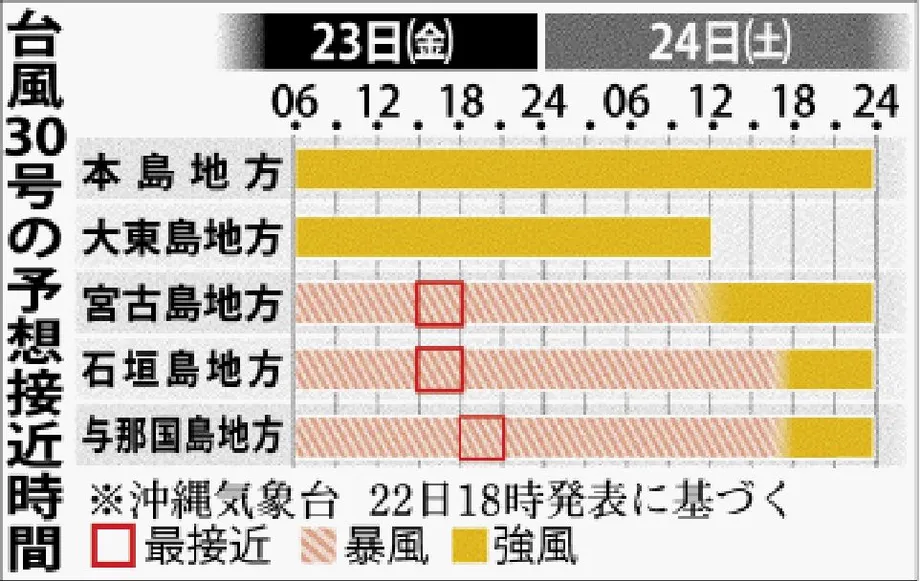
Minamitori lies in a region regularly struck by typhoons and is vulnerable to storm surges. Those conditions matter for an island that would need to receive hazardous cargo and support a disposal facility far from the mainland.
Long term projections of rising sea levels add another concern for an atoll reaching only 62 meters above sea level. The required storage period stretches far beyond the timescale of ordinary buildings, ports or other infrastructure.
A repository would need engineering capable of withstanding saltwater intrusion, extreme weather and potential tsunamis. Saltwater intrusion means seawater entering areas where it could affect the site's geology or infrastructure. Underground containment would have to maintain its integrity for longer than human civilization has existed.
Geology and climate therefore meet at a practical requirement: radioactive waste must remain isolated even as conditions around the island change. The initial survey is intended to help determine whether Minamitori warrants the deeper investigation needed to assess that requirement.
Shipping Waste Across the Pacific
Transporting thousands of canisters to an island approximately 1,900 kilometers from Tokyo would create a major logistical task. Specialized vessels would be needed to carry hazardous material safely across open Pacific waters, including through regions exposed to typhoons.
William A. Parkinson, a senator in Guam's legislature, has stressed concerns about the project's long term handling, transport, storage and possible burial of highly persistent and hazardous radioactive waste. His concerns extend beyond what happens inside an underground facility to the journey required to reach it.
Minamitori's existing port and runway provide basic access, but a permanent disposal project would involve repeated movement of material to a remote destination. The transport challenge sits alongside the geological and environmental questions that Japan must examine during its selection process.
A Second National Priority Near the Island
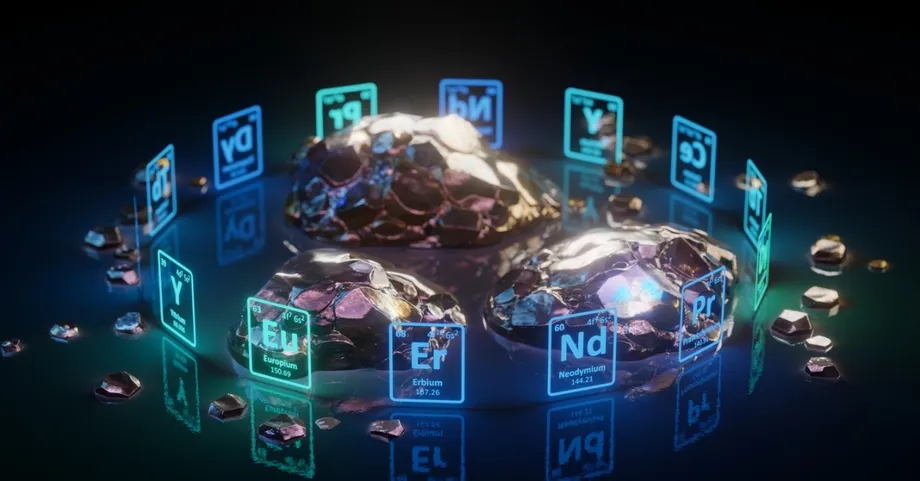
Minamitori has also emerged as a potential base for seabed mining of rare-earth elements. Earlier in 2026, Japanese researchers successfully retrieved mud containing rare-earth minerals from waters around the island at a depth of 5,600 meters.
Rare-earth minerals are used in electronics and renewable energy technologies. Their presence near Minamitori gives the island strategic value for Japan's efforts to secure supplies of materials needed by those industries.
Residents of the Ogasawara islands have expressed concern that designating Minamitori for nuclear waste disposal could complicate or prevent seabed mining operations. Their concern places two national priorities alongside each other: finding a permanent destination for radioactive waste and developing access to valuable minerals.
The relationship between those activities is unresolved. For Ogasawara, the survey decision therefore involves possible economic opportunities as well as safety and reputation. Shibuya's call for other candidate municipalities seeks to keep the national search broad while Minamitori's suitability is examined.
What to Know
- Japan has approved a preliminary literature survey of Minamitori Island after securing consent from Ogasawara Mayor Masaaki Shibuya.
- Minamitori is the fourth survey location and the first initiated by a direct central government request.
- The island has no permanent civilian residents, is entirely state owned and lies approximately 1,900 kilometers from Tokyo.
- The initial study takes two years and does not authorize drilling, construction or final site selection.
- Japan has approximately 2,500 canisters of vitrified high-level waste, alongside thousands of tons of spent nuclear fuel.
- The waste remains hazardous for approximately 100,000 years and requires disposal in stable bedrock at least 300 meters underground.
- Porous limestone, seawater intrusion, typhoons, storm surges and rising seas are concerns for the island's suitability.
- The selection process spans roughly 20 years, against a stated latest disposal deadline of 2045.
- Shibuya wants protection against negative publicity and simultaneous approaches to other municipalities.
- Rare-earth minerals retrieved from surrounding seabed mud add a competing strategic and economic interest.