Nearly Half of Schools Have Stepped Back From Overnight Trips
Only 53.4 percent of schools represented in a nationwide teachers union survey organized overnight field trips during the past academic year. Among teachers asked about their reluctance to arrange these programs, 89.6 percent cited fear of criminal liability if a student suffered an accident. As of April 23, 2026, that fear is reshaping a familiar part of South Korean school life.
Contents
- Nearly Half of Schools Have Stepped Back From Overnight Trips
- What the Union Survey Shows
- The Fatal Sokcho Trip and Its Court Outcome
- Why Supervising a Trip Can Become a Criminal Matter
- The Work Begins Long Before Departure
- Teachers Have a Voice, Yet Some Feel Pressured
- A 606,000 Won Trip Meets Family Resistance
- What Teachers Want Changed
- What Students Lose When Trips Disappear
- Key Points
The Korean Teachers and Education Workers Union surveyed 789 branch heads between March 23 and 30. Its findings describe schools replacing overnight journeys with shorter outings, activities on campus or no experiential learning at all. Experiential learning means learning through direct experience, such as visiting a historic site or exploring a landscape, rather than studying it only in a classroom.
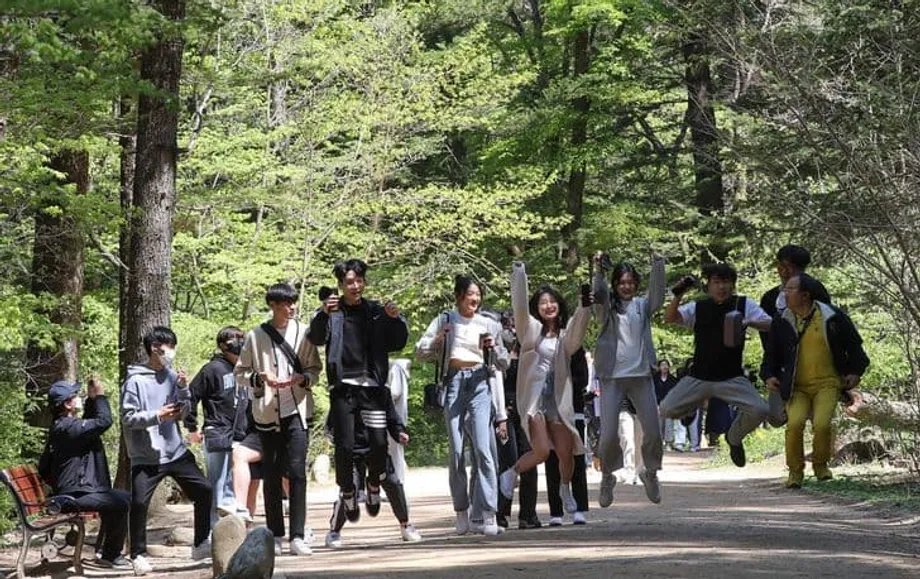
For generations, students looked forward to visiting the volcanic landscapes of Jeju Island, hiking in the mountains of Gangwon Province or exploring the ancient temples of Gyeongju. These trips offered recreation alongside opportunities to become more independent, form friendships and practice skills outside school. They also gave children a brief release from the academic pressure that shapes much of South Korean education.
Teachers now have to weigh those benefits against the possibility of prosecution, a criminal record and damage to their careers. A fatal bus accident during a November 2022 school trip to Sokcho, followed by a teacher's conviction, has become central to that calculation. Administrative demands and family concerns about prices add further pressure, leaving schools caught between providing meaningful experiences and protecting the people responsible for them.
What the Union Survey Shows
The survey included branch heads from elementary, middle and high schools across the country. Elementary schools accounted for 41.95 percent of respondents, middle schools for 27.76 percent and high schools for 23.07 percent.
Alongside the 53.4 percent of institutions that organized overnight trips, 25.9 percent conducted only day trips. Another 10.8 percent replaced excursions outside school with activities on school grounds, while 7.2 percent suspended all forms of experiential learning.
The figures show several stages of retreat. Some schools still take students beyond the classroom but bring them home the same day. Others keep the activity within the campus. Schools in the final group provide no structured experiential program, removing even the shorter alternatives.
The account describes a sharp reduction from earlier years, with nearly half of schools abandoning overnight programs. It gives no earlier participation figure for calculating the size of that decline. The present survey nevertheless shows how much of the school community is already operating without the traditional overnight excursion.
Teachers' answers also reveal the intensity of the concern behind these decisions. Of those asked about reluctance to organize overnight programs, 89.6 percent cited possible criminal liability, and 54.8 percent described the pressure as "very high." The fear is about more than responsibility for a difficult day: educators are considering whether an accident could lead to prosecution and imprisonment.
The Fatal Sokcho Trip and Its Court Outcome
In November 2022, an elementary school student died during a field trip to Sokcho in Gangwon Province. A chartered bus struck the child while reversing in a parking lot. The tragedy led to criminal charges against both the homeroom teacher and an assistant chaperone for occupational negligence resulting in death.
The court of first instance found that the homeroom teacher had failed to exercise sufficient care while supervising students. It sentenced the teacher to six months in prison, suspended for two years. A suspended sentence means the prison term is not served immediately, subject to the conditions of the court's decision.
The appellate court later reduced the sentence and granted a stay of execution, allowing the teacher to avoid immediate incarceration and retain their position. For other teachers, however, the initial guilty verdict carried a powerful message: supervision during an educational trip could expose them to criminal punishment when a student died, including in an accident involving a transport contractor.
The case brought grief over a child's death together with a wider debate about how far a teacher's responsibility extends. The bus driver controlled the reversing vehicle, while the educators were responsible for supervising the children. Teachers saw the prosecution as evidence that limited control over another person's actions could still leave them facing serious legal consequences.
The key events described in the account followed this sequence:
- November 2022: An elementary school student died after a reversing chartered bus struck the child during a trip to Sokcho.
- After the accident: The homeroom teacher and an assistant chaperone were charged with occupational negligence resulting in death.
- At the first trial: The homeroom teacher received a prison sentence of six months, suspended for two years.
- On appeal: The sentence was reduced and a stay of execution allowed the teacher to avoid immediate incarceration and keep their position.
- March 23 to 30: The union surveyed 789 branch heads about experiential learning and the pressures surrounding it.
- Early April: A proposed middle school trip to Gangwon Province was canceled after objections to its price.
Why Supervising a Trip Can Become a Criminal Matter
South Korean law uses the concept of professional negligence, known in Korean as 업무상 과실치사, when someone causes a death through a failure to carry out duties connected with their work. In the school trip context, the issue is whether an educator fulfilled the responsibility to supervise students and take sufficient precautions for their safety.
Courts have interpreted that responsibility to cover supervision during field trips. For teachers, the result is potential criminal exposure even when outside contractors are involved or their direct control over the circumstances is limited. A bus journey, a parking area or another part of an excursion can become a setting in which their professional duty of care is examined.
Civil lawsuits, professional discipline and criminal prosecution carry different consequences. A civil claim can seek compensation, while disciplinary action concerns a person's employment or professional conduct. Criminal proceedings can lead to a conviction and a prison sentence. Teachers fear that the last of these can also leave a permanent mark on their professional record and threaten their career.
The Sokcho ruling made that possibility tangible. Teachers who might previously have thought mainly about civil claims or workplace sanctions now have to consider criminal records, imprisonment and the loss of their profession. The account describes the case as an aggressive application of professional negligence to a routine educational activity.
Schools therefore face a difficult decision before a trip begins. The educational value may be substantial, but the teacher responsible must consider the personal consequences if something goes wrong. That calculation helps explain why legal anxiety reaches far beyond the staff directly involved in the Sokcho accident.
The Work Begins Long Before Departure
Administrative demands are another major reason teachers hesitate to organize trips. In the union survey, 84 percent of respondents identified excessive administrative requirements as an obstacle. Arranging an excursion involves much more than choosing a destination and preparing lessons.
Teachers must conduct prior site inspections, negotiate contracts with transport companies and accommodation providers, prepare extensive safety documents and obtain approval from principals and education boards. These tasks sit alongside their usual teaching workload and preparation for important examinations.
During site inspections, faculty members personally check safety conditions, photograph emergency exit routes, assess whether facilities meet educational standards and examine food safety procedures. Each destination creates its own set of checks, records and decisions before students can take part.
The paperwork also includes detailed liability waivers, reviews of participants' medical histories and contingency plans for emergencies ranging from natural disasters to student illness. Teachers report spending more time on trip logistics than on developing the curriculum or preparing students for the educational content of the visit.
Evenings and weekends can become part of the preparation period as educators fit these duties around lessons, marking and examinations. An activity intended to broaden children's education becomes an additional administrative workload for the adults arranging it, with legal concerns attached to the same safety preparations.
Teachers Have a Voice, Yet Some Feel Pressured
The survey found that 72.2 percent of teachers said their opinions were formally reflected in decisions about trips. At the same time, 35.5 percent reported being forced to participate against their better judgment or feeling substantial pressure to approve excursions they considered risky.
Those findings describe a tension between taking part in a planning process and feeling able to refuse the activity. A teacher can be consulted about a destination, schedule or safety arrangement while still believing that declining involvement will carry professional consequences.
Educators face pressure in both directions. Schools and families may expect a trip to proceed, while teachers anticipate that they could bear serious legal consequences after an accident. The account describes a working environment in which refusing participation can feel damaging to a career, yet agreeing can bring risks the teacher considers unacceptable.
The union's demand for a right to refuse trip participation without professional penalty addresses this problem directly. It seeks to give educators a meaningful choice, rather than leaving consultation as a formal step in a decision they feel unable to challenge.
A 606,000 Won Trip Meets Family Resistance
In early April, an online post disclosed that a middle school excursion to Gangwon Province, lasting three days, would cost each student 606,000 won, approximately $410 to $440. Parents objected to the price of a domestic public school trip, and the school canceled it.
The cancellation shows that the pressure on excursions extends beyond legal concerns. Families must decide whether the experience fits their household budget. Schools must consider whether a trip remains practical when parents regard its cost as excessive.
Rising accommodation costs, transport charges and insurance premiums have pushed educational travel prices beyond what many working families can afford. These expenses create another route to cancellation, even where teachers are prepared to handle the planning and supervision.
The two problems can reinforce each other. Teachers worry about responsibility for student safety, while parents worry about paying for the activity. Schools are left trying to preserve an educational opportunity while protecting family finances and staff welfare. Canceling can appear easier than proceeding with a costly excursion that carries stress for everyone involved.
Some institutions have shifted from traditional trips involving an entire grade to experiential activities organized by individual classes. Smaller events reduce logistical complexity and exposure to liability, but they also reduce the opportunities for students to form relationships across the wider year group. Other schools have replaced visits outside the campus with virtual tours or guest speakers.
What Teachers Want Changed
The Korean Teachers and Education Workers Union is calling for institutional changes to preserve experiential learning while protecting educators from what it considers unjust legal consequences. In the survey, 80.9 percent of respondents supported stronger immunity from criminal liability, making it the leading reform priority.
Teachers want accidents during legitimate educational activities excluded from the application of professional negligence resulting in death or injury charges. Their argument is that criminal prosecution should be reserved for intentional harm or extreme recklessness, rather than unavoidable accidents during school activities.
The union also wants national safety standards that state what precautions satisfy a teacher's duty of care. Such rules would give educators a defined set of responsibilities when organizing and supervising trips, reducing uncertainty about how a court might later assess their decisions.
Clarifying safety standards was supported by 26.6 percent of respondents. Another 30.8 percent supported restricting or discontinuing overnight programs if the liability problem cannot be addressed. The latter response shows that some teachers regard ending the activity as a necessary option when they see no acceptable protection.
Professional safety personnel are another part of the proposed changes. Teachers want more staff dedicated to supervision and emergency response, so that homeroom teachers do not carry the responsibility alone. They also seek a guarantee that declining participation will not result in professional penalties or career damage.
The union argues that current arrangements turn educational activities into dangerous and burdensome work. Its position is that reasonable safety standards and protection from criminal prosecution over accidents must be addressed together if schools are to keep providing these experiences.
What Students Lose When Trips Disappear
Students lose more than a recreational outing when an overnight trip is canceled. These journeys give them opportunities to navigate unfamiliar places, practice independence and build relationships beyond the classroom. Traveling together can bring children into contact across the social hierarchies that shape daily school life.
South Korea's demanding academic environment makes that time particularly valuable. Field trips offer a break from examination preparation and standardized testing, while allowing informal learning and personal development alongside the planned educational program. A historic temple, a mountain trail or a volcanic landscape can become both a lesson and a shared memory.
Day trips and activities within school preserve some opportunities, but they provide a different experience from spending time away from home with classmates. Virtual tours and guest speakers can bring information into a classroom, while visits outside school let students practice dealing with real places and unfamiliar situations.
The retreat from overnight excursions is creating a divide between generations. Experiences that earlier students treated as a normal part of school are becoming less available to children now. Teachers' efforts to avoid legal exposure may protect them personally while leaving students with fewer chances to develop practical skills and social confidence through travel.
The immediate challenge is to keep student safety, teacher responsibility and access to learning in the same discussion. The survey shows the scale of educators' concern, while the canceled Gangwon trip shows the financial pressure on families. The union's proposed changes address legal protection, clearer duties, staffing and the ability to refuse participation, all factors shaping whether schools continue to organize trips.
Key Points
- The Korean Teachers and Education Workers Union surveyed 789 branch heads nationwide between March 23 and 30.
- Only 53.4 percent of surveyed institutions organized overnight trips during the past academic year; 25.9 percent offered only day trips, 10.8 percent used activities on campus and 7.2 percent suspended experiential learning.
- Fear of criminal liability was cited by 89.6 percent of teachers asked about reluctance to organize overnight programs; 54.8 percent described the pressure as very high.
- A student died during a November 2022 trip to Sokcho after being struck by a reversing bus. The homeroom teacher received a suspended prison sentence, later reduced on appeal.
- Excessive administrative requirements were an obstacle for 84 percent of respondents, while 35.5 percent reported pressure to participate or approve trips they considered risky.
- A middle school canceled a trip to Gangwon Province after parents objected to a price of 606,000 won per student.
- Stronger protection from criminal liability was supported by 80.9 percent of respondents. The union also seeks clearer safety standards, professional safety staff and the right to refuse participation without penalty.