New Guns Ordered to the Border Before the End of 2026
North Korea plans to deploy new 155 millimeter mobile howitzers with a claimed range exceeding 60 kilometers to its southern border before the end of 2026, adding to the weapons already capable of striking Seoul. Leader Kim Jong Un ordered the deployment after inspecting mass production at a major munitions factory, according to an announcement carried Friday by the official Korean Central News Agency (KCNA).
Contents
- New Guns Ordered to the Border Before the End of 2026
- What the New Howitzers Are Designed to Do
- Why the Range Matters for Seoul and Gyeonggi
- More Firepower Creates a Defense Challenge
- Choe Hyon Approaches Its Naval Handover
- Kim's Daughter Joins the Military Display
- The Constitution Abandons Unification
- From Failed Talks to New Military Deadlines
- Battlefield Feedback and Pressure on Diplomacy
- Key Points
Seoul, a city of approximately 10 million people, lies only 40 to 50 kilometers from the border. The stated range of the new guns, equivalent to roughly 37 miles, would allow them to hit northern districts of the South Korean capital from forward positions without advancing into the South.
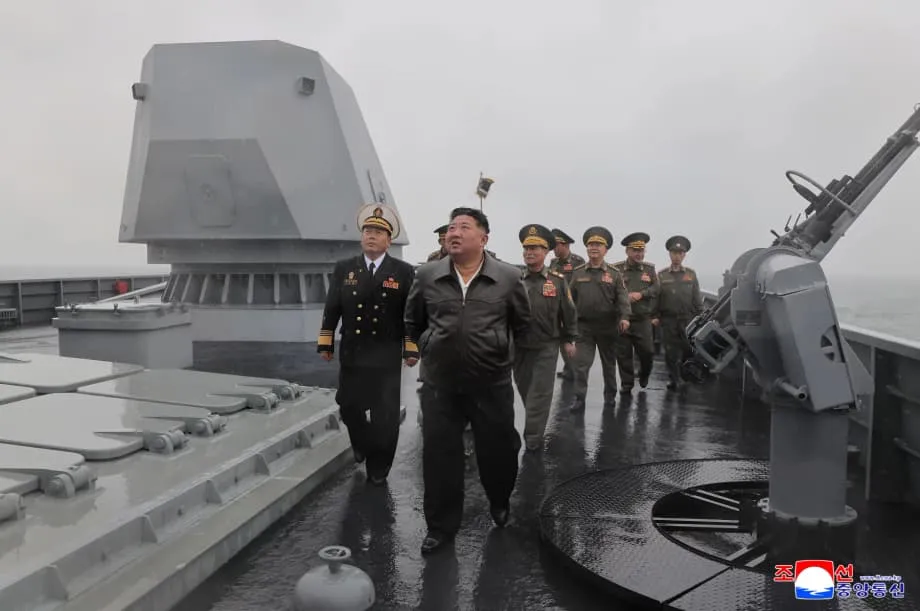
Kim's artillery inspection came alongside another military priority: preparing the 5,000 ton destroyer Choe Hyon for delivery to the navy by mid June. He boarded the ship during sea trials Thursday and called for two more destroyers of the same class to be built by October.
Both developments followed confirmation Wednesday that North Korea had removed every reference to Korean unification from its revised constitution. Together, the weapons programs and constitutional changes show Pyongyang expanding its military capabilities while formally abandoning the shared statehood once pursued by Kim's father and grandfather.
South Korea has continued to offer engagement, including steps to reduce tensions at the border. Its Presidential Office said Thursday that peace efforts would continue. North Korea, meanwhile, is preparing additional artillery, missiles and rocket launchers for the same front, reinforcing a military threat that has shaped life around Seoul for decades.
What the New Howitzers Are Designed to Do
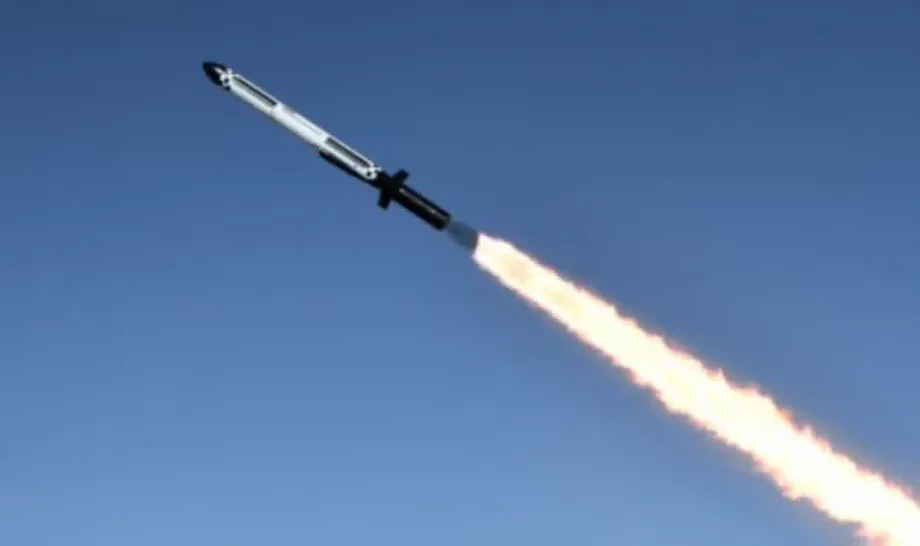
The weapon Kim inspected is a large caliber rifled gun mounted on a mobile chassis. A howitzer fires artillery shells, while its mobile platform allows the weapon to change position. The production lines shown during the visit indicate that North Korea is preparing to introduce the system in numbers, alongside its better known missile and nuclear programs.
KCNA said Kim directed that the guns be sent to a long range artillery unit stationed along the southern border. Three battalions are expected to receive the weapons, concentrating their firepower within that formation. Various operational and tactical missile systems, as well as powerful multiple rocket launcher systems, are also scheduled for deployment along the front.
Kim described the rapid extension of artillery range and improvement in capability as providing a great change and advantage in army land operations. The stated objective combines longer reach with greater precision, allowing units to threaten more distant targets while seeking to strike particular facilities.
North Korea already maintains hundreds of guns and rocket launchers within range of Seoul. The new howitzers would add to that existing force. Their deployment would increase the number and variety of weapons available to attack the capital region, rather than introduce artillery as a threat there for the first time.
Why the Range Matters for Seoul and Gyeonggi
A range exceeding 60 kilometers would bring northern Seoul and much of surrounding Gyeonggi Province within the weapons' reach from forward positions. Gyeonggi contains key industrial hubs and millions of additional residents, extending the potential exposure beyond the capital's administrative boundaries.
Some analysts have compared the North Korean system with South Korea's K9 Thunder, a widely exported howitzer with a range of roughly 40 kilometers. The North's stated range exceeds that figure by more than 20 kilometers, suggesting an effort to outmatch a platform regarded as a symbol of South Korean technical superiority.
Lim Eul Chul, an analyst at the Institute for Far Eastern Studies, described the significance of the claimed improvement in accuracy and reach:
By unveiling a precision strike system with a range exceeding 60 kilometers, North Korea is demonstrating its ability to conduct targeted strikes against key facilities in the greater Seoul area, moving away from its traditional reliance on mass, unguided fire.
Independent observers have not verified North Korea's claims about accuracy or sustained firing performance. Those details matter because reaching a distant area, hitting a specific facility and continuing to fire reliably are different demands on an artillery system.
South Korean commanders nevertheless face a wider planning problem. Command facilities, airfields and logistics centers previously considered outside artillery range could come under fire during the opening hours of a conflict. Logistics centers store and move the supplies that military forces need to keep operating.
More Firepower Creates a Defense Challenge
Three battalions equipped with the new howitzers could provide a concentrated salvo capability, meaning many weapons firing within a short period. Even where precision remains uncertain, large numbers of incoming shells can place heavy demands on defenses.
North Korea's planned combination of artillery, missiles and multiple rocket launchers adds to that pressure. Defenders would have to respond to different weapons arriving in large numbers, creating what military planners call saturation: more incoming threats than a defensive system can readily handle at once.
The mobile howitzers can be moved and fired more quickly than ballistic missiles, making them harder to attack before they are used. Their mobility also adds to the difficulty of planning a response to a force positioned near the border.
Seoul and Washington must therefore account for two developments at the same time. North Korea is building more nuclear weapons while improving the conventional forces that can threaten South Korea without a nuclear strike. Ballistic missile tests often attract greater international attention, but artillery remains a more immediate danger for communities near the border.
Choe Hyon Approaches Its Naval Handover
Kim boarded the Choe Hyon on Thursday to review its maneuverability during sea trials off North Korea's west coast. The 5,000 ton destroyer is the largest and most advanced warship the country has built, making it a central part of Pyongyang's naval modernization effort.
Kim expressed satisfaction with the testing and instructed authorities to hand the ship over to the navy by mid June, as scheduled. As of May 10, that delivery remained ahead, with the ship undergoing trials before entering service.
The Choe Hyon first appeared publicly last year amid considerable fanfare in Pyongyang. North Korea subsequently unveiled a second destroyer of identical design, although that vessel was damaged during a botched launching ceremony. Kim has continued pressing the program despite that setback.
His call for two additional destroyers of the same class by October sets another near term construction target. The naval program is therefore advancing alongside the artillery deployment, with both carrying deadlines during 2026.
Analysts believe the destroyer class may eventually carry strategic cruise missiles capable of being fitted with nuclear warheads. Such a capability would give North Korea another platform for threatening targets and add a naval dimension to allied defense planning.
Kim's Daughter Joins the Military Display
State media photographs showed Kim's teenage daughter accompanying him aboard the Choe Hyon. In one image, she stood behind her father while he addressed sailors. Another showed them sharing a meal with the crew.
South Korea's National Intelligence Service indicated last month that she could be considered a potential heir. Her repeated appearances at military events have therefore drawn attention beyond the weapons being displayed.
Her presence during preparations for the flagship's entry into service adds a message of family continuity to the modernization campaign. For domestic elites and foreign observers, the photographs connect the expansion of military power with the possible continuation of the ruling dynasty.
The Constitution Abandons Unification
South Korean officials confirmed Wednesday that North Korea's revised constitution drops every reference to Korean unification. The document now defines North Korean territory strictly as the northern half of the peninsula and refers to South Korea by its official name, the Republic of Korea.
The revision puts into constitutional form Kim's January 2024 instruction to abandon the idea of shared statehood. It ends an ideological commitment that had remained central to North Korea since the peninsula's division and had been pursued by his father and grandfather.
Pyongyang's description of a hostile two state system now frames South Korea as a permanent hostile enemy rather than separated kin. That position narrows the political space for the engagement policies favored by the current liberal administration in Seoul.
South Korean officials have halted propaganda loudspeaker broadcasts along the border and made diplomatic overtures intended to lower tensions. North Korea's rejection of cooperation has included blowing up liaison offices that once linked the two sides and severing road and rail connections. The constitutional revision adds a fundamental legal change to those physical breaks.
For decades, the idea of eventual unification offered a theoretical destination for diplomacy even during periods of severe tension. Removing it signals a rejection of the previous framework for coexistence. The artillery and destroyer programs give military form to a policy that treats the South as an adversary to deter or, during a crisis, target.
From Failed Talks to New Military Deadlines
The Korean Peninsula remains technically at war because the conflict from 1950 to 1953 ended with an armistice rather than a peace treaty. An armistice stops the fighting, while a peace treaty formally settles a war. That unresolved status has persisted through decades of military confrontation and attempts at diplomacy.
Relations have deteriorated over the past six years. Kim's nuclear diplomacy with former U.S. President Donald Trump collapsed in 2019 without an agreement, and North Korea has since shunned formal dialogue with Washington and Seoul.
Pyongyang has instead expanded its arsenal across several areas, including ballistic missiles launched from submarines, intercontinental ballistic missiles using solid fuel and the extended range artillery now being prepared for border units. The destroyer program adds a larger surface warship to that expansion.
The main developments and deadlines span several years:
- 1953: Fighting in the Korean War ended with an armistice, leaving the peninsula without a peace treaty.
- 2019: Nuclear diplomacy between Kim and Trump collapsed without an agreement.
- January 2024: Kim ordered North Korea to abandon the goal of shared statehood with the South.
- Last year: North Korea publicly unveiled the Choe Hyon and later presented a second destroyer of identical design.
- Wednesday: South Korean officials confirmed that North Korea's revised constitution removes references to unification.
- Thursday: Kim reviewed the Choe Hyon's sea trials, while South Korea's Presidential Office reaffirmed its pursuit of peace efforts.
- Friday: North Korea announced the planned deployment of its new artillery.
- Mid June 2026: The Choe Hyon is scheduled for handover to the navy.
- October 2026: Kim wants two additional destroyers of the same class completed.
- Before the end of 2026: The new howitzers are to reach a border artillery unit.
Battlefield Feedback and Pressure on Diplomacy
Recent reports indicate that North Korean arms supplies to Russia for use in Ukraine have provided Pyongyang with valuable information about how its weapons perform in combat. That feedback may be accelerating improvements in range, accuracy and reliability.
Combat use gives a weapons producer information about performance under conditions that are difficult to reproduce during controlled testing. For North Korea, the reported feedback comes as it is pursuing both greater production and improvements to the weapons intended for its own forces.
South Korea's Presidential Office said Thursday that it would continue pursuing peace with the North. The constitutional changes and deployment plans, however, indicate little willingness in Pyongyang to reciprocate those overtures.
Seoul's residents face a familiar geographic danger with an expanding military dimension. The capital has long been within reach of North Korean guns; the new systems would extend that reach and add to the available firepower. The threat also reaches into surrounding industrial and residential areas of Gyeonggi Province.
Kim's timetable turns those ambitions into concrete targets: a naval handover by mid June, further destroyer construction by October and artillery deployment before the end of the year. Alongside the constitutional rejection of unification, the military upgrades send a message to Seoul, Washington and North Korea's domestic audience that Pyongyang intends to answer what it calls hostility with more weapons.
Key Points
- North Korea plans to deploy new 155 millimeter mobile howitzers with a claimed range exceeding 60 kilometers before the end of 2026.
- Seoul lies 40 to 50 kilometers from the border, and the weapons would also threaten much of Gyeonggi Province.
- Three battalions are expected to receive the guns. Independent observers have not verified claims about accuracy or sustained firing performance.
- The 5,000 ton Choe Hyon is scheduled for naval handover by mid June, with two additional destroyers sought by October.
- Kim's teenage daughter accompanied him aboard the ship after South Korean intelligence identified her as a potential heir.
- North Korea's revised constitution removes references to unification and formalizes its hostile two state approach to South Korea.
- South Korea says it will continue peace efforts despite Pyongyang's military expansion and rejection of engagement.