Tokyo Rally Demands Equal Protection for Korean Schoolchildren
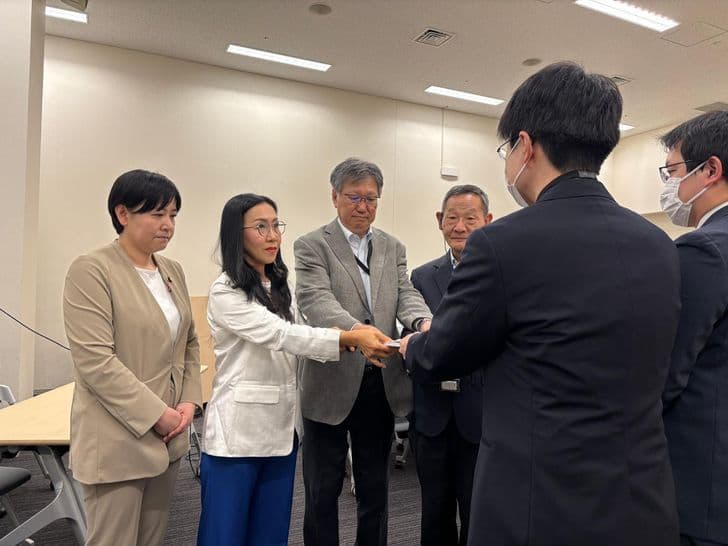
Civic rights groups from Korea, Japan, Europe, and Australia gathered at the House of Councillors Members’ Office Building in Tokyo on Thursday, submitting a global petition signed by more than 45,000 people demanding that the Japanese government include Korean schools under the Basic Act on Children. The demonstrators, organized by the International Network in Solidarity with Korean Schools, urged immediate action to end what they describe as systemic discrimination against ethnic Korean educational institutions.
- Tokyo Rally Demands Equal Protection for Korean Schoolchildren
- A Legacy of Discrimination: From Colonial Subjects to Statelessness
- Political Retaliation: How Diplomatic Tensions Became Weapons Against Education
- Exclusion from Child Protection and Disaster Relief
- Life Inside Chosen Schools: Education or Indoctrination?
- The Rising Tide of Hate Speech and Xenophobia
- Japan’s Obligations Under International Human Rights Law
- Key Points
The rally highlights the latest chapter in a decades-long struggle for equality facing Chosen schools (Chosun schools), educational institutions serving the Zainichi Korean community, ethnic Koreans whose families have resided in Japan for multiple generations. These schools have faced successive exclusions from government support programs, ranging from high school tuition waivers to earthquake recovery aid and pandemic relief packages.
Ha Sang-gyun, head of the Citizens’ Group in Solidarity with Korean Schools, addressed the crowd regarding the legal implications of the exclusion. He explained that the omission violates international standards, particularly given Japan’s status as a party to the U.N. Convention on the Rights of the Child. The Basic Act on Children, enacted in 2023, establishes the protection of children’s fundamental human rights and freedom from discriminatory treatment as basic principles, yet specifically excludes these minority educational institutions.
Makiko Kishi, a lawmaker from the Constitutional Democratic Party of Japan who joined the demonstration, criticized the current administration for adopting increasingly anti-foreign stances. Kim Mi-ra, representing the U.S.-based rights group Koreans for Woori Schools, characterized the denial of support to children as an act against humanity and a blatant violation of human rights.
A Legacy of Discrimination: From Colonial Subjects to Statelessness
To understand the current controversy, one must examine the historical trajectory of Koreans in Japan, a population known as Zainichi, meaning residing in Japan. This community traces its origins to Japan’s colonization of the Korean Peninsula from 1910 to 1945, during which hundreds of thousands of Koreans were brought to Japan, either voluntarily or through forced conscription, to work in mines and factories.
Following Japan’s defeat in World War II, approximately two million Koreans remained in Japan. In 1945, Korean residents established nearly five hundred schools to teach their children the Korean language, history, and culture that had been suppressed during the colonial period, when Japan had banned the use of Korean names and language. However, the Allied occupation authorities, viewing these institutions as communist-influenced, ordered the closure of many schools and the dissolution of the League of Koreans (Choryon), the organization initially running them.
The situation worsened with the signing of the San Francisco Peace Treaty in 1952, which stripped Koreans and Taiwanese of Japanese citizenship, rendering them stateless. The Japanese government classified these former colonial subjects as possessing Chosun nationality, a designation indicating geographical origin on the Korean Peninsula rather than citizenship in North Korea. This administrative classification created a vulnerable population excluded from social security systems, voting rights, and public employment opportunities.
In 1955, pro-North Koreans formed Chongryun (the General Association of Korean Residents in Japan), which established the network of Chosen schools to provide ethnic education. Because Japan refused to support ethnic education for Zainichi Koreans, these schools relied on funding channeled through Chongryun from North Korea, supplemented by tuition payments from families. By 1975, all existing Chosen schools obtained miscellaneous school status under Japanese education law, a classification distinct from Article 1 schools (regular Japanese schools) that allowed them to operate but restricted students from sitting university entrance examinations without completing additional qualifications.
Political Retaliation: How Diplomatic Tensions Became Weapons Against Education
The pattern of excluding Chosen schools from public support programs intensified dramatically in 2010, when Japan’s Ministry of Education announced the Tuition Waiver and Tuition Support Fund Program for high school education. Initially, the program was designed to include not only Japanese public and private high schools but also schools with foreign curricula and international schools. However, following political pressure, the government revised its ministerial ordinance to exclude all ten high schools supported by Chongryun.
The official justification cited concerns over North Korea’s nuclear program and the unresolved abduction of Japanese citizens by North Korean agents during the 1970s and 1980s. Civil organizations advocating for the resolution of the abduction issue, particularly the National Association for the Rescue of Japanese Kidnapped by North Korea (Sukuukai), actively lobbied the government to exclude Chosen schools. They argued that providing financial support would enfeeble Japan’s diplomatic position and essentially equated ethnic education with support for the North Korean regime.
Under the second Abe administration, Education Minister Shimomura Hakubun announced in 2013 that Chosen schools would remain excluded, citing the schools’ relationship with Chongryun regarding educational content, personnel, and finance. The government solicited public comments on the exclusion, receiving 30,510 submissions, approximately fifty-two percent supporting exclusion and forty-six percent opposing it. Despite the divided public opinion, the ministry proceeded with the exclusion, which took effect in February 2013.
This exclusion created a significant financial burden for families. While public high schools charged approximately 117,000 yen annually, Chosen high schools charged an average of 320,000 yen, with some institutions like Osaka Korean High School charging up to 444,000 yen. The tuition waiver program would have covered all or partial tuition depending on household income, but Chosen school students became uniquely ineligible for this relief.
The legal battles that followed produced contradictory results. In July 2017, the Osaka District Court ruled in favor of Chosen schools, finding that the removal of the schools from the program based on political and diplomatic intentions was unconstitutional and invalid. The court recognized the historical context of the schools and affirmed the state’s responsibility to guarantee equality and the right to develop ethnic identity. However, the Tokyo District Court, Nagoya District Court, and Fukuoka District Court ruled against plaintiffs in subsequent cases, and by July 2021, the Supreme Court dismissed final appeals from Chosen schools.
Exclusion from Child Protection and Disaster Relief
The discrimination documented in the tuition waiver cases extends beyond education funding. Following the 2011 Great East Japan Earthquake and tsunami, Chosen schools were excluded from recovery aid distributed to other educational institutions. In 2019, when the government implemented free early childhood education and care programs, forty Chosen kindergartens were omitted from the benefits extended to other preschools.
During the COVID-19 pandemic, the pattern continued. The Ministry of Education denied eligibility for the Emergency Student Support Handout for Continuing Studies to students of Chosen University, a program designed to provide up to 200,000 yen to students facing economic hardship. While the ministry eventually included six foreign universities after NGO criticism, Chosen University remained excluded due to its miscellaneous school status.
The 2023 Basic Act on Children represents the latest exclusion. This legislation establishes comprehensive protections for children, yet Chosen schools remain outside its scope. The U.N. Committee on the Elimination of Racial Discrimination has issued corrective recommendations urging Japan to include these schools in tuition support programs and eliminate discriminatory treatment, recommendations that the Japanese government has largely dismissed.
Yoo Jae-hyun, an activist with the Choson School Sponsorship Association in Germany, spoke at the Tokyo rally regarding the fundamental principle at stake. He emphasized that children should never bear political responsibility for historical events or diplomatic tensions between nations.
No matter the reason, children should never be made to bear political responsibility for events of the past. They should be protected, not forced to shoulder responsibility.
Life Inside Chosen Schools: Education or Indoctrination?
Public perception of Chosen schools in Japan is often shaped by their association with North Korea. Classrooms display portraits of Kim Il-sung and Kim Jong-il, and the schools maintain ties to Chongryun. However, academic research and classroom observations reveal a more complex reality that contradicts accusations of brainwashing.
Contrary to claims by exclusion advocacy groups that these institutions cultivate anti-Japanese sentiment, fieldwork by Japanese scholars indicates that Chosen schools teach considerable content about Japanese society and the world, emphasizing friendship with Japan. The curriculum has evolved significantly over decades. Following major revisions between 1993 and 1995, academic subjects related to the Kim family were eliminated, and hours dedicated to Japanese history and society increased. Students begin learning about Japanese society and history in Grade 3, before studying Korean geography in Grade 5 and Korean history in Grade 6.
The schools operate with longer hours than regular Japanese schools to accommodate both the standard subjects required for integration into Japanese society and ethnic education components including Korean language, history, and geography. Teachers, many of whom are third-generation Zainichi Koreans, emphasize critical thinking and independent thought rather than rote memorization. Students and graduates commonly refer to their institutions as uri hakkyo, meaning our school, reflecting deep community bonds and the role of these institutions as sanctuaries where students can develop ethnic identity without shame.
Students describe the environment as warmer and more supportive than typical Japanese schools. Second-year high school student Park Sang-joo explained that living in Japanese society offers few chances to speak Korean or feel Korean identity, making these schools essential spaces for cultural preservation.
Im Jinhyeok, a lawyer and graduate of Osaka Chosen High School, explained that the schools serve as sanctuaries where people of the same ethnic background develop community, share struggles, and grow together through mutual help. He noted that predecessors entrusted these schools with paving the way to a brighter future for children constantly exposed to discrimination and prejudice.
The Rising Tide of Hate Speech and Xenophobia
The exclusion of Chosen schools from public support occurs against a backdrop of rising nationalist sentiment and anti-Korean hate speech in Japan. The most prominent civilian group targeting Zainichi Koreans is Zaitokukai (the Citizens’ League to Deny Special Rights for Permanent Residents in Japan), founded in 2007. This organization advocates the abolition of special permanent residency status for Zainichi Koreans and has organized demonstrations filled with hate speech and intimidation.
In December 2019, members of Zaitokukai gathered in front of the Kyoto Chosen Elementary School during school hours, waving Imperial Japanese flags and using loudspeakers to chant blatantly hateful slogans including You are training North Korean spies and Get Chosen schools out of Japan. They damaged school property while filming the incident for online distribution. Although the Supreme Court affirmed the criminality of such protesters, the underlying sentiments persist.
Professor Kotani Junko, specializing in hate speech regulations, explains that despite the 2016 Hate Speech Elimination Act, current Japanese law does not seriously tackle crimes against ethnic minorities. The legislation does not criminalize hate speech or consider race or ethnicity in its treatment of unfair discriminatory behavior.
Historian Itagaki Ryuta argues that contemporary anti-Korean sentiment represents a modern version of colonizers’ fear of the colonized. He traces this phenomenon to the chaotic postwar period and the 1923 Great Kanto Earthquake, when Japanese police, military, and citizens massacred thousands of innocent Koreans based on rumors that they were plotting anti-Japanese activities. This historical parallel suggests that ultra-nationalists today replicate colonial anxiety by transforming it into hatred toward visible, accessible targets like Chosen schools.
Physical attacks against students have occurred with disturbing regularity. Since 1994, female students wearing traditional Korean school uniforms have faced targeted attacks, including incidents where assailants slashed uniforms with knives. Such violence led schools to instruct female students to wear uniforms only while on school grounds.
Japan’s Obligations Under International Human Rights Law
Japan’s treatment of Chosen schools raises serious questions regarding its compliance with international human rights obligations. The Convention on the Rights of the Child, which Japan ratified, specifies in Article 2 that states must respect children’s rights without discrimination of any kind, including based on national, ethnic, or social origin. Articles 29 and 30 reinforce the rights of minority children to develop their own cultural identity, language, and values.
The Committee on the Elimination of Racial Discrimination (CERD) has repeatedly criticized Japan’s exclusion of Chosen schools from tuition support programs. In 2014, CERD specifically recommended that Japan revise its position and allow Chosen schools to benefit from the High School Tuition Support Fund. The 2018 CERD concluding observations urged Japan to ensure that students at Chosen schools have equal educational opportunities without discrimination.
Legal analysis reveals a double standard in the government’s treatment of foreign schools. While MEXT subjected Chosen schools to intensive review of their curricula and alleged influence from North Korea, the ministry approved other miscellaneous schools, including pro-South Korea institutions, without equivalent scrutiny regarding their educational content or influence from foreign governments. This selective application of standards suggests that the exclusion targets a specific ethnic minority rather than maintaining consistent educational quality controls.
The Japanese government maintains that its measures do not constitute discrimination based on Korean ethnicity, arguing instead that diplomatic concerns and potential misuse of funds justify the exclusions. However, international human rights frameworks emphasize that children should not suffer deprivation of educational benefits due to political tensions between states, particularly when those children are stateless residents with no ability to influence the foreign policy of either Japan or North Korea.
Key Points
- Rights groups submitted a 45,000-signature petition to Japan’s government demanding inclusion of Korean schools under the Basic Act on Children and tuition support programs
- Chosen schools (Chosun schools) serve Zainichi Koreans, a community of ethnic Koreans in Japan whose ancestors were colonial subjects or wartime laborers
- The schools have been excluded from tuition waivers since 2013, disaster relief, early childhood education programs, and COVID-19 student aid
- Exclusion is justified by Japanese officials citing North Korea’s nuclear program and unresolved abductions of Japanese citizens
- Courts have issued contradictory rulings, with Osaka District Court finding the exclusion unconstitutional in 2017, while the Supreme Court dismissed final appeals in 2021
- Activists argue the exclusion violates the U.N. Convention on the Rights of the Child and Convention on the Elimination of Racial Discrimination
- The schools provide dual curriculum teaching Japanese standards plus Korean language, history, and culture to preserve ethnic identity
- Students and families face rising hate speech and physical attacks from nationalist groups like Zaitokukai
- Most Zainichi Koreans with Chosun nationality are technically stateless, having lost Japanese citizenship in 1952 without gaining North or South Korean citizenship