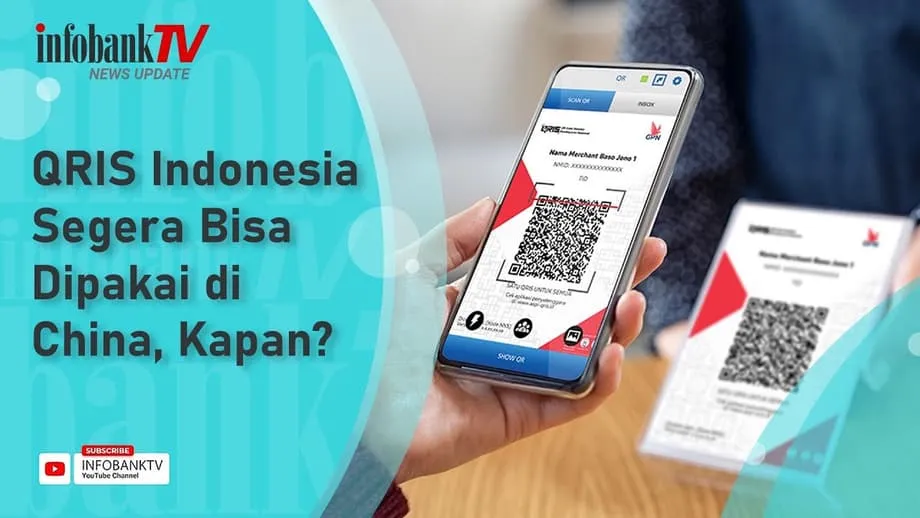
China Payment Link Nears Launch After Rp 556 Billion Trial
Indonesia plans to officially launch its cross-border QRIS payment connection with China on April 30, 2026, after a trial processed 1.64 million transactions worth Rp 556 billion, approximately $32 million. The connection will allow payments between the two countries to settle in their own currencies, reducing the need to use the United States dollar as an intermediary.
Contents
- China Payment Link Nears Launch After Rp 556 Billion Trial
- What Travelers and Merchants Will Be Able to Do
- The Networks Behind the Connection
- Why Rupiah and Yuan Settlement Matters
- Tourism and Small Businesses Stand to Benefit
- How the Project Reached the Launch Stage
- Security and Capacity Behind Everyday Payments
- China Joins a Wider QRIS Network
- BI-FAST and the Next Regional Connection
- The Essentials
Bank Indonesia Deputy Governor Filianingsih Hendarta announced the planned launch during a virtual press conference following the central bank's April 2026 Board of Governors meeting. As of April 25, technical and commercial preparations had been completed, with 24 Indonesian institutions and 19 Chinese institutions participating.
Hendarta described the expected launch date and the scale of transactions already processed during testing:
Hopefully, on April 30, 2026, we will be able to officially launch it. Even during the trial phase alone, transaction volume reached 1.64 million transactions with a value of Rp 556 billion ($32 million).
The Indonesian participants comprise 16 banks and eight institutions outside the banking sector. Their involvement gives the connection multiple channels through which customers can make payments, rather than tying the service to a single bank or application.
China is Indonesia's largest trading partner, with bilateral trade exceeding $100 billion annually. The payment connection is a major step in Indonesia's effort to reduce dollar dependence and strengthen economic ties with China. Its immediate purpose is practical: letting travelers pay through familiar applications while merchants receive payments through the systems they already use.
What Travelers and Merchants Will Be Able to Do
QRIS, short for Quick Response Code Indonesian Standard, is Indonesia's national standard for payments made by scanning a QR code. Introduced in 2019, it brought different mobile payment platforms into a common framework so that compatible applications could work with the same merchant codes.
Indonesian travelers visiting China will be able to use their domestic mobile banking applications to make purchases through the connection. Chinese tourists will likewise be able to use their preferred participating payment applications at more than 40 million merchants accepting QRIS across Indonesia.
A traveler from Indonesia buying something in Shanghai would pay through a familiar application, with the payment converted from rupiah into Chinese yuan through the linked banking networks. A Chinese visitor shopping in Bali or Jakarta would be able to scan a merchant's QRIS code, with the merchant receiving the payment in rupiah.
The arrangement reduces the need for travelers to exchange cash or use international credit cards that process payments through networks denominated in dollars. For merchants, it opens another route to receive spending from visitors without requiring separate payment terminals or foreign currency accounts.
The cross-border service builds on the same idea that shaped domestic QRIS: different payment providers can connect through a shared standard. Customers and businesses can keep using their existing payment tools while the networks behind those tools handle the international transaction.
The Networks Behind the Connection
The Indonesian Payment System Association, known as ASPI, and UnionPay International, China's global payment network, are partners in the technical architecture. Their cooperation links the payment systems that customers use on either side of the border.
Four Indonesian payment switch providers, Rintis, ALTO, Artajasa and Jalin, have signed cooperation agreements with UnionPay to process transaction routing and settlement. Routing directs payment information through the relevant networks. Settlement completes the financial transfer so that the merchant receives the money owed.
Ant International and Alipay also participate, creating multiple pathways for processing payments between Indonesia and China. During testing, selected users made purchases with Indonesian mobile payment applications in China and with Chinese applications, including UnionPay and Alipay, at Indonesian merchants.
The connection requires coordination among central banks, switch operators, commercial banks and financial technology providers. On the Chinese side, participants include major state banks and payment technology companies that have adapted their systems to recognize and process QRIS codes.
Why Rupiah and Yuan Settlement Matters
Bank Indonesia's arrangement uses local currencies for settlement. Indonesian payments in China convert directly into yuan, while Chinese payments in Indonesia settle in rupiah. This removes the need for dollar intermediation in the bilateral retail payments handled through the connection.
Traditional international payment arrangements often involve conversion through the dollar. Using rupiah and yuan directly reduces conversion costs and exchange rate risks for consumers and merchants. The traveler still makes a payment across two currencies, but the linked networks handle that conversion without a dollar step.
Bank Indonesia Governor Perry Warjiyo has consistently placed the expansion of cross-border QRIS within a wider strategy to internationalize the rupiah and deepen regional financial integration. In practical terms, that means making the Indonesian currency usable in more transactions beyond the country's borders and connecting its financial systems more closely with those of its partners.
The initiative supports Indonesia's Local Currency Transaction framework, which the central bank has promoted with major trading partners. Indonesia has already implemented similar local currency arrangements with several countries. China's place as its largest trading partner gives this connection particular weight.
Reducing dollar dependence is also part of Bank Indonesia's effort to support rupiah exchange rate stability and reduce exposure to dollar volatility. The QRIS connection brings that currency policy into everyday purchases, linking a national financial objective with payments for meals, transportation and shopping.
Tourism and Small Businesses Stand to Benefit
Indonesia's more than 40 million merchants accepting QRIS range from street vendors to retail chains. Micro, small and medium enterprises, which form the backbone of the country's economy, will gain direct access to Chinese consumer spending through the payment connection.
For a small business, accepting a visitor's payment through an existing QR code avoids the need to invest in a separate terminal or maintain a foreign currency account. The customer uses a participating application, and the payment reaches the merchant in rupiah.
Approximately 500,000 tourists travel between Indonesia and China annually, with that number expected to grow as travel patterns normalize. The connection is intended to make spending during those trips simpler by reducing the need to exchange currency and allowing visitors to use applications they already know.
Indonesian visitors to Beijing or Shanghai will be able to pay for meals, transportation and shopping through their domestic mobile banking applications. Chinese visitors in Indonesia can scan the same merchant QR codes used by local residents, making payments easier while retaining the system's transaction security protections.
Bank Indonesia officials also expect the integration to benefit cross-border electronic commerce and service transactions. Smoother settlement can support payments for digital goods and freelance services between the two economies, extending the connection's usefulness beyond purchases made during a holiday.
How the Project Reached the Launch Stage
The China connection follows extensive sandbox testing that began in September 2025 under a Government-to-Government cooperation model. A sandbox is a testing environment in which a payment service can be tried before its full introduction.
Selected users tested payments in both directions during the pilot. Indonesian applications were used in China, while Chinese applications were used at Indonesian merchant locations. By the April 2026 announcement, those trial transactions had reached 1.64 million, with a combined value of Rp 556 billion.
The key dates show how the China project fits into the development of QRIS and its international connections:
- 2019: Indonesia launched QRIS to bring mobile payment platforms into a common national framework.
- August 17, 2025: The QRIS connection with Japan launched during celebrations of Indonesia's 80th Independence Day.
- September 2025: Sandbox testing for the China connection began under Government-to-Government cooperation.
- April 2026: Hendarta announced the planned China launch following Bank Indonesia's Board of Governors meeting.
- April 30, 2026: Bank Indonesia plans to officially launch the China connection.
Hendarta's announcement places the service at the final preparation stage. The 16 Indonesian banks and eight institutions outside the banking sector have completed system integration to support transaction processing and settlement in real time, while technical and commercial preparations for full implementation have been finalized.
Security and Capacity Behind Everyday Payments
Indonesia and China have put standards in place to protect consumer data and transaction integrity across borders. Security protocols address fraud prevention and the management of cyber risks, both of which matter when payment information passes between institutions in different countries.
The system uses standardized technical, business and governance frameworks designed to handle increases in transaction traffic while maintaining reliability. These frameworks cover the technology connecting participants, the arrangements governing their business relationships and the rules under which they operate.
Bank Indonesia's domestic payment figures show the scale of activity within the wider digital ecosystem. Total digital payment transaction volume reached 14.82 billion in the first quarter of 2026, an increase of 37.69% compared with the same period a year earlier.
QRIS transactions grew by 116.43% over that period, more than doubling from a year earlier. Expanding merchant acceptance and greater use of the service drove that increase. QRIS transaction growth was therefore faster than the growth recorded for digital payments as a whole.
The China connection extends this expanding domestic system across a national border. Its reliability depends on the participating institutions being able to process payments together, protect information and complete settlement as transaction activity grows.
China Joins a Wider QRIS Network
Bank Indonesia has already established QRIS connections with Japan, South Korea, Malaysia, Thailand and Singapore. The planned China launch continues that expansion, giving Indonesian payment applications access to another major destination for travel and commerce.
Japan's connection began on August 17, 2025, coinciding with Indonesia's 80th Independence Day celebrations. The South Korea connection also preceded the planned China rollout.
UnionPay International has indicated ambitions to extend similar QR payment linkages to 19 countries and regions outside mainland China. Indonesia's integration may serve as a template for that wider expansion, showing how an established national QR standard can connect with payment networks abroad.
The growing network links two parts of Indonesia's payment strategy: wider acceptance of its digital payment tools and greater use of local currencies in international transactions. For customers, the practical result is the ability to make purchases abroad through familiar applications. For participating institutions, it requires agreements that let different systems exchange payment information and settle transactions.
BI-FAST and the Next Regional Connection
Bank Indonesia is also preparing the next generation of BI-FAST, the country's payment system for transfers in real time. The upgraded infrastructure will incorporate cross-border capabilities through Nexus, a multilateral scheme intended to connect payment systems across several countries.
The Nexus initiative spans Malaysia, Singapore, Thailand, the Philippines and India. Its architecture aims to create a connected payment network across Southeast and South Asia, reducing reliance on traditional correspondent banking channels dominated by dollar clearing.
Correspondent banking involves banks using relationships with other banks to move money internationally. Connecting payment systems through Nexus would provide a broader regional route for transfers, alongside the QRIS connections used for payments through participating applications and merchants.
Bank Indonesia's preparations therefore cover both the China QR payment link and a wider regional payment infrastructure. As of April 25, the next scheduled milestone for the China project was the planned official launch on April 30. No launch date was given for the next generation of BI-FAST.
The Essentials
- Bank Indonesia plans to launch the cross-border QRIS connection with China on April 30, 2026.
- The trial processed 1.64 million transactions worth Rp 556 billion, approximately $32 million.
- Participants include 16 Indonesian banks, eight Indonesian institutions outside banking and 19 Chinese institutions.
- Payments will settle in rupiah and yuan, reducing the need for dollar intermediation.
- Indonesian travelers will be able to use domestic mobile banking applications in China, while Chinese visitors can pay at more than 40 million Indonesian merchants accepting QRIS.
- ASPI, UnionPay International, Rintis, ALTO, Artajasa, Jalin, Ant International and Alipay participate in the payment architecture.
- The China connection follows QRIS expansion to Japan, South Korea, Malaysia, Thailand and Singapore.
- Bank Indonesia is preparing upgraded BI-FAST infrastructure with cross-border capabilities through Nexus.