A Revenue Proposal for One of the World's Busiest Sea Routes
Indonesia is exploring charges on ships passing through the Strait of Malacca, a vital corridor between the Indian and Pacific Oceans, while Singapore insists that vessels have a guaranteed right to travel through it without paying a toll. As of April 25, 2026, the idea remains at an early stage, with no implementation date announced.
Contents
- A Revenue Proposal for One of the World's Busiest Sea Routes
- Why Malacca Matters to Trade and Energy
- Iran's Hormuz Charges Enter the Debate
- What the Legal Arguments Say About Passage
- Singapore Draws a Firm Line Against Tolls
- Malaysia's Earlier Toll Proposal and Its Current Position
- Military Cooperation Adds a Sovereignty Debate
- China's Dependence and the Malacca Dilemma
- What Indonesia Would Need to Resolve
- Key Points
Finance Minister Purbaya Yudhi Sadewa introduced the proposal at a symposium in Jakarta on Wednesday hosted by Sarana Multi Infrastruktur, Indonesia's state infrastructure financier. He presented it as part of President Prabowo Subianto's ambition to make Indonesia a central hub in global commerce rather than an economy on its margins.
Purbaya argued that Indonesia's position beside a major shipping route should bring greater economic benefits to the country:
Indonesia is not a marginal country. We sit along a key global trade and energy route, yet ships passing through the Malacca Strait are not charged,
Indonesia would need to coordinate any fee system with Malaysia and Singapore, which also border the waterway. Purbaya said Indonesia controls the largest portion of the strait's coastline, but acknowledged that reaching agreement among the three countries and addressing resistance from global shipping interests would be complicated. Implementation is unlikely soon.
The proposal comes as disruptions to global supply chains and geopolitical tensions elsewhere draw renewed attention to the strait. Indonesia has substantial resources but faces difficulty financing infrastructure. Charging passing vessels offers an attractive potential revenue source for a government seeking greater economic sovereignty over its territorial waters and less dependence on traditional sources of income.
Why Malacca Matters to Trade and Energy
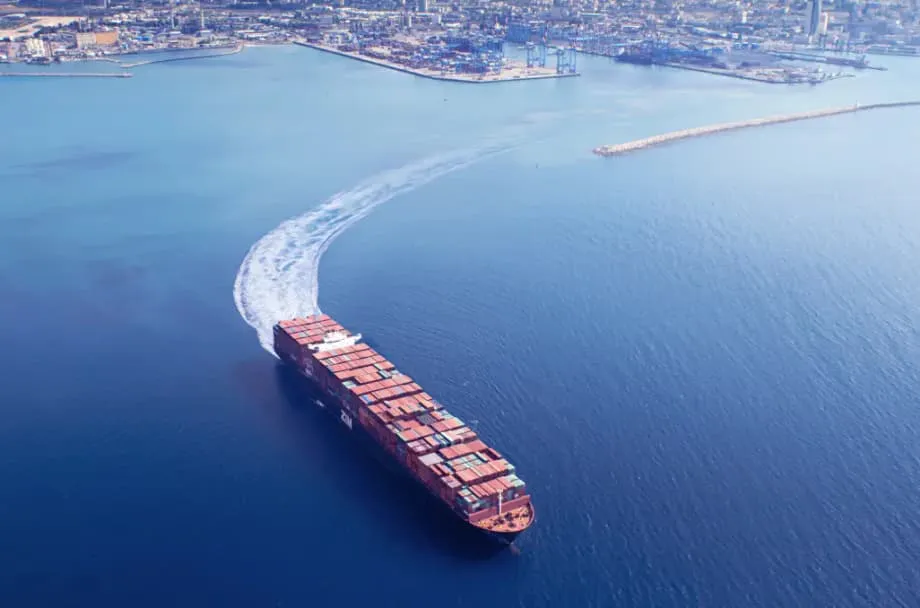
The Strait of Malacca connects major Asian economies, including Japan, Taiwan, South Korea and India, with markets in the Middle East and Europe. Ships using it carry crude oil, liquefied natural gas and containers supplying factories and consumers across East Asia.
Traffic estimates put annual vessel transits at approximately 94,000, with another figure of about 82,000 also cited. Estimates of its share of worldwide trade likewise range from roughly 30% of all traded goods to about 40% of global trade. These figures describe a corridor carrying a substantial part of international commerce, although the estimates use different totals.
The waterway runs for approximately 1,000 kilometers, with Indonesia to the south and Malaysia and Singapore to the north. At its narrowest point, it measures just 2.7 kilometers across, making it more than ten times narrower than the Strait of Hormuz. Heavy traffic passing through such a narrow space makes disruption particularly consequential.
Oil flowing from the Middle East to China, Japan and South Korea forms a major part of the traffic. Manufacturing also depends on ships reaching their destinations on time. Systems known as just-in-time delivery keep factories supplied close to the moment materials are needed, so delays at sea can interrupt production as well as postpone deliveries.
Energy analysts put the wider concentration of maritime commerce into perspective: three-quarters of global maritime trade, representing $10 trillion in value, passes through just thirteen key chokepoints, including Malacca. A chokepoint is a narrow passage through which large volumes of traffic must travel. Additional costs or disruption at Malacca could spread through those networks and raise prices for consumers far beyond Southeast Asia.
Iran's Hormuz Charges Enter the Debate
Purbaya explicitly referred to Iran's practices in the Strait of Hormuz when explaining the case for a Malacca levy. Following weeks of armed conflict with the United States and Israel, Iran has effectively established a maritime toll system in the contested waterway.
The Islamic Revolutionary Guard Corps has reportedly begun charging selected vessels up to $2 million for safe passage. Shipping analysts say the system generates substantial revenue while restricting traffic through a chokepoint that handles 20% of global oil consumption.
Hormuz therefore offers a striking example of how control over a narrow shipping route can become a source of money and political power. It also brings a legal dispute directly into Indonesia's discussion: legal experts warn that Iran's charges breach international maritime law.
Donald Rothwell, a professor of international law at the Australian National University, explained why the argument reaches beyond the Gulf:
Iran seeking to impose tolls is not consistent with our understanding of the International Law of the Sea that applies to international straits, of which the Strait of Malacca and the Strait of Singapore are prominent examples,
Philippe Delebecque, a maritime law expert at Paris' Sorbonne University, warned that accepting restrictions in one strait could encourage similar action elsewhere:
If the Strait of Hormuz could be closed, then why not the Strait of Gibraltar between the Mediterranean and the Atlantic, or the Strait of Malacca off Indonesia?
Delebecque described that prospect as "the end of an international society" founded on the principle that the sea belongs to no single nation. His concern is that a practice adopted at one crucial passage could spread to others, creating wider restrictions on international shipping.
What the Legal Arguments Say About Passage
The United Nations Convention on the Law of the Sea, known as UNCLOS and ratified by 172 countries, is central to the objections to charging vessels simply for passing. It provides the legal framework cited by those defending navigation through international straits.
Article 17 sets out the right of innocent passage. Article 26 prohibits coastal states from charging foreign ships solely for passage, while allowing charges for specific services, such as pilotage or port facilities. Pilotage means assistance in guiding a vessel through waters where navigation requires particular care.
A charge for a service and a toll for access serve different purposes. A vessel paying for pilotage receives navigational assistance; a vessel paying a transit toll pays to move through the route itself. Indonesia's proposal concerns the latter, which is why it has attracted objections about the right of passage.
Singapore's position centers on transit passage through international straits. Its government argues that this is an existing right of ships, rather than permission that a bordering country may grant in exchange for payment. The practical challenge for Indonesia is therefore both diplomatic and legal: agreement over collecting revenue would have to address the rules governing international navigation.
Singapore Draws a Firm Line Against Tolls
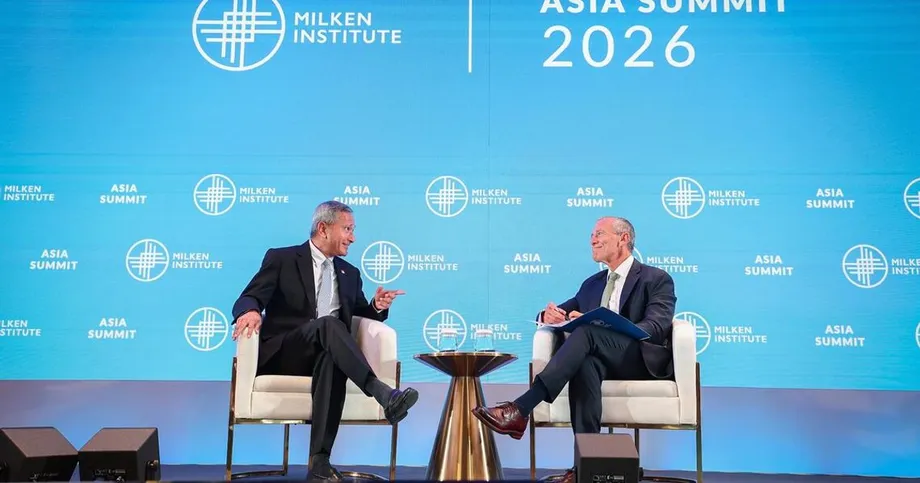
Singapore Foreign Minister Vivian Balakrishnan delivered a categorical rejection of tolls during Singapore Maritime Week 2026. Singapore, which operates one of the world's busiest hubs for transferring cargo between ships, argues that such charges would violate principles that have governed maritime trade for centuries.
Balakrishnan set out Singapore's position on keeping its surrounding sea routes open:
The right of transit passage is guaranteed for everyone. We will not participate in any attempts to close or interdict or to impose tolls in our neighbourhood.
During parliamentary questioning, Balakrishnan also explained why Singapore regards passage as an inherent right rather than a privilege supplied by coastal states:
It is not a privilege to be granted by the bordering state, it is not a license to be supplicated for, it is not a toll be paid,
He followed that statement with a direct description of what ships are entitled to do:
It is a right of ships to traverse.
Singapore's opposition reflects its economic dependence on maritime access. The small island nation lacks natural resources, and its prosperity depends on its role as a trading hub, where more than 500 vessels pass daily. Restrictions on passage through Malacca would threaten that economic lifeline.
Singapore is also building Tuas Port, which is expected to become the world's largest automated terminal when completed in 2040. The investment deepens its commitment to shipping and unrestricted maritime access. Its concern about restrictions extends to other crucial routes worldwide, including the Suez and Panama canals, where obstacles to trade would also affect global shipping networks.
Malaysia's Earlier Toll Proposal and Its Current Position
Malaysia pursued a similar idea more than three decades ago. In October 1992, then Prime Minister Mahathir Mohamad announced plans for an international conference to discuss tolls on ships using the Strait of Malacca, where vessels had previously paid nothing for transit.
Mahathir cited growing numbers of shipping accidents and argued that those using the route should help pay for safety measures. He described the proposed arrangement this way:
some form of payment must be made to some authority which would be responsible for keeping the straits open and reducing any danger to shipping.
The initiative collapsed amid international opposition and recognition that unilateral tolls would violate established maritime law. That history is relevant to Indonesia's proposal because it involved the same waterway and the same broad question of whether passing vessels should finance its upkeep.
Malaysia's present government rejects comparisons between Malacca and Hormuz. Defence Minister Mohamed Khaled Nordin said the three countries bordering Malacca do not face the geopolitical pressures confronting Iran:
What happened in Hormuz is not something to be emulated,
Khaled explained the regional difference in direct terms:
Malaysia, Indonesia, Singapore, we are not facing the same circumstances as Iran.
Malaysia has nevertheless pursued direct dialogue with Iran to secure passage for Malaysian vessels through the blockaded Strait of Hormuz. Singaporean officials have criticized those negotiations, viewing them as giving legitimacy to violations of international law. The disagreement shows that the neighboring countries have different approaches to dealing with restrictions already imposed elsewhere, even as Malaysia rejects Hormuz as a model for Malacca.
Military Cooperation Adds a Sovereignty Debate
Indonesia's discussion of maritime revenue is taking place alongside closer military cooperation with the United States. In early April, Jakarta and Washington signed a Major Defence Cooperation Partnership, known as the MDCP.
The agreement prompted reports that the Trump administration wanted blanket access for American military aircraft to fly through Indonesian airspace. Indonesian officials clarified that no unrestricted access had been granted. The reports nevertheless prompted debate within the military about sovereignty and strategic autonomy, meaning Indonesia's ability to make its own security decisions.
Colonel Arm Oke Kistiyanto of the Indonesian armed forces published a detailed assessment warning that such arrangements could expose Indonesia to serious risks and draw it into conflicts beyond its control. He explained why access to airspace carries consequences beyond a single flight:
Airspace is a core domain of state sovereignty,
Kistiyanto then described the wider considerations involved when a major power requests access:
When access to that domain is requested by a major power, what is at stake is not only the passage permit, but also the strategic significance of that permit: who gains operational benefits, how other countries interpret it, and whether the decision is consistent with Indonesia's foreign policy orientation.
American naval movements have also drawn attention to the waterway. The USS Miguel Keith, an expeditionary sea base vessel measuring 240 meters, transited the strait in mid-April during operations the US Navy described as routine. Indonesia confirmed that the transit complied with international law.
The American vessel's passage illustrates Jakarta's balancing task. Indonesia wants greater economic benefits from its location while maintaining sovereignty and avoiding involvement in rivalry between major powers. Its decisions about maritime access are being considered against that wider security debate.
China's Dependence and the Malacca Dilemma
China has a particular interest in keeping Malacca open. It relies on the waterway for approximately 70% of its imported energy, making uninterrupted passage a major concern for its energy security.
Chinese strategists have long identified the strait as a vulnerability. During Hu Jintao's presidency in the early 2000s, the term Malacca Dilemma emerged to describe the risk that a naval blockade could cut off oil supplies.
A move to restrict passage or charge for it would therefore cause concern in Beijing, which also views increased American military activity with deep suspicion. Indonesia's revenue proposal enters a setting where commercial shipping, energy supplies and military access already carry considerable political weight.
The main developments span several decades:
- October 1992: Mahathir Mohamad proposed an international conference on tolls for Malacca Strait shipping. The initiative later collapsed under legal and diplomatic opposition.
- Early 2000s: Chinese strategists identified the Malacca Dilemma during Hu Jintao's presidency.
- Early April 2026: Indonesia and the United States signed the Major Defence Cooperation Partnership.
- Mid-April 2026: The USS Miguel Keith transited the strait, with Indonesia confirming compliance with international law.
- Wednesday before April 25, 2026: Purbaya presented the ship levy idea at the Sarana Multi Infrastruktur symposium in Jakarta.
- 2040: Singapore expects completion of Tuas Port, planned as the world's largest automated terminal.
What Indonesia Would Need to Resolve
Indonesia faces practical obstacles alongside the legal objections. The strait borders three sovereign countries, so collecting fees would require a level of coordination beyond Indonesia's control alone. Without a trilateral agreement, ships could move closer to Malaysian or Singaporean coastlines to avoid Indonesian charges, undermining the levy while straining relations.
Indonesia, Malaysia and Singapore have cooperated against maritime piracy for decades. A shared toll system would require a fundamentally different arrangement, involving decisions about who collects charges and how the three countries manage a route used by global shipping.
The economic consequences would also reach beyond Indonesia's potential revenue. Additional costs for tankers, gas carriers and container ships could spread into energy markets and manufacturing supply chains. Delays would threaten delivery schedules, while higher shipping costs could eventually reach consumers.
Purbaya acknowledged that the proposal remains preliminary and is unlikely to be implemented soon. He described the approach he wants Indonesia to take:
With all the resources we have, we should not think defensively. We need to start thinking more offensively, but in a measured way,
Indonesia's next challenge is to reconcile that ambition with international navigation rules, neighboring governments and the commercial interests that rely on Malacca. Singapore has firmly rejected tolls, Malaysia has rejected Hormuz as a model, and Jakarta would need cooperation from both to make a regional collection system workable.
Key Points
- Indonesia's finance minister has floated a levy on ships passing through the Strait of Malacca, but the proposal remains preliminary.
- Singapore insists that transit passage is a guaranteed right and rejects closing, obstructing or imposing tolls on nearby international straits.
- Iran reportedly charges selected vessels up to $2 million for Hormuz passage, a practice maritime law experts say breaches international law.
- Malacca traffic estimates range from approximately 82,000 to 94,000 vessel transits annually, with estimates of its trade share ranging from 30% to 40%.
- Malaysia's 1992 toll initiative collapsed, and its current defence minister rejects adopting Hormuz as a model.
- Indonesia's military cooperation with the United States and China's dependence on Malacca add security concerns to the revenue debate.
- No implementation date has been announced, and Indonesia would need to address legal objections and coordinate with Malaysia and Singapore.