

A Rp 12 Trillion Response to a Threatening Dry Season
Indonesia is mobilizing Rp 12 trillion ($700 million) to protect agriculture from an unusually harsh dry season, as rising fire activity adds urgency to preparations for the possible arrival of a powerful El Niño. Agriculture Minister Andi Amran Sulaiman announced the allocation after meetings with regional regents, warning that every province is susceptible to extreme drought.
Contents
- A Rp 12 Trillion Response to a Threatening Dry Season
- Where the Agricultural Money Will Go
- What the El Niño Forecasts Say
- Why Some Regions Face Drought and Others Face Flooding
- Rice Reserves Provide a Food Buffer
- Pumps, Deep Wells and Advice for Farmers
- Fire Activity Is Already Climbing
- The Health and Economic Costs of a Severe Event
- Forest Clearance Puts Government Policy Under Scrutiny
- Key Points
As of April 25, 2026, preparations cover the April to October period, described as an anticipated dry spell lasting six months. The government is responding to warnings about a possible Godzilla El Niño, a name associated with exceptionally strong warming in the Pacific Ocean. Forecasts still give different probabilities for how strong the event could become.
The agricultural package is much larger than the $173 million set aside for similar preparations in 2014. Its two main priorities are distributing seeds for plantation crops and supplying water through pipes, pumps and irrigation systems. Amran has urged prompt disbursement to regional governments because the dry season is expected to begin earlier and last longer than usual.
Indonesia is also building food reserves and expanding access to groundwater. State logistics firm Bulog holds 4.08 million tons of rice, while the government is seeking irrigation coverage for 2 million hectares. Those preparations face a growing environmental threat: satellite data indicated that 32,637 hectares had already burned by February 2026, twenty times the area recorded during the same period in 2025.
The pressure extends beyond farms. A shortage of rainfall can affect food prices, commodity exports and mining operations, while fires threaten health and release greenhouse gases. Government spending on drought protection is also drawing scrutiny as forest clearance continues to grow.
Where the Agricultural Money Will Go
Approximately Rp 9.95 trillion ($580.3 million) is earmarked for seeds of cocoa, coconut, sugarcane and cashew nuts. The plan calls for distribution across 870,000 hectares of agricultural land, giving the package a substantial focus on plantation crops.
Another Rp 3 trillion ($175 million) is assigned to irrigation infrastructure, including water pipes and pump systems for places vulnerable to severe water shortages. Seeds and water address different parts of the same problem: farmers need crops to plant and enough moisture to keep those crops growing through a prolonged dry period.
The stated allocations add up to Rp 12.95 trillion, above the announced Rp 12 trillion package. No explanation was given for how the headline allocation and its two components fit together. The figures remain central to understanding the scale of the government's commitments.
Amran's call for quick transfers to regional governments reflects the timing of the threat. Infrastructure and planting decisions must be made before water becomes scarce. The anticipated earlier start and longer duration of the dry season narrow the period available for preparations.
What the El Niño Forecasts Say
NASA climatologist Bill Patzert coined the Godzilla description during the 2015 El Niño to describe exceptionally intense events in which Pacific sea surface temperatures rise at least 2.5 degrees Celsius above normal. Indonesian agencies have adopted the term to communicate extreme risk.
The Meteorology, Climatology, and Geophysics Agency (BMKG) projects a 50 to 80 percent chance of a weak to moderate El Niño developing. The United States National Oceanic and Atmospheric Administration also leaves open a stronger outcome, giving a 50 percent chance of a strong episode and a 25 percent probability of a very strong classification.
Those forecasts give Indonesia several possible weather outcomes to prepare for. The weak to moderate prospect described by BMKG sits alongside the possibility of a much stronger event in the United States agency's outlook. The government's preparations are being made while that strength remains uncertain.
Why Some Regions Face Drought and Others Face Flooding
The National Research and Innovation Agency (BRIN) warns that El Niño could coincide with a positive Indian Ocean Dipole (IOD). The IOD is a pattern of differences in ocean temperatures across the Indian Ocean that can influence where rain falls. BRIN expects the combination to suppress rainfall across southern Indonesia while increasing rain and flood risks in parts of the northeast.
BRIN senior researcher Erma Yulihastin explains that the two phenomena could substantially alter weather during the April to October dry season. Clouds and rainfall would concentrate over the Pacific Ocean, leaving Indonesian skies clearer and rainfall minimal in areas exposed to drought.
Java through East Nusa Tenggara faces the prospect of severe drought. Sulawesi, Halmahera and Maluku, meanwhile, may experience intense rainfall. Indonesia's preparations therefore have to account for very different conditions across the archipelago, with water shortages in one region and excess rain in another.
The events and preparations span several years:
- 2014: Indonesia set aside $173 million for similar agricultural preparations.
- 2015: Patzert used the Godzilla description for an intense El Niño, and Indonesia experienced devastating fires.
- 2024: Drought resistant crop varieties and water saving drip irrigation were tested during El Niño.
- 2025: Indonesia's deforestation reached 433,751 hectares, an increase of 66 percent.
- January to March 2026: Peatland hotspot monitoring recorded mounting fire activity, including 12,942 hotspots in March.
- April to October 2026: Indonesia is preparing for the anticipated prolonged dry season and possible combination of El Niño and a positive IOD.
Rice Reserves Provide a Food Buffer
The National Food Agency (Bapanas) is strengthening national food reserves alongside the Agriculture Ministry's package. Bulog's 4.08 million tons of rice represents a 77.8 percent increase from March 2025, with stocks projected to reach 5 million tons shortly.
Rice held by hotels, restaurants and households brings total national availability to approximately 27 million tons. That quantity is theoretically sufficient to meet demand for up to ten months. The broader total includes rice distributed across the economy, while Bulog's figure describes the stocks held by the state logistics firm.
Additional government reserves include 144,000 tons of corn, 95,000 kiloliters of cooking oil and 50,000 tons of consumer sugar. The government also holds substantial quantities of beef, chicken and eggs.
These reserves give Indonesia a buffer as it prepares to sustain production through the dry season. The response combines food already in storage with investments intended to keep farms producing, linking immediate supply protection with the next harvests.
Pumps, Deep Wells and Advice for Farmers
The Ministry of Public Works is accelerating construction of groundwater irrigation networks, known as JIAT. The networks use wells drilled to a depth of 120 meters, capable of supplying 12 liters of water per second and irrigating approximately 20 hectares each.
Amran confirmed the distribution of 80,000 irrigation pump units nationwide. He is coordinating with Public Works Minister Dody Hanggodo to expand irrigation coverage to 2 million hectares. The aim is to enable regions currently producing one harvest a year to sustain three annual harvests despite drought conditions.
Groundwater networks and pumps are intended to give farmers access to water when rainfall falls short. The government's ambition goes beyond preserving the existing harvest: it seeks to make more frequent planting possible in areas where a limited water supply currently restricts production.
Professor Bayu Dwi Apri Nugroho, an agroclimatologist at Universitas Gadjah Mada, points to drought resistant varieties and water saving drip irrigation as proven ways to reduce drought damage. These approaches were tested during the 2024 El Niño. Drip irrigation delivers water directly to crops in small amounts, helping farmers use limited supplies carefully.
Bayu says farmers also need adequate support from agricultural extension workers, who provide practical guidance on farming decisions. He described communication as central to putting these measures into practice:
The key lies in communication between farmers and extension workers. With clear information, farmers can make more appropriate decisions in the field.
Fire Activity Is Already Climbing
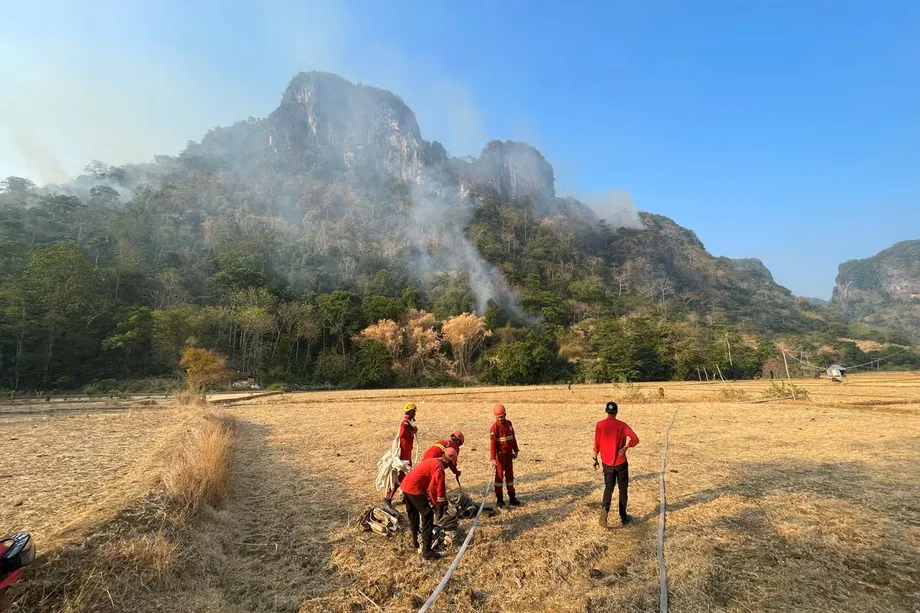
By February 2026, the 32,637 hectares identified as burned by satellite data covered an area roughly equivalent to three times the size of Paris. The twentyfold increase from the same period in 2025 shows how quickly fire pressure had grown before the expected peak of the dry season.
Independent environmental watchdog Pantau Gambut detected 23,546 hotspots in peatland ecosystems since January. March alone accounted for 12,942. Hotspots are locations identified through monitoring as unusually hot and used to track possible fire activity; burned area measures the extent of land affected.
Peatlands store twenty times more carbon than mineral soils. They become particularly vulnerable to fire when drained for agricultural conversion. Their large carbon stores also make burning peat a major concern for greenhouse gas emissions.
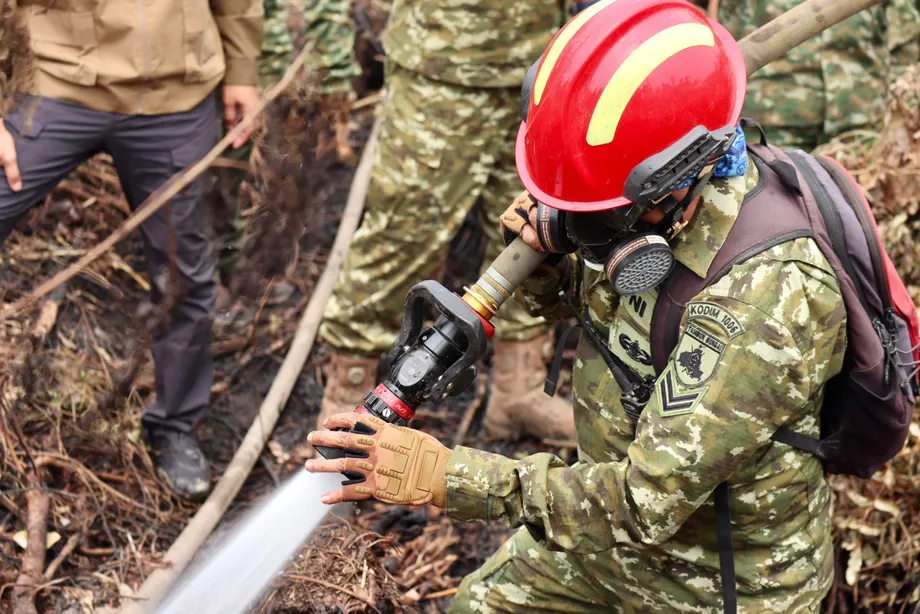
Current monitoring identified 6,192 fires within oil palm concessions and 1,334 within timber concessions. Those figures have increased pressure for stricter oversight of corporate land management as the country prepares for a potentially harsher dry season.
The Health and Economic Costs of a Severe Event
Environment Minister Hanif Faisol Nurofiq has warned that forest fires are among Indonesia's largest sources of greenhouse gas emissions. He also highlighted their lasting effects on health and their economic cost:
Forest fires are among the largest contributors to greenhouse gas emissions, causing environmental damage, chronic health impacts and trillions of rupiah in economic losses.
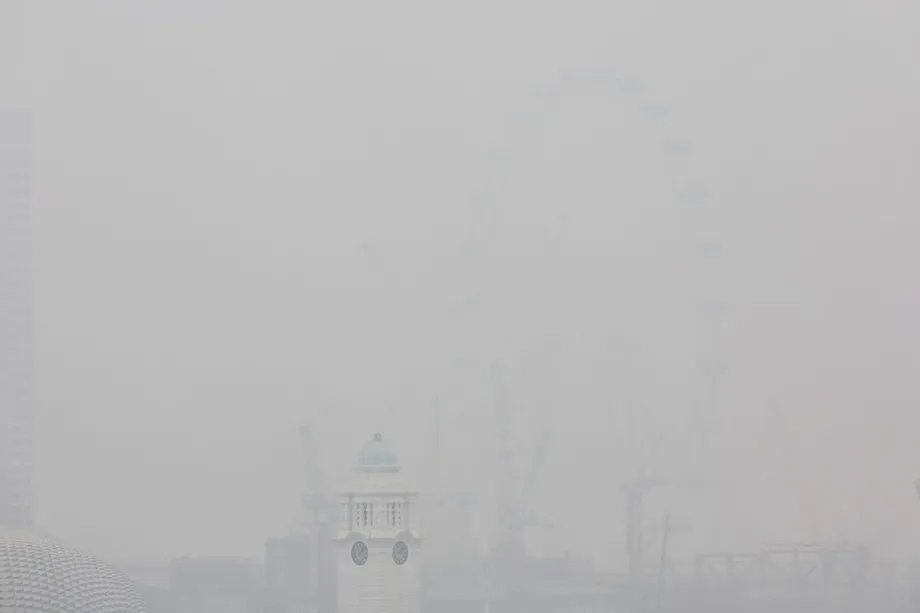
The 2015 Godzilla El Niño provides a damaging benchmark. Fires burned an estimated 2.6 million hectares and triggered more than 500,000 respiratory infections. World Bank estimates put the economic damage at $16.1 billion.
International Monetary Fund research finds that El Niño events have historically reduced Indonesia's gross domestic product and pushed inflation upward by approximately 91 basis points through food price volatility. Gross domestic product measures economic output. A rise of 91 basis points means an increase of 0.91 percentage points in the inflation rate.
Indonesia's exposure also reaches international commodity markets because the country supplies substantial portions of global palm oil, cocoa and nickel exports. Drought threatens agricultural production, while mining operations that rely heavily on hydropower face difficulties extracting minerals when water becomes scarce.
The government's response therefore addresses several connected risks. Irrigation is aimed at keeping production going, food reserves provide supplies during disruption, and fire prevention protects land, health and economic activity. The 2015 losses show why preparations extend beyond the value of a single harvest.
Forest Clearance Puts Government Policy Under Scrutiny
Indonesia's deforestation rose 66 percent in 2025 to 433,751 hectares. Environmental activists point to a conflict between spending on drought protection and policies that encourage further forest conversion.
The government's food estate program, which allocates 20.6 million hectares of forest land for agricultural conversion, is cited as part of the pressure driving forest loss. The policy seeks agricultural expansion while drought preparations focus on protecting production from worsening climate conditions.
Auriga Nusantara chairman Timer Manurung notes that deforestation is frequently followed by fires. Of the land cleared, 28,889 hectares consisted of vulnerable peatlands, connecting forest loss with the ecosystems already attracting concern from fire monitors.
WALHI campaigner Musdalifah argues that the Rp 3 trillion allocated for forest fire mitigation is small compared with the Rp 3,843 trillion national budget. Her concern is sharpened by the escalation of the 2026 fire season before the dry season peak.
The Rp 3 trillion for forest fire mitigation is presented separately from the Rp 3 trillion assigned to agricultural irrigation. Both allocations address parts of the climate threat, while the criticism of forest conversion focuses on policies that may increase exposure to fires.
Key Points
- Indonesia announced Rp 12 trillion ($700 million) for agricultural protection ahead of the anticipated April to October 2026 dry season.
- The stated components are Rp 9.95 trillion for plantation crop seeds across 870,000 hectares and Rp 3 trillion for irrigation, exceeding the announced total.
- BMKG forecasts a 50 to 80 percent chance of weak to moderate El Niño, while United States forecasts include the possibility of a strong or very strong event.
- BRIN warns that El Niño combined with a positive Indian Ocean Dipole could bring severe drought from Java to East Nusa Tenggara and heavier rain in northeastern regions.
- Bulog holds 4.08 million tons of rice, up 77.8 percent from March 2025, while total national rice availability approaches 27 million tons.
- Indonesia has distributed 80,000 irrigation pumps and is pursuing irrigation coverage for 2 million hectares.
- Satellite data indicated 32,637 hectares had burned by February 2026, while Pantau Gambut recorded 23,546 peatland hotspots since January.
- Deforestation rose 66 percent to 433,751 hectares in 2025, drawing scrutiny of forest conversion and funding for fire prevention.