
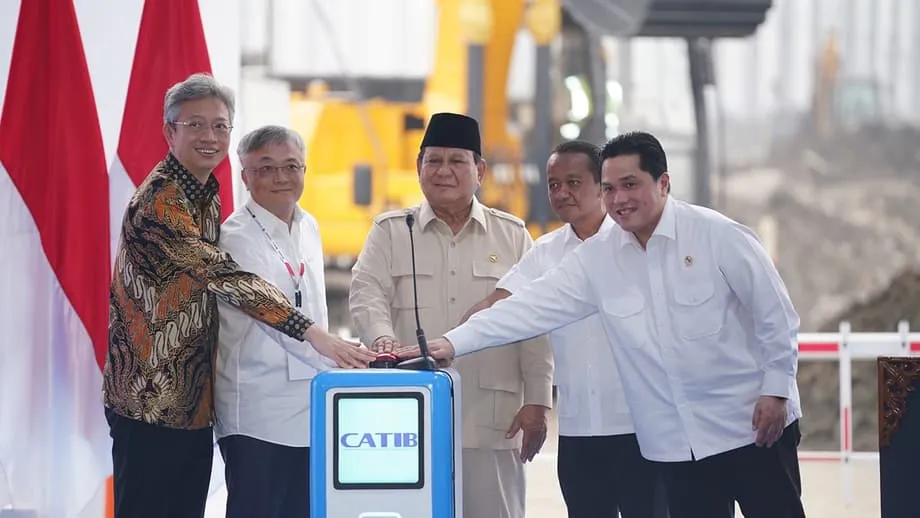
Karawang battery line targets production and exports in 2026
Toyota Motor Manufacturing Indonesia (TMMIN) is investing 1.3 trillion rupiah, equivalent to $76 million or approximately 12 billion yen, in local battery cell and module production with Contemporary Amperex Technology Co. Limited (CATL). Announced on April 20, 2026, the partnership will establish a dedicated Toyota production line inside CATL's manufacturing facility in Karawang, West Java.
Contents
- Karawang battery line targets production and exports in 2026
- What changes when battery components are made locally?
- A partnership that began in July 2019
- Why hybrids are central to the investment
- Nickel anchors Indonesia's battery ambitions
- CATL's $6 billion project stretches from mining to recycling
- Jobs, Japanese investment and the export push
- How the factory plans to use energy and recover materials
- A separate bioethanol plant is planned for Lampung
- The dates shaping the two investments
- The Bottom Line
Operations are scheduled to begin in the second half of 2026. The batteries will supply Toyota's Indonesian hybrid vehicle assembly operations and international export markets, making TMMIN the first Toyota subsidiary in Southeast Asia to export batteries beyond regional markets. Export shipments are also scheduled to start in the second half of the year, although destination markets have not been disclosed.
Toyota's investment brings together two parts of Indonesia's industrial ambitions: making more vehicle components locally and selling more sophisticated automotive products abroad. The country is seeking to move beyond its role as an assembly base for domestic buyers and regional distribution, while building a supply chain that stretches from mineral extraction to finished batteries.
CATL, the world's largest manufacturer of batteries for electric vehicles, is already developing a much larger battery project in Indonesia. Toyota's dedicated line will sit within that wider manufacturing expansion, while serving the company's immediate need for batteries used in hybrid vehicles.
TMMIN operates as a joint venture between Toyota Motor Corporation and Astra International, one of Indonesia's largest conglomerates. Toyota has operated continuously in Indonesia for 55 years and says its cumulative investment across manufacturing and distribution activities has reached Rp 100 trillion, equivalent to $5.8 billion. The new battery commitment adds another stage to that established industrial presence.
What changes when battery components are made locally?
TMMIN currently imports battery cell components and modules for its hybrid vehicle lineup, including the Kijang Innova Zenix, Veloz and Yaris Cross, which are assembled at its Karawang plant. The CATL partnership will move production of those components into Indonesia, using Indonesian workers and resources.
Nandi Julyanto, president director of TMMIN, said the project would extend beyond assembling imported components and support Toyota's approach to reducing carbon emissions through several vehicle technologies.
The battery cell and module components that are currently imported will later be produced by Indonesian human resources. This partnership will not only increase investment but also support Toyota's multipathway initiative towards carbon neutrality by strengthening the local supply chain.
The facility will produce complete battery cells and modules. A cell is the basic unit that stores electrical energy, while a module groups cells together. Battery packs combine these components into the finished units used in vehicles. Toyota's existing battery pack production line combines imported cells into finished units; the new operation will bring earlier stages of manufacturing into the country.
Producing cells and modules locally gives Indonesian workers a larger role in making the battery itself. It also supports Indonesia's Domestic Component Level requirements, which call for increasing local content in manufactured goods. In practical terms, more of the components that go into the finished product will be made domestically instead of arriving from overseas.
A partnership that began in July 2019
CATL and Toyota established their broader partnership in July 2019. That agreement covered battery supply for new energy vehicles, joint development of battery technologies, improvements in quality, and systems for battery reuse and recycling.
The agreement reflected both companies' view that dependable battery supplies and continued technological development are necessary for wider vehicle electrification. CATL also supplies major manufacturers including Tesla, BMW and Volkswagen, while Toyota brings decades of experience as a pioneer in hybrid vehicle technology.
Toyota describes its strategy as a multipathway approach to carbon neutrality. It includes hybrid electric vehicles, plug in hybrid electric vehicles, battery electric vehicles, fuel cell electric vehicles and flexible fuel vehicles that use bioethanol blends. The Indonesian battery project forms part of that range of technologies, with its immediate manufacturing focus on batteries for hybrids.
Toyota's separate plans for bioethanol production in Indonesia extend the same strategy beyond batteries. Together, the projects show how the company is developing both vehicle components and alternative fuels within the country's industrial supply chain.
Why hybrids are central to the investment
Indonesia's electrified vehicle sales reached 177,367 units in 2025, up 71 percent from 103,452 units in the previous year, according to the Indonesian Automotive Industry Association, GAIKINDO. The increase amounted to 73,915 vehicles, showing the scale of growth in demand.
Domestic production of electrified vehicles totaled 127,420 units in 2025, with 99,162 units directed to the Indonesian market. Local manufacturing accounted for approximately 55 percent of electrified vehicle sales in the country.
Hybrid electric vehicles accounted for 97,462 units of production, approximately 76.5 percent of the total. That means hybrids represented more than three quarters of Indonesia's electrified vehicle output, explaining Toyota's decision to concentrate this investment on hybrid batteries rather than exclusively on batteries for fully electric vehicles.
A hybrid combines an engine with an electric motor and battery. A battery electric vehicle uses a battery to power its electric motor. Both fall within the electrified vehicle market described by the figures, but the production mix shows that hybrids currently occupy the larger share of Indonesian manufacturing.
Toyota's planned local battery supply therefore matches the vehicles it already assembles in Karawang and the dominant technology in Indonesia's electrified vehicle output. The export plan adds a second purpose to the production line: supplying batteries beyond the domestic factories that will use them.
Nickel anchors Indonesia's battery ambitions
Indonesia, the world's largest nickel producer, is seeking to build a complete electric vehicle supply chain around its mineral resources. Restrictive measures on exports of unprocessed nickel ore have been implemented since 2014, pushing foreign companies to establish processing facilities inside the country to gain access to those resources.
The government aims to reach annual battery production capacity of 140 gigawatt hours by 2030, a target comparable to total global electric vehicle battery production in 2020. Gigawatt hours measure the amount of energy batteries can store, allowing the capacity of many batteries to be added together.
Indonesia requires foreign battery manufacturers to partner with Indonesia Battery Corporation (IBC). Established in 2021, the holding company comprises four state owned enterprises: mining industry holding company MIND ID, nickel miner Aneka Tambang, electric utility PLN, and oil and gas company Pertamina.
Those partnerships connect battery investment with Indonesia's mining, electricity and energy industries. Toyota's move to local cell and module production fits within that wider effort to retain more manufacturing activity in the country. The battery initiative also aligns with Indonesia's goal of achieving carbon neutrality by 2060.
CATL's $6 billion project stretches from mining to recycling
CATL's Indonesian expansion extends far beyond Toyota's $76 million production line. Through its subsidiary Contemporary Brunp Lygend, CATL is implementing the $6 billion Indonesia Battery Integration Project, covering more than 2,000 hectares.
The project spans nickel mining and processing in North Maluku, battery manufacturing in Karawang, and recycling operations. Its partners include Antam and IBC, and it represents the largest battery industry investment in Southeast Asia.
The planned chain links the extraction of raw materials with the manufacture of battery components and the recovery of materials from used batteries. Toyota's line is one specific manufacturing investment within that much larger industrial undertaking.
Once fully operational, the broader project is expected to produce 142,000 tons of nickel and 30,000 tons of cathode materials annually. A cathode is one of the main parts of a battery cell, and its materials help the cell store and release energy. The project also includes capacity to process approximately 20,000 tons of recycled batteries.
Those outputs are intended to support Toyota's hybrid vehicle production and expanding global demand for electric vehicle components. The scale of the project also explains why its employment estimates are much larger than the immediate scope of Toyota's dedicated production line.
Jobs, Japanese investment and the export push
The Indonesia Battery Integration Project is expected to create 8,000 direct jobs and 35,000 indirect employment opportunities once fully operational. Those estimates apply to the broader project, while Toyota's $76 million commitment covers its specific production line within CATL's facility.
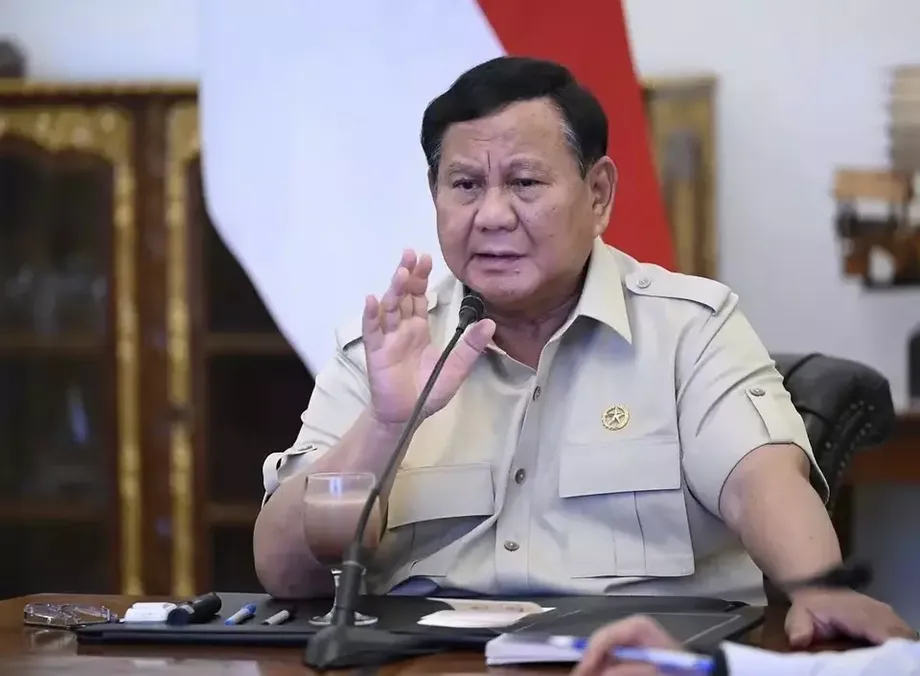
President Prabowo Subianto attended the groundbreaking ceremony for the larger CATL project. He said Indonesia seeks partnerships with global stakeholders to develop an industrial ecosystem for green batteries.
Prabowo described the project's scale and its role in Indonesia's energy ambitions:
This project, the largest initiative of its kind in Southeast Asia, clearly demonstrates Indonesia's dedication to promoting sustainable energy.
During a recent state visit to Tokyo, Prabowo also said Indonesia would continue opening its economy to Japanese participation. Japanese direct investment in Indonesia reached approximately $3.1 billion during 2025.
TMMIN's battery exports will add a new type of product to Indonesia's automotive manufacturing activity. Instead of serving solely as a location for vehicle assembly and regional distribution, the country is seeking a larger role in producing advanced components for global markets. Toyota's position as the first of its Southeast Asian subsidiaries to export batteries beyond regional markets gives the Karawang operation a distinct role within the company.
How the factory plans to use energy and recover materials
CATL's Karawang facility will use the company's Lighthouse Factory and Extreme Manufacturing methodologies to produce battery cells and modules efficiently and to high quality standards. The plant is designed for very low energy consumption through renewable energy integration and advanced manufacturing processes.
Battery recycling operations are projected to recover more than 95 percent of metals. Recovering materials from used batteries allows them to return to production, supporting a circular economy in which resources are reused rather than discarded after a single period of use.
Indonesia's nickel industry also faces environmental and governance concerns, particularly around mining practices in Sulawesi and North Maluku. Those concerns sit alongside the industrial benefits expected from expanding the country's mining, processing and battery manufacturing activities.
The World Bank's Ease of Doing Business index places Indonesia 73rd among 190 economies. The ranking reflects continuing challenges in the business environment despite government efforts to attract foreign investment through partnerships with state owned enterprises.
A separate bioethanol plant is planned for Lampung
Toyota is also advancing a separate joint venture with Pertamina NRE, the renewable energy subsidiary of state owned energy company Pertamina. The companies plan to build a bioethanol production facility in Lampung province, with an estimated investment of $200 million to $300 million.
Groundbreaking is scheduled for the fourth quarter of 2026, and production is targeted for 2028. The schedule aligns with Indonesia's plans to introduce gasoline containing 10 percent ethanol nationwide. Bioethanol is an alcohol fuel that can be blended with gasoline, making it part of Toyota's alternative fuel strategy.
Deputy Investment Minister Todotua Pasaribu confirmed that investors in the project will receive tax holidays under government incentives for renewable energy infrastructure. These incentives reduce tax payments for a period, supporting investment in the planned facility.
The Lampung project and the Karawang battery line address different parts of Toyota's Indonesian operations. Battery production supports electrified vehicles and component exports, while bioethanol production supports vehicles that use blended fuels. Both fit the company's strategy of pursuing several routes toward carbon neutrality.
The dates shaping the two investments
Toyota's battery production plan follows years of cooperation with CATL and Indonesia's longer effort to build industries around its mineral resources. The announced schedule now places battery production and exports ahead of the planned start of bioethanol output.
- 2014: Indonesia began implementing restrictive export measures on unprocessed nickel ore.
- July 2019: Toyota and CATL established their broader agreement on battery supply, technology development, quality, reuse and recycling.
- 2021: Indonesia Battery Corporation was established with four state owned enterprises.
- April 20, 2026: TMMIN announced its Rp 1.3 trillion battery production investment with CATL.
- Second half of 2026: Toyota's dedicated Karawang battery line is scheduled to begin operations and exports.
- Fourth quarter of 2026: Groundbreaking is scheduled for the Toyota and Pertamina NRE bioethanol plant in Lampung.
- 2028: The Lampung plant is targeted to begin production.
- 2030: Indonesia aims to reach annual battery production capacity of 140 gigawatt hours.
- 2060: Indonesia's target year for carbon neutrality.
As of April 25, 2026, Toyota's next scheduled manufacturing milestone is the start of battery production in the second half of the year. The Lampung groundbreaking is due later in 2026, extending the company's investment program from battery components into alternative fuel production.
The Bottom Line
- TMMIN is investing Rp 1.3 trillion, equivalent to $76 million or approximately 12 billion yen, in battery cell and module production with CATL in Karawang.
- Operations and battery exports are scheduled for the second half of 2026, supplying domestic hybrid assembly and international markets.
- The line will replace imported battery components with Indonesian production and make TMMIN Toyota's first Southeast Asian subsidiary to export batteries beyond regional markets.
- Hybrids accounted for 97,462 of Indonesia's 127,420 electrified vehicles produced in 2025, approximately 76.5 percent.
- CATL's broader $6 billion project covers mining, processing, battery manufacturing and recycling, with 8,000 direct and 35,000 indirect jobs expected.
- Toyota and Pertamina NRE plan a bioethanol plant costing $200 million to $300 million in Lampung, with groundbreaking in late 2026 and production targeted for 2028.
- Indonesia aims for annual battery capacity of 140 gigawatt hours by 2030 and carbon neutrality by 2060.