A Vast Rail Network Changes the Tourism Map
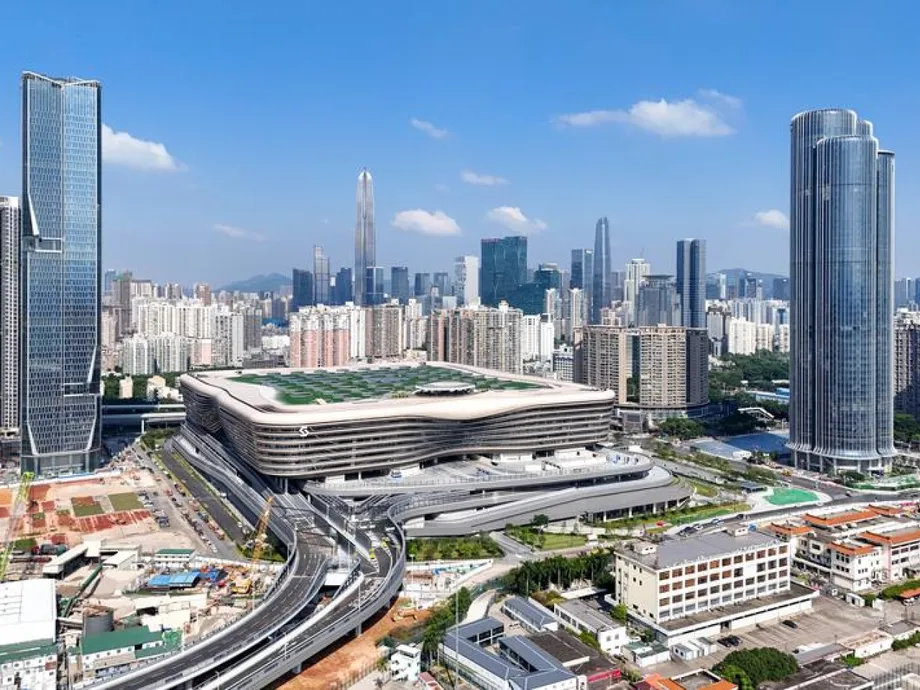
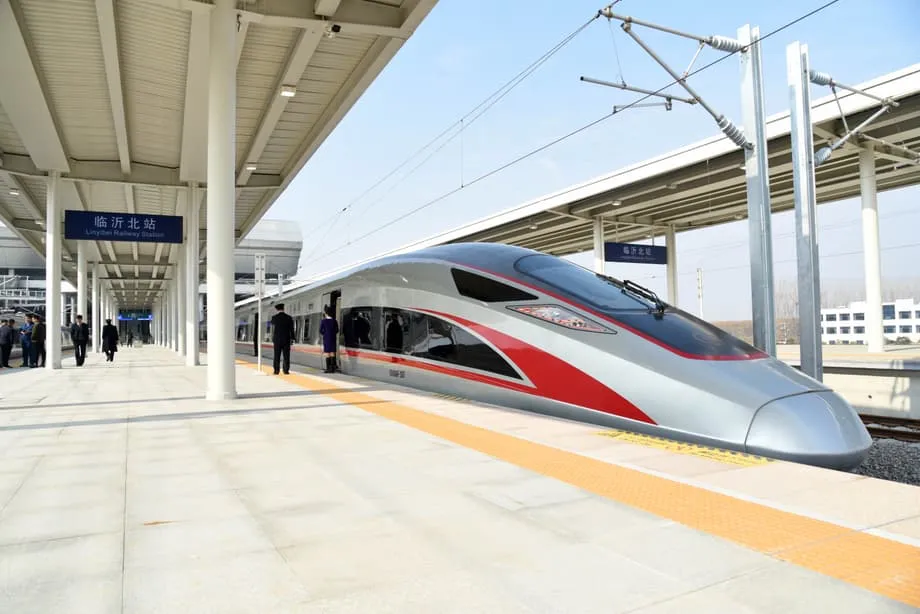
China's high speed rail network passed 50,000 kilometers by the end of December 2025, following the opening of the Xi'an-Yan'an line in Shaanxi Province. That put roughly 70 percent of the world's high speed railway tracks in one country, connecting major cities and bringing more distant destinations within reach of shorter holidays.
Contents
- A Vast Rail Network Changes the Tourism Map
- How China Built Connections Across the Country
- When Distance Takes Less Time
- Smaller Cities Gain Visitors and New Business
- Altay's Shift From Mining to Winter Tourism
- Hainan Broadens Its Tourism Appeal
- Entry Rules and Payments Help Foreign Visitors Travel Further
- The Railway Connection Through Laos
- Border Procedures and Costs Shape Regional Benefits
- Expansion Brings Environmental and Capacity Choices
- Key Points
The newest trains routinely operate at speeds of up to 350 kilometers per hour. In 1993, trains on China's older infrastructure averaged 48 kilometers per hour. The transformation has compressed decades of railway development into less than 20 years, changing how travelers plan journeys across a country where distance once consumed much of a holiday.
During the 2026 Spring Festival travel period, the network carried a record 538 million passengers, with nearly 13,000 trains running daily at peak capacity. Those journeys reflect the scale of demand during China's busiest seasonal movement of people, when railway authorities must accommodate both holidaymakers and people returning home.
For tourism, the change reaches beyond faster journeys between famous cities. New routes allow visitors to combine coastal gateways with inland destinations, while provincial governments promote tourism areas reachable within two hours. Hotels, restaurants, tour operators and local transport services increasingly depend on what happens after passengers step off a train.
As of April 25, 2026, the network's expansion also presents practical choices: how to connect stations with attractions, manage holiday crowds, protect sensitive landscapes and make expensive infrastructure financially sustainable. China's experience shows how closely tourism development now depends on railway planning, local services and the rules governing international travel.
How China Built Connections Across the Country
China's first high speed railway, connecting Beijing and Tianjin, opened in August 2008, just before the Beijing Olympic Games. Unlike Japan's Shinkansen and Germany's ICE, which developed gradually through incremental improvements over several decades, China's network expanded rapidly from that starting point.
The Beijing-Shanghai high speed railway began service in June 2011. It reduced the journey of about 1,300 kilometers from more than 10 hours to just over four hours, making travel between two major economic centers possible within a much smaller part of the day.
Newer corridors, including Guangzhou-Zhanjiang and Baotou-Yinchuan, have continued extending the network into southern and western regions. By 2024, high speed rail served 97 percent of Chinese cities with populations above 500,000 and had cumulatively carried more than 22.9 billion passengers.
The main milestones show how quickly the system grew:
- August 2008: The Beijing-Tianjin high speed railway opened ahead of the Olympic Games.
- June 2011: The Beijing-Shanghai line began operating, cutting the journey to just over four hours.
- By 2024: The network served 97 percent of cities with more than 500,000 residents and had carried more than 22.9 billion passengers.
- December 2025: The Xi'an-Yan'an opening helped take the network beyond 50,000 kilometers.
- Spring Festival 2026: Passenger journeys reached a record 538 million during the travel period.
These connections give tourism businesses more options than a simple journey into and out of one major city. Visitors can travel through several destinations, while smaller cities gain access to potential customers living along the same railway corridors.
When Distance Takes Less Time
Researchers describe the effect of faster transport as time-space compression. The physical distance between two places stays the same, but the time needed to travel between them shrinks, changing which trips feel practical.
Studies using weighted averages adapted to local conditions show that station locations strongly affect accessibility. Such calculations consider travel times across destinations rather than looking only at the speed of the train itself. A station's position can therefore shape how much benefit nearby attractions receive.
In Guangxi, access to ecotourism destinations improved sharply after high speed rail was introduced. Journeys to major scenic attractions fell from nine to 10 hours to between 3.7 and six hours. The share of attractions reachable within six hours rose from 31.58 percent to 78.95 percent, an increase of 47.37 percentage points.
The research describes patterns of centrality and diffusion: transport hubs become important meeting points for journeys, while faster connections spread access outward to surrounding destinations. For a visitor, the result can be the difference between spending most of a day traveling and having enough time left to visit an attraction.
The Wuhan-Guangzhou railway produced similar effects in Hubei Province. New corridors through central China also bring Yichang, a gateway to stretches of the Yangtze River, within a few hours of major hubs such as Wuhan and Chongqing.
The Baotou-Yinchuan line reduced travel across northern desert and grassland areas from more than six hours to 2.5 hours. Travelers from Shanghai or Hangzhou who previously faced two or three days of road travel to Ningxia can now leave in the morning and arrive by dinner, after about 10 hours traveling through hubs such as Xuzhou and Xi'an.
Provincial governments market two-hour tourism circles around this improved access. Landscapes and cultural attractions become realistic choices for spontaneous excursions, frequent short trips and weekend visits. Faster connections also support commuting between cities within the same day.
Smaller Cities Gain Visitors and New Business
Cities connected to high speed rail recorded nine percent growth in tourist arrivals, according to research described in the tourism findings, alongside increases in tourism revenue. The expansion has helped redirect visitors toward secondary and inland cities previously overshadowed by coastal megacities.
Tour operators have responded by replacing lengthy bus itineraries with programs built around rail travel. High speed trains cover the longer distances, while local transport connects stations with hotels, attractions and neighboring destinations. This combination supports tours through several cities without requiring visitors to spend as much time on the road.
Hotels, restaurants and cultural attractions in cities such as Zhengzhou and Nanchang report substantial business growth as travelers explore beyond established tourism centers. More passengers can mean more spending locally, provided visitors can reach the places where they want to eat, stay and sightsee.
Municipal authorities have upgraded station districts, developed shuttle connections to historic quarters and set aside land for commercial projects within walking distance of platforms. This approach, often called transit-oriented development, puts businesses and services close to transport rather than treating the station as an isolated arrival point.
Some stations on city fringes have nevertheless struggled to attract enough passengers. Their experience places local transport and land planning alongside train speed as practical concerns. A fast journey between cities still needs a useful connection between the arrival station and the destination itself.
Altay's Shift From Mining to Winter Tourism
Altay Prefecture in Xinjiang illustrates the wider economic transition occurring in some tourism regions. Once dependent on mining, Altay faced environmental restrictions and declining output in its secondary sector, which includes mining and manufacturing, during 2015 and 2016.
Ecological protection measures under China's ecological civilization initiative pushed the region toward ice and snow tourism. Its transformation unfolded across three distinct phases, with local authorities navigating the competing demands of environmental protection and economic growth.
Tourist arrivals rose from 1.5 million in 2007 to more than 26 million in 2021, then reached 30 million in 2023. The 2023 figure was 20 times the 2007 total. Ski resorts, winter sports facilities and cultural events helped attract visitors seeking experiences different from those offered by more established destinations.
The tertiary sector, which includes services such as tourism, grew from about one-third of Altay's economy in 2007 to nearly 50 percent by 2020. Its growing share shows how the region's economic activity shifted toward services as environmental constraints affected resource extraction.
China's ecological civilization framework was written into the constitution in 2018. Ecological redlines, which set limits intended to protect sensitive areas, and central environmental protection inspections placed pressure on resource dependent local governments to change their development models and pursue greater harmony between people and nature.
Hainan Broadens Its Tourism Appeal
Hainan Province offers another example of how improved infrastructure and tourism facilities can change a destination's appeal. Travel agents from Singapore and Macao have observed substantial changes over the past 15 years, including the development of more beaches and a wider range of activities.
Jiang Huijun, president of Singapore-based Jun-Air Travel, has spent 15 years promoting Hainan's luxury tourism. She described the development of its resorts and the kinds of visits she plans to promote:
Many more beaches have been developed into tourist-friendly resorts. I plan to promote high-end and long-stay vacation packages and recommend Hainan as a destination for major exhibitions.
Paco Ng, a travel agent based in Macao, highlighted Hainan's appeal across age groups. He pointed to helicopter tours, diving and varied cuisine, alongside the convenience of a flight taking about one hour from the Guangdong-Hong Kong-Macao Greater Bay Area.
Hainan's experience brings together several parts of tourism development: access to a destination, the accommodation available after arrival and the activities that encourage people to stay. The agents' observations cover resort holidays, longer visits and travel for major exhibitions, rather than a single type of visitor.
Entry Rules and Payments Help Foreign Visitors Travel Further
China's railway expansion has coincided with simpler entry arrangements and changes to payment services for international visitors. By June 2025, China offered unilateral visa-free entry to citizens of 47 countries and had extended its 240-hour visa-free transit policy to 55 nations.
The transit allowance gives eligible travelers up to 10 days under that policy. Officials describe the combination of entry arrangements as a multilayered, streamlined travel service system. In the first half of 2025, foreign visitors made 13.64 million entries without visas, up 53.9 percent from a year earlier and accounting for 71.2 percent of all foreign arrivals.
British travel vloggers Reanne and Ben have documented rail efficiency and digital payments in more than 40 videos, using words such as "shocking" and "unbelievable" in their titles. Their videos tagged "China Travel" have attracted more than 80 million views on YouTube alone, showing international audiences journeys beyond gateway cities and into China's interior.
The State Taxation Administration introduced instant tax rebates at the point of purchase in April 2024. By August, the number of tax refund stores exceeded 10,000, while refund claims increased 247.8 percent compared with a year earlier. Receiving a rebate at purchase makes the shopping process more immediate for eligible visitors.
Digital platforms recorded a 35 percent increase in bookings combining flights and rail journeys in 2025. Connections between major airports and high speed railway stations in Beijing and Shanghai supported that growth, helping passengers continue toward destinations such as Xi'an and Chengdu after arriving internationally.
Shenzhen recorded 85.88 million non-cash payment transactions by foreign nationals in the first half of 2025, with a total value of 11.81 billion yuan. Mobile payment limits had risen to $5,000 per transaction. Together, easier payments, entry arrangements and transport connections have supported the spread of the "China Travel" trend across global social media.
The Railway Connection Through Laos
The Laos-China Railway extends China's regional rail connections beyond its borders under the Belt and Road Initiative. Operational since 2021, the route connects Kunming with Vientiane over more than 1,000 kilometers.
Travel from Boten, on the Chinese border, to Vientiane now takes three to four hours by rail, compared with more than a full day by road previously. A projection for 2025 put annual passenger traffic at more than 30 million.
The World Bank estimated that the railway could increase aggregate income in Laos by up to 21 percent over the long term if the government undertook appropriate reforms. Aggregate income means income across the economy, so the estimate concerns a broad economic gain rather than railway ticket revenue alone.
The World Bank tied that potential gain to changes in policy and logistics services:
With the right reforms undertaken by the Lao government, the railway connecting Lao PDR to the vast Belt and Road network could potentially increase aggregate income by up to 21 percent over the long term.
Its analysis identified opportunities for Laos to become a logistics hub, with targeted investment in agriculture and tourism opening new export possibilities. The benefits depend partly on how efficiently goods and people move through the railway corridor.
Border Procedures and Costs Shape Regional Benefits
Customs and border reforms are central to the Laos-China Railway's economic prospects. Recommended measures include effective risk management, electronic customs declarations and acceptance of railway consignment notes as transit documents. Risk management allows agencies to direct checks toward shipments requiring closer attention, while consignment notes provide documentation for goods moving by rail.
Passenger border procedures also need to be simpler so that lengthy checks do not consume the time saved on the railway. For tourists planning a journey across countries, border processing forms part of the total travel time.
Transit trade through Laos along the corridor could reach an estimated 3.9 million tonnes annually by 2030. About 1.5 million tonnes could shift from maritime transport to rail, while passenger services are expected to account for most train traffic by that year.
Expansion plans target Thailand and Malaysia, with the aim of building a continuous network between major economic hubs in Southeast Asia. The connections could help turn economies without coastlines into centers linked by land transport. Estimated land transport price reductions between Vientiane and Kunming range from 40 to 50 percent.
The railway's construction cost was $5.9 billion, equivalent to one-third of Lao gross domestic product in 2017. Ownership is divided between Lao and Chinese partners in a 30-70 split. The scale of that investment makes efficient operations, useful connecting services and the projected economic gains central to its financial sustainability.
Expansion Brings Environmental and Capacity Choices
China aims to expand its domestic high speed railway network to 60,000 kilometers by 2030. Development also includes testing projects for medium speed magnetic levitation trains in Guangdong, introducing communications based on 5G technology and using rolling stock designed to consume less energy.
Railway authorities continue adjusting services to manage overcrowding during major holidays such as Chinese New Year, when daily passenger volumes exceed 20 million. Peak demand requires enough trains, station capacity and connecting transport to move large numbers of travelers within a limited period.
Guangxi's sensitive karst landscapes and biodiversity corridors create another planning challenge. Karst terrain includes landscapes shaped by the dissolution of rock, while biodiversity corridors connect habitats used by wildlife. Rail access and tourism development must be balanced with protection of those environments and transport options that produce fewer carbon emissions.
China's investments support national goals for reducing emissions and spreading growth more evenly between regions. Rail remains a backbone of that transport strategy, but the experience of stations with weak passenger demand shows why expansion also requires attention to where stations are built and how people reach them.
The tourism gains described across the network depend on several connected decisions: fast intercity services, convenient local journeys, attractions that can accommodate visitors and environmental rules that protect the places people travel to see. China's railway expansion has shortened journeys on a vast scale. Turning those time savings into durable local benefits remains a task for transport authorities, tourism businesses and municipal governments.
Key Points
- China's high speed rail network exceeded 50,000 kilometers by December 2025, representing about 70 percent of the global total, with the newest trains operating at up to 350 kilometers per hour.
- The 2026 Spring Festival travel period recorded 538 million passenger journeys, with nearly 13,000 trains running daily at peak capacity.
- In Guangxi, the share of major scenic attractions reachable within six hours rose from 31.58 percent to 78.95 percent after high speed rail integration.
- Research recorded nine percent growth in tourist arrivals in cities connected by high speed rail, alongside increases in tourism revenue.
- Altay's tourist arrivals rose from 1.5 million in 2007 to 30 million in 2023 as the region shifted toward ice and snow tourism.
- Foreign visitors made 13.64 million entries without visas in the first half of 2025, an increase of 53.9 percent from a year earlier.
- The Laos-China Railway cut Boten-Vientiane travel to three or four hours. The World Bank estimated potential long term income gains for Laos of up to 21 percent with appropriate reforms.
- China's next network target is 60,000 kilometers by 2030, alongside work on financial sustainability, holiday capacity, local connections and environmental protection.