
Commuting Relief Comes With a Clock to Watch
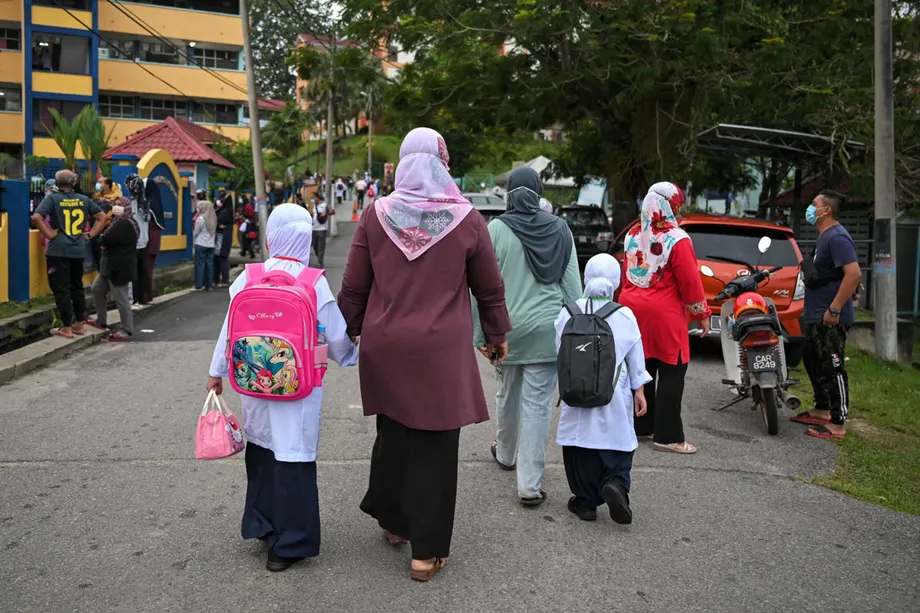
Malaysia's work from home policy began on April 15, 2026, with a promise of lower travel costs during a global energy crisis. For about 200,000 federal civil servants taking part, that relief comes with a demanding condition: verifying their presence every hour through the SPOT-Me application.
Contents
- Commuting Relief Comes With a Clock to Watch
- Why Some Employees Prefer the Office
- What the Digital Monitoring Requires
- Government Oversight Meets a Debate About Trust
- Who Qualifies and What the Government Hopes to Save
- Wider Participation Could Produce Larger Savings
- Sarawak and Sabah Face Different Practical Conditions
- Households Save on Travel but Pay More for Power
- Solar Power and Public Transport Offer Other Options
- Key Points
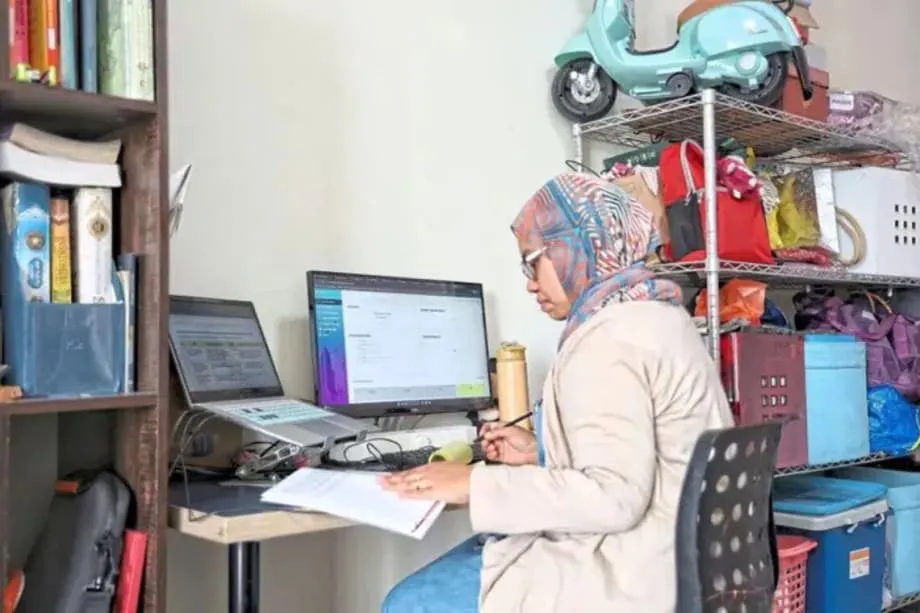
Neesa, a human resources officer aged 32 who lives far from her workplace in Putrajaya, initially welcomed the arrangement. Rising travel costs and the time spent commuting had made working from home attractive. She described the monitoring routine as a source of persistent anxiety, with alarms and attendance checks repeatedly breaking her concentration.
SPOT-Me also sometimes fails to detect an employee's location. Workers have responded by taking screenshots to document their attempts to comply. For Neesa, the combination of repeated checks and technical problems has raised a question of trust: experienced officers who previously organised their work independently now feel required to keep proving that they are present.
The government says close supervision is needed to prevent employees from slacking and to maintain public services. Its policy also has a financial purpose. Estimates put potential monthly savings at 9.4 million litres of RON95 petrol and RM17.7 million in fuel subsidies if eligible employees reduce their commuting.
As of April 16, the debate brings together three practical concerns: how much fuel Malaysia can save, how departments can measure completed work, and how employees can concentrate while checking in every 60 minutes. The arrangement covers an estimated eligible pool of 260,000 public sector employees, while approximately 200,000 federal employees are described as participating.
Why Some Employees Prefer the Office
Sarah, a civil servant aged 29 who commutes from Cheras to central Kuala Lumpur, found that her single weekly day working from home felt more stressful than her usual office routine. Avoiding morning traffic helped, but intensive workloads and hourly attendance requirements left her feeling unable to take a lunch break.
Other employees have expressed similar frustrations on social media. Their accounts describe anxiety about missing a check during an online meeting or a period of focused work. Some would rather return to the office than continue worrying about attendance windows throughout the day.
Neesa's experience highlights how frequent checks can interrupt a task that needs sustained attention. An officer working through a document or a difficult problem must stop, open the application and record attendance, then return to the task. Setting alarms helps prevent missed checks but creates its own cycle of interruptions.
Hamdan, an employee aged 32 who travels between Petaling Jaya and Kuala Lumpur, described another problem: virtual meetings can last for hours, yet participants still need to excuse themselves to verify attendance. A system intended to maintain productivity can therefore interrupt the discussions through which work gets done.
Hamdan also raised a concern about how employees use the arrangement. He argued that working from home should mean working in a dedicated home environment, rather than treating the permission as an opportunity to work from arbitrary locations. His position combines criticism of disruptive checks with support for clear limits on where remote work takes place.
What the Digital Monitoring Requires
The Public Service Department (PSD) has built its monitoring framework around SPOT-Me, an application managed by the National Digital Department. Employees must make hourly checks using location information to confirm that they are at their designated place of work.
Civil servants also need virtual private networks (VPNs) to access internal systems. A VPN provides a protected connection to those systems while an employee is outside the office. Attendance monitoring and access to government work systems are therefore separate parts of the same remote working routine.
Azlina Suliman, an accountant in the Consultancy Division of the Accountant General's Department, confirmed that officers must record their tasks systematically, use laptops issued by their offices and establish suitable workspaces. The requirements are intended to maintain productivity standards while staff work away from government buildings.
Location detection failures add another administrative task. Employees who cannot register a valid location keep screenshots as evidence of their attempts. Their smartphones must remain close at hand throughout the working day, reducing the flexibility they expected from working at home.
Employees contrast this with office routines, where a short trip to the pantry or a brief errand did not require the same attendance documentation. Their frustration concerns both the frequency of the checks and the work involved when the technology fails.
Government Oversight Meets a Debate About Trust
Chief Secretary to the Government Tan Sri Shamsul Azri Abu Bakar said the monitoring mechanisms were designed to prevent slacking. Prime Minister Datuk Seri Anwar Ibrahim has directed close oversight of the policy's implementation.
PSD Director General Tan Sri Wan Ahmad Dahlan Abdul Aziz defended hourly verification as a necessary form of discipline. He said clear key performance indicators (KPIs) would keep output consistent. KPIs are measures used to assess whether employees are completing the work expected of them.
Madani Government spokesperson Datuk Fahmi Fadzil has defended the supervision as a way to balance flexibility with governance. He also said service delivery at public counters continues uninterrupted, a central concern for people who still need to visit government offices.
Gabriel Tan, a human resources professional and Associate CIPD, described the hourly requirement as a "trust tax" in an analysis shared through professional networks. He argued that it rewards visible activity over completed results and that leaders unable to trust employees to work independently should reconsider their hiring decisions. He expressed his criticism this way:
If you're checking the clock every 60 minutes, you aren't doing deep work; you're just doing 'status theatre'. Micromanagement is the most expensive way to get the least amount of work done. Leaders, would you rather have 8 hours of logged activity or 4 hours of high-impact results?
Neesa's account reflects the same concern from an employee's perspective. Officers with years of professional service feel that the monitoring treats them as untrustworthy. The disagreement is about how accountability should work: through frequent proof of presence, measures of completed work, or a combination that employees can manage without constant disruption.
Who Qualifies and What the Government Hopes to Save
The initiative responds to a global energy crisis triggered by the ongoing conflict in the Middle East. Fuel subsidies are putting pressure on Malaysia's budget, giving the government a financial reason to reduce commuting.
The policy targets an estimated 260,000 eligible public sector employees who live more than eight kilometres from their workplaces in Putrajaya, Kuala Lumpur, Selangor and state capitals. Approximately 1.3 million public employees are excluded because they work in essential services, including healthcare, education, security and defence.
Economists estimate that reducing commuting from every working day to eight days a month could save 9.4 million litres of RON95 petrol and RM17.7 million in subsidies each month. A fuel subsidy is government spending that helps keep the price paid by motorists lower than it otherwise would be.
The policy's initial scale limits those savings. The estimates amount to roughly 0.7 percent of total petrol consumption and 0.4 percent of subsidy expenditure. Those figures explain why the arrangement can provide meaningful relief to participating workers while making a relatively small change to national fuel use.
The policy dates and schedules are:
- April 15, 2026: the work from home arrangement began.
- April 16, 2026: employees' experiences include commuting relief, anxiety about hourly checks and problems with location detection.
- States observing Sunday holidays: remote work is scheduled from Tuesday through Thursday.
- States observing Friday holidays: remote work is scheduled from Monday through Wednesday.
No date was given for expanding the arrangement to a wider group of workers. Its current reach depends on eligibility, job responsibilities and the ability to work effectively away from the office.
Wider Participation Could Produce Larger Savings
Environmental advocacy group Rimba Watch calculated a larger potential saving if remote work reaches more employees. Its analysis considered half of the Klang Valley's employed population of 4.1 million, equivalent to 2.05 million workers.
Under that scenario, Rimba Watch projected a reduction of 4.51 million litres in daily petrol consumption and RM169 million in monthly subsidy savings. Those projections describe a wider arrangement than the current policy for eligible civil servants.
Dr Geoffrey William, an economist based in Malaysia, argued that expansion to the private sector could reduce traffic during peak hours by 25 percent. He estimated that combined monthly savings in fuel costs and subsidies could approach RM1 billion.
The RM17.7 million estimate for the public sector and Rimba Watch's RM169 million projection both concern monthly subsidy spending, but cover different groups of workers. William's estimate includes fuel costs as well as subsidies. The figures show how the financial calculation changes with participation and with the types of savings counted.
Private sector participation could also spread commuting relief beyond government employees. The experience of workers already spending several days at home offers a view of both the possible savings and the household costs that accompany such arrangements.
Sarawak and Sabah Face Different Practical Conditions
Putrajaya and Kuala Lumpur have seen quieter government buildings under the arrangement. Buildings are operating with reduced power use and limited lift usage, extending the change beyond fewer vehicles on the roads.
Sarawak has taken a selective approach covering only 30 percent of staff. Unreliable internet access, unstable electricity supplies and limited phone lines make working remotely impractical in many districts. Employees need those connections to access work systems, communicate and complete digital attendance checks.
Sabah employees with long journeys describe a more immediate benefit. Rayner Majuntin, an information technology officer who travels more than 30 kilometres from Tuaran to Kota Kinabalu each day, sees the arrangement as practical relief from pressures on the cost of living.
Clarice Mojigoh faces a journey of nearly 50 kilometres from Papar. Working remotely makes that commute more manageable, although transporting files between locations requires her to ensure that documents remain secure.
Different state weekend arrangements also produce different remote work schedules. Together with the exclusions for essential services, those variations create a patchwork that complicates coordination between agencies and consistency in service delivery. The policy therefore has to function across both different working calendars and unequal access to reliable connections.
Households Save on Travel but Pay More for Power
Suzana Abdullah, an employee of a telecommunications company who commutes from Seremban to Kuala Lumpur, previously spent RM400 a month on petrol, tolls and parking. She reports savings of up to RM700 a month under an arrangement allowing three days of work from home.
The RM400 figure describes her former spending on those commuting items, while RM700 is the reported saving under her current arrangement. Reduced congestion has also meant less frequent vehicle maintenance, extending the time between workshop visits. The savings provide relief alongside the reduced Budi 95 fuel quota of 200 litres.
Elthan Koo, an information technology consultant in Cyberjaya, described a cost moving in the opposite direction. During the COVID-19 Movement Control Order period, his electricity bills reached RM300 because of constant air conditioning use in a landed property.
Working at home can therefore reduce petrol, toll and parking expenses while increasing residential electricity consumption. For each household, the financial result depends on the commuting distance and the infrastructure needed to keep the home workspace usable.
Neesa and Sarah also show why the calculation extends beyond money. Time saved in traffic can be valuable, but the attendance routine can replace some of that relief with stress. Employees are weighing their travel savings against power bills, workload and the daily demands of digital supervision.
Solar Power and Public Transport Offer Other Options
Interest in rooftop solar has grown as households consider the electricity costs of working from home. Prof Dr Norasikin Ahmad Ludin, director of Universiti Kebangsaan Malaysia's Solar Energy Research Institute, said installations with a capacity of five to six kWp under the Solar Atap programme could reduce electricity bills by 70 to 85 percent.
The term kWp describes the peak power capacity of a solar installation. Monthly household electricity use is measured in kilowatt hours (kWh), which record the amount of electricity consumed over time.
For households using 900 to 1,200 kWh a month, the projected change is substantial: bills of RM300 to RM400 could fall to approximately RM50 to RM80. That offers a possible response to the higher home electricity use described by employees such as Koo.
Nithi Nesadurai, coordinator of Climate Action Network Southeast Asia, argued that investment in public transport is the more sustainable solution over the longer term. He suggested that dedicated bus lanes could provide reliability similar to rail at a lower infrastructure cost while addressing congestion and emissions.
Public transport also addresses the journeys of people who remain ineligible for remote work, including the large group employed in essential services. Malaysia's immediate arrangement reduces commuting for selected workers. Its wider transport and energy choices will shape the costs faced by both those working at home and those who must continue travelling.
Key Points
- Malaysia's work from home policy began on April 15, 2026, with about 200,000 federal civil servants participating and an estimated eligible pool of 260,000 public sector employees.
- Hourly SPOT-Me location checks have prompted complaints about anxiety, interrupted concentration and meetings, and technical failures requiring screenshots.
- The government says close monitoring and clear performance measures are needed to prevent slacking and maintain services.
- Estimated monthly savings are 9.4 million litres of RON95 petrol and RM17.7 million in subsidies if commuting falls to eight days a month.
- Approximately 1.3 million employees in healthcare, education, security and defence are excluded.
- Sarawak's selective arrangement covers 30 percent of staff amid connectivity problems, while employees with long commutes in Sabah describe substantial practical relief.
- Household travel savings can be partly offset by higher electricity use. Rooftop solar and better public transport are other options discussed for reducing costs.