A Generation in Stasis: The Aging of Japan’s Hidden Population
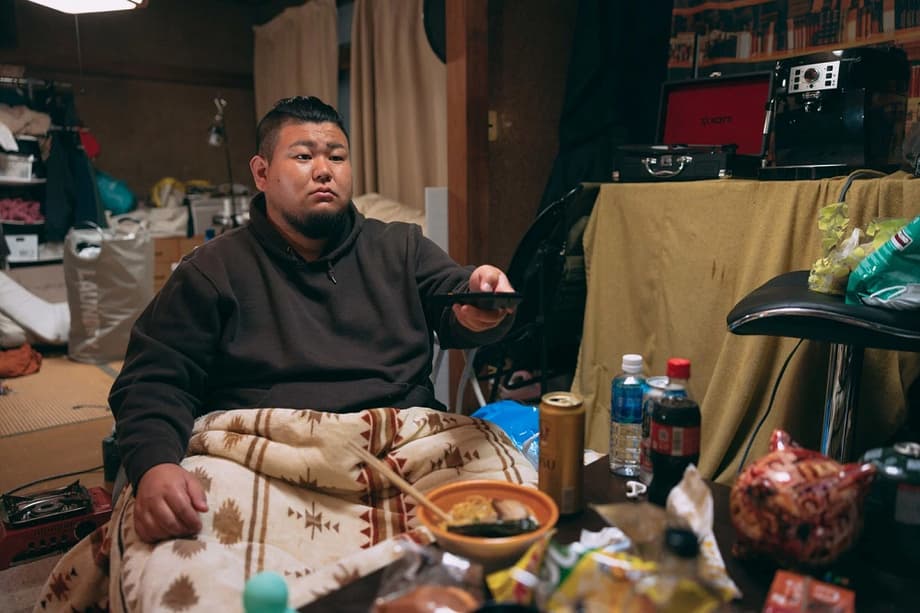
In homes across Japan, a demographic time bomb is ticking. Nonagenarian parents are caring for sexagenarian children who have not stepped outside in decades, creating family units where both generations face extreme isolation. According to the latest annual survey by KHJ, the National Federation of Hikikomori Families, the average age of Japan’s hikikomori has reached 36.9 years, climbing steadily from 33.1 when the organization first tracked the population in 2014. The study, which surveyed 280 families this past winter, found that 43.1 percent of socially withdrawn individuals are now over 40, while 12.7 percent have entered their 50s or beyond. Even more striking, the research documented instances of parents in their 90s supporting children in their 60s, a phenomenon that defies the traditional image of hikikomori as troubled teenagers. The survey results paint a troubling picture of a condition that has evolved from a temporary youth crisis into a permanent social structure affecting multiple generations simultaneously.
The data reveals a parallel aging among caregivers. The average age of family members providing support has risen to 66.3 years, creating what Japanese social workers have termed the “8050 problem” and its more extreme variant, the “9060 problem.” These labels describe households where parents in their 80s or 90s sustain adult children in their 50s or 60s who lack the social or economic capacity to live independently. As most hikikomori rely entirely on parents for living expenses, the mathematical reality of life expectancy creates an impending crisis. When these elderly caregivers pass away, their dependent offspring face not just emotional devastation but a complete collapse of their support systems.
The Tragic Endgame: Body Abandonment and Social Isolation
The consequences of this generational collision are already manifesting in Japan’s criminal justice system. According to the National Police Agency, arrests for corpse abandonment among middle-aged individuals have risen sharply, with 52 people in their 50s and 31 in their 60s investigated in 2023, representing the highest figures since 2014. In many of these cases, unemployed adult children had been living with elderly parents who died of natural causes, leaving the surviving offspring without the financial means, social connections, or emotional capacity to arrange proper funerals.
In June 2023, police arrested a 63-year-old unemployed man in Kanagawa Prefecture who had left his 95-year-old father’s body unattended for six months. The man later told investigators he could not afford funeral arrangements. Another case involved a 60-year-old man living with his nonagenarian father who, upon the parent’s death, continued cashing pension checks rather than reporting the death, later telling authorities he could not face contacting anyone about his future living arrangements. These incidents represent what sociologists call the terminal stage of social withdrawal, where decades of isolation culminate in a complete inability to navigate basic civic processes.
Reiko Katsube, secretary general of the Toyonaka Council of Social Welfare and the professional who coined the term “8050 problem,” offered this assessment of the growing trend.
These cases represent the end-point of the families involved, and they symbolize social isolation.
While prosecutors have dropped charges in some instances, recognizing the complex psychological and economic factors at play, the phenomenon underscores the unsustainable nature of current care arrangements. Simple mathematics dictates that parents in their 90s cannot provide indefinite support for children in their 60s, yet Japanese cultural values regarding family loyalty have historically prevented the development of alternative support structures.
From Youth Crisis to Lifelong Condition
The aging of the hikikomori population reflects a fundamental misunderstanding of the condition’s duration. When psychiatrist Tamaki Saito first identified the phenomenon in the early 1990s, the average age of withdrawal was 15, with sufferers typically being young men from middle-class families. Early research suggested that social withdrawal stemmed from temporary stressors such as school bullying or romantic rejection. However, longitudinal data now shows that for many individuals, withdrawal becomes a permanent state rather than a developmental phase.
The 2016 Cabinet Office survey illustrated the measurement challenges posed by this aging trend. That study, which only examined individuals between 15 and 39 years old, identified approximately 541,000 hikikomori. However, researchers noted this figure likely represented a significant undercount because it excluded the substantial population of withdrawees who had aged beyond the survey’s upper limit. The study found that 23.7 percent of hikikomori in the 2010 survey were already between 35 and 39, meaning they would have been excluded from the 2016 research by virtue of having aged out of the bracket, even as their condition persisted.
The Cabinet Office data revealed that 34.7 percent of hikikomori had been withdrawn for more than seven years, nearly double the 16.7 percent reported in 2010. This duration has only extended further in subsequent years. Saito, now a professor at Tsukuba University, describes the process as a vicious cycle where prolonged isolation erodes self-esteem and social skills, making reintegration increasingly terrifying. The longer an individual remains withdrawn, the more acutely they feel their social failure, creating a paralyzing psychological barrier that prevents them from seeking help or employment.
This dynamic explains why the population has aged so dramatically over three decades. The young people who withdrew during Japan’s economic bubble collapse in the 1990s have simply grown older without exiting their isolation. Government surveys have tracked this progression, with the 2019 study showing 38 percent of hikikomori in their 40s, 36 percent in their 50s, and 26 percent in their 60s. By 2023, the distribution had shifted further toward older age brackets, with 42 percent in their 50s and 36 percent in their 60s.
Economic Roots and Shifting Demographics
Academic research has identified strong correlations between socioeconomic factors and hikikomori prevalence. A longitudinal study examining data from 2010 to 2019 found that rises in unemployment rates corresponded with increased hikikomori incidence, particularly during the earlier years of the study period. The correlation suggests that household income levels, particularly the ability of middle-class families to support non-working adults indefinitely, function as enabling variables. In families without sufficient resources to provide room and board, potential hikikomori might be forced into the workforce despite psychological distress, effectively masking the condition through economic necessity rather than resolving the underlying social anxiety.
Andy Furlong, an academic at the University of Glasgow specializing in education-to-work transitions, connects the growth of hikikomori directly to the emergence of short-term, part-time work and the stigma attached to job-hopping youth known as freeters. This economic precarity interacts with specific cultural mechanisms that prolong withdrawal. The concept of sekentei, or reputation in the community, creates intense pressure to avoid public failure, while amae, a form of interdependent family psychology, enables adult children to remain dependent on parental support indefinitely.
Recent data also reveals a shifting gender distribution. While early hikikomori were predominantly male, the 2023 government survey found that women comprise 52.3 percent of hikikomori between ages 40 and 64. This shift may reflect changing social expectations for women, who now face the same economic pressures and workplace harassment as men, combined with cultural scripts that have traditionally encouraged female domesticity. Female hikikomori advocates have called for gender-specific support measures, noting that middle-aged women face distinct stigmas regarding unemployment and family roles.
Unlike in Western societies where individualism typically drives young adults toward independence, Japanese family structures often tolerate and even reinforce prolonged cohabitation. Even when hikikomori exhibit violent behavior toward parents, which occurs in approximately 10 percent of cases according to Saito’s research, families rarely consider expulsion as an option. This cultural patience, while born of compassion, inadvertently removes the external pressure that might otherwise motivate individuals to seek rehabilitation or employment.
Beyond Borders: A Regional and Global Crisis
While Japan remains the epicenter of hikikomori research, the phenomenon has spread throughout East Asia and beyond. South Korea faces a comparable crisis, with government estimates suggesting between 300,000 and 400,000 reclusive young people in a nation with roughly one-third of Japan’s population. Proportionally, these figures exceed Japanese estimates and suggest that Korea may be following the same demographic trajectory. The Seoul city government found approximately 130,000 socially isolated youth in 2022, representing 4.5 percent of the capital’s young adult population.
International recognition has grown sufficiently that the term hikikomori entered the Oxford English Dictionary in 2010. Cases have been documented in Hong Kong, Italy, the United States, Morocco, Oman, India, Finland, and France. However, cross-cultural comparisons remain complicated by differing social structures. In individualistic Western societies like the United States and Britain, where adult children rarely live with parents, similar withdrawal patterns often result in homelessness rather than hidden domestic isolation. The United States has an estimated 1.6 million homeless young people, while Britain has approximately 250,000, figures that may represent Western variants of the same underlying social and psychological fractures.
The global spread suggests that hikikomori is not merely a Japanese cultural curiosity but a response to universal pressures: rapid urbanization, technological substitution for face-to-face interaction, economic precarity, and the breakdown of traditional community structures. As these conditions proliferate worldwide, the Japanese experience offers a cautionary tale about the long-term consequences of untreated social withdrawal.
Policy Responses and Pathways Forward
The Japanese government has begun acknowledging the scale of the crisis through legislative action. The Loneliness and Isolation Countermeasures Promotion Act, enacted in 2023 and implemented in April 2024, represents the first national framework specifically targeting hikikomori and related social withdrawal issues. The legislation followed a 2023 Cabinet Office survey that estimated 1.46 million working-age hikikomori, or 2 percent of the labor force, though experts like Saito argue the true figure could be as high as 10 million when including undiagnosed cases and those over 64.
Practical interventions have emerged at the municipal level. Kyoto Prefecture launched an online meet-up program in 2022 to provide virtual socialization spaces, while several municipalities now offer remote job placement services recognizing that digital work may provide the only viable employment pathway for those unable to leave their homes. The Ministry of Health, Labour and Welfare has established 85 Regional Support Centers for Hikikomori and launched the Hikikomori VOICE STATION website to connect recluses with services.
However, experts emphasize that family-level preparation remains crucial given the aging demographic. Saito advises parents of middle-aged hikikomori to establish lifetime financial plans including disability pensions and public assistance applications, urging them to overcome embarrassment about seeking help. Treatment approaches have evolved from aggressive rescue interventions, which often trigger violence, to gradual relationship rebuilding. Success stories typically involve years of slow rehabilitation through peer support groups known as ibasho, or safe spaces, combined with therapy and sometimes pharmacological treatment for underlying depression or anxiety.
Saito emphasizes that recovery means different things for different individuals.
Going back to school or getting a job should not necessarily be seen as the ultimate goal.
For some, simply establishing consistent sleep patterns and limited communication with family constitutes progress. The key lies in recognizing hikikomori as a state of being rather than a mental illness, one that requires sustained social scaffolding rather than brief interventions.
The Bottom Line
- The average age of Japan’s hikikomori has risen to 36.9, with 43.1 percent over 40 and growing numbers in their 50s and 60s
- The “8050 problem” and “9060 problem” describe aging parents caring for middle-aged withdrawn children, creating an unsustainable care dynamic
- Cases of body abandonment have increased among unemployed middle-aged children unable to handle parental deaths or funeral arrangements
- What began as a youth phenomenon in the 1990s has become a lifelong condition for many, with over 34 percent withdrawn for more than seven years
- Women now represent 52.3 percent of hikikomori between ages 40 and 64, indicating a significant gender shift in the aging population
- South Korea and other nations face similar crises, suggesting hikikomori is a global phenomenon linked to economic precarity and technological isolation
- Japan’s 2023 Loneliness and Isolation Countermeasures Promotion Act represents the first national legislation addressing the crisis
- Experts recommend lifetime financial planning for families and gradual rehabilitation focused on autonomy rather than forced reintegration