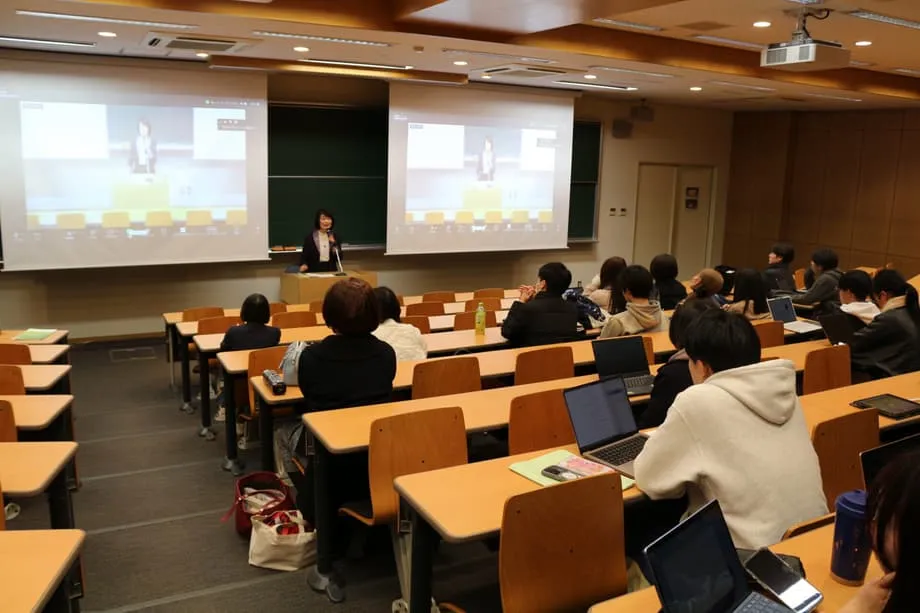
A New Graduate Program Takes Shape in Saitama
Saitama University in Sakura Ward opened Japan's first graduate program dedicated to diversity studies this spring, bringing the study of discrimination, economic inequality and inclusion into a department of its own. The program accepts corporate employees and local government officials alongside students pursuing academic study, with the aim of turning research into changes in workplaces and communities.
Contents
- A New Graduate Program Takes Shape in Saitama
- What Students Will Study
- Bringing Workplace Experience Into the Classroom
- Girls Visit Engineering Sites Before Choosing a Major
- Engineering Admissions Target a Large Gender Gap
- A Bank Removes a Rule Applied Only to Women
- How Banking Uniforms Became Linked to Gender Roles
- A President Builds on the Shared Campus
- The Main Dates and Measures
- What Will Shape the Program's Results
- At a Glance
The department belongs to the Graduate School of Humanities and Social Science. Its creation comes as Japan faces persistent gaps in gender representation, the integration of people from different cultural backgrounds, and access to economic opportunity. The university wants to prepare professionals who can identify and address inequality within businesses, public agencies and local communities.
Saitama University educates roughly 8,500 students on a single campus that brings together faculties in the humanities, science and engineering. Its location combines access to professional networks in the metropolitan area with suburban surroundings. The new department expands the university's academic work beyond its established strengths in scientific and engineering research.
University officials describe the launch as a response to corporate demand for specialists in equity and inclusion that existing academic departments have not fully met. Equity means considering the different barriers people face when seeking opportunities; inclusion concerns whether they can participate meaningfully. Graduates are expected to work in areas including education, public administration and corporate consulting.
The department also connects with changes already taking place around the university. Efforts to bring more girls into science and engineering, new admission places reserved for women, and the removal of rules requiring only female bank employees to wear uniforms all address how institutions distribute opportunities and assign roles.
What Students Will Study
Mieko Tashiro, a university vice president and a lead instructor in the program, describes diversity studies as an emerging field examining how diversity affects societies and organizations. Its purpose is to uncover the mechanisms behind discrimination and economic disparity.
Race, gender, age and disability status are central to the curriculum because these differences can shape organizational behavior and social outcomes. Students will examine how power, resources and opportunities are distributed according to social identity. The emphasis moves beyond counting how many people from different groups belong to an institution.
A workplace might have a varied staff while still distributing responsibility or opportunity unevenly. Studying the rules and practices behind such outcomes is the kind of analytical work the program is intended to develop. That focus gives it a different purpose from general cultural studies or training limited to human resources administration.
Tashiro identifies gender equality and multicultural coexistence as pressing issues for Japan. Multicultural coexistence means people from different cultural backgrounds living and participating in the same society. She presents the department as both an academic experiment and a practical response to demand for trained professionals.
Tashiro, speaking about the launch in her role as vice president and instructor, said companies need expertise that specialized graduate education has not previously supplied:
While there is a growing need for professional talent among companies, there is no school that offers a specialized course to nurture such talent other than Saitama University. This course is Japan's first challenge to meet such social needs.
Bringing Workplace Experience Into the Classroom
Corporate workers and municipal officials will study alongside other graduate students, creating a classroom in which theoretical research meets direct experience of business and public administration. Their participation is intended to help lessons reach workplace policy quickly.
The curriculum places weight on both research and practical problem solving. Its ambition is to nurture professionals capable of radically changing society by understanding inequality and developing ways to address it. Participants can bring knowledge of how decisions are made inside their own organizations into discussions about how those decisions affect different groups.
Saitama University's department functions as a professional school for practitioners, unlike conventional graduate programs that often serve as routes into doctoral research. Accepting officials and corporate employees who are already partway through their careers reflects the university's view that diversity expertise should influence everyday decisions as well as academic work.
Hiring guidelines, urban planning decisions and education policy are among the areas where that knowledge is expected to matter. Japanese corporations and public agencies face growing pressure to address inclusion, while government initiatives have sought to increase women's participation in employment and improve support for foreign residents.
Putting those goals into practice can stall when managers in the middle ranks lack training in how to examine unequal access to opportunity. The department aims to fill that gap by preparing specialists who can assess institutional culture and recommend changes to organizational structures and practices.
Students entering this spring are joining a program without a domestic precedent. Its mix includes civil servants and bankers seeking to revise policies in their organizations, giving the classroom a practical urgency alongside its academic purpose.
Girls Visit Engineering Sites Before Choosing a Major
Saitama University's work on gender representation also reaches students much younger than its graduate intake. In the 2021 academic year, the university began an initiative encouraging girls in junior high school and high school to consider science or engineering majors.
This spring, 12 students from schools inside and outside Saitama Prefecture joined a bus tour of major civil engineering sites. They visited the Oyoshi flood retention basin in Koshigaya and the Metropolitan Area Outer Underground Discharge Channel in Kasukabe, giving them a chance to see engineering through actual infrastructure.
Chiaki Oguchi, a professor of earth science who worked at Saitama University until last summer, provided commentary during the tour. Nine university student guides accompanied the visitors. The guides included international students who spoke with the younger students in English.
Shiho Inaba, a graduate student in science and engineering aged 23, served as one of the guides. She said the shared campus was a reason she chose Saitama University: having humanities, science and engineering faculties in one place creates more opportunities for Japanese and international students to mingle.
Inaba hopes many more female students will come to the university. The tour connects that hope with an existing outreach effort, giving school students contact with university researchers, graduate students and engineering projects before they decide what to study.
Engineering Admissions Target a Large Gender Gap
Only three of the 110 students entering the department of electrical engineering, electronics and applied physics in a recent year were female. That is about 2.7 percent of the intake, showing the size of the gender gap in that department.
Beginning in the 2026 academic year, Saitama University will introduce places reserved for female students in spring admissions to the Faculty of Engineering for the first time. The measure covers the electrical engineering department and two other departments that traditionally enroll few women.
Each of the three departments has reserved 20 places for female students admitted through recommendations from their high schools. Together, that amounts to 60 reserved places across the departments. The approach gives school recommendations a specific role in widening entry to fields where women remain a small minority.
Women accounted for roughly 12 percent of students in the entire Faculty of Engineering in the 2024 academic year, when the quota system was announced. Their share rose to 17 percent this spring, an increase of about five percentage points.
The faculty figures show broader movement alongside the university's targeted outreach and admission changes. The department intake of three women among 110 students also shows why the university is directing additional measures toward particular engineering fields rather than relying only on the faculty's total enrollment share.
A Bank Removes a Rule Applied Only to Women
Saitamaken Shinkin Bank in nearby Urawa abolished its uniform requirement for female employees this spring. The change applies immediately to regular employees and will extend to employees working part time by next year. Staff now choose suits appropriate for business.
The bank's rule had been in place for at least 50 years, according to staff. Its original 1969 provision described uniforms as a means of maintaining grace and elegance to improve work performance. Men were not subject to the same uniform requirement.
During recent internal discussions, employees raised discomfort about how the different clothing rules made colleagues appear. Women in uniforms could look subordinate to men dressed in business attire. A majority favored ending the requirement.
The decision is part of a broader reconsideration of longstanding workplace practices in Saitama Prefecture. Banking institutions in Urawa have moved to abolish rules requiring only women to wear uniforms, revisiting customs that assigned different expectations to male and female employees.
For the university's new field of study, the bank's change provides a concrete example of the connection between an institutional rule and perceptions of status. Clothing requirements concern what employees wear, but the bank's discussions also addressed how workers were seen in relation to one another.
How Banking Uniforms Became Linked to Gender Roles
Makiko Habazaki, an associate professor of gender studies at Saitama University's Diversity Promotion Office, has traced the history of these banking practices. During Japan's rapid economic growth in the 1960s, financial institutions hired large numbers of women as tellers to present an approachable image to new customers.
Male executives established uniform rules for women on the assumption that female employees, who were paid less than men, would find it difficult to buy business suits themselves. The clothing policy grew out of a workplace already divided by gender in both pay and duties.
After the economy inflated by rising asset prices collapsed in the early 1990s, some banks removed uniforms to reduce costs. Many later brought them back to strengthen corporate branding, using common attire to create a recognizable institutional appearance.
Habazaki welcomes the growing variety of approaches to work attire. She argues that the traditional arrangement in which men make sales calls while women serve at teller windows reflects a gender division of labor that uniforms have reinforced and encouraged.
Habazaki hopes efforts to remove requirements applying only to women will take root across the region. Her account connects the current changes with the earlier decisions about recruitment, pay, customer service and branding that shaped banking workplaces.
A President Builds on the Shared Campus
Takaomi Shigehara, who became president of Saitama University on April 1, has placed the university's single campus at the center of his education strategy. He wants to nurture people who combine professional expertise with comprehensive knowledge by drawing on the fact that all faculties share one location.
Shigehara plans classes and special education programs that bring students from every faculty together. The approach depends on regular interaction between humanities, science and engineering students, rather than separating disciplines into different physical locations.
Technical expertise can be paired with awareness of social needs, while policy study can draw on scientific knowledge. Collaboration across faculties is expected to become a defining part of the university's teaching model, with the campus providing opportunities for those exchanges.
Shigehara also connects education with regional economic development. He wants stronger interaction with local communities and work that addresses issues across Saitama Prefecture. Bringing corporate employees and local government officials into the diversity studies department is one way to connect the university's research with the organizations around it.
The president has said that research projects of world standing are underway at the university. Partnerships with businesses and civic institutions are intended to help put that scholarship into practical use. Shigehara described his plans for shared classes and collaboration among industry, universities and government:
We will offer classes and implement special education programs for which students from all faculties gather to equip them with broad perspectives. We will move ahead with those projects and promote social implementation of our research products obtained through industry academia government collaborations.
The Main Dates and Measures
Saitama University's new department sits alongside efforts that began several years before its opening. The engineering outreach, admission policy and recent leadership change show how the university's educational plans have developed over time.
- 1969: Saitamaken Shinkin Bank's original provision described uniforms as supporting grace, elegance and work performance.
- Early 1990s: After the collapse of the economy inflated by rising asset prices, some banks removed uniforms to reduce costs. Many later restored them for corporate branding.
- 2021 academic year: Saitama University began encouraging girls in junior high school and high school to consider science and engineering.
- 2024 academic year: The university announced the engineering quota system. Women made up roughly 12 percent of the Faculty of Engineering.
- April 1: Takaomi Shigehara took office as university president.
- Spring 2026: The diversity studies graduate program opened, female representation in engineering reached 17 percent, and Saitamaken Shinkin Bank ended uniforms for regular female employees.
- 2026 academic year: Reserved spring admission places for women begin in three engineering departments, with 20 places in each.
- Next year: Saitamaken Shinkin Bank's removal of the uniform requirement will extend to employees working part time.
The sequence connects changes in access to education with changes in workplace expectations. The graduate program adds a dedicated place to study the discrimination, resource distribution and organizational decisions that sit behind such issues.
What Will Shape the Program's Results
Saitama University's decision carries particular weight for a regional public university. Attention in Japanese higher education often centers on prestigious private universities in central Tokyo and leading national institutions in Kyoto and Osaka. The launch in Sakura Ward places a nationally distinctive social science program outside those traditional centers of academic attention.
The university is treating diversity and inclusion as professional knowledge that deserves a dedicated curriculum, rather than a subject confined to optional courses. Its ambition is to connect the human dimensions of social problems with the technical knowledge available elsewhere on campus.
The department's success in producing measurable social change is not yet known. Graduate placement rates, the quality of industry partnerships and local governments' willingness to fund dedicated diversity officer positions will help determine how far its teaching reaches beyond the classroom.
Rising female representation in engineering and banks' reconsideration of longstanding dress rules show that the academic initiative is arriving alongside practical changes in the region. Students will examine discrimination, economic disparity and multicultural dynamics while learning with professionals seeking changes in their own workplaces.
A successful program could influence how other regional universities in Japan organize professional education across disciplines in the coming decade. For now, Saitama University's experiment brings academic research and workplace experience together with a shared purpose: preparing people to understand unequal opportunities and change the practices behind them.
At a Glance
- Saitama University opened Japan's first dedicated graduate program in diversity studies this spring within its Graduate School of Humanities and Social Science.
- The curriculum examines discrimination, economic disparity and how race, gender, age and disability affect organizations and society.
- Corporate workers and local government officials study alongside other graduate students.
- Three engineering departments will each reserve 20 admission places for women through high school recommendations beginning in the 2026 academic year.
- Women's share of the Faculty of Engineering rose from roughly 12 percent in 2024 to 17 percent this spring.
- Saitamaken Shinkin Bank ended uniforms for regular female employees this spring and will extend the change to employees working part time next year.
- President Takaomi Shigehara plans shared classes across faculties and stronger cooperation with businesses, government and local communities.