Breaking: Rare Europe-Targeted Sanctions Over Taiwan
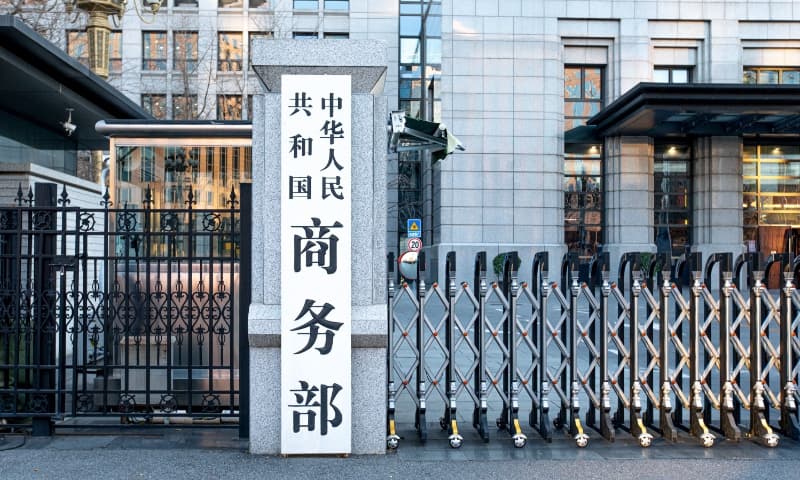
China has imposed immediate export restrictions on seven European defense-related entities, marking a rare instance of Beijing targeting European companies with sanctions tied to Taiwan. The Chinese Ministry of Commerce (MOFCOM) announced on Friday that the measures took effect immediately, prohibiting the export of dual-use items to the listed firms citing their involvement in arms sales to Taiwan or alleged collusion with Taiwanese authorities.
The move represents a significant escalation in Beijing’s use of trade restrictions as a geopolitical tool, extending beyond its frequent sanctions against American defense contractors to encompass European firms. While China has repeatedly penalized major United States arms makers for weapons sales to Taiwan, including a December round of sanctions following an $11 billion American weapons package, this latest action breaks new ground by targeting European Union-based entities.
The timing of the announcement carries particular diplomatic weight. The sanctions came just one day after the European Union adopted its 20th sanctions package against Russia, which included measures against at least one Chinese individual and 27 mainland- and Hong Kong-based firms over alleged ties to Moscow amid the ongoing war in Ukraine.
The Seven Entities Targeted by Beijing
The export control list includes a mix of established defense manufacturers and aerospace research organizations spanning three European Union member states. Among the named entities are German defense electronics firm Hensoldt AG and Belgian-based firearms manufacturer FN Herstal, also referred to as FN Browning in some reports. The remaining five entities hail from the Czech Republic, including Excalibur Army, a unit of the Amsterdam-listed Czechoslovak Group, and VZLU Aerospace, the national aerospace research and development center.
Two entities are from Belgium, one from Germany, and four from the Czech Republic. The geographic concentration in Central and Eastern Europe reflects a growing diplomatic trend wherein Taipei has found increasingly sympathetic partners in that region, particularly since Russia’s full-scale invasion of Ukraine in 2022. While Western European powers have largely avoided major arms sales to Taiwan for approximately three decades due to fears of Chinese retaliation, several Central and Eastern European nations have pursued closer defense and technological cooperation with the island democracy.
Belgian and German Defense Giants
FN Herstal, the Belgian firearms manufacturer, ranks among the world’s best-known small arms producers, supplying military and law enforcement agencies globally. Hensoldt AG, the German defense electronics company, specializes in sensor technologies, radar systems, and electronic warfare equipment critical to modern military operations. Both firms represent significant players in Europe’s defense industrial base.
Hensoldt responded to the sanctions by stating it was verifying the facts and would assess the situation in due course. The company did not immediately confirm or deny the Chinese allegations regarding Taiwan-related activities. FN Herstal had not issued an immediate comment at the time of the announcement.
Czech Defense and Aerospace Firms
Excalibur Army, which focuses on military vehicles and defense equipment, sought to downplay the potential impact of the Chinese measures. A company representative indicated that Excalibur Army does not directly source dual-use technologies from China and does not expect to see a material impact on its business operations. This response suggests that at least some of the targeted firms have already diversified their supply chains away from Chinese-sourced components or never relied heavily on such inputs.
VZLU Aerospace represents the research and development arm of the Czech aerospace sector, engaging in satellite technology and advanced aviation research. The inclusion of research institutions alongside commercial manufacturers signals that Beijing is targeting not just weapons exporters but also entities involved in technological cooperation that could enhance Taiwan’s defense capabilities.
Understanding Dual-Use Export Controls
The sanctions specifically target dual-use items, a category of goods, software, and technologies that serve both civilian and military applications. These items occupy a critical space in international trade law and national security policy, as they can be integrated into consumer products while also enhancing military capabilities. The category includes advanced electronics, certain rare earth elements, specialized materials, and components essential for manufacturing semiconductors and unmanned aerial vehicles, commonly known as drones.
Rare earth elements, in particular, have emerged as a strategic chokepoint in global supply chains. China dominates the processing and refining of these minerals, which are indispensable for producing high-performance magnets used in precision-guided munitions, radar systems, and aircraft components. By restricting access to these materials, Beijing can effectively disrupt production lines for advanced defense equipment even when the final assembly occurs thousands of miles away in European facilities.
Under the new Chinese regulations, exporters are prohibited from shipping dual-use items directly to the seven listed entities. Additionally, foreign organizations and individuals are barred from transferring or providing dual-use items originating from China to these firms, effectively closing loopholes that might allow rerouting through third parties. All ongoing related activities must cease immediately, according to the MOFCOM statement.
However, Beijing has left the door slightly ajar for exceptional circumstances. Exporters may submit applications to the Ministry of Commerce for case-by-case approval when an export is deemed truly necessary, suggesting that China wishes to maintain some flexibility while still signaling its displeasure with the targeted entities.
Official Chinese Justification and Reassurances
Chinese authorities framed the sanctions as necessary measures to safeguard national security and interests while fulfilling international obligations regarding non-proliferation. The Commerce Ministry spokesperson emphasized that the legally mandated export controls target only a small number of EU entities involved in military affairs, specifically those that have participated in arms sales to Taiwan or engaged in collusion with Taiwan authorities.
Law-abiding EU entities with integrity have absolutely no need to worry. The measures only apply to dual-use items and do not affect normal economic and trade exchanges between China and Europe.
This rhetorical approach attempts to compartmentalize the sanctions, presenting them as targeted enforcement actions rather than broad economic warfare against the European Union. Beijing has consistently sought to prevent its Taiwan-related grievances from derailing its broader commercial relationship with Europe, which remains a crucial market for Chinese exports and a source of technology and investment.
The ministry also noted that China had informed the European Union about the impending measures through the bilateral export control dialogue mechanism prior to the public announcement. This diplomatic courtesy suggests that while Beijing is willing to escalate economically, it prefers to manage the fallout through established channels rather than allowing the dispute to spiral unpredictably.
Corporate and Diplomatic Reactions
Corporate responses to the sanctions have varied from cautious verification to confident dismissal of potential impacts. Hensoldt’s measured approach reflects the uncertainty that sudden regulatory changes create for multinational defense contractors, whose supply chains often span dozens of countries and involve thousands of subcontractors. The German firm must now audit its Chinese sourcing relationships to determine whether critical components for its radar and electronic warfare systems could face interruption.
Czech officials displayed more visible irritation at the designation. Foreign Minister Petr Macinka took to social media to address the sanctions, indicating that he had instructed the Czech embassy in Beijing to seek clear explanations from Chinese authorities regarding the rationale behind targeting Czech entities.
The Chinese authorities should explain this to us clearly. I have already instructed our embassy in Beijing.
Taiwan’s government had not issued an immediate comment on the sanctions at the time of the announcement, while the European Union had not released a coordinated collective response. The silence from Brussels may reflect the complex internal dynamics of the bloc, where member states hold varying positions regarding China and Taiwan. While the EU officially maintains a One China policy, individual member states have developed divergent bilateral relationships with Taipei, particularly in the economic and technological spheres.
Geopolitical Timing and Context
The sanctions arrive amid a particularly tense moment in EU-China relations. The immediate trigger appears to be the European Union’s 20th sanctions package against Russia, adopted on Thursday, which included designations against Chinese entities and individuals accused of supporting Russia’s war machine. Beijing’s response, whether calculated retaliation or opportunistically timed, demonstrates the increasingly interconnected nature of global sanctions regimes, where actions in one theater prompt reactions in another.
Taiwan occupies a unique position in global arms markets. While the island operates a sophisticated indigenous defense industry, it relies heavily on foreign suppliers for major weapons systems. Historically, the United States has served as Taiwan’s primary arms supplier, providing fighter jets, missile systems, and naval vessels. European nations have largely avoided big-ticket arms sales to Taipei for roughly three decades, fearful of provoking exactly the type of economic retaliation that Beijing has now unleashed.
However, the landscape has shifted since 2022. Russia’s invasion of Ukraine galvanized several Central and Eastern European nations, which see clear parallels between their own historical experiences of Russian aggression and Taiwan’s precarious security position. Countries like the Czech Republic, Lithuania, and Poland have pursued closer unofficial ties with Taiwan, including defense technology exchanges and military training cooperation, even while stopping short of formal diplomatic recognition.
Implications for Global Supply Chains
This latest round of sanctions highlights the growing weaponization of technology trade in geopolitical competition. Dual-use technologies form the backbone of modern defense supply chains, with components often crossing multiple borders before final assembly. By restricting access to Chinese-sourced rare earth elements and electronic components, Beijing can create bottlenecks that disrupt production schedules for European defense contractors, potentially delaying deliveries to Taiwanese or other international customers.
The European Union Chamber of Commerce in China warned in a recent report that Beijing’s increasingly stringent export controls, particularly on rare earths, pose long-term business risks for European industries. Defense contractors may accelerate efforts to diversify supply chains away from Chinese-controlled materials, but such transitions require years of investment and often involve higher costs or lower performance specifications.
For Taiwan, the sanctions serve as a reminder that its defense partnerships carry economic costs for its partners. While the immediate impact on the seven targeted entities may be limited, particularly if they have already reduced dependencies on Chinese inputs, the precedent established could chill future European cooperation with Taipei. Conversely, the sanctions might reinforce the resolve of Central and Eastern European nations to deepen ties with Taiwan, viewing Chinese pressure as interference in their sovereign foreign policy decisions.
Key Points
- China banned exports of dual-use items to seven European entities effective April 24, citing their involvement in arms sales to Taiwan
- The targeted firms include German defense electronics company Hensoldt AG, Belgian firearms manufacturer FN Herstal, and Czech companies including Excalibur Army and VZLU Aerospace
- Dual-use items include rare earth elements and technologies with both civilian and military applications, critical for drone and semiconductor production
- The sanctions represent a rare case of China targeting European rather than American firms over Taiwan-related issues
- Beijing informed the EU in advance through bilateral export control dialogue mechanisms but gave no indication of lifting the measures
- Corporate reactions range from Hensoldt’s fact-checking to Excalibur Army’s confidence that the ban will not materially impact operations
- The timing follows the EU’s 20th sanctions package against Russia, which targeted Chinese entities, suggesting possible retaliatory linkage
- China dominates global processing of rare earth elements, giving Beijing significant leverage over defense supply chains