Six Episodes Put Consent at the Centre of a National Debate
Chiraiya, a Hindi drama that began streaming on JioHotstar in March 2026, has drawn millions of viewers into a story about forced sex within marriage and the families that excuse it. By April 14, the series had become one of the platform's most watched Hindi programmes in months, bringing a subject often surrounded by silence into a national conversation.
Contents
- Six Episodes Put Consent at the Centre of a National Debate
- A Wedding Exposes the Family's Rules
- The Exception That Survived a New Criminal Code
- Courts, Evidence and the Unequal Protection of Consent
- Why the Adaptation Begins With an Enabler
- How Family Pressure Passes From One Generation to Another
- Viewers Challenge the Show and Share Their Experiences
- What the 6.1% Figure Adds to the Story
- The Final Reckoning Happens at Home
- Key Points
The six episodes follow Kamlesh, a homemaker played by Divya Dutta, as she confronts violence committed by a man she raised like her own son. The title translates to "small birds", but the story addresses a large and unresolved issue: India's criminal law retains an exception that excludes forced sex by a husband with an adult wife from the definition of rape, apart from circumstances involving separation.
Government data cited in the debate puts the proportion of ever married Indian women who have experienced sexual violence at 6.1%. Activists believe the actual figure is much higher because many women do not report abuse, facing social stigma and pressure to protect their families.
India is described as one of approximately three dozen countries, about 36, where marital rape is not explicitly criminalised. Pakistan, Afghanistan and Saudi Arabia are among the other countries named. Years of activism and multiple petitions before India's Supreme Court have kept the issue alive, while the exception remains in place.
Chiraiya brings those legal and social pressures together through an ordinary household. Its central conflict concerns consent, meaning a person's freely given agreement to sexual activity, and the belief that marriage gives a husband permanent access to his wife's body. The drama asks its characters to confront that belief inside their own family.
A Wedding Exposes the Family's Rules
Kamlesh begins the series as a devoted woman in middle age who believes women's responsibilities lie in cooking and housework. She lives within a traditional North Indian joint family, where relatives share a household and family expectations carry considerable weight.
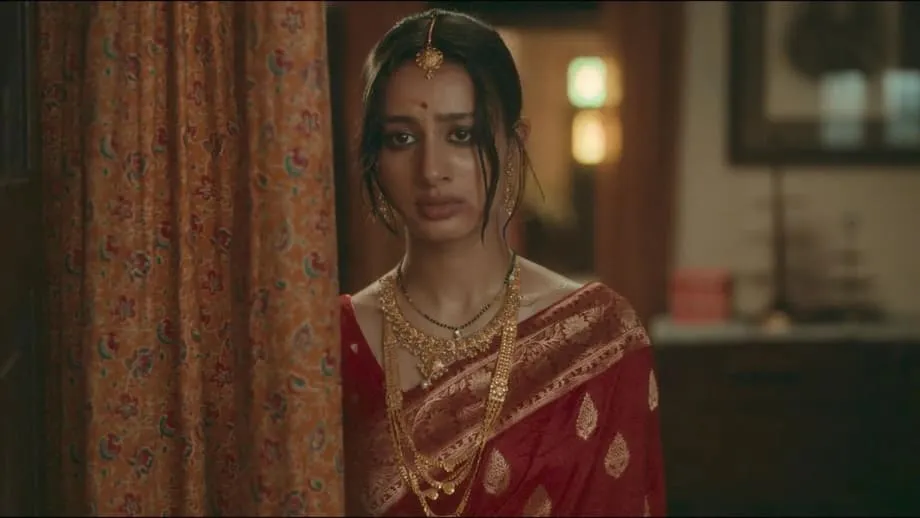
Pooja, played by Prasanna Bisht, enters that household with different expectations. Educated and socially conscious, she speaks openly about gender equality and bodily autonomy, the right to make decisions about one's own body. She marries Arun, Kamlesh's brother-in-law, expecting a partnership built on mutual respect.
Kamlesh has raised Arun as her own son. That bond becomes central when he rapes Pooja on their wedding night and dismisses her distress afterward. The person Kamlesh loves and protects is also the person responsible for the violence.
Divy Nidhi Sharma, the series' scriptwriter and a co-writer of the acclaimed film Laapataa Ladies, gave Arun dialogue that invokes the legal exception. Arun, the fictional husband played by Siddharth Shaw, tells Pooja:
I just took what's mine. Why do you keep repeating that I raped you? Marital rape is not a crime in India and there is no law to deal with it.
Pooja's search for help exposes another layer of the problem. Her mother tells her to adjust, warning that speaking out will bring shame on the family. Kamlesh initially takes the same position. She slaps Pooja in disbelief and argues that consent is already part of the marriage contract.
Kamlesh's response gives the story its difficult emotional starting point. Rather than immediately recognising the assault, she defends the household's rules and the man she helped raise. Her eventual support for Pooja requires her to reconsider beliefs she has followed for decades.
The Exception That Survived a New Criminal Code
Section 375 of the Indian Penal Code, first enacted in 1860 under British colonial rule, defined rape while retaining a marital exception. Under Exception 2, sexual acts by a husband with his wife, provided she is over 18, were excluded from that definition.
The exception survived in the Bharatiya Nyaya Sanhita, the criminal code enacted in 2023. Its continuation across the 163 years between 1860 and 2023 is central to the debate raised by Chiraiya: a major rewriting of criminal law preserved this exclusion.
For an adult married woman, that rule creates a gap between experiencing forced sex and having it recognised as rape under criminal law. The account of the legal framework identifies separation as an exception to the exemption, including cases where the couple is legally separated.
The chronology behind the series stretches well beyond its streaming release:
- 1860: The Indian Penal Code was enacted during British colonial rule, establishing the legal framework that included the marital rape exception.
- 2023: The Bharatiya Nyaya Sanhita retained the exception when India's criminal code was rewritten.
- 2025: A man convicted of raping his wife, who died within hours of the alleged assault, was acquitted on appeal because the judge ruled that Indian law did not recognise marital rape as a criminal offence.
- March 2026: Chiraiya premiered on JioHotstar, turning the legal issue into a drama about consent and family loyalty.
Courts, Evidence and the Unequal Protection of Consent
The 2025 acquittal gives the legal debate a stark human context. The wife died within hours of the alleged assault, yet the appeal turned on whether the law recognised the conduct as marital rape. The exception determined the outcome described in that case.
The Allahabad High Court has also previously ruled that a wife's denial of sex constitutes mental cruelty. That ruling feeds the wider debate about whether marriage creates an expectation of automatic sexual access, an expectation Chiraiya places directly in Arun's words and his family's reactions.
Abha Singh, a legal analyst, identifies difficulties in proving what happened within a marriage as one reason the exemption persists. She describes the challenge of distinguishing between a claim to marital intimacy and an allegation of coercion:
It is very difficult to prove whether it is enjoyment of conjugal rights or it is something else.
Conjugal rights refers here to expectations of intimacy within marriage. Critics of the exception argue that difficulties in proving an offence arise in other crimes too, and that those difficulties have not prevented the conduct from being criminalised.
The practical dispute is therefore about both evidence and access to protection. Critics argue that the exception denies married women the same protection for bodily autonomy that unmarried women receive under rape law. Chiraiya makes that unequal treatment understandable through Pooja's predicament: she describes violence, while Arun answers by invoking his status as her husband.
Multiple petitions concerning the exception are before the Supreme Court. No next hearing date or timetable for a legal decision was given as of April 14. The series enters that unfinished debate without offering its characters a courtroom victory.
Why the Adaptation Begins With an Enabler
Chiraiya adapts the Bengali series Sampoorna, moving the story to North India and changing the perspective through which audiences encounter it. Sampoorna had an explicitly feminist protagonist. Kamlesh, by contrast, initially helps sustain the attitudes that harm Pooja.
Director Shashant Shah explains that the creative team wanted a woman whom millions of women across India could recognise. Kamlesh trusts the family system and gradually discovers that its appearance of harmony can conceal suffering behind closed doors.
The adaptation presents its North Indian setting as more rigidly patriarchal. It moves from Bengal to the Hindi heartland, placing the story amid a landscape of rivers while examining restrictive attitudes maintained in the name of tradition. The setting is part of the team's effort to reach viewers beyond urban, elite audiences.
Sharma, the scriptwriter, describes that intended audience in concrete terms. He says the project was designed to speak to women and girls outside the metropolitan circles that often dominate discussions of feminism:
We are not making content for the Sundance festival.
There is no point in preaching to the choir. We are addressing that woman in Meerut, the girl in Lucknow.
Kamlesh's transformation serves that approach. She must unlearn familiar rules before she can recognise injustice, allowing the drama to show how a person who defends a harmful custom might begin to challenge it. The story's emotional weight lies in that gradual change, rather than in presenting her as an ally from the start.
How Family Pressure Passes From One Generation to Another
Nupur Dhakephalkar, a clinical psychologist, describes a process relevant to the story as "intergenerational transmission of trauma". Children learn patterns of relationships from their caregivers. When control and coercion are accepted within marriage, those patterns can become the model the next generation follows.
Dhakephalkar also identifies "identification with the aggressor", a response in which a person aligns with those holding power as a way to survive. In the series, women defend patriarchal authority even when that authority harms another woman. Patriarchy here means a family and social order in which men hold greater power and women's choices are restricted.
Kamlesh initially argues that a husband taking what belongs to him is no thief. Her reasoning treats the wife as property and explains why Arun's claim of entitlement finds support inside the household. Pooja's mother's instruction to adjust adds another form of pressure: preserving the family's reputation takes priority over acknowledging the violence.
Dutta, who plays Kamlesh, describes how deeply her character has absorbed those expectations:
doesn't even know the spelling of misogyny, she's so steeped in patriarchal conditioning.
Misogyny means hostility or prejudice toward women. Kamlesh does not need to know the word to repeat the beliefs it describes. Her journey moves from ignorance toward awareness as she recognises the harm caused by rules she once regarded as normal.
Dutta also explains the isolation and fear that can keep women silent:
Every woman who goes through it thinks it's just her story. She thinks if she speaks about it, there will be social stigma, the harmony of the house will be disrupted.
Viewers Challenge the Show and Share Their Experiences
Chiraiya's popularity has been accompanied by arguments on Reddit and Twitter. Some male viewers have called it "propaganda against men", an "attempt to undermine the sanctity of marriage", or "anti-men" content. Others have accused it of portraying every man as a villain, while some commentators have justified rape as a marital right.
The objections echo the conflict within the drama: whether naming violence inside a marriage is an attack on marriage itself. The creative team has responded by identifying consent and abuse, rather than gender, as the focus.
Anjuman Saxena, the actor who plays Pooja's mother, rejects the allegation that the series targets men:
The intention of the series is not to target any gender but to create awareness.
It is not anti-men. It is anti-rape.
Dutta says she prefers to concentrate on supportive reactions. Viewers have sent her messages at midnight, poems and even sarees to thank her for telling the story. Describing her response to the criticism, she says:
I would rather not read that 1% and thrive on the 99% who are giving it their love.
Siddharth Shaw, who plays Arun, says viewers have also sent him direct messages describing their own experiences of marital rape. His account gives the audience response a personal dimension beyond praise or criticism of a television programme.
Shaw invokes writer Saadat Hasan Manto's observation that art reflects society. Explaining the connection between storytelling and the world around it, the actor says:
Cinema is a reflection of society.
Whatever is happening in society, he was writing it.
The experiences described to the actors echo the pressures depicted on screen: violence within marriage, fear of speaking and the need for someone inside the family to listen. The series also places responsibility on men who remain silent while others commit abuse.
What the 6.1% Figure Adds to the Story
The government figure of 6.1% concerns ever married Indian women who have experienced sexual violence. It gives the discussion a measure of scale alongside the individual story of Pooja. Activists argue that underreporting and the stigma surrounding sexual abuse mean many experiences remain uncounted.
Pooja's mother's warning about shame and Kamlesh's initial refusal to believe her illustrate the social pressures described by those activists. A woman weighing whether to speak may fear losing family support as well as facing disbelief.
The drama connects the legal exception to those pressures. Arun cites the law to dismiss Pooja's complaint, while other family members ask her to preserve the household's peace. The two responses reinforce each other: his claim of entitlement is backed by relatives who resist acknowledging what happened.
Sharma accepts that the series can be distressing for viewers, but says its purpose was to begin a conversation about a subject often treated as taboo. He describes both the limits and the role of the creative team:
We are artists, we can't make laws, we can't curb crimes, but we can use art to make a taboo topic mainstream.
That ambition explains the choice to follow Kamlesh rather than build the story entirely around a character already committed to gender equality. The audience watches someone recognise an injustice within the same family structure she has spent her life defending.
The Final Reckoning Happens at Home
Chiraiya ends with a reckoning within the family rather than a courtroom victory. Its final episodes argue that justice can begin in the values people practise at home, the conversations they stop avoiding and their willingness to challenge wrongdoing by someone they love.
The series places particular responsibility on parents to raise sons who respect consent and to correct entitled behaviour when it appears. It also asks relatives to respond to abuse instead of protecting a perpetrator in the name of family unity.
With the marital rape exception still in place, the narrative gives family intervention a central role in Pooja's search for support. Parliament's possible amendment of the criminal law and the petitions before the Supreme Court remain part of the wider legal struggle, while Kamlesh's decision concerns what she can do within her own household.
The drama favours gradual change over a sudden rejection of every familiar role. Kamlesh's example suggests that dissent can begin with something as ordinary as cooking a dish of her own choice, rather than leaving the kitchen altogether. The point is her ability to make a decision for herself.
Dutta says she believes that focus can make the series matter to its audience:
I think this will make a difference in more ways than one because it is telling us where we are going wrong.
Rather than just putting the onus on the outside, for someone else to do something for us, this show emphasizes that let's start from home first. And that is a first step, but it is a very strong step.
Key Points
- Chiraiya premiered on JioHotstar in March 2026. The six episodes have attracted millions of viewers and made it one of the platform's most watched Hindi programmes in months.
- Divya Dutta plays Kamlesh, who moves from defending her family to supporting Pooja, played by Prasanna Bisht, after Arun rapes Pooja on their wedding night.
- The marital rape exception originated in the Indian Penal Code of 1860 and was retained in the Bharatiya Nyaya Sanhita of 2023.
- India is among approximately 36 countries where marital rape is not explicitly criminalised. The legal account identifies an exception involving separated spouses.
- Government data puts sexual violence among ever married Indian women at 6.1%. Activists believe underreporting and social stigma conceal a higher figure.
- The adaptation of the Bengali series Sampoorna shifts the setting to North India and seeks to reach audiences beyond metropolitan elite circles.
- The cast and writer reject accusations that the show targets men, describing its purpose as opposing rape and bringing a taboo subject into public discussion.
- The ending focuses on family accountability, respect for consent and confronting abuse, while the legal challenge to the exception continues.