
The Comeback That Split the Fandom
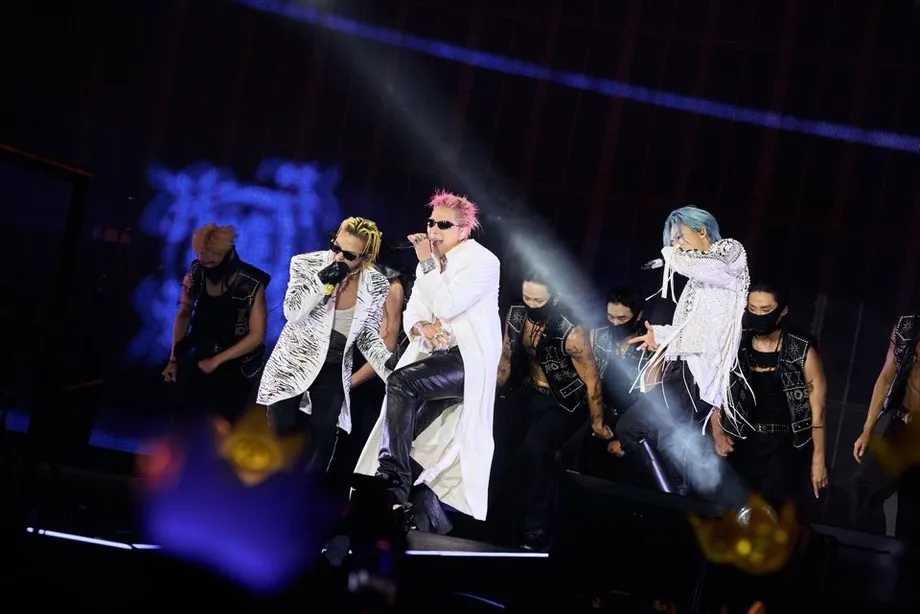
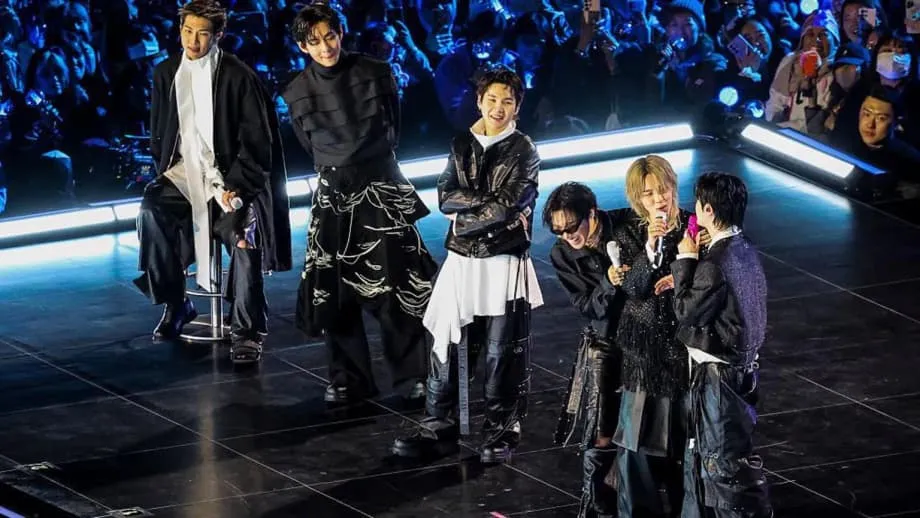
On March 21, seven silhouettes appeared against an arch of LED screens framing the historic Gwanghwamun Gate in Seoul. J-Hope, RM, Suga, Jin, Jimin, V and Jungkook stood together before screaming crowds stretching for city blocks. More than 18 million people live-streamed the one-hour show, a slick teaser for the upcoming BTS world tour that marked their first full-group appearance since completing mandatory military service. "BTS 2.0 is just getting started," J-Hope declared, capturing the triumphant mood.
Contents
Yet beneath the celebration, a more complicated story has emerged. The release of their fifth studio album, "Arirang," has ignited a fierce debate about whether the world's biggest band is losing its K-pop identity in pursuit of global dominance. Named after Korea's most beloved folk song and wrapped in cultural symbolism, the album nevertheless contains more than 80% English lyrics. A candid Netflix documentary, "BTS: The Return," reveals members disagreeing with their powerful agency, Hybe, over the direction of their music. The question haunting this comeback is stark: in trying to capture the whole world, has BTS strayed too far from home?
When Korean Heritage Meets English Lyrics
The contradictions inherent in "Arirang" are immediately apparent. The album borrows its title from a Korean folk song registered on UNESCO's list of Intangible Cultural Heritage of Humanity, a symbol of unity and resilience for Koreans across generations. The opening track, "Body to Body," samples the traditional melody, while a video tribute honors seven Korean students who recorded the first known version of Arirang in 1896 at Howard University in Washington, D.C. The album even incorporates the ringing of the Sacred Bell of Great King Seongdeok, a national treasure, to bridge its two halves.
Despite these markers of cultural specificity, the album's linguistic landscape has raised eyebrows. The lead single, "Swim," is performed entirely in English, and the bulk of the album follows suit. In the Netflix documentary, RM, the group's leader and primary English speaker, expresses visible discomfort. "There's a level of authenticity needed that may not be achieved with too much English," he tells the camera. Suga suggests increasing the Korean lyrics, while Jimin admits, "I don't know if this is right, to be honest," after hearing an early version of the title track.
Their reservations clash with the vision of Bang Si-hyuk, the Hybe chairman who originally assembled BTS 13 years ago. In the documentary, Bang tells the members, "It's impossible to deny that you're a once-in-a-generation kind of icon, and we can't deny that you are Koreans. So your target audience is now more and more a global one, no longer just Koreans, and that's also undeniable." This tension between artistic instinct and commercial strategy sits at the heart of the current controversy.
Documenting the Divide
The documentary footage captures moments of genuine conflict rarely seen in the carefully controlled world of K-pop. At one point, RM describes having a "physical reaction" to linking the band to such a monumental cultural symbol as Arirang, fearing it might feel forced or overly nationalistic. The members debate whether to sample the folk song for a longer or shorter duration, with Jungkook noting that global audiences might not understand the reference, while RM ultimately fights for the longer version, asking, "How much can you assert yourself?"
These disagreements reflect broader industry shifts. Bang Si-hyuk has publicly stated that the company aims to move beyond the "K" in K-pop toward what he calls "global pop." In an interview with Billboard, he explained, "We need to create as many exits and entrances as possible to access universal values globally." This philosophy has manifested in the album's eclectic producer credits, which include American DJ Diplo, Australian songwriter Kevin Parker of Tame Impala, and Spanish musician El Guincho. The result is a sound that critics have largely welcomed as experimental, with the BBC praising the rap-heavy "Hooligan" as audacious and the Jersey club-styled "FYA" as deliciously dark. Yet for some Korean fans, the heavy use of English and Western production represents a sacrifice of originality for Western market access.
If you remove the Korean language, the 'K' becomes difficult to define. The growing inevitability of English lyrics reflects business logic more than artistic necessity.
Music critic Kim Seong-dae voiced this concern in a recent column, arguing that the trend risks blurring the very foundation that supports K-pop. However, academic analysis offers a counterpoint. Grace Kao, IBM professor of sociology at Yale University, told The Korea Times that BTS is actually "reasserting their identity as Korean artists" by centering their heritage even as they use English. Kim Hee-yon, an assistant professor at Cornell University, noted that "global reach does not require erasing cultural specificity. Rootedness and authenticity themselves can become a source of global resonance."
Chart Dominance vs. Cultural Debate
Commercially, "Arirang" has shattered records regardless of the linguistic debates. The album debuted at number one on the Billboard 200 with 641,000 equivalent album units, the highest opening figure since Taylor Swift's release the previous October. It became the first K-pop album to spend three consecutive weeks at the top of the chart, a feat last achieved by a group in 2012-13. All 13 tracks charted on the Hot 100, with "Swim" debuting at number one, making BTS the first group to simultaneously top the album and singles charts multiple times.
This success has not quelled the identity discussion. In South Korea, some fans argue that the emphasis on heritage feels too deliberate, making the album harder to connect with despite its Korean references. Online forums and social media show a split between listeners who miss the raw passion of their 2014 album "Dark & Wild" and those who appreciate the polished experimentalism of the new work. One longtime fan wrote on Reddit that "nothing about this comeback is bad necessarily, but it's getting pretty clear that they aren't really sure what BTS is any more."
Conversely, international audiences appear less divided. The album's streaming numbers suggest global listeners are embracing the hybrid approach. Duolingo reported that U.S. users learning Korean rose approximately 22% over the past year, while applicants for the Test of Proficiency in Korean surpassed 500,000 for the first time. Following the album's release, all 14 tracks ranked as the most-viewed lyrics on Apple Music, indicating that international fans are actively seeking translations and engaging with the Korean cultural content embedded in the English-heavy tracks.
The BTS 2.0 Vision
Bang Si-hyuk has framed this era as "BTS 2.0," a deliberate departure from their past rather than an extension of it. In a detailed interview with Yahoo Entertainment, he explained the central question driving the album: "If the BTS that released their debut album 2 Cool 4 Skool had grown with that same identity, without the genre variations or outward expansions of the past 13 years, what kind of music would they have created to lead the current era?" The answer, he suggests, required moving beyond the "boy band" label that has followed them since their debut in 2013.
This evolution involved significant risks. Bang discarded existing choreography drafts late in the production process, pushing for a minimal approach that shocked the members. For tracks like "Swim" and "Hooligan," the dance routines were revised to such a basic level that the members questioned whether it truly reflected BTS. Bang responded by telling them, "You already possess the kind of aura that can command a stage just by existing. For artists like you, standing still can be more than enough." The goal was to ensure the music itself took precedence over the explosive, synchronized dance routines that have historically defined K-pop performances.
The members have also matured as individual artists during their hiatus. RM and Suga leaned into experimental projects, Jungkook and J-Hope focused on performance-led pop, while Jimin, V and Jin developed their vocal work. In the documentary, Suga notes that at age 34, "the stories that we're trying to tell are more grown-up now." This shift toward artistic maturity and away from the frantic energy of their early twenties represents a gamble that not all fans have embraced, particularly those who associate BTS with high-intensity choreography like their 2018 hit "Idol."
The World Tour Tightrope
The identity debates moved from streaming platforms to stadiums on March 20, when BTS launched the "Arirang" World Tour at Goyang Stadium. The opening leg drew more than 120,000 fans over three nights, with tickets selling out instantly despite heavy rain drenching the venue. The tour represents the largest in K-pop history, with 85 concerts planned across 34 cities in North America, Europe, Asia, and Latin America through March 2027. Analysts project revenues of up to 2.7 trillion won, placing it among the biggest global tours of any genre.
Initial reactions from the Goyang shows revealed the challenges of the group's new direction. Some fans expressed disappointment over what they perceived as scaled-back choreography, fewer dance-heavy sequences, and the absence of solo stages that have been staples of previous BTS concerts. Others questioned the pacing and production design compared to earlier tours. Defenders argued that the weather influenced the performance style, while supporters of the new approach noted that sustaining high-intensity physical routines across an 85-date global tour requires strategic recalibration.
The tour's scale extends beyond traditional venues. In an innovative distribution strategy, BTS is bringing the concert experience to AMC movie theaters, allowing fans who cannot attend the live shows to participate in the event through cinema screenings. This hybrid model reflects the group's continued blurring of boundaries between physical and digital performance spaces, a necessity for a fandom that spans continents and time zones.
Symbolism and National Expectations
The choice of Gwanghwamun Square for their comeback stage carries heavy symbolic weight. As the main gate of Gyeongbok Palace, the site served as the central axis of the Joseon Dynasty capital and has evolved from a royal space to a civic one, hosting rallies for democratic values and government accountability in recent years. Professor Seo Jae-kweon of the Korea National University of Heritage noted that "what was once the king's space has become the people's space," praising the venue choice while stressing the responsibility of performing in such a charged location.
This national symbolism adds pressure to a group already struggling with their role as representatives of South Korean soft power. The members have appeared at the White House and United Nations, delivered speeches on mental health during the pandemic, and generated billions in revenue through music, merchandising, and endorsements that have allowed Hybe to expand aggressively and go public. As music critic Park Hee-ah observed, "As a group, they've become something like a national brand. That inevitably places them under enormous pressure, and it may be why some feel they've lost a sense of identity."
Yet the members themselves seem determined to navigate this space on their own terms. In the documentary, Jin notes that when reunited in Los Angeles after their military service, "it didn't feel like I was seeing my colleagues. It just felt like I was seeing my family again." This emphasis on their bond as seven individuals rather than as corporate icons suggests that BTS 2.0 may be less about abandoning their roots than about finding a sustainable way to carry their particular crown. As RM reflects in the album's closing moments, "If the seven of us can continue down this path together, we can swim whenever the tides take us."
The Bottom Line
- BTS returned from a four-year military hiatus with the album "Arirang," named after Korea's iconic folk song but featuring over 80% English lyrics, sparking debate about their K-pop identity.
- The Netflix documentary "BTS: The Return" reveals internal conflicts between members wanting to maintain Korean authenticity and Hybe chairman Bang Si-hyuk pushing for global pop accessibility.
- Despite identity questions, "Arirang" achieved historic commercial success, becoming the first K-pop album to spend three consecutive weeks at number one on the Billboard 200 chart.
- The accompanying world tour spans 85 concerts across 34 cities on five continents through March 2027, projected to generate 2.7 trillion won in revenue.
- Performance styles have shifted toward minimal choreography and musical focus rather than the high-energy dance routines that defined their earlier work, drawing mixed reactions from fans.
- Heritage elements including the Gwanghwamun comeback stage, the Sacred Bell of King Seongdeok, and the Arirang sample aim to anchor the English-heavy album in Korean cultural specificity.
- The group faces the dual challenge of satisfying domestic fans who miss their earlier Korean-language hip-hop roots while maintaining the global audience that propelled them to become the world's biggest band.