
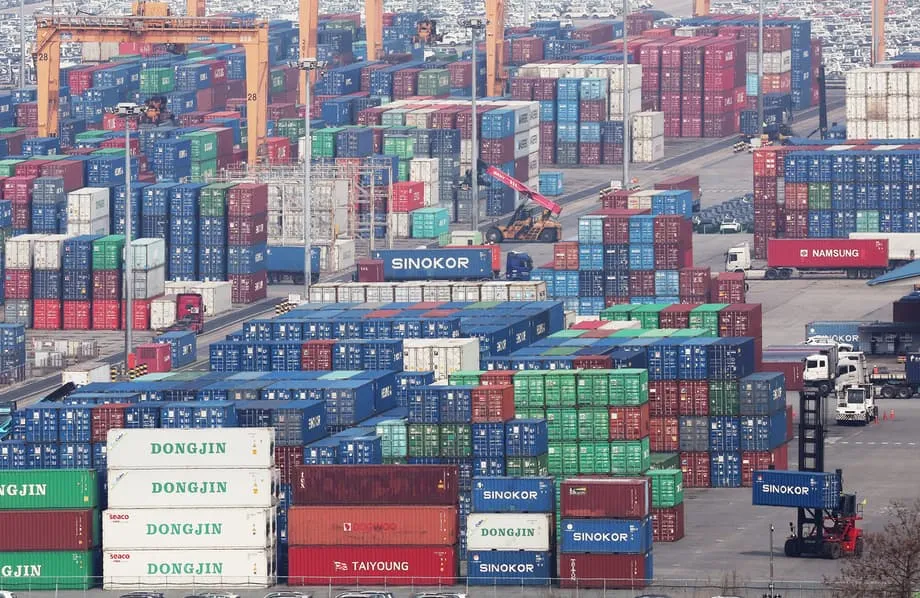
AI Demand Powers the Fastest Growth Since 2020
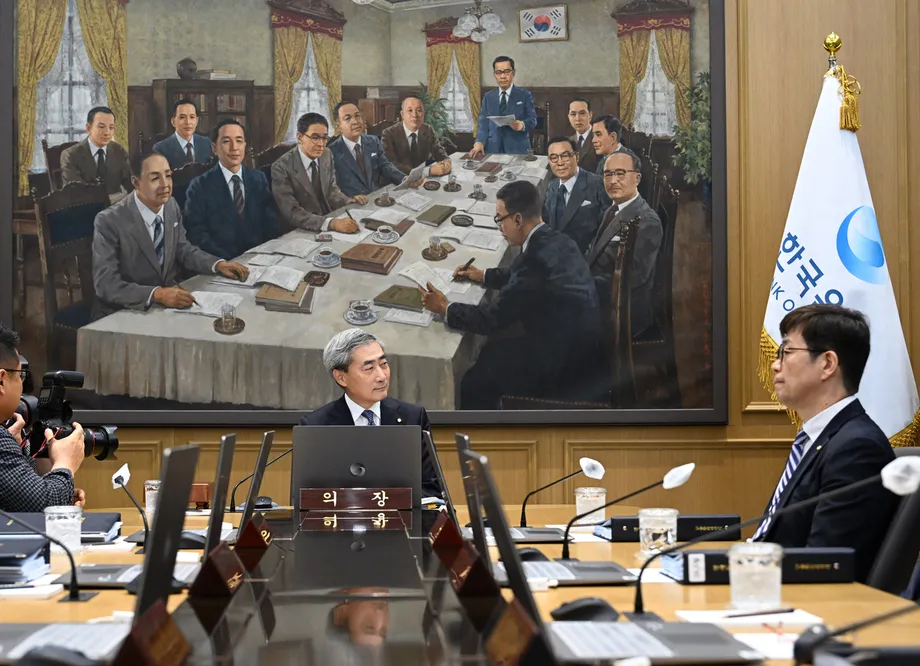
South Korea's economy grew 1.7 percent in the first three months of 2026 compared with the previous quarter, the Bank of Korea announced on April 23. Semiconductors generated approximately 55 percent of that growth, showing how strongly demand for chips used in artificial intelligence is shaping the country's economic recovery.
Contents
- AI Demand Powers the Fastest Growth Since 2020
- Chips Account for More Than Half the Growth
- Record Earnings at the Memory Chipmakers
- Investment Recovers, While Household Spending Moves Slowly
- Why the War's Economic Effects Are Still Developing
- The Central Bank Balances Growth and Inflation
- National Purchasing Power Rises Faster Than Output
- Why Taiwan's Growth Forecast Is Higher
- India Becomes Part of the Expansion Strategy
- Stocks Rally as Investors Bet on Chip Earnings
- Annual Forecasts Face a May Reassessment
- The Bottom Line
The January-March expansion was the fastest since the third quarter of 2020, when the economy was recovering from pandemic disruptions. It also reversed a 0.2 percent contraction in the final quarter of 2025. The result nearly doubled the central bank's forecast of 0.9 percent and exceeded market expectations of around 1.0 percent.
Compared with the same quarter a year earlier, gross domestic product grew 3.6 percent, up from 1.6 percent in the previous quarter and above forecasts of 2.7 percent. GDP measures the value of goods and services produced in an economy. The quarterly figure shows the change from the preceding three months, while the annual comparison measures growth against the same period in 2025.
Chip exports, factory investment and a recovery in construction drove the rebound. Household spending increased more slowly, and services lagged manufacturing. The result was a strong expansion with much of its momentum concentrated in technology.
The next quarter brings a different test. War in the Middle East threatens energy supplies and raises costs for South Korea, the world's fourth-largest oil importer. The first quarter captured only a limited period of disruption, leaving policymakers to weigh continued strength in semiconductor demand against pressure from more expensive oil.
Chips Account for More Than Half the Growth
Lee Dong-won, director general of the Bank of Korea's Economic Statistics Department, said semiconductors accounted for approximately 55 percent of total economic growth in the first quarter. Without that contribution, the quarterly growth rate could have been more than halved.
Exports rose 5.1 percent from the preceding quarter, supported by shipments of information technology components, including high-bandwidth memory and other semiconductors used in AI data centers. High-bandwidth memory allows large amounts of data to move quickly, helping the computers used for AI process demanding tasks.
Global technology companies are spending heavily on the computing infrastructure needed for AI. That spending is creating demand for Korean memory chips and encouraging producers to expand capacity.
Net exports contributed 1.1 percentage points to the 1.7 percent GDP increase, while domestic demand contributed 0.6 percentage points. Net exports represent exports minus imports. Together, the two contributions show that trade provided the larger part of the quarter's growth.
Manufacturing output expanded 3.9 percent, its fastest increase since late 2020. Computers, electronics and optical equipment led the rise, reinforcing the central role of technology production in the recovery.
Record Earnings at the Memory Chipmakers
SK hynix, the world's second-largest memory chipmaker, reported on April 23 that first-quarter operating profit rose 405 percent to an all-time high. Strong orders from global technology companies building AI infrastructure drove the increase.
Sales also reached a record, extending the company's run of unprecedented performance. Operating profit measures earnings from a company's main business after operating costs, making the increase a direct indication of the strength of its chip operations.
Samsung Electronics showed similar momentum earlier in April. Preliminary results indicated an eightfold increase in quarterly profit on revenue of approximately 133 trillion won, or $89 billion.
The earnings figures help explain why semiconductor demand has become so important to the wider economy. Higher chip sales support exports, while strong profits give manufacturers resources to invest in production facilities. The first-quarter figures show both developments occurring together.
Investment Recovers, While Household Spending Moves Slowly
Facility investment rose 4.8 percent in the first quarter, reversing a 1.7 percent contraction in the final quarter of 2025. Companies increased spending to expand production capacity for memory chips and displays.
Construction investment grew 2.8 percent, supported by more building activity and civil engineering projects, including expansion work at semiconductor fabrication plants. These are the factories where chips are manufactured.
The construction recovery followed difficulties caused by rising material costs and delays at redevelopment projects. Government policies to expand public housing supply, implemented since September, helped encourage new housing starts and resolve some delays linked to costs at urban redevelopment sites.
Construction investment nevertheless remained below its level in early 2025, officials cautioned. Further increases in raw material prices could put renewed pressure on projects if the Middle East conflict escalates.
Private consumption rose 0.5 percent, with increased purchases of goods such as clothing. Government spending increased just 0.1 percent, providing limited support to the rebound.
Services grew 0.4 percent. Finance and insurance performed well, while other parts of the sector lagged. Compared with manufacturing's 3.9 percent expansion, the slower increase in services shows how uneven the recovery remained across the economy.
Why the War's Economic Effects Are Still Developing
The Middle East war erupted in late February, when military strikes targeted Iran. South Korea is particularly exposed to disruptions in the Strait of Hormuz because the bulk of its crude oil supplies passes through the waterway.
The Bank of Korea said the war affected only about ten days of the first quarter's ninety days, as ships continued passing through the strait until late March. Higher oil prices and possible supply disruptions are therefore likely to have a fuller effect on second-quarter figures.
March consumer inflation reached 2.2 percent, moving back above the central bank's target. The government imposed fuel price caps for the first time in nearly three decades as energy costs became a growing concern.
The main dates show why the strong GDP result and the emerging energy risks belong to different parts of the economic picture:
- Final quarter of 2025: GDP contracted 0.2 percent and facility investment fell 1.7 percent.
- Late February 2026: Military strikes targeting Iran marked the outbreak of the Middle East war.
- Late March: Ships had continued passing through the Strait of Hormuz until this point, limiting the disruption captured in the first quarter.
- April 10: The Bank of Korea kept its benchmark interest rate unchanged.
- April 23: The central bank announced first-quarter GDP growth of 1.7 percent, and SK hynix reported record results.
- May: The Bank of Korea is expected to revise its economic outlook.
The Central Bank Balances Growth and Inflation
Lee Dong-won, the Bank of Korea's director general for economic statistics, described the competing forces facing the economy. He said the damage from the war had grown, while semiconductor exports remained favorable and government measures were expected to begin having an effect in the second quarter.
From the perspective of our economy's key drivers, it is true that the negative impact from the Middle East war has grown. However, the favorable trend in semiconductor exports continues, and the effects of government policies are expected to appear starting from the second quarter.
The Bank of Korea held its benchmark interest rate steady at its April 10 meeting and warned that the outlook was highly uncertain. The conflict threatens to weaken growth while increasing inflation, creating competing pressures on interest rate policy.
Lower interest rates can support spending and investment by reducing borrowing costs. Rising prices make that decision harder because stronger demand can add to inflation pressure. The unexpectedly strong GDP result also gives policymakers another reason to assess how much support the economy needs.
Market pricing reflected a reduced likelihood of monetary easing after the GDP release. Yields on government bonds maturing in three years rose 8.8 basis points to 3.453 percent. A basis point is one hundredth of a percentage point, so the increase was 0.088 percentage points.
National Purchasing Power Rises Faster Than Output
Real gross domestic income rose 7.5 percent from the previous quarter, its fastest increase since 1988. That was much stronger than the 1.7 percent expansion in real GDP.
GDP tracks production, while gross domestic income, or GDI, tracks income earned by residents and businesses. The first-quarter gap reflected an improvement in South Korea's terms of trade, the relationship between the prices it receives for exports and the prices it pays for imports.
Semiconductor prices rose sharply before the full increase in oil costs reached the quarterly figures. Korean exporters could therefore gain more purchasing power from each unit sold. Higher export prices relative to import costs supported company profits and national purchasing power.
The income gain could help support investment and wage growth if it lasts. Its durability depends partly on what happens to chip and energy prices in the coming months.
Stephen Lee, an economist at Meritz Securities, warned that higher oil costs could hurt consumption and corporate capital expenditure in the second quarter, potentially offsetting semiconductor gains. Capital expenditure means spending on assets such as machinery and factories. A prolonged rise in oil prices, alongside stabilizing chip prices, could reverse the favorable movement in the terms of trade.
Why Taiwan's Growth Forecast Is Higher
Taiwan, another major Asian technology economy benefiting from AI demand, is forecasting annual growth exceeding 7.3 percent. South Korea's first-quarter growth of 3.6 percent compared with a year earlier is strong, yet lower than that forecast.
Bank of Korea officials pointed to the structure of the two economies. The proportion of IT exports in Taiwan is three times higher than in South Korea, giving Taiwan greater exposure to the sector experiencing the strongest growth.
South Korea has a more varied export base, including automobiles, petrochemicals and steel. Those industries have not experienced the same acceleration associated with AI investment. The comparison helps explain why booming chip demand can produce different growth rates across the two economies.
India Becomes Part of the Expansion Strategy
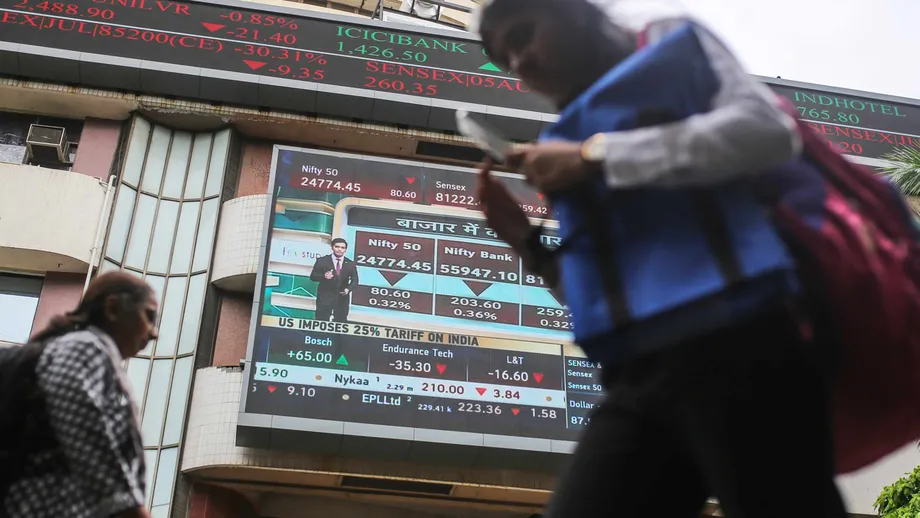
President Lee Jae Myung and Indian Prime Minister Narendra Modi recently outlined plans in New Delhi to expand cooperation in semiconductors, artificial intelligence, shipbuilding and steel.
A proposed India-South Korea Digital Bridge aims to connect India's engineering talent with Korean digital infrastructure. The wider partnership targets a doubling of bilateral trade to $50 billion by 2030.
Korean technology companies are also drawing on India's engineering schools for AI development talent. Operations in cities such as Noida are becoming extensions of their research operations in South Korea.
The cooperation combines the technology strengths driving the current rebound with efforts to develop relationships beyond traditional markets. Its scope also includes shipbuilding and steel, sectors outside the semiconductor boom.
Stocks Rally as Investors Bet on Chip Earnings
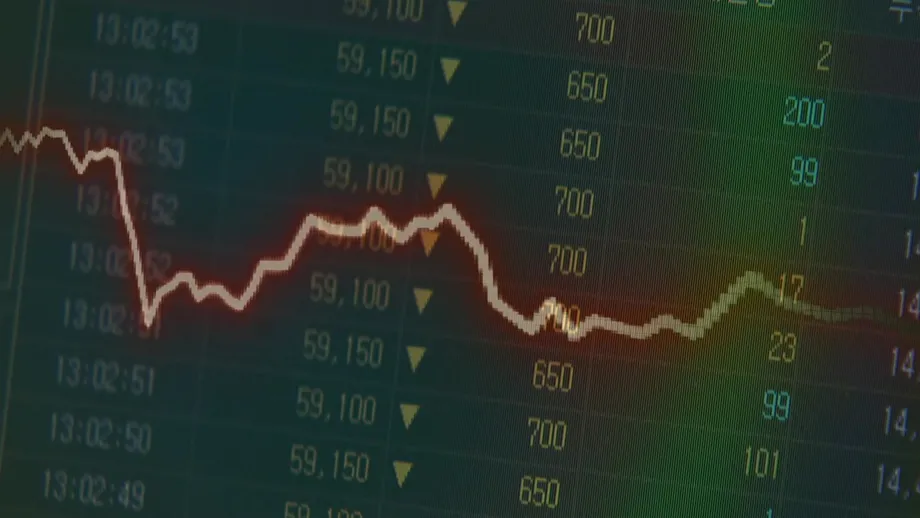
The KOSPI benchmark stock index reached an all-time high above 6,400 in April. It gained approximately 15 percent over the preceding month and roughly 52 percent since the start of the year.
Foreign investors helped drive the rally with net purchases exceeding 1.7 trillion won, or $1.19 billion. Domestic retail investors took profits, selling 2.36 trillion won in holdings.
Goldman Sachs projected that the KOSPI could rise above 8,000 within a year, based on stronger earnings forecasts. JPMorgan set a higher target of 8,500 if the semiconductor cycle remained robust.
Those projections depend on global technology companies continuing their AI capital spending at current rates and memory chip prices remaining firm. The strong earnings at SK hynix and Samsung explain the enthusiasm, while those conditions show what investors are counting on.
Annual Forecasts Face a May Reassessment
The International Monetary Fund maintained a forecast of 1.9 percent growth for South Korea in 2026. The Organization for Economic Cooperation and Development recently lowered its projection to 1.7 percent from 2.1 percent, citing risks from the Middle East.
The Bank of Korea forecast 2.0 percent annual growth in February. It is likely to revise that outlook in May to account for both the stronger first quarter and the worsening external environment. The size and direction of any revision had not been decided as of April 23.
The figures cited across the recent forecasts range from 1.7 percent to 2.1 percent, with 2.1 percent representing the OECD's projection before its reduction. The current forecasts named here are 1.7 percent from the OECD, 1.9 percent from the IMF and 2.0 percent from the Bank of Korea.
The first-quarter GDP increase and the annual forecasts measure different periods. A 1.7 percent rise from one quarter to the next can coexist with a forecast for 1.7 percent growth across the full year, because the annual result also depends on later quarters and the starting level of output.
South Korea enters the second quarter with strong semiconductor exports, record chipmaker earnings and recovering investment. Energy costs are the major threat to that momentum, with possible effects on household spending, business investment and the purchasing power gained during the opening months of the year.
The Bottom Line
- GDP grew 1.7 percent from the previous quarter and 3.6 percent from a year earlier, marking the fastest quarterly expansion since the third quarter of 2020.
- Semiconductors supplied approximately 55 percent of growth. Exports rose 5.1 percent, and net exports contributed 1.1 percentage points to GDP growth.
- SK hynix reported a 405 percent increase in operating profit to a record. Samsung's preliminary results showed an eightfold profit increase.
- Facility investment rose 4.8 percent and construction investment increased 2.8 percent, while private consumption grew 0.5 percent.
- Real gross domestic income jumped 7.5 percent, the fastest increase since 1988, as higher semiconductor prices improved purchasing power.
- The Middle East war threatens oil supplies and raises costs, with a fuller economic effect expected in the second quarter.
- The KOSPI reached a record above 6,400 in April as foreign investors bought Korean shares.
- The Bank of Korea is expected to reassess its annual growth forecast in May, weighing stronger chip demand against mounting energy risks.