
Three Years of International Trains Bring More Than 800,000 Travelers
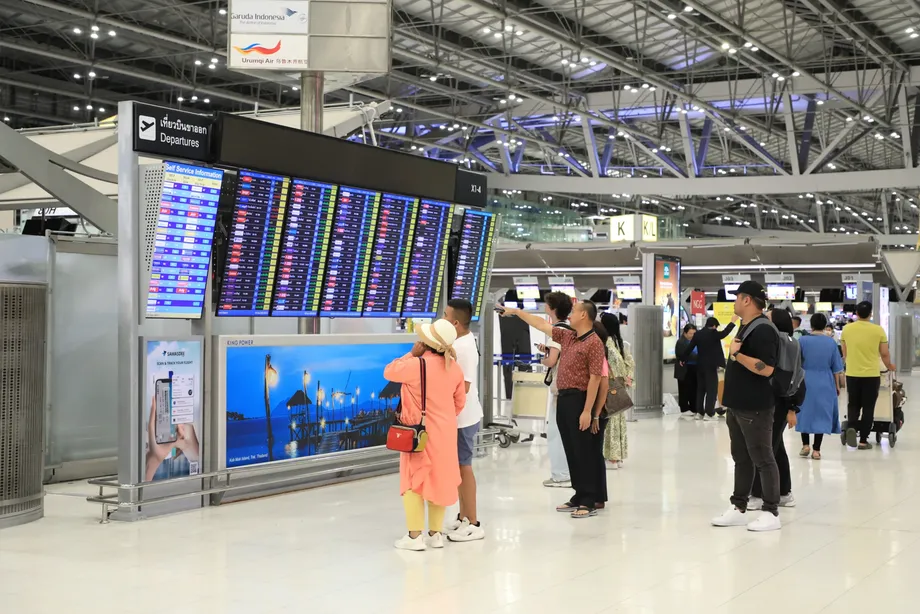
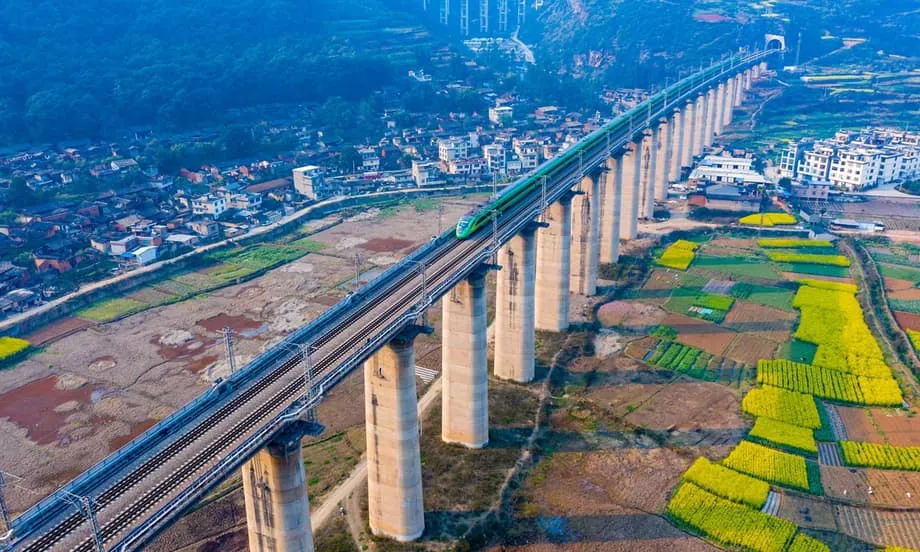
More than 800,000 travelers from over 120 countries have used the China-Laos Railway's international passenger service since it began in April 2023. By April 16, 2026, the 1,035-kilometer route between Kunming in southwest China and Vientiane, the capital of Laos, had become a major connection for tourism, trade and family visits across the border.
Contents
- Three Years of International Trains Bring More Than 800,000 Travelers
- How Laos Became Easier to Reach
- Tourism Growth Reaches Cities Along the Line
- Freight Connects Farms With Larger Markets
- Tourism Expansion Also Opens Wildlife Markets
- Conservation Funding Meets Weak Enforcement
- A Wider Network Connects China, Laos and Thailand
- Precision Maintenance Supports Reliable Journeys
- Family Visits and the Next Tourism Targets
- The Bottom Line
The journey now takes 9 hours and 26 minutes, roughly nine and a half hours. A route that once involved difficult overland travel now links destinations ranging from Kunming's Stone Forest and Xishuangbanna's tropical rainforests to the Buddhist temples of Luang Prabang and Vientiane's colonial architecture.
More than 560 scenic spots are connected through the tourism corridor, including UNESCO World Heritage sites and ancient cultural centers. The railway has brought places previously regarded as remote within easier reach of major Chinese population centers, helping create a cross-border tourism economic circle in which visitors spend money across several destinations.
During the Spring Festival holiday from February 15 to February 23, 2026, the railway handled 12,900 cross-border trips, up 41.8 percent from the previous year, according to China Railway Kunming Group Co. Inbound journeys rose 52.7 percent to more than 6,300, while outbound journeys increased 32.5 percent to more than 6,500.
Those holiday figures show demand rising in both directions, with inbound travel growing faster. Rail has also become an alternative to budget airlines for tourists exploring mainland Southeast Asia, especially those who want to visit several places along the way.
The expansion has brought business to hotels, restaurants and shops. It has also widened access to illegal wildlife markets, making enforcement part of the same story as tourism growth.
How Laos Became Easier to Reach
Laos spent decades facing the disadvantages of being landlocked. Its mountainous terrain and limited infrastructure separated communities from the economic activity of neighboring countries with coastal access. The railway has helped turn it into a land-linked connection between China and the wider ASEAN region.
The line opened in December 2021, before international passenger trains began operating in April 2023. Natural attractions and cultural sites already existed along its route, but reaching them could be difficult. Mountain roads often required 12 to 14 hours of travel between major cities, and monsoon weather frequently interrupted journeys.
International trains brought predictable schedules and a more comfortable way to cross previously difficult terrain. Laos increasingly serves as a stop within a wider regional journey, rather than a destination on the edge of the travel network.
Several milestones explain how that change developed:
- December 2021: The China-Laos Railway opened.
- April 2023: International passenger services began between China and Laos.
- 2025: A shared checkpoint was established at the Mohan-Boten crossing to handle exit and entry procedures in one facility.
- September 2025: A service combining rail and road transport departed Kunming for markets in Thailand through Vientiane.
- November 2025: The China-Laos Railway City Alliance launched in Kunming.
- February 15 to February 23, 2026: Spring Festival cross-border journeys reached 12,900.
The shared border facility further reduced total journey time. Together with the railway itself, it made crossing the frontier a more integrated part of the trip.
Tourism Growth Reaches Cities Along the Line
Xishuangbanna, the subtropical prefecture in southern Yunnan known for Dai minority culture and tea plantations, recorded 674,100 overseas visitors in 2025. Tourism generated $441 million in foreign exchange earnings, meaning money earned from visitors arriving from abroad.
Both visitor numbers and those earnings rose by more than 110 percent from the previous year. Each measure therefore more than doubled, showing that the increase involved spending as well as arrivals.
Mohan, the Chinese border town on the route, also recorded growth. Foreign tourists entering China without a visa through the Mohan railway port increased by 48 percent in 2025. The crossing has become an international gateway as well as a railway station serving neighboring countries.
Luang Prabang, with its saffron-robed monks and golden temple roofs, is now more accessible to travelers from China. Vientiane and Luang Prabang have both seen steady increases in visitor numbers, while hotels, restaurants and small businesses along the corridor have reported stronger patronage.
The route brings together different kinds of travel within one journey. Visitors can combine the Stone Forest, tropical biodiversity in Xishuangbanna, Buddhist heritage in Luang Prabang and the architecture of Vientiane. Spending can follow them from one destination to the next, extending the railway's economic effects beyond fares.
Freight Connects Farms With Larger Markets
The railway's economic role extends to agricultural goods. It has transported more than 14 million tons of goods since opening. Fruit shipments reached 171,000 tons in the first seven months of 2025, an increase of 62.8 percent.
Fresh durians from Thailand and Laos can now reach Kunming within 48 hours of harvest. Customs clearance at Mohan Station can take as little as five minutes. For fresh fruit, shorter transport and border processing times help suppliers get produce to buyers quickly.
Lao farmers have also responded to rising Chinese demand for dried cassava chips. Planting increased so aggressively that seedling shortages emerged in 2026, a development locally described as the cassava phenomenon. The shortage shows how a stronger transport connection can affect decisions on farms far from the passenger platforms.
By early 2026, cumulative freight volumes stood at 81.5 million tons, including 18.6 million tons of cross-border cargo. The cross-border portion was about 23 percent of that cumulative total. Cross-border cargo trade grew by 62.7 percent from a year earlier in the first quarter of 2026.
The World Bank projects that annual transit trade through Laos along the railway corridor could reach 3.9 million tons by 2030. Transit trade means goods moving through a country on their way to another market. For Laos, that would strengthen its role as a transport connection between larger neighboring economies.
Tourism Expansion Also Opens Wildlife Markets
A joint investigation by the Global Initiative Against Transnational Organized Crime and Mongabay linked the tourism surge to an illegal wildlife trade network estimated to be worth $400 million annually. Increased access has brought customers closer to sellers of prohibited animal products.
Chinese tourist arrivals in Laos rose from 45,000 in 2022 to more than 1 million in 2024. A projection put the 2025 figure at 1.3 million. The jump from 2022 to 2024 was more than twentyfold, creating a much larger potential market for goods sold to visiting tourists.
Investigators identified at least 18 large venues across Laos openly selling prohibited wildlife products. Some operated under the cover of cultural centers, museums, jewelry stores or coffee shops. The products included rhino horn, elephant ivory, bear products, tiger parts and pangolin scales.
Many venues had armed guards, government authority logos and portraits of Lao and Chinese officials. These displays created an appearance of state endorsement around merchandise being sold illegally.
Organized tour circuits aimed specifically at Chinese tourists used coded language and marketing to present visits as cultural shopping experiences. Tour operators registered visitors in advance using their passports and transported them to the venues. Receipts used ordinary business names such as Kinliao Coffee or Laos Shopping Stop.
The combination of organized tours, advance registration and routine receipts made wildlife sales part of a structured visitor itinerary. The same easier access that supports legitimate shops and attractions has also helped customers reach these markets.
Conservation Funding Meets Weak Enforcement
Laos has been a party to the Convention on International Trade in Endangered Species since 2004. The convention governs international trade in protected wildlife. Despite that commitment and more than $81 million in donor funding for conservation efforts, enforcement against the trade described in the investigation remained minimal.
The open sale of prohibited goods has brought governance and corruption concerns into the debate over tourism growth. Stronger transport connections can increase economic opportunity, while weak accountability allows illegal businesses to use those connections too.
China has clear legal grounds to prosecute its citizens and tour companies involved in wildlife trafficking overseas. That gives Chinese authorities a role in addressing conduct connected to organized trips outside the country.
Donor countries also face pressure to reassess how conservation money is used because of the lack of progress. The central challenge is to make enforcement effective as visitor numbers and access expand, rather than allowing illegal sales to grow alongside legitimate tourism.
A Wider Network Connects China, Laos and Thailand
The China-Laos Railway City Alliance launched in Kunming in November 2025. Its founding members included Kunming, Vientiane and eight other cities from the two countries, making ten cities in total.
The alliance aims to build cooperation networks, share resources and develop joint cultural and tourism initiatives to attract visitors from around the world. It gives cities along the corridor a framework for working together rather than promoting each destination entirely on its own.
Passengers already combine the Kunming-Vientiane route with existing Thai rail lines for journeys across several countries. Those itineraries offer an alternative to short flights and place the railway within an emerging China-Laos-Thailand economic triangle.
A freight service using more than one form of transport departed Kunming in September 2025. It reached Thai wholesale markets in three and a half days, using road transport from Vientiane for the onward leg. This shortened the previous logistics chain and connected the railway with markets beyond its own tracks.
Thai Airways and Air China have adjusted their Bangkok-Kunming services as more tourists choose scenic rail journeys. Cross-border seating capacity has increased from 250 to 420 passengers per train, an increase of 170 seats, or 68 percent. Daily services have risen from four at launch to 18.
More seats, more services and the shared Mohan-Boten checkpoint together support the expanding travel network. The railway is now functioning as both a bilateral connection and a backbone for broader regional integration.
Precision Maintenance Supports Reliable Journeys
Operating through mountains, heavy rain and seismic activity requires close attention to track condition and safety. Over the past three years, the railway has completed more than 100,000 train trips without a safety incident and achieved an arrival punctuality rate of 99 percent.
Maintenance crews consistently keep track quality index measurements below 2.7 millimeters. The index measures variations in track geometry, so smaller values indicate a smoother track. The resulting ride has been described as comparable to high-speed rail standards.
Passengers demonstrate that smoothness through the popular coin stability challenge, balancing coins upright on window sills while trains accelerate through mountainous curves. Behind that experience are maintenance standards requiring precision down to 0.1 millimeters.
More than 900 Chinese railway professionals have been deployed to Laos to keep both sections operating under identical standards. Crews use drones and specialized vehicles to inspect the track, while tunnel inspection robots improve maintenance efficiency.
The Lao section also has systems that monitor rainfall and strong winds, detect foreign objects entering the railway and track weather conditions. These protections support operations during regional heavy rains and help address risks associated with seismic activity.
The railway has continued operating through heavy traffic, torrential rain and earthquakes. Ngamprasong Muangmani, the Lao minister of public works and transport, described the project as a model of construction to high standards for railways crossing national borders.
Family Visits and the Next Tourism Targets
Souksavanh, a traveler from Laos whose child studies in Kunming, described how the railway changed the practicalities of staying connected as a family:
My home is in Vientiane, and my child studies in Kunming. Before the train service, long-distance bus travel was really difficult, and my child rarely came home. Now, with the China-Laos Railway, we can reach China in a day, making it easier for my child to visit.
The shorter trip has made visits easier for families separated by the border. That everyday use sits alongside the railway's better known roles in tourism and freight.
Laos aims to attract 5 million to 6 million international arrivals in 2026, a target largely dependent on continued railway expansion and regional connectivity. Tourism authorities are developing packages that combine train travel with festivals and cultural attractions. Seasonal trains from distant Chinese cities, including Beijing and Harbin, already connect with the main corridor.
The World Bank expects passenger rail traffic to account for most train movements by 2030. That forecast points toward a railway increasingly centered on carrying people rather than primarily serving as a freight channel.
Further investment in connections between stations and nearby communities will be needed for benefits to spread beyond major hubs such as Luang Prabang and Vientiane. Those connections determine how easily travelers can reach accommodation, attractions and smaller settlements after leaving the train.
Academic studies have raised concerns about habitat disruption near new infrastructure and the possibility that smaller communities receive fewer economic gains than larger cities. Clearer regional standards for tourism connected to rail could help balance growth with social and environmental protection.
As of April 16, 2026, the 2026 arrivals target and the World Bank's 2030 projections remained goals and forecasts. The railway's next stage will involve serving growing demand while extending economic benefits beyond its busiest stations and strengthening safeguards against environmental damage and illegal trade.
The Bottom Line
- More than 800,000 travelers from over 120 countries have used international passenger services since April 2023.
- The 1,035-kilometer Kunming-Vientiane journey takes 9 hours and 26 minutes and connects a tourism corridor with more than 560 scenic spots.
- Spring Festival cross-border trips reached 12,900 in 2026, up 41.8 percent from the previous year.
- Xishuangbanna recorded 674,100 overseas visitors and $441 million in tourism foreign exchange earnings in 2025, with both measures rising by more than 110 percent.
- Cumulative freight reached 81.5 million tons by early 2026, including 18.6 million tons of cross-border cargo.
- An investigation linked expanding tourism to an illegal wildlife trade estimated at $400 million annually and identified at least 18 large sales venues.
- The railway recorded more than 100,000 trips without a safety incident over three years and a 99 percent arrival punctuality rate.
- Laos is targeting 5 million to 6 million international arrivals in 2026, while the World Bank projects annual transit trade of 3.9 million tons by 2030.