
A Fare Increase Larger Than the Government Expected
Indonesia raised its maximum airline fuel surcharge to 38% on April 6, 2026, after aviation fuel prices at Soekarno-Hatta Airport climbed from 13,656.51 rupiah per liter in March to 23,551.08 rupiah in April. By April 16, passengers were reporting domestic fare increases of up to 50%, far above the government's expected range of 9% to 13%.
Contents
- A Fare Increase Larger Than the Government Expected
- What Changed in the Ticket Price Rules?
- Tax Relief Was Announced Before It Was Ready
- Why the Relief May Take Time to Reach Passengers
- A Weaker Rupiah Adds to Airline Losses
- Airlines Adjust Flights as Demand Softens
- Travelers Compare Domestic Flights With Overseas Routes
- Fewer Passengers Could Deepen the Pressure
- A Regional Fuel Shock With No Quick Recovery
- The Essentials
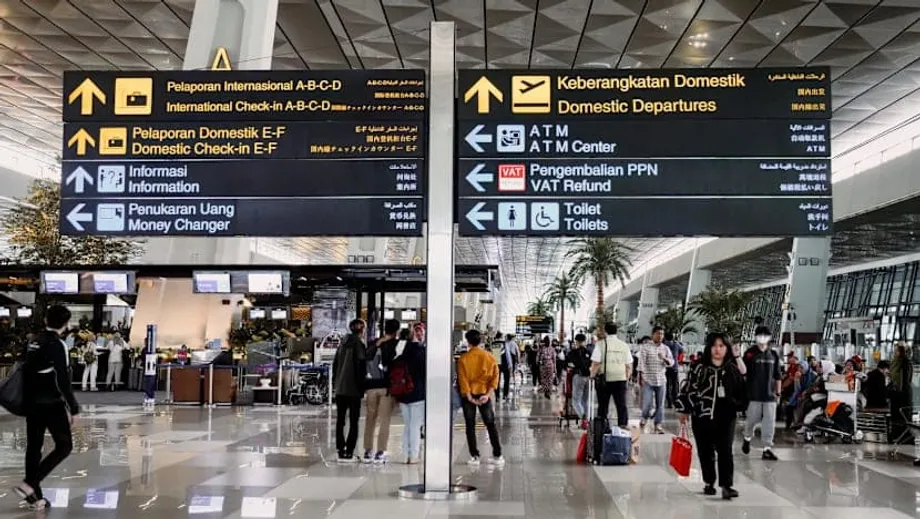
Jennifer, a Jakarta resident employed in the private sector who frequently travels to Medan for work, encountered the increase while trying to return from Kualanamu International Airport in North Sumatra to Soekarno-Hatta Airport in Tangerang. Economy tickets that usually cost about 1.6 million to 1.9 million rupiah, equivalent to US$93 to US$111, had reached 2.5 million rupiah. Business tickets cost between 8 million and 14 million rupiah.
Jennifer asked for her real name to be withheld because she lacked permission from her employer to speak to the media. She described how much harder an ordinary work journey had become.
"Outside of peak season, you can usually still buy a ticket on the same day," said Jennifer.
Jennifer struggled to find any available seat and delayed her return by two days. Her experience captures two pressures facing travelers at once: higher prices and fewer convenient flight options.
The increase combines a jump in fuel costs, a weaker rupiah and a regulatory change that allows airlines to recover more of their expenses through ticket charges. Government tax relief was intended to soften the increase, but airlines began applying the new surcharge before the promised relief was in place.
What Changed in the Ticket Price Rules?
Indonesia sets distance based ceilings on domestic airfares. These are upper limits on the fares airlines can charge for a route. A fuel surcharge is an additional charge intended to help cover changes in aviation turbine fuel costs, commonly called avtur. The Transportation Ministry determines the formula used to calculate it.
The April 6 decision raised the surcharge ceiling from 10% to 38% for jet aircraft and from 25% to 38% for turboprops, aircraft driven by propellers. A ceiling sets the maximum permitted charge; the final ticket price also depends on the fare and other charges.
Coordinating Minister for Economic Affairs Airlangga Hartarto announced the change at a press conference, explaining that the two aircraft categories would now have the same limit.
"Previously, the surcharge was capped at 10% for jets and 25% for propeller aircraft. Now, it has been standardized at 38%," he said.
The Indonesian National Air Carriers Association (INACA) had initially requested a 15% increase. The government approved a larger adjustment as airlines faced exceptional pressure on their finances.
Fuel normally accounts for approximately 40% of flight operating costs. When an expense that large rises sharply, airlines face a substantial increase in the cost of operating each flight, even before paying for maintenance, aircraft and other needs.
Pertamina, the state energy company, raised aviation fuel prices for April 1 to April 30. At Soekarno-Hatta, the domestic increase was 72.45%, taking the price from 13,656.51 to 23,551.08 rupiah per liter. Fuel for international routes rose even faster, increasing 80.32% to approximately US$1.34 per liter.
Tax Relief Was Announced Before It Was Ready
The government paired the surcharge increase with a promise to cover the 11% value-added tax (VAT) on economy tickets for two months. The measure, known as PPN DTP, means the government bears the tax rather than passing it on to the passenger.
The announced tax support was valued at approximately 1.3 trillion rupiah a month in revenue the government would forgo. Authorities also eliminated import duties on aircraft spare parts, with an estimated annual cost to the state of 500 billion rupiah.
Airlangga said these measures were expected to keep fare increases below the levels passengers subsequently encountered.
The government expected "ticket price increases to remain within the 9% to 13% range."
The Transportation Ministry issued Ministerial Decree No. 83/2026 authorizing the 38% surcharge. The Finance Ministry, however, had yet to disburse the promised VAT subsidy when airlines began changing their prices.
INACA secretary-general Bayu Sutanto explained that the surcharge had a written regulatory basis while the accompanying tax relief was still awaiting Finance Ministry rules.
So far, the only regulation in place is the 38% fuel surcharge under Ministerial Decree No. 83/2026. There are no new written regulations yet from the Finance Ministry,
The timing left passengers paying fares that included the higher surcharge without the intended tax offset. The longer term duration of the VAT support also remained uncertain beyond the announced two months, complicating decisions by airlines about future costs.
The main dates show how quickly the price changes developed:
- March 2026: Domestic aviation fuel at Soekarno-Hatta cost 13,656.51 rupiah per liter.
- April 1 to April 30: Pertamina's new pricing period raised that cost to 23,551.08 rupiah per liter.
- April 6: Airlangga announced a uniform maximum fuel surcharge of 38%.
- April 7: Traveler Dion Haryadi posted about a sharp fare increase between Batam and Jakarta.
- April 16: Passengers were facing higher fares while the promised VAT relief had yet to offset the surcharge increase.
- April 21: Garuda Indonesia was scheduled to begin its Hajj operations.
Why the Relief May Take Time to Reach Passengers
Aviation analyst Alvin Lie argued that raising the jet aircraft surcharge from 10% to 38% translated into ticket price increases of at least 28%. In his assessment, keeping the final increase within 13% would require substantial subsidies.
Lie said the VAT measure was the part of the government's package that would directly reduce the amount paid by travelers.
"The only measure that directly affects consumers is the removal of the 11% VAT on tickets. If you take that off a 28% increase, you are still looking at a 17% rise," he said.
His calculation illustrates why the government target remained difficult to reach even after tax support was promised. The surcharge ceiling, tax treatment and underlying fare all affect the final bill, while passengers also face the cost of whichever seats remain available when they book.
The removal of spare part import duties offers a different kind of relief. Lie estimated that it could reduce maintenance costs by around 5%, but the first beneficiaries would be maintenance, repair and overhaul providers, known in aviation as MRO businesses.
Airlines would need time to receive those savings and reflect them in their own costs. Lie said it could take two to three months before the benefit reached consumer ticket prices.
Lie described the policy as a "sharing the pain" approach, spreading the burden among airlines, travelers and the state. He put the monthly tax revenue forgone at nearly 1.5 trillion rupiah, compared with the approximately 1.3 trillion rupiah attached to the announced package.
"To prevent airlines and passengers from bearing the full brunt, the government has scrapped the 11% VAT, foregoing nearly 1.5 trillion rupiah in monthly ticket revenue," Lie explained.
Airlangga acknowledged there was "no silver bullet" and said Indonesia was not alone in facing these pressures.
A Weaker Rupiah Adds to Airline Losses
Indonesian airlines also face a mismatch between the currency they earn and the currency they spend. Roughly 70% of their operating expenses are denominated in US dollars, while their revenue comes mainly from passengers paying in rupiah.
The rupiah weakened from approximately 14,100 per US dollar in 2019 to nearly 17,000 in early 2026. At those exchange rates, buying one dollar requires about 2,900 more rupiah, or roughly 21% more than in 2019. An airline therefore needs more local currency to meet a dollar expense even when the dollar price stays unchanged.
Garuda Indonesia entered the latest fuel crisis with substantial financial strain. The national carrier recorded a net loss of 5.4 trillion rupiah in 2025, nearly five times its loss in the previous year.
Fuel inflation adds to those existing difficulties. Airlines must decide how much of the increase passengers can absorb while maintaining enough revenue to keep flights operating.
Airlines Adjust Flights as Demand Softens
AirAsia confirmed that it had "adjusted flight frequencies across several routes," covering domestic and international services and prioritizing operations with the strongest performance. It did not identify the affected routes.
Acting President Director Achmad Sadikin said the changes were part of a gradual response to conditions in the aviation industry.
"We understand that the aviation industry is currently facing continuously evolving dynamics. Therefore, we are implementing gradual operational adjustments as part of our efforts to ensure that operations remain healthy, adaptive, and capable of delivering optimal services to the public," he said in a statement.
INACA's Bayu said airlines might reduce frequencies or temporarily suspend routes because the period through May is usually a low season, when demand is softer. Operating fewer flights can reduce expenses, but travelers then have fewer departure times and seats to choose from.
Affected passengers were being offered compensation options including complimentary rescheduling within 30 days, travel credits or refunds.
Garuda Indonesia was focusing on routes with large passenger volumes, including the coming Hajj season. Starting April 21, it planned to deploy 15 aircraft with wide cabins to carry more than 102,000 pilgrims, even as it dealt with its wider financial difficulties.
Travelers Compare Domestic Flights With Overseas Routes
Indonesian travelers have taken to social media to complain about higher fares, with some canceling or postponing journeys. On April 7, Threads user Dion Haryadi wrote that Batik Air tickets from Batam to Jakarta had increased from the usual 1.5 million rupiah to about 2.4 million rupiah. Those figures represent an increase of 60%.
Jennifer found that traveling from Medan to Jakarta through Kuala Lumpur, Malaysia, was cheaper than a domestic itinerary through Padang that cost more than 3 million rupiah. The cheaper overseas connection was unavailable to her because she had not brought her passport.
Jennifer explained why the alternative did not solve her immediate problem.
"At the time, there were no direct domestic flights to Jakarta, but I did not have my passport with me for a Kuala Lumpur transit," she said.
Tourism expert Azril Azahari of Trisakti University warned that Indonesian destinations were losing price competitiveness against trips abroad.
"Flying to Singapore can be cheaper than travelling to Raja Ampat, Komodo Island or even Bali," he observed.
Azril warned that Indonesia's tourism appeal could weaken amid regional competition if fares failed to return to competitive levels. For travelers comparing the total cost of a holiday, an expensive domestic flight can make an overseas destination more attractive.
Fewer Passengers Could Deepen the Pressure
Transportation analyst Revy Petragradia of the Indonesian Transportation Society (MTI) predicted a possible decline of 10% to 15% in air passenger numbers as people became more selective about flying.
Revy expected the effects to vary by traveler and distance, with some passengers switching to land or sea transport on shorter journeys.
"Business trips may continue as usual, but economy passengers and those travelling short distances will certainly think twice. A shift in transport modes, from air to land or sea, is likely for shorter routes," she explained.
Government spending restrictions were already weighing on demand. Since late 2024, authorities have limited official travel as part of a broader effort to reduce state expenditure.
Finance Minister Purbaya Yudhi Sadewa announced in the week before April 16 that the government was targeting savings of 121.2 trillion to 130.2 trillion rupiah during 2026. The effort focused on spending considered nonessential, including official travel.
Airlines therefore face higher costs at a time when an established source of demand is being restrained. If more leisure travelers also postpone journeys, carriers may face further pressure to reduce flights.
Revy said uncertainty about how long the VAT subsidy would last encouraged airlines to make conservative assumptions about future expenses. She suggested packages combining flights, accommodation and tourism activities, developed with the Ministry of Tourism and Creative Economy, as a way to support the sector.
A Regional Fuel Shock With No Quick Recovery
The conflict in the Middle East, including the war involving Iran and its effect on the Strait of Hormuz, has disrupted energy markets far beyond the region. Approximately one fifth of the world's daily oil and liquefied natural gas passes through the narrow waterway, with more than 80% destined for Asia.
Platts, part of S&P Global Energy, assessed the benchmark FOB Singapore jet fuel and kerosene price at US$228.76 per barrel on April 6. The benchmark had stayed above US$200 for six consecutive trading sessions. FOB, or free on board, refers to the price of the product loaded for shipment.
The fuel's crack spread against crude oil hovered near US$100 per barrel. A crack spread is the gap between the price of crude and a refined product such as jet fuel. Such a large gap indicated severe tightness in refined fuel supplies, adding to operating difficulties for airlines worldwide.
Southeast Asian governments responded with different measures. The Philippines raised its fuel surcharge to Level 8, permitting charges from 253 to 6,208.98 Philippine pesos depending on distance, and declared a national energy emergency.
In Vietnam, more than 60% of airlines implemented fare increases or fuel surcharges ranging from 5% to 20%. Thailand imposed special fuel surcharges on particular routes. Singapore postponed its sustainable aviation fuel levy framework by six months to manage cost pressures.
The Asian Development Bank warned that a prolonged conflict, with price increases continuing until early 2027, could reduce economic growth by up to 1.3% in developing countries in the Asia-Pacific region.
Willie Walsh, director of the International Air Transport Association (IATA), cautioned that even if the Middle East ceasefire held, jet fuel supplies and prices would take months to return to normal.
"I do not think it is going to happen in weeks," he said.
For Indonesia, that leaves the April policy package addressing immediate costs while passengers and airlines face a longer period of uncertainty. The surcharge increase took effect quickly; tax relief, maintenance savings and a recovery in fuel supplies operate on different schedules.
The Essentials
- Indonesia raised the maximum fuel surcharge to 38% on April 6, from 10% for jets and 25% for turboprops.
- Domestic aviation fuel at Soekarno-Hatta rose 72.45%, from 13,656.51 rupiah per liter in March to 23,551.08 rupiah in April.
- Passengers reported fare increases of up to 50%, above the government's expected 9% to 13%; one Batam to Jakarta example rose from 1.5 million to 2.4 million rupiah.
- The government announced two months of support covering 11% VAT on economy tickets, valued at approximately 1.3 trillion rupiah monthly, but implementation lagged behind the surcharge change.
- Removing aircraft spare part import duties costs the state about 500 billion rupiah annually, with consumer savings expected to take two to three months.
- AirAsia adjusted flight frequencies, while Garuda prepared to carry more than 102,000 Hajj pilgrims using 15 aircraft from April 21.
- About 70% of airline operating expenses are in dollars, adding pressure as the rupiah weakened to nearly 17,000 per dollar.
- Garuda recorded a net loss of 5.4 trillion rupiah in 2025, nearly five times the previous year's loss.
- Revy Petragradia forecast a possible 10% to 15% decline in air passenger numbers as travelers reconsidered flying.
- The Singapore jet fuel benchmark reached US$228.76 per barrel on April 6, and IATA's Willie Walsh warned that supply and price recovery could take months.