
A $10 Billion Response to an Energy Emergency
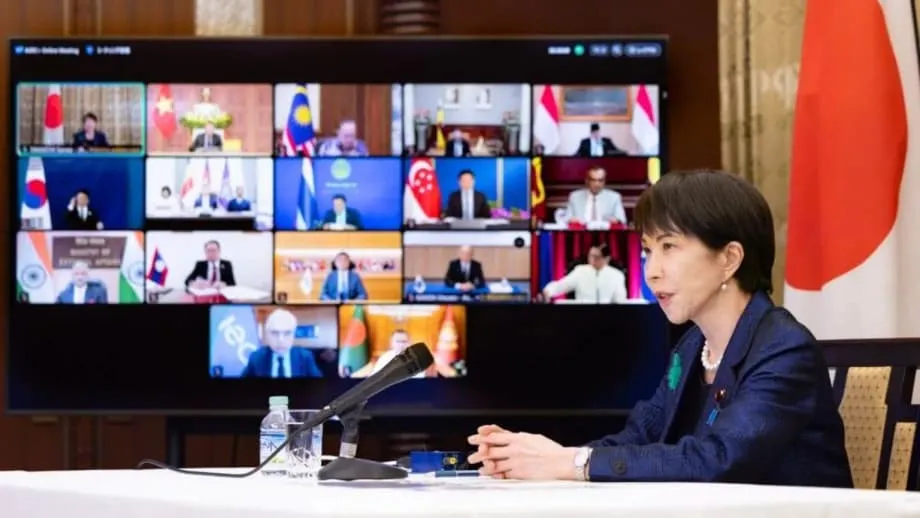
Japan has pledged $10 billion in emergency financing to help Southeast Asian countries secure energy supplies as blockades in the Strait of Hormuz disrupt oil shipments and the Iran war spreads into surrounding territories. Prime Minister Sanae Takaichi announced the package on Wednesday, April 15, 2026, following a virtual summit with regional leaders.
Contents
- A $10 Billion Response to an Energy Emergency
- How POWERR Asia Will Work
- Storage Is Part of the Rescue
- Why an Oil Crisis Reaches Hospitals
- The Philippines Calls for Shared Fuel
- Factories Seek Substitute Supplies
- Japan Releases Oil at Home
- Why Tokyo Is Offering Finance Instead of Barrels
- American Crude Brings New Technical Costs
- Energy Support Becomes Regional Diplomacy
- Key Points
The commitment, worth roughly 1.6 trillion yen, aims to keep factories, transport systems and essential supply chains operating. Tokyo also sees a direct connection to its own hospitals: shortages of petroleum materials in Southeast Asia threaten production of medical equipment that Japan imports, including supplies used for dialysis and surgery.
The announcement came at the Asia Zero-Emission Community (AZEC) Plus summit, which brought together leaders from the Philippines, Malaysia, Singapore, Thailand, Vietnam, Bangladesh, South Korea and Indonesia. Japanese authorities described the package's scale as equivalent to approximately 1.2 billion barrels of crude, matching about one year of combined oil imports by the ten member states of the Association of Southeast Asian Nations (ASEAN).
Takaichi, Japan's prime minister, explained why her government regards support for neighbouring economies as part of protecting Japan's economy:
Japan is closely interconnected with each Asian country through supply chains and mutually dependent with them,
Japan depends on production networks stretching across Asia. When an overseas factory loses access to fuel or raw materials, Japanese businesses and medical facilities can lose supplies even when Japan itself has enough oil. The financing package seeks to address both the immediate difficulty of buying energy and the wider risk of interrupted manufacturing.
The Strait of Hormuz connects the Persian Gulf to the Gulf of Oman and carries 21 percent of global petroleum liquids. Nearly 90 percent of the oil and gas passing through the narrow waterway is bound for Asian markets, leaving the region particularly exposed when shipping is disrupted.
How POWERR Asia Will Work
Tokyo has named the initiative the Partnership On Wide Energy and Resources Resilience (POWERR) Asia scheme. Presented as Japan's largest regional economic intervention in decades, it combines emergency financial support with investment intended to make countries better prepared for future interruptions.
The package operates through financing and insurance rather than a direct distribution of Japanese oil. Its immediate purpose is to help companies buy supplies when higher prices, uncertain deliveries and limited access to credit make purchases difficult. Its longer purpose is to expand infrastructure, including oil storage.
Four institutions have different roles in the framework:
- The Japan Bank for International Cooperation (JBIC) will extend concessional loans to national oil companies facing cash shortages. These loans provide more favourable terms than ordinary commercial borrowing.
- Nippon Export and Investment Insurance (NEXI) will provide insurance against political and commercial risks, helping transactions with new suppliers proceed during the crisis.
- The Japan International Cooperation Agency (JICA) will contribute technical assistance for infrastructure development.
- The Asian Development Bank will coordinate regional policy alignment.
Emergency measures include credit enhancement, which makes a buyer's payment commitment more secure and helps it obtain financing or supplier approval. That support is intended to enable Asian firms to purchase crude from the United States and other alternative suppliers despite elevated prices and uncertainty over availability.
Smaller economies can struggle to compete for replacement cargoes when suppliers worry about their ability to pay. The Japanese framework targets that gap in creditworthiness, helping companies secure purchases that might otherwise be beyond their reach during market turmoil.
Storage Is Part of the Rescue
POWERR Asia's second pillar focuses on physical preparedness. Financing for strategic reserve tanks would allow countries to hold more oil before a disruption occurs, giving them additional time to arrange replacement shipments when normal routes are interrupted.
Many Southeast Asian countries maintain much smaller oil stockpiles than Japan. A delayed shipment can therefore translate more quickly into shortages, price increases or reduced factory output. The Philippines has declared a national energy emergency as commercial inventories have dwindled, while petrochemical plants in Vietnam and Thailand have reduced operating rates amid uncertainty over feedstock supplies.
Feedstock means the raw material a factory processes into other products. For a petrochemical plant, losing access to that material can interrupt production even if electricity remains available. Tokyo's package addresses both the money needed to buy replacement supplies now and the storage capacity needed to absorb future interruptions.
Why an Oil Crisis Reaches Hospitals
Naphtha shortages have created a second threat alongside the fuel problems affecting transport and power generation. Naphtha is a light material derived from crude oil that serves as a major raw material for plastics manufacturing across Southeast Asia.
Factories use petroleum feedstocks to produce materials such as polypropylene and polyethylene. Those plastics are used in disposable syringes, intravenous tubing, dialysis equipment and other medical products. The wider manufacturing network also supplies sterile examination gloves and packaging needed to keep medical items safe for use.
Malaysian and Thai manufacturers face rising feedstock costs and physical shortages as regional refineries reduce production. Malaysia's glove manufacturers have encountered particular operational difficulties, threatening supplies of personal protective equipment used by hospitals around the world.
Japan imports dialysis cassettes, surgical drainage containers and sterile packaging materials from Southeast Asian factories. A dialysis cassette is part of the equipment used in treatment for patients whose kidneys cannot adequately filter their blood. Interruptions at the factories producing such equipment can reach healthcare providers far from the original oil shortage.
Takaichi described the medical supplies Japan receives from its Asian partners during her briefing:
We rely on supplies from Asian countries for medical items such as equipment used for dialysis patients, as well as waste fluid containers and gloves required for surgical procedures,
Tokyo has secured approximately four months of naphtha inventory for domestic chemical production, including supplies earmarked for medical manufacturing needs. Japanese inventories can sustain production at home, while factories elsewhere in the region need their own reliable access to raw materials to keep supplying Japan.
The $10 billion framework therefore includes specific credit lines for chemical manufacturers to maintain production. It also supports diversification into biofuel feedstocks that could reduce dependence on materials derived from petroleum over the longer term. Energy security and medical supply security are being addressed together because the same interruption can affect both.
The Philippines Calls for Shared Fuel
The Philippines has formally declared a national energy emergency, authorising extraordinary procurement powers and restrictions intended to reduce demand among industrial and residential consumers. President Ferdinand Marcos Jr used the AZEC Plus summit to urge immediate activation of ASEAN's fuel sharing pact.
The pact is a mutual assistance mechanism intended to allow fuel transfers across national borders during severe shortages. Activating it would bring an unprecedented level of resource pooling among ASEAN members and could establish a precedent for how the region coordinates future crisis responses.
Marcos, the Philippine president, told the summit that countries could not protect themselves from a disruption of this size through national measures alone:
No single country in Asia can insulate itself from supply chain shocks of this scale by acting alone.
Governments across the region have adopted conservation measures rarely seen outside wartime conditions. These include compulsory carpooling for government vehicles and strict limits on air conditioning in public buildings during peak afternoon hours. The measures seek to stretch limited fuel supplies while replacement shipments are arranged.
The Philippines has emerged as a particularly prominent prospective beneficiary of Japan's support. Social media reports have indicated specific bilateral allocations, while officials have stressed that the collective regional framework remains the main delivery mechanism. The financing is being presented as a response to connected regional needs, alongside any individual arrangements.
Factories Seek Substitute Supplies
Vietnam's Nghi Son Refinery has made unusual spot purchases of straight-run fuel oil and vacuum gasoil to compensate for missing crude deliveries. These are materials produced during oil refining that can serve as substitute inputs. The refinery has accepted lower quality supplies to help keep power generation running.
Spot purchases are individual transactions for available cargoes, rather than deliveries secured through a continuing supply agreement. They offer a way to obtain replacement material quickly, although buyers must work with what the market can provide during the disruption.
Thai manufacturers have reduced production to conserve limited feedstock supplies. Bangladesh and Sri Lanka face severe balance of payments pressures from higher oil prices, meaning that paying for imports places greater strain on their external finances. These extended partner countries have welcomed Japan's initiative as a bridge while they move towards alternative energy sources.
Across these economies, the immediate problem is both physical and financial: companies need available supplies, and they need the money and credit to purchase them at elevated prices. Japan's loans, insurance and procurement support are intended to help keep production operating during that transition.
Japan Releases Oil at Home
Japan is supporting regional purchases while drawing on its own strategic petroleum reserves to stabilise domestic markets. At the end of 2025, it held oil stocks sufficient to cover 254 days of consumption, placing it among the countries with the largest reserves relative to domestic demand.
Authorities released a record 50 days' worth of supply in March 2026. A further release of 36 million barrels, equivalent to 20 days of consumption, is planned from early May. Together, the March release and the planned May release represent 70 days of supply, using the government's stated measures.
The releases mark the first time Japan has drawn so heavily on emergency stocks for reasons beyond domestic natural disasters or internationally coordinated actions. Officials have said that remaining inventories still provide a substantial buffer against further disruption.
The main dates in Japan's response are:
- End of 2025: Japan held oil stocks covering 254 days of consumption.
- March 2026: Authorities released a record 50 days' worth of supply.
- April 15, 2026: Takaichi announced the $10 billion POWERR Asia package following the virtual AZEC Plus summit.
- Early May 2026: Japan plans to begin releasing another 36 million barrels, equivalent to 20 days of consumption.
- June 2026: American crude deliveries to Asia are projected to reach 3.5 million barrels per day.
Japanese authorities have also secured four months of naphtha supplies. Oil reserves and naphtha inventories serve related but different needs: crude supports the wider energy system, while naphtha supplies chemical production, including the manufacture of materials needed for medical goods.
Why Tokyo Is Offering Finance Instead of Barrels
Japanese legal constraints prevent the government from sharing oil directly from its reserves with neighbouring countries. POWERR Asia uses financial assistance to support their purchases instead, allowing Tokyo to help regional production without transferring its emergency stockpiles abroad.
Takaichi has stressed that the $10 billion commitment comes from separate institutional budgets and export credit mechanisms rather than the national reserve system. The arrangement is intended to avoid a trade-off between protecting Japanese energy supplies and supporting regional partners.
For Japanese households and businesses, the two measures address different parts of the same crisis. Domestic reserve releases seek to moderate price spikes and maintain supplies at home. Regional financing seeks to keep overseas factories producing essential goods that Japan needs, including medical equipment.
Tokyo is balancing immediate consumer protection with the longer task of maintaining reliable production networks. Even with substantial domestic crude inventories, Japan remains dependent on suppliers elsewhere in Asia for finished goods and industrial materials.
American Crude Brings New Technical Costs
Asian refiners are turning rapidly towards United States crude as the crisis changes global trade flows. Market projections put American crude deliveries to Asia at 3.5 million barrels per day by June 2026, a 40 percent increase from previous records.
Japanese purchasers alone have secured more than 530,000 barrels per day of United States supplies for June delivery. That represents an 83 percent increase from December 2025 levels, showing the scale of the shift towards suppliers outside the disrupted route.
Replacement oil brings technical challenges. Many Asian refineries were designed to process heavier Middle Eastern crude. Lighter American grades behave differently during refining, changing the mix of fuels and other products a facility produces.
ExxonMobil's Singapore Jurong refinery is reconfiguring operations to handle lighter West Texas Intermediate crude. It is accepting reduced efficiency and changes in product yields in exchange for greater supply security. Product yield means the amount of each finished product obtained from the crude being processed.
Japan's financing package supports these adjustments by providing working capital for technical modifications and alternative feedstock purchases. Working capital is the money a company needs to cover everyday operations, including buying raw materials before it receives payment for finished products.
Securing a replacement cargo is therefore only one step. Refiners also need funds and technical changes to process it, while manufacturers further along the production chain need a dependable flow of the resulting materials.
Energy Support Becomes Regional Diplomacy
Japan's initiative comes amid competition among major powers for influence in Southeast Asia. Its financial diplomacy offers an alternative to Chinese infrastructure financing, which has left several countries in the region heavily indebted.
Tokyo is using established institutions such as JBIC and JICA rather than creating new lending vehicles with less transparent structures. The approach seeks to distinguish Japan's support from bilateral debt arrangements that have generated controversy elsewhere in the region.
POWERR Asia also aligns with Japan's Free and Open Indo-Pacific strategy, placing energy security within a wider approach to regional resilience. Its emphasis on shared infrastructure and collective purchasing capacity moves beyond traditional resource diplomacy conducted mainly between two countries.
Japan is treating stable supply chains as a shared interest rather than a contest in which countries protect their own stockpiles at their neighbours' expense. The package serves regional needs while advancing Japan's strategic autonomy, because keeping Asian factories operating also protects Japanese economic and medical supplies.
As of April 16, the central commitment is $10 billion in financing, backed by loans, insurance, technical assistance and policy coordination. Japan's next dated domestic measure is the additional reserve release planned for early May, while larger American crude deliveries are projected for June.
Key Points
- Japan announced $10 billion, roughly 1.6 trillion yen, in regional energy financing at the April 15 AZEC Plus summit.
- Japanese authorities described the scale as equivalent to 1.2 billion barrels, about one year of combined crude imports by ASEAN's ten members.
- POWERR Asia brings together JBIC, NEXI, JICA and the Asian Development Bank to support purchases, insure risks and expand storage.
- Hormuz disruptions threaten fuel supplies and naphtha dependent manufacturing, including medical equipment and protective supplies.
- The Philippines has declared an energy emergency, and President Ferdinand Marcos Jr has urged activation of ASEAN's fuel sharing pact.
- Japan held 254 days of oil stocks at the end of 2025, released 50 days in March and plans another 36 million barrels from early May.
- Legal constraints prevent Japan from directly sharing reserve oil, so regional support uses separate financing mechanisms.
- Japanese buyers have secured more than 530,000 barrels per day of American crude for June, an 83 percent increase from December 2025.