
Three Airspace Decisions Stop a Presidential Visit
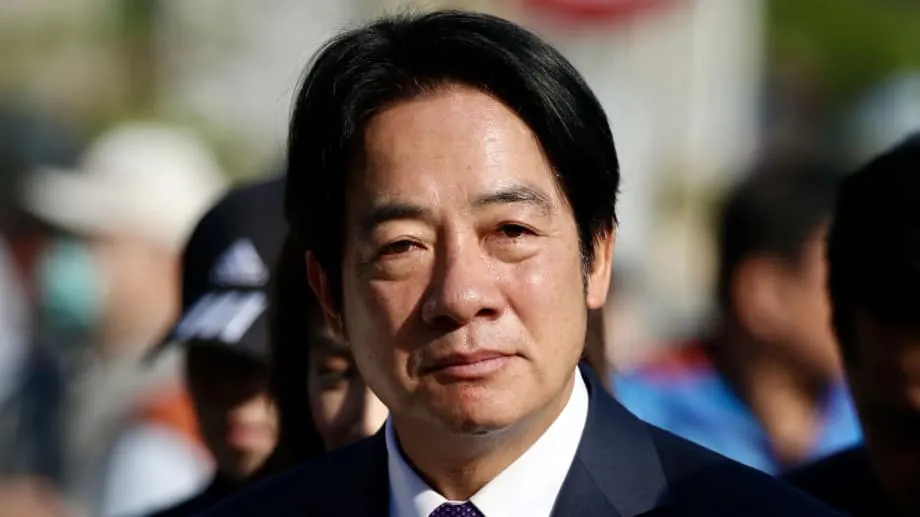
Taiwanese President Lai Ching-te canceled a planned April 22 to 26 visit to Eswatini after Seychelles, Mauritius and Madagascar abruptly withdrew permission for his aircraft to cross their airspace. Taiwan announced the cancellation on April 21, less than 24 hours before his scheduled departure, and accused China of pressuring the three countries through economic threats.
Contents
- Three Airspace Decisions Stop a Presidential Visit
- Why the Flight Route Mattered
- What Seychelles and Madagascar Said
- Taiwan Alleges Threats Over Debt and Financing
- Eswatini's Relationship With Taiwan
- A Royal Anniversary With a Difficult Political Context
- Beijing Defends the One China Principle
- Washington, Europe and Taiwan's Opposition Respond
- From Diplomatic Switches to Blocking Transit
- Taiwan Plans Representation Despite the Cancellation
- Key Points
The trip would have been Lai's first foreign visit in more than five months. He was due to attend celebrations marking the 40th anniversary of King Mswati III's accession to the throne and the monarch's 58th birthday in Taiwan's only remaining diplomatic partner in Africa.
Presidential Office Secretary-General Pan Meng-an told a hastily arranged news conference in Taipei that the withdrawal of flight permissions was virtually unprecedented in international diplomatic practice. With the planned route blocked, Taiwan canceled the visit and said Lai would appoint a special envoy to attend the celebrations.
China denied using economic coercion while praising the three countries for supporting its One China principle. Seychelles and Madagascar confirmed their decisions, presenting them as exercises of national policy and sovereignty. Mauritius had not immediately issued a public statement about the withdrawal.
The dispute brings together two different powers: a country's control over its own airspace and Beijing's efforts to limit Taiwan's international relationships. For Taipei, the immediate result was concrete. Its president could no longer use the planned route to reach an ally that had invited him, even though the journey involved flying over the three countries rather than visiting them.
Why the Flight Route Mattered
Lai's delegation planned to fly directly to Eswatini through airspace controlled by Seychelles, Mauritius and Madagascar. Each country had granted the necessary permission before withdrawing it shortly before departure, according to Taiwan's account.
Overflight permission allows an aircraft to travel through another country's airspace. It is different from permission to land or conduct an official visit. Taiwanese presidents have previously traveled over countries that do not recognize Taipei without incident when they were neither landing nor carrying out official business there.
Lai had chosen a direct route to avoid transiting the Middle East, where ongoing regional conflicts presented heightened security risks. The loss of the three permissions therefore disrupted a journey whose route had already been selected with safety in mind.
Pan said the countries rescinded their approvals unexpectedly and without providing prior justification. He argued that forcing third countries to reverse sovereign decisions undermined aviation safety and violated established international norms and practices. Taiwan described the cancellation as the first time a Taiwanese president had been forced to abandon a foreign trip because of denied airspace access.
What Seychelles and Madagascar Said
Seychelles' foreign affairs ministry confirmed that clearance had been denied in line with its longstanding policy on Taiwan's sovereignty status. Aline Morel, a senior protocol officer at the ministry, said the decision was taken independently and followed established procedures.
Madagascar's foreign ministry also confirmed its refusal. It said Malagasy diplomacy recognizes only one China and that the decision respected the country's sovereignty over its airspace.
Mauritius did not immediately provide a public explanation. Its role in the cancellation was identified by Taiwan alongside those of Seychelles and Madagascar.
Seychelles and Madagascar described their actions as national policy decisions. Taiwan's officials said Chinese pressure lay behind the sudden reversals. Those competing explanations are central to the dispute: the countries defended their authority to decide who could fly overhead, while Taipei accused Beijing of using economic power to determine those decisions.
Taiwan Alleges Threats Over Debt and Financing
A senior Taiwan security official, speaking anonymously to international media, alleged that Beijing threatened to revoke substantial debt relief packages, stop ongoing financing projects and impose further economic sanctions if the three countries allowed Lai's aircraft to transit.
Debt relief reduces or eases what a borrower must repay. A threat to withdraw it can place pressure on a government's finances, while stopping financing can interrupt projects that depend on outside money. Taiwan's allegation was that China used those possible losses to secure a diplomatic result.
China has developed extensive economic and political relationships across Africa through its Belt and Road Initiative. Infrastructure financing and development assistance have often left recipient countries indebted to Beijing. Taiwanese officials argued that these financial dependencies gave China a way to pressure the three governments over the flight.
Pan condemned the alleged pressure as crude interference in the internal affairs of sovereign countries. His objection extended beyond Taiwan's canceled visit: he said coercing governments into changing decisions about their own airspace undermined the international practices on which such travel depends.
Beijing denied economic coercion. The allegations concerning debt relief, financing and sanctions came from the unnamed Taiwan security official, while the public explanations from Seychelles and Madagascar focused on their diplomatic positions toward China.
Eswatini's Relationship With Taiwan
Eswatini, a landlocked kingdom formerly known as Swaziland, has a population of approximately 1.3 million. It is Taiwan's only formal diplomatic ally in Africa, while the other 53 African nations maintain diplomatic relations with Beijing.
Burkina Faso's switch to Beijing in 2018 left Eswatini as Taipei's sole African partner. The kingdom has maintained the relationship despite intense Chinese pressure, making presidential visits especially valuable to Taiwan's efforts to sustain a visible international presence.
King Mswati III attended Lai's inauguration in Taiwan in 2024. Lai's planned journey would have been the first visit to Eswatini by a Taiwanese president since former President Tsai Ing-wen traveled there in 2023.
Eswatini's government expressed regret over the cancellation but said it would not change the longstanding bilateral relationship. Acting government spokeswoman Thabile Mdluli explained that international travel arrangements can be affected by logistical and diplomatic considerations beyond the control of the parties involved.
Taiwan's decision to send a special envoy would allow it to be represented at the royal celebrations despite Lai's absence. The cancellation interrupted a presidential visit, while Eswatini publicly maintained its commitment to the relationship.
A Royal Anniversary With a Difficult Political Context
King Mswati III has ruled Eswatini since 1986. The planned celebrations combined the 40th anniversary of his accession with his 58th birthday, giving Lai's visit both a diplomatic purpose and a personal connection to the monarch.
Eswatini remains Africa's last absolute monarchy. In an absolute monarchy, governing power rests with the monarch rather than being limited in the way it is under an elected parliamentary system. The kingdom has faced criticism over its human rights record.
That criticism includes the violent suppression of protests demanding democracy in 2021 and the killing of opposition politician Thulani Maseko in 2023. These events form part of the political context surrounding Taiwan's close relationship with the kingdom.
Taiwan has provided various forms of assistance to Eswatini, including antiviral drugs that reportedly helped Mswati recover from COVID-19 in 2021. The king's attendance at Lai's inauguration and the planned return visit illustrate the personal dimension of ties that also include diplomatic support and assistance.
Beijing Defends the One China Principle
China's Foreign Ministry expressed high appreciation for the three countries' commitment to what Beijing described as international law and the basic norms governing international relations. It rejected allegations of economic coercion while defending the decisions that prevented Lai's journey.
Beijing's One China principle holds that Taiwan is an inalienable part of China's territory and that the government of the People's Republic of China represents the whole of China. Under that position, Beijing rejects Taiwan's separate diplomatic representation and the legitimacy of Lai's presidential title.
The Chinese Foreign Ministry stated its position on that title in these terms:
There is no longer any so-called president of the Republic of China in the world.
The ministry also pointed to the diplomatic relationships China maintains with every African country except Eswatini. It noted that those countries adopted the Beijing Declaration at the 2024 Forum on China-Africa Cooperation Summit.
A spokesperson for China's Taiwan Affairs Office invoked the ancient Chinese philosopher Mencius, saying that a just cause enjoys abundant support while an unjust cause finds little support. Foreign Ministry spokesperson Guo Jiakun also rejected Washington's criticism, asserting that it confused right and wrong.
Beijing has previously labeled Lai a separatist and troublemaker. The Chinese Communist Party regards him as a supporter of independence, despite his public adherence to the Republic of China constitutional framework. Lai maintains that only Taiwan's people can decide their future.
Washington, Europe and Taiwan's Opposition Respond
The U.S. House Select Committee on China described the airspace decisions as economic pressure intended to isolate a democratic partner rather than legitimate diplomacy. Senator Ted Cruz singled out Mauritius, suggesting that the country appeared determined to align itself with the Chinese Communist Party.
Raymond Greene, the top American diplomat in Taipei, conveyed the U.S. State Department's position that the three African countries had acted at Beijing's behest as part of an ongoing campaign of intimidation against Taiwan.
Washington urged Beijing to stop its military, diplomatic and economic pressure and engage in meaningful dialogue with Taiwan's democratically elected leadership. The European Union and Britain's de facto ambassador in Taipei also expressed concern about the developments.
The cancellation drew criticism across Taiwan's political divide. Kuomintang chair Cheng Li-wun had recently met Chinese President Xi Jinping in Beijing, yet senior KMT lawmaker Lai Shyh-bao criticized mainland China's pressure tactics as unwise, particularly after that meeting.
Lai Shyh-bao's response showed that objections to the pressure extended beyond the president's political camp. The criticism came at a moment when the KMT leadership had pursued direct contact with Beijing, adding a domestic political dimension to the canceled visit.
From Diplomatic Switches to Blocking Transit
Taiwan now maintains formal diplomatic relations with only 12 nations, most of them small island states in the Pacific, Caribbean and Latin America. China's earlier pressure campaigns largely focused on persuading Taiwan's partners to switch recognition to Beijing, often through financial incentives.
The loss of Nicaragua in 2021, Honduras in 2023 and Nauru in January 2024 reduced Taipei's diplomatic network. The Eswatini cancellation involved a different method: preventing Taiwan's president from passing through third countries on the way to a partner that still recognizes Taipei.
The sequence of diplomatic setbacks and visits provides context for the April cancellation:
- 2018: Burkina Faso switched recognition to Beijing, leaving Eswatini as Taiwan's only African diplomatic ally.
- 2021: Nicaragua switched diplomatic recognition from Taipei to Beijing.
- 2023: Honduras switched recognition, and Tsai Ing-wen visited Eswatini.
- January 2024: Nauru switched recognition to Beijing.
- 2024: King Mswati III attended Lai's inauguration in Taiwan.
- April 21, 2026: Taiwan announced the cancellation of Lai's Eswatini visit after the three overflight permissions were withdrawn.
- April 22 to 26, 2026: Lai had been scheduled to visit Eswatini for the royal celebrations.
The airspace dispute expanded the pressure from diplomatic recognition to the practical arrangements needed for international travel. Taiwan argued that using economic threats to close sovereign airspace broke with established diplomatic practice concerning transit.
Taiwan Plans Representation Despite the Cancellation
Lai said in a social media post that threats and suppression could not change Taiwan's determination to engage with the world or negate its ability to contribute internationally. He planned to appoint a special envoy to represent him at Eswatini's celebrations.
National Security Council chief Joseph Wu said Taiwan would continue seeking ways to maintain and strengthen its international partnerships despite what Taipei described as authoritarian interference.
Eswatini's response left the diplomatic relationship intact, while the canceled journey demonstrated how decisions by countries along a flight route can disrupt contact between two partners. As of April 23, the central disagreement remained over why those decisions were made: Taiwan alleged Chinese economic threats, China denied coercion, and Seychelles and Madagascar defended their actions as consistent with national policy.
Key Points
- Lai Ching-te canceled his April 22 to 26 Eswatini visit after Seychelles, Mauritius and Madagascar withdrew overflight permissions.
- Taiwan announced the cancellation on April 21, less than 24 hours before the planned departure.
- A Taiwan security official alleged Chinese threats involving debt relief, financing projects and economic sanctions. Beijing denied coercion.
- Seychelles and Madagascar confirmed their refusals and cited their positions on China and Taiwan. Mauritius did not immediately issue a public explanation.
- Eswatini remains Taiwan's only diplomatic ally in Africa and one of its 12 formal partners worldwide.
- Lai had planned to attend King Mswati III's 40th accession anniversary and 58th birthday celebrations. Taiwan said it would send a special envoy.
- The United States, European Union and Britain's representative in Taipei expressed criticism or concern, while KMT lawmaker Lai Shyh-bao also criticized Beijing's pressure tactics.