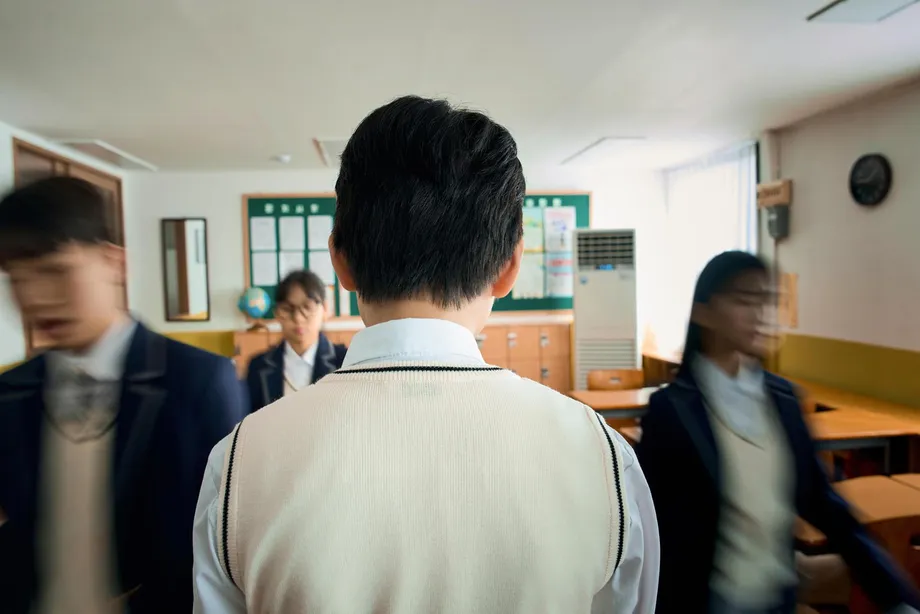
A Swimming Champion Receives His Award Alone
Only 14.5 percent of Seoul's 605 elementary schools held awards ceremonies where pupils were recognized in front of their classmates, according to figures compiled by Seoul councilor Chae Su-ji. For Bang Kyeong-hwan, the consequences were personal: his son won first place among fourth graders at a national swimming competition, but received his award privately, with only his teacher present.
Contents
- A Swimming Champion Receives His Award Alone
- More Than Half of Surveyed Teachers Faced Malicious Complaints
- Field Trips and Playground Sports Disappear
- Schools Remove Winners From Sports Days
- A Teacher's Death Brought Nationwide Protests
- What the 2023 Laws Changed
- One Teacher's Legal Victory Did Not End Her Dispute
- Why Protecting Children Can Mean Removing Competition
- Classroom Violence Adds to Teachers' Fear
- Government Promises Meet Continuing Liability Concerns
- The Essentials
The boy had represented his school and spent months training to reach the podium. His father expected a celebration. Instead, there were no classmates cheering, no applause in the room and no announcement recognizing the achievement before his peers.
Bang said the quiet ceremony reflected a loss that reaches beyond one child's medal. He argued that celebrating effort helps children understand achievement and teaches classmates to welcome another person's success.
For kids growing up, there should be a culture of cheering for a classmate's success, but now these are things of bygone days," he explained. "A recognition of how hard he or she tried to reach a certain goal is not just a reward, but a crucial element in the growth of a child. Otherwise, they would not be able to experience what it is like to achieve something.
South Korean schools are increasingly limiting activities that could prompt complaints from parents, including competitive sports, field trips, awards ceremonies and routine playground activities. Teachers describe a climate in which avoiding a complaint can take priority over arranging experiences that involve competition, disappointment or responsibility for pupils outside the classroom.
As of April 16, 2026, that retreat was continuing despite legislation adopted after nationwide teacher protests in 2023. The dispute connects several pressures: parents seeking to protect their children, teachers fearing accusations and sanctions, and schools reducing activities to limit their exposure.
More Than Half of Surveyed Teachers Faced Malicious Complaints
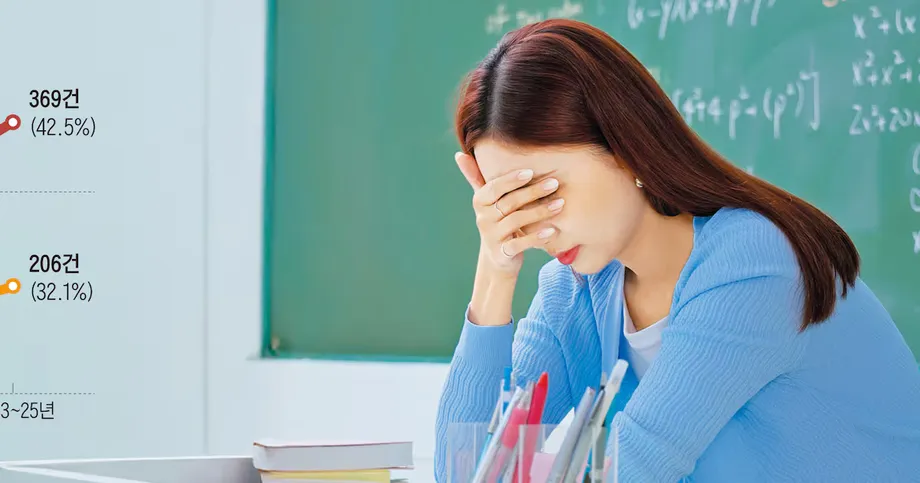
A December survey by the Korean Federation of Teachers Unions found that 51.9 percent of 2,746 teachers had suffered malicious complaints from parents during the second half of 2025. That is slightly more than half of the teachers who answered the survey.
Authorities do not track annual complaint statistics. The survey provides a measure of respondents' experiences, while educators describe exercising severe restraint because a complaint can bring administrative sanctions or legal proceedings.
Teachers use the Korean term "gapjil" to describe abuse of power by parents who exploit legal and administrative procedures to harass educators. In this setting, the pressure can arise when a parent challenges ordinary discipline and the teacher must defend the decision through a formal process.
The problem intensified after a 2014 child welfare law mandated automatic suspension for teachers accused of child abuse. Parents have used that provision to report educators for actions such as restraining violent students or criticizing poor performance. The threat of an accusation therefore reaches into routine classroom management, as well as activities outside school.
Legislative changes in 2023 were intended to strengthen teachers' protection. Educators nevertheless continue to describe fear of sanctions, helping explain why some schools choose to remove potentially disputed activities before a complaint arises.
Field Trips and Playground Sports Disappear
Elementary schools in Seoul, Daejeon and Gyeonggi Province halved their programs of excursions lasting a full day between 2025 and 2026, according to data compiled by Representative Chun Ha-ram. The reduction means those programs fell to roughly half their previous level within the period covered by the figures.
The decline accelerated after a child died in a car accident during a school trip in 2022. Teachers have since avoided organizing trips to eliminate the risk of being held legally responsible for an accident.
Sports restrictions have also spread. Nearly 4 percent of 5,584 elementary schools outside Seoul officially banned students from taking part in any sports on school grounds. Those bans remove a physical outlet during the school day.
Busan had the highest reported share of playground restrictions in 2026, at 34.7 percent of its 303 elementary schools. Incheon followed at 9.3 percent, while Gyeonggi Province recorded 4.4 percent. Busan's figure represents more than one in three schools, compared with fewer than one in ten in Incheon.
Schools Remove Winners From Sports Days
Seoul's changes extend beyond where children can play. Sixty percent of its elementary schools either declined to honor winners at annual sports days or canceled those events entirely, according to the figures compiled by Chae Su-ji.
Some schools now arrange sporting events to end in draws. Removing winners and losers is intended to avoid parental complaints, but it also changes what children experience when they take part in a competition.
Bang's son's private award ceremony shows another version of the same response: an achievement is acknowledged, but without a public celebration. The 14.5 percent figure for ceremonies before classmates shows how limited that form of recognition has become among the 605 Seoul elementary schools covered by the data.
Schools are responding to the prospect that a child's disappointment may become a dispute with adults. Their choices affect both pupils who succeed and those who need to learn how to respond when someone else wins.
A Teacher's Death Brought Nationwide Protests
Between January 2018 and June 2023, 100 public school teachers in South Korea died by suicide. Elementary school educators accounted for the majority.
The crisis reached a breaking point in July 2023, when a primary school teacher aged 23 was found dead at her school in Seoul. She had reportedly suffered anxiety over complaints from abusive parents.
The teacher's diary entries, later made public, described the fear she felt when entering her classroom:
My chest feels too tight. I feel like I am going to fall somewhere. I do not even know where I am.
Two weeks before her death, she had written that she "wanted to let go". Her death prompted nine weeks of nationwide protests, with up to 200,000 educators demanding legal protection.
The protests placed pressure on legislators to address teachers' vulnerability to accusations and harassment. They also brought national attention to the emotional strain associated with handling complaints while continuing to teach.
What the 2023 Laws Changed
The National Assembly passed four bills in September 2023, collectively known as the Teacher Rights Restoration Bills. The legislation prevents automatic suspension when teachers face child abuse accusations, requires evidence before disciplinary action and provides financial support for educators fighting lawsuits.
The laws also prohibit principals from concealing violations of teachers' rights. Their purpose is to give educators protection within their schools as well as help when disputes enter the legal system.
The sequence of events shows how the reforms followed years of pressure:
- 2014: A child welfare law mandated automatic suspension for teachers accused of child abuse.
- January 2018 to June 2023: One hundred public school teachers died by suicide, with elementary educators making up the majority.
- 2022: A child died in a car accident during a school trip, after which the decline in excursions accelerated.
- July 2023: The death of a teacher aged 23 at her Seoul school prompted nine weeks of protests.
- September 2023: The National Assembly passed the four Teacher Rights Restoration Bills.
- Second half of 2025: A teachers union survey found that 51.9 percent of respondents experienced malicious parental complaints.
- 2025 to 2026: Elementary schools in Seoul, Daejeon and Gyeonggi Province halved their programs of excursions lasting a full day.
Many educators argue that the 2023 legislation does not go far enough because parents who make false accusations face no penalties. The Korean Teachers and Education Workers Union described the bills as a first step, saying their full effectiveness requires further budget support, staffing and legal amendments.
One Teacher's Legal Victory Did Not End Her Dispute
A teacher identified only as B to protect her privacy described being suspended without a proper investigation after making students stand during class because they had failed to bring materials.
After more than a year of legal battles, a judge ruled in her favor. Education authorities nevertheless imposed disciplinary measures, including a forced transfer and withheld wages.
B continues to struggle with emotional distress and anxiety disorders resulting from the experience. Her case illustrates the different processes a teacher may face: a court can rule on a legal dispute while education authorities pursue disciplinary measures affecting employment and pay.
For teachers concerned about complaints, the burden therefore includes more than defending a classroom decision. A dispute can also involve prolonged proceedings, financial losses and continuing damage to health.
Why Protecting Children Can Mean Removing Competition
Lim Myun-ho, a psychology professor at Dankook University, links parental aggression to South Korea's intensely competitive society. Academic achievement affects access to elite universities, career prospects and even marriage opportunities.
Parents who experienced those pressures themselves increasingly view teachers as service providers rather than authority figures. Complaints become a way to try to protect children from failure or discomfort.
Lim said the wish to protect a child can work against the child's ability to handle setbacks:
The goal of the parents is to prevent their children being worn down by such a competitive society, but it should not be achieved by trying to remove the possibility of failing," he explained. "Children should learn how to cope with failure rather than be shielded from it.
Lim said schools are at a disadvantage when confronting complaints, encouraging passive responses such as abandoning sports days or arranging competitions without winners. He warned that these choices can affect how children understand effort and competition.
Sporting events orchestrated to end in draws could have a negative impact, such as making people think that there is no need to compete," he noted. "Shielding children too much from competition, because of the competitive nature of Korean society is not a good way.
Bang and Lim approach the issue from different positions, as a parent and a psychology professor, but both describe something children lose when schools remove public achievement or the possibility of failure. One focuses on recognizing effort; the other focuses on learning to cope when effort does not lead to victory.
Classroom Violence Adds to Teachers' Fear
A recent Korean Federation of Teachers Associations survey of 3,551 educators found that 86 percent had experienced violations of their rights and personal safety. Nearly half, 48.6 percent, reported being assaulted or injured by students, or witnessing colleagues suffer such attacks.
The survey recorded several forms of disruption and abuse:
- 93 percent cited deliberate interruptions of lessons and refusals to follow instructions.
- 87.5 percent reported verbal abuse.
- 80.6 percent faced threatening behavior, including glaring, spitting and intimidation.
- 47.5 percent experienced misconduct of a sexual nature.
Only 13.9 percent of teachers reported incidents to protection committees. Most remained silent because they feared retaliatory complaints or false child abuse allegations from parents.
Kang Joo-ho, president of the Korean Federation of Teachers Associations, said fear of retaliatory malicious complaints keeps teachers from reporting incidents. The association has called for the state, rather than individual teachers, to take responsibility for lawsuits involving educational activities.
The organization also wants education superintendents to file countersuits against false accusations. Kang demanded an end to the situation in which teachers face accusations in court while carrying out legitimate instruction.
Government Promises Meet Continuing Liability Concerns
Prime Minister Kim Min-seok acknowledged the seriousness of the issue during a National Assembly session and apologized for not addressing it with enough urgency.
I would like to sincerely apologize for not having given this matter much thought," he said. "This may seem like a simple issue, but it is a grave one.
Education Minister Choi Kyo-jin has committed to further legislative reforms, including clearer clauses exempting teachers from liability when they exercise due diligence. In plain terms, due diligence means taking the care expected of a teacher responsible for pupils.
A revision to the Act on the Prevention of and Compensation for Accidents at School took effect in June. It exempts teachers from civil and criminal accountability for deadly incidents involving students when educators have acted with due diligence. Civil accountability concerns legal responsibility for compensation, while criminal accountability concerns prosecution and punishment.
In November, however, an appellate court found a teacher guilty of failing to prevent a child's death during a field trip in Sokcho, Gangwon Province. Unclear exemption clauses were part of the problem.
Choi acknowledged that teachers continue to avoid field trip duties because they remain fully responsible for accidents despite the new legislation. No date was given for the additional reforms he promised.
Schools' decisions about trips, sports and awards therefore sit alongside an unresolved demand for clearer protection. The 2023 bills changed how accusations and disciplinary action should be handled, but teachers continue to describe exposure to complaints, legal costs and responsibility for accidents.
The Essentials
- 51.9 percent of 2,746 teachers surveyed experienced malicious parental complaints during the second half of 2025.
- Elementary schools in Seoul, Daejeon and Gyeonggi Province halved their programs of excursions lasting a full day between 2025 and 2026.
- Nearly 4 percent of 5,584 elementary schools outside Seoul banned all sports on school grounds.
- In Seoul, 60 percent of elementary schools stopped honoring sports day winners or canceled the events; only 14.5 percent held awards ceremonies before classmates.
- One hundred public school teachers died by suicide between January 2018 and June 2023. A teacher's death that July prompted nationwide protests.
- The September 2023 Teacher Rights Restoration Bills strengthened legal protections, but educators say false accusations still carry no penalties for parents.
- 48.6 percent of respondents to a separate survey reported student assaults or injuries, or witnessed attacks on colleagues; only 13.9 percent reported incidents to protection committees.
- The government has promised clearer protection from liability, while teachers continue to avoid activities they fear could lead to complaints or prosecution.