Six New Stops on Noto's Recovery Journey
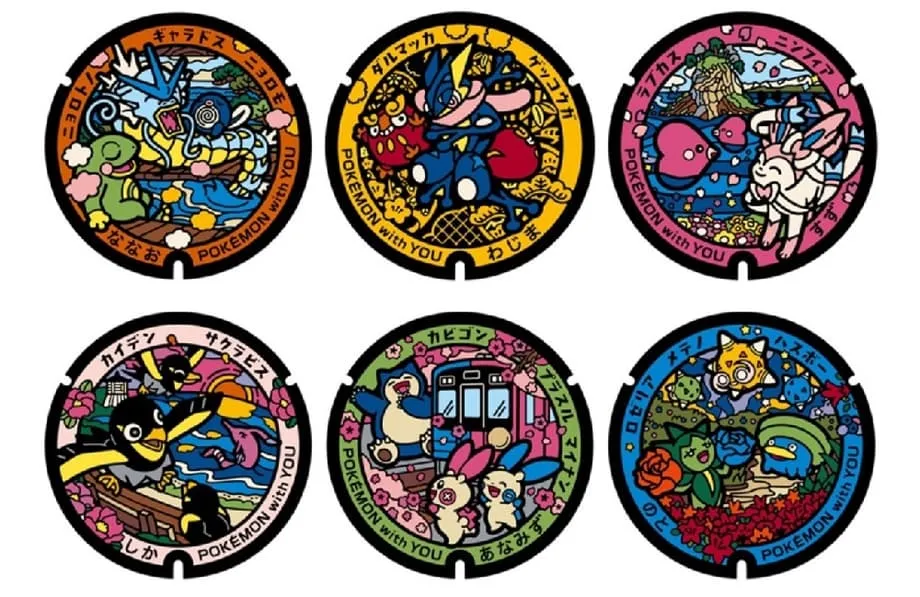
Six Pokémon manhole covers will begin appearing across Japan's Noto Peninsula on April 29, 2026, connecting popular characters with hot springs, coastal scenery, gardens and traditional crafts as the region works to rebuild its visitor economy.
Contents
- Six New Stops on Noto's Recovery Journey
- Why Tourism Matters to Reconstruction
- A Project Built on Earlier Disaster Support
- How the Noto Project Has Developed
- Anamizu and Suzu Pair Characters With Local Scenery
- Nanao's Hot Springs and Wajima's Craft Heritage
- Flowers in Noto Town and Sea Views in Shika
- How Pokémon GO Connects the Six Locations
- What Visitors Can Discover Beyond the Covers
- More Than a Photograph Stop
- Key Points
The installations, known as Pokéfuta or PokéLids, will be the first on the peninsula. Each will stand in a different municipality: Anamizu, Suzu, Nanao, Wajima, Noto Town and Shika. The Pokémon Company is donating all six, working with the Pokémon With You Foundation and local authorities.
Noto is recovering from the magnitude 7.6 earthquake of January 1, 2024, which caused widespread destruction across Ishikawa Prefecture and left a death toll exceeding 700. Severe flooding in September 2024 brought further damage, with overflowing rivers and collapsing hillsides disrupting communities already struggling to rebuild.
Snorlax beneath cherry blossoms, Gyarados in thermal waters and Sylveon beside a romantic beach give the project a playful appearance. Its purpose is practical: encourage people to visit several towns, spend time at local attractions and bring business to restaurants, inns and craft workshops.
The covers also extend a relationship already visible on the peninsula's railway. The Pokémon With You Train began operating between Nanao and Anamizu stations in September 2024. New monuments, station decorations and a themed footbath are intended to give travelers more reasons to stay after taking a photograph.
Why Tourism Matters to Reconstruction
The New Year's Day earthquake collapsed buildings, triggered tsunami warnings and severed transport links along the northern coast of Honshu. Thousands of people were displaced, while rural communities across the peninsula faced extensive damage to homes, businesses and infrastructure.
September's heavy rain compounded those losses. Landslides isolated communities again and damaged work already undertaken during reconstruction. Tourism businesses faced prolonged closures or fewer customers as travelers hesitated to return to an area still associated with disaster.
Noto's small inns, restaurants and traditional workshops depend heavily on visitors. When tourist spending falls, the effects reach businesses that have supported families for generations. Rural communities also have fewer alternative industries than large cities, while repairing roads and other infrastructure in remote coastal areas can take longer.
Local recovery therefore involves two connected tasks: restoring buildings and transport, and bringing customers back. The PokéLids address the second by placing new attractions beside places that already express the peninsula's character.
Six installations across six municipalities create a route rather than a single destination. A traveler drawn to one character may continue to another town, stopping for food, accommodation or shopping along the way. Organizers hope that movement will distribute visitor spending across the peninsula.
A Project Built on Earlier Disaster Support
Pokémon With You began after the magnitude 9.0 earthquake and tsunami that struck the Tohoku region on March 11, 2011, killing nearly 20,000 people. The Pokémon Company used fundraising and activities for children to support affected communities.
Volunteers dressed as Pikachu visited schools and evacuation centers, offering moments of enjoyment to children who had lost homes and family members. Pokémon Center stores across Japan donated portions of their profits to rescue and reconstruction work.
When a permanent Pokémon Center eventually opened in Tohoku, some fans waited more than five hours to enter and show support. The initiative developed into a continuing effort to help communities through disaster recovery and regional tourism projects.
The PokéLid program officially began in 2018 under the broader Pokémon Local Acts initiative. More than 400 decorated covers have since been installed across every Japanese prefecture. They combine working street infrastructure with public artwork and connections to the Pokémon GO mobile game.
Noto's six covers bring that established approach to communities still recovering from successive disasters. The Pokémon Company is supplying the artwork, while the Pokémon With You Foundation is helping coordinate installation and promotion. A franchise with nearly three decades of history is being used to attract attention to places whose recovery will require sustained support.
How the Noto Project Has Developed
The new installations follow several important dates in the peninsula's recent history. The railway project began in the same month that severe rain struck the region, while the manhole covers are scheduled to start appearing in late April 2026.
- March 11, 2011: The earthquake and tsunami in Tohoku prompted the Pokémon With You support initiative.
- 2018: The PokéLid project officially launched under Pokémon Local Acts.
- January 1, 2024: A magnitude 7.6 earthquake devastated communities across the Noto Peninsula.
- September 2024: Severe flooding and landslides damaged the region, and the Pokémon With You Train began operating between Nanao and Anamizu.
- April 29, 2026: Installation of Noto's six Pokémon manhole covers is scheduled to begin.
As of April 18, April 29 is the announced starting date; an individual installation date for every cover has not been given. The project combines the new street artwork with additional attractions at several locations.
Anamizu and Suzu Pair Characters With Local Scenery
Anamizu Station will receive a cover showing Snorlax resting beneath cherry blossom trees, accompanied by Plusle and Minun. The two smaller Pokémon resemble rabbits and are known for generating electrical energy together.
Anamizu is known for its spring cherry blossoms, and the station provides a gateway to coastal views. The pairing of Plusle and Minun also supplies a theme of cooperation, connecting their shared energy with a community rebuilding through collective effort.
The station is adding Pokémon decorations beyond the cover itself. Together with the themed train between Anamizu and Nanao, those additions make the railway part of the visitor experience rather than simply a means of reaching the artwork.
At Mitsuke Beach in Suzu City, Sylveon will appear beside two Luvdisc. Sylveon is a fairy type evolution of Eevee, while Luvdisc are heart shaped fish Pokémon associated with romance.
The design suits a beach known for romantic scenery and views of Mitsuke Island, a rocky outcrop in the Sea of Japan. Suzu is also installing a monument called Sylveon with Love near the cover, giving visitors another place to stop.
Suzu's food provides reasons to stay beyond the beach. Local specialties include snow crab, oysters and Noto kuroge wagyu beef. Linking the character artwork with the coast and local meals is central to the project's aim of turning a brief visit into a longer stay.
Nanao's Hot Springs and Wajima's Craft Heritage
Yuttari Park in Nanao City will feature Gyarados relaxing in hot spring waters with Politoed and Poliwag. The design draws directly on the area's onsen culture. An onsen is a bath supplied by naturally heated water, where visitors soak and relax.
Gyarados is a powerful sea serpent that evolves from the much less imposing Magikarp. Its transformation gives the image another connection to recovery: the movement from weakness to strength parallels the resilience of communities rebuilding after disaster.
Nanao is also opening a Pokémon themed footbath. Visitors will be able to soak their feet in thermal water while surrounded by character artwork, extending the hot spring theme beyond the manhole cover.
Wajima's cover will stand at the Furattohomu roadside station. Greninja, a Pokémon resembling a ninja frog, appears in a dramatic pose beside Darumaka, a fire type Pokémon.
The stop connects visitors with a city known for one of Japan's oldest morning markets and for its lacquerware. Wajima artisans coat wooden bowls, chopsticks and other goods with lacquer made from sap, applying as many as 80 layers to produce a shiny, durable surface.
Those repeated applications require considerable patience and skill. The resulting goods command high prices and support an important local industry that has endured the earthquake and floods. The roadside station offers access to traditional artisan goods while also providing a rest stop for people exploring the peninsula by car.
Flowers in Noto Town and Sea Views in Shika
Yanagida Botanical Park in Noto Town will host Roselia, Minior and Lotad among floral imagery. The combination brings together Pokémon associated with plants and the sky, matching the garden's attention to natural beauty and plant diversity.
The park's appeal continues after the cherry blossom season ends in April. Azaleas, roses, wisteria and irises provide changing displays through spring and summer, giving visitors reasons to return at different points in the growing season.
Shika's cover will be placed at Sekaiichi no Bench, whose name means The World's Longest Bench. Wattrel, a seabird Pokémon, will fly above Gorebyss swimming through illustrated waves, linking the design to the nearby sea.
The wooden bench stretches 460.9 meters along the peninsula's western coast. It claimed a Guinness World Record in 1989, although it no longer holds that title. Its length still makes it an unusual landmark and provides ample seating overlooking the Sea of Japan.
Shika's coastal setting and Noto Town's changing flowers show how the six designs have been matched to their surroundings. The characters provide an initial attraction, while the place around each cover gives visitors something else to experience.
How Pokémon GO Connects the Six Locations
Each cover is intended to become a PokéStop in Pokémon GO, the mobile game that uses a player's real location. Players visit physical places to collect game items and interact with virtual creatures, linking activity on a phone with movement through towns and landscapes.
At Noto's covers, that connection is intended to bring the franchise's large international audience to specific destinations. The digital element can encourage players to continue between towns as they build their collections, potentially extending stays and supporting accommodation and restaurant businesses.
The planned experience also connects the Pokémon pictured on the covers with augmented reality, which places digital images over a phone's view of the surroundings. Special events or research tasks associated with the region are potential additions to that experience.
Photographs provide another route to wider attention. Previous PokéLid installations have generated millions of shares on Instagram and X, with fans posting images of the artwork and location information for other enthusiasts.
For Noto, those visitor posts can introduce the peninsula to people who know Pokémon but may know little about Ishikawa Prefecture. A picture of a familiar character beside a garden, beach or hot spring can draw attention to local traditions without relying entirely on conventional advertising.
The physical spread of the covers matters as much as their digital role. Six stops give fans a reason to move through several communities, including towns they might otherwise pass without visiting.
What Visitors Can Discover Beyond the Covers
Wajima's morning market ranks among Japan's three most famous. Its vendors sell fresh fish, octopus and fugu directly from boats. The market's food experience includes buying seafood and renting gas grills to prepare it at the site.
Wajima lacquerware offers a different encounter with local work. The many layers of lacquer applied to wooden goods explain both their appearance and their price: each finished object represents repeated, careful work rather than a single coating.
The peninsula is also home to Kiriko matsuri festivals. During summer evenings, villagers pull large festival floats into the sea while taiko drummers perform in firelight, wearing hairy wigs and cloaks.
Local legend connects those costumes with an effort to frighten away pirates by making villagers look like demons. The festivals continue as religious observances as well as attractions for visitors.
Senmaida's roughly one thousand small rice paddies descend the coastal slopes, showing how farming has been adapted to the peninsula's terrain. Traditional salt production also continues in small factories, using methods involving evaporation beside the cliffs. Visitors can try the demanding work themselves.
These attractions give substance to the tourism plan. Pokémon may be the reason a younger traveler first notices Noto, while food, festivals, farming and craft traditions provide reasons to spend more time there. The project brings a familiar element of popular culture into contact with local practices that have continued for centuries.
More Than a Photograph Stop
The Pokémon With You Train, which continues to carry passengers between Nanao and Anamizu in decorated carriages, gives the recovery partnership a presence beyond the new covers. Its September 2024 introduction preceded the latest installations and provides a transport connection between two participating municipalities.
Local authorities are also planning collaborative events and themed attractions near the PokéLids. The Sylveon with Love monument in Suzu, additional decorations at Anamizu Station and Nanao's Pokémon footbath are intended to encourage people to remain in each town.
A photograph takes only a moment. A footbath, a meal, a train journey or a visit to a craft shop creates a longer encounter with the place and more opportunities for local businesses to earn income.
The six municipality approach spreads those opportunities geographically. Rather than placing every attraction in one center, the project invites travelers to move between the peninsula's eastern coast, western shoreline, gardens and traditional commercial stops.
Noto's rebuilding still involves damaged infrastructure, displaced residents and businesses recovering from both earthquake and flood losses. The new covers form one part of that work, using a globally recognizable cast of characters to help reconnect visitors with the communities, scenery and traditions behind the images.
Key Points
- Six Pokémon manhole covers are scheduled to begin installation across the Noto Peninsula on April 29, 2026.
- The first PokéLids on the peninsula will be placed in Anamizu, Suzu, Nanao, Wajima, Noto Town and Shika.
- The Pokémon Company is donating the covers, working with the Pokémon With You Foundation and local municipalities.
- The project supports tourism recovery after the magnitude 7.6 earthquake of January 1, 2024, whose death toll exceeded 700, and severe flooding in September 2024.
- Each design connects Pokémon with local scenery or attractions, including hot springs, cherry blossoms, gardens and the coast.
- The covers are intended to become Pokémon GO PokéStops, connecting game activity with visits to six communities.
- Related attractions include Suzu's Sylveon monument, decorations at Anamizu Station and a Pokémon themed footbath in Nanao.
- The initiative follows the September 2024 launch of the Pokémon With You Train between Nanao and Anamizu.