
Seoul's Digital Change Leaves a Residence Card Dispute Unsettled
Taiwan will continue identifying South Korean nationals as coming from South Korea, rather than the Republic of Korea, on its Alien Resident Certificates, even after Seoul changed an electronic arrival system that had placed Taiwan under a China designation.
Contents
- Seoul's Digital Change Leaves a Residence Card Dispute Unsettled
- How the Electronic Arrival Card Triggered the Dispute
- Taiwan Responded With Its Own Naming Changes
- The Main Dates in the Naming Dispute
- Why Physical Residence Permits Still Matter
- A Formal Name Taiwan Had Previously Accepted
- A $37 Billion Trade Deficit Behind the Diplomatic Friction
- Competition and Cooperation in the Same Supply Chain
- Economic Dependence Has Not Ended Taiwan's Objection
- Key Points
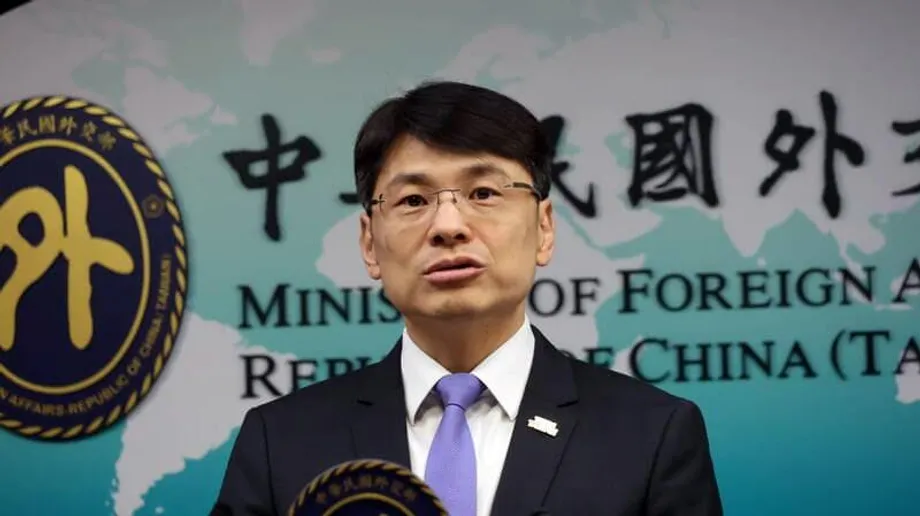
Ministry of Foreign Affairs spokesman Hsiao Kuang-wei confirmed the decision on April 14, 2026. He cited reciprocity and consistency across Taiwan's administrative systems. The announcement means Taiwan will keep the wording introduced on March 1 instead of restoring the formal national name that South Korea prefers.
South Korea's electronic arrival card adjustment took effect on Friday. It removed Taiwan from the China designation in dropdown menus, addressing a complaint that had generated diplomatic protests, objections from travelers and questions in Taiwan's legislature. Yet another part of the dispute remains: South Korea has reportedly used China (Taiwan) on physical residence permits issued to Taiwanese nationals for more than a decade.
The Alien Resident Certificate, commonly called an ARC, is the main identification document for foreign nationals living in Taiwan. Its nationality field is therefore more than a detail on a travel form. Thousands of South Korean citizens living and working on the island encounter that wording in a document used in everyday life.
Taipei's position brings two different administrative systems into the same diplomatic argument. An arrival card records information about someone entering a country. A residence certificate identifies someone who lives there. Seoul has changed the first system, while Taiwan is retaining its response in the second.
Foreign Minister Lin Chia-lung has described reciprocal respect as the foundation of the relationship. Taiwan's decision shows that it continues to seek changes beyond the electronic arrival platform, even as the two economies depend heavily on each other for advanced semiconductor production.
How the Electronic Arrival Card Triggered the Dispute
South Korea introduced its electronic arrival card system in February 2025 as an alternative to paper landing cards for incoming travelers. Two mandatory fields, Place of Departure and Next Destination, listed Taiwan as China (Taiwan).
Taiwan objected because that wording presented the island as part of the People's Republic of China. For Taipei, the issue concerned its sovereignty, meaning its authority to govern itself and its status in dealings with other governments. A dropdown choice became politically sensitive because travelers had to use a system whose labels expressed a position Taiwan rejected.
The Taipei Representative Office in Seoul repeatedly protested the designation. Taiwan's Ministry of Foreign Affairs also made formal diplomatic requests for a correction. The wording nevertheless remained in place for months, drawing public complaints from Taiwanese travelers and concern from lawmakers in the Legislative Yuan.
Lin spoke publicly about the issue throughout March, saying the labeling downgraded Taiwan's sovereignty status. Taiwan operates under the official name Republic of China, while South Korea's formal name is the Republic of Korea. Both governments have constitutional claims that make national names politically sensitive, including Taiwan's position in relations across the Taiwan Strait.
Taiwan Responded With Its Own Naming Changes
Taiwan changed the nationality designation on Alien Resident Certificates for South Korean citizens on March 1, 2026. Republic of Korea became South Korea. The measure applied to people applying for a certificate for the first time and those renewing an existing permit.
The change was a deliberate response to Seoul's continued use of China (Taiwan). Taiwan replaced the formal name requested by South Korea with a geographic designation that is widely understood but lacks the official wording Seoul wanted on government documents.
Taiwan's Ministry of Foreign Affairs then set March 31 as the deadline for South Korea to correct its electronic arrival card system. It warned that Taiwan could also change the South Korean listing in its own online immigration entry system from Republic of Korea to Korea (South).
Foreign Minister Lin Chia-lung addressed the Legislative Yuan on March 19. Discussing Taiwan's demand for a response and the effect of its measures, he said:
We are waiting for their reply, and we believe our actions will have an effect. Taiwan is Taiwan.
Lin's statement expressed Taipei's refusal to accept wording that placed Taiwan under China in an international administrative system. The threatened online change would have extended the naming response beyond residence certificates to another immigration service.
The Main Dates in the Naming Dispute
The dispute developed over more than a year, moving from the launch of a travel platform to changes affecting foreign residents. Its main dates show why Seoul's latest adjustment has not ended Taiwan's response.
- February 2025: South Korea introduced an electronic arrival card system whose Place of Departure and Next Destination fields listed Taiwan as China (Taiwan).
- March 1, 2026: Taiwan began replacing Republic of Korea with South Korea on Alien Resident Certificates for new applicants and people renewing their permits.
- March 19, 2026: Foreign Minister Lin Chia-lung told lawmakers that Taiwan was waiting for South Korea's reply and expected its measures to have an effect.
- March 31, 2026: Taiwan's deadline for correcting the electronic arrival card system expired. Taipei had warned of a further naming change in its online immigration entry system.
- April 14, 2026: Ministry spokesman Hsiao Kuang-wei confirmed that Taiwan would retain South Korea on its residence certificates.
- Friday before April 18, 2026: South Korea's electronic arrival card adjustment took effect, removing Taiwan from the China designation in dropdown menus.
Taiwan's Bureau of Consular Affairs also issued a Level 1 gray travel alert for South Korea during the dispute. It advised Taiwanese travelers to use paper arrival cards instead of the electronic system to avoid the disputed identifier.
Why Physical Residence Permits Still Matter
South Korea's physical residence permits have reportedly identified Taiwanese nationals as China (Taiwan) for more than a decade, according to people familiar with bilateral negotiations. That practice predates the electronic arrival card dispute by many years.
Taiwan's Ministry of Foreign Affairs has repeatedly raised the residence permit wording with Seoul without securing a resolution. The digital adjustment therefore addresses one administrative problem while leaving another longstanding complaint unresolved.
Hsiao, asked whether Taiwan would reverse its ARC changes after South Korea adjusted the electronic arrival system, said it would keep the South Korea format on grounds of reciprocity and consistency across its systems. In plain terms, Taipei wants the respect it gives to South Korea's preferred name to be returned in documents identifying Taiwanese people.
The continuing permit issue helps explain why Taiwan is maintaining its position despite the change for arriving travelers. No date has been given for correcting South Korea's physical residence permits or restoring Republic of Korea on Taiwan's certificates.
A Formal Name Taiwan Had Previously Accepted
South Korea formally asked Taiwan approximately a decade ago to use Republic of Korea in its administrative systems. Taiwan accepted that request as a gesture of respect for Seoul's sovereign identity.
The March 1 reversal withdrew that earlier accommodation. South Korea remained an understandable description of the country, but the change carried a diplomatic message: Taipei was no longer willing to keep using Seoul's preferred formal name while its own identity appeared under China in South Korean documents.
Republic of China and Republic of Korea are rooted in constitutional frameworks established during the middle of the twentieth century. The names express how each government formally identifies itself. Labels such as China (Taiwan), or the substitution of South Korea for Republic of Korea, consequently carry weight beyond their practical usefulness in a database.
Taiwan and South Korea have limited formal diplomatic relations, yet both regard questions of statehood and international recognition as matters on which they will not compromise. Their administrative disagreements sit within that sensitive political setting.
The two changes also convey different messages. China (Taiwan) places Taiwan beneath another country in the wording of the document. South Korea replaces Seoul's formal constitutional name with a geographic name. Taipei's use of reciprocity connects those administrative choices to its demand for mutual respect.
A $37 Billion Trade Deficit Behind the Diplomatic Friction
Taiwan's trade deficit with South Korea reached a record $37 billion in 2025. A trade deficit means that Taiwan bought more goods from South Korea than it sold there. The $37 billion figure measures that gap, rather than the total value of trade between the two economies.
Much of the increase was driven by an 80 percent rise from the previous year in imports of high bandwidth memory. That memory is needed for the production of artificial intelligence servers at major Taiwanese manufacturing operations, including Quanta and Foxconn.
High bandwidth memory helps advanced computing systems move large amounts of data quickly. Taiwan's manufacturers need Korean memory components to assemble advanced AI servers, making the relationship a practical requirement for production as well as a commercial opportunity.
South Korea's recent procurement of 260,000 graphics processing units, or GPUs, for large data center construction also depends on Taiwan's foundry and logic chip ecosystem. GPUs provide computing power for demanding tasks, while foundries manufacture chips. Taiwan's role in producing advanced logic chips connects it directly to South Korea's plans for AI infrastructure.
The figures show dependence running in both directions. Taiwan needs memory from South Korea for its server industry, and South Korea needs Taiwan's chip manufacturing ecosystem for its computing expansion. That gives both sides a strong commercial reason to keep administrative friction from disrupting industrial cooperation.
Competition and Cooperation in the Same Supply Chain
Colley Hwang, chief executive and chairman of DIGITIMES, described Taiwan and South Korea as having moved from historical rivalry into a relationship of lip and tooth interdependence. The expression describes partners whose positions are so closely connected that each relies on the other.
Hwang argued that neither economy can compete effectively in the AI era without the other's cooperation. Explaining why confrontation would be costly within this industrial system, he said:
No one can truly defeat the other in this ecosystem; the only path forward is to hold hands and do business.
Hwang also said South Korea's leaders recognize Taiwan as an indispensable partner. His assessment placed the administrative dispute alongside a supply chain in which the two economies provide different components needed for the same products.
Taiwan's strength in logic chip manufacturing and South Korea's memory production are complementary. Their relationship follows a model often called co-opetition: businesses or economies compete in some areas while cooperating in others.
Competition continues in established sectors such as steel and display panels. Cooperation is essential in emerging technologies, where advanced chips and memory must work together inside AI systems. The naming disagreement therefore exists alongside a business relationship that has become more closely connected as demand for AI infrastructure grows.
Economic Dependence Has Not Ended Taiwan's Objection
South Korea's Foreign Ministry has confirmed that Seoul maintains unofficial but practical relations with Taiwan. Those ties operate in an East Asian setting where the People's Republic of China is increasing pressure on Taiwan's international participation.
Taipei's response shows how a seemingly small administrative choice can become part of that larger struggle. Taiwan is resisting its placement under Chinese nomenclature even in systems run by countries with which it maintains friendly practical ties.
The technology relationship provides what has been described as a Silicon Shield against a prolonged diplomatic conflict. In this context, the expression means that dependence on each other's semiconductor industries gives both sides reasons to preserve cooperation.
Economic dependence, however, has not persuaded Taiwan to restore Republic of Korea on its residence certificates. Taipei continues to treat respect for its identity as part of the bilateral relationship, alongside commercial exchange.
The handling of this dispute could also influence how Taiwan responds to similar naming controversies elsewhere. For now, the result is a partial adjustment: Seoul has changed its electronic arrival platform, while the residence permit complaint and Taiwan's reciprocal certificate wording remain in place.
Key Points
- Taiwan will keep South Korea, rather than Republic of Korea, on Alien Resident Certificates, spokesman Hsiao Kuang-wei confirmed on April 14, 2026.
- South Korea changed its electronic arrival card dropdown menus on Friday, removing Taiwan from the China designation.
- The electronic dispute began in February 2025. Taiwan changed its residence certificate wording on March 1, 2026, and set a March 31 deadline for Seoul to act.
- South Korea has reportedly used China (Taiwan) on physical residence permits for more than a decade. That complaint remains unresolved.
- Taiwan cites reciprocity and consistency across its administrative systems as reasons for keeping its current wording.
- Taiwan's trade deficit with South Korea reached $37 billion in 2025, driven largely by an 80 percent increase in high bandwidth memory imports.
- South Korea's procurement of 260,000 GPUs and Taiwan's demand for Korean memory illustrate the industrial dependence that accompanies the diplomatic dispute.